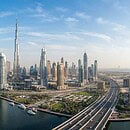
Image generated with Ai
China’s Cultural Tourism economy expanded strongly in 2025 as inbound travel, domestic trips and cultural-sector activity increased together. The latest official report recorded 154 million inbound visits and $131.135 billion in visitor spending, while domestic travellers made 6.522 billion trips and spent 6.30 trillion yuan. The most important development is not visitor volume alone. Inbound expenditure increased 39.2%, more than twice the 17.1% rise in visits. That difference points to a higher-value travel economy, although the available national data cannot identify which visitor markets, destinations or tourism businesses received the largest gains.
The latest results mark a shift from a straightforward recovery story towards a broader account of consumption. China’s Cultural Tourism market now connects travel with museums, heritage, film, literature, games, performances, regional food and creative products. International exposure to these cultural forms can introduce destinations before a journey begins. Once visitors arrive, related spending can move through accommodation, transport, restaurants, attractions and shops. The official figures establish substantial growth across this system, but they do not prove that cultural exposure caused every visit or every dollar of expenditure.
Advertisement
The chronology is important. Domestic travel had already regained enormous scale during 2025, giving destinations a large internal market. Wider entry facilitation then continued into 2026, while a national tourism plan for 2026–2030 placed deeper integration between culture and tourism among its priorities. On 25 August 2026, the new report brought these strands together by presenting the 2025 economic results to the national legislature. It did not announce a visa, passport, airline, railway, airport or hotel measure. Its purpose was to document how tourism and the cultural economy had developed, not to create an immediate travel rule.
Inbound tourism reached 154 million recorded visits during 2025, increasing 17.1% from the previous year. Spending associated with those visits reached $131.135 billion, up 39.2%. The spending growth rate was approximately 2.3 times the rate of growth in visits. This is a comparison between two published growth rates, not a separate government performance indicator. It shows that total receipts rose much faster than traffic. It does not establish that every visitor spent 39.2% more, because traveller mix, journey purpose, length of stay, prices and repeat border movements can all influence aggregate results.
Advertisement
The distinction matters when assessing Cultural Tourism. A higher total may reflect increased spending on accommodation, food, transport, admission, entertainment or shopping, but no official category-level breakdown accompanied the headline figures. National data also do not identify the provinces, cities or rural areas receiving the largest shares. Claims that one destination, nationality or business segment led the increase would therefore be unsupported. The defensible conclusion is narrower: inbound travel continued to expand, and its recorded economic value grew considerably faster than its volume during 2025.
Category Officially verified development Ratio or comparison Meaning for travel Inbound tourism 154 million visits, up 17.1% Visit growth was less than half the spending-growth rate Cross-border demand continued recovering Inbound expenditure $131.135 billion, up 39.2% Growth was about 2.3 times the increase in visits Total tourism receipts strengthened faster than traffic Domestic tourism 6.522 billion trips, up 16.2% An increase of 907 million trips Domestic demand remained the sector’s main volume base Domestic spending 6.30 trillion yuan, up 9.5% Spending grew more slowly than trip volume Growth did not translate evenly into expenditure per trip Cultural industries 20.83 trillion yuan in operating revenue, up 8.8% Profits reached 1.90 trillion yuan Travel sits within a much larger cultural economy Cultural trade $143.4 billion in imports and exports No tourism-only share was published International cultural visibility extends beyond physical travel Film economy 51.832 billion yuan box office; 817.259 billion yuan estimated industry-chain output Industry-chain output was about 15.8 times box office Film activity connects with retail, transport and destination spending
The table brings together measurements with different definitions. Visitor expenditure, business revenue, trade value and estimated industry-chain output cannot be added to produce a single tourism total. Their value lies in showing the scale of connected activity. The film figure is particularly broad because it includes core production, supporting services and spillover activity. Treating the full 817.259 billion yuan as tourism revenue would be incorrect, even though part of the estimate covers transport, retail, film locations, theme parks and festival activity.
Domestic residents completed 6.522 billion trips in 2025, an increase of 907 million and 16.2% year on year. They spent 6.30 trillion yuan, 550 billion yuan more than in 2024 and an increase of 9.5%. Trip volume therefore grew faster than total expenditure. This does not necessarily indicate weakening demand, but it cautions against assuming that every additional journey generated the same economic value. The figures count trips rather than unique people, meaning one resident travelling repeatedly contributes several times to the annual total.
Urban residents generated 4.996 billion trips and 5.30 trillion yuan in spending. Rural residents recorded 1.526 billion trips and spent 1.00 trillion yuan. Rural trip volume grew 22.6%, while rural expenditure increased 21.4%, exceeding the respective urban growth rates of 14.3% and 7.5%. This supports a more geographically diverse travel market and creates opportunities for community attractions, accommodation, food services and local transport. However, national totals do not reveal how income was distributed within rural communities or how many lasting jobs and businesses resulted from tourism activity.
Advertisement
Advertisement
The cultural economy provides the article’s most distinctive context. Cultural and related industries generated 20.83 trillion yuan in operating revenue during 2025, an 8.8% increase, while profits reached 1.90 trillion yuan. Imports and exports of cultural products totalled $143.4 billion. Chinese literature, online games, television programmes, traditional medicine, martial arts, folk music and designer toys have also gained visibility internationally. Online Chinese literature reportedly reaches more than 200 countries and regions, widening the audience encountering Chinese stories, places and traditions outside a physical tourism setting.
Film offers a measurable example of how Cultural Tourism can extend beyond admission tickets. The 2025 box office reached 51.832 billion yuan, while the estimated value of the full film-industry chain reached 817.259 billion yuan. The estimate included 226.618 billion yuan from core film activities, 251.546 billion yuan from indirect supporting activity and 339.095 billion yuan from induced and spillover output. The final category covered areas including catering, transport, retail, intellectual-property products, filming locations, theme parks and festivals. These figures demonstrate economic connections, but they do not measure how many tourists chose a destination specifically because of a film.
The economic report does not require travellers to alter existing bookings. It introduces no general visa exemption, passport concession or new immigration document. Entry eligibility still depends on nationality, purpose, route and the specific immigration programme used. Visa facilitation remains relevant background: foreign-national arrivals reached 22.91 million in the first half of 2026, including 17.82 million visa-free entries. Those figures should not become the main news angle because they belong to a separate reporting period and already support an established inbound-recovery story.
Travellers planning future visits should concentrate on the conditions that apply to their own journey:
International visitors may benefit from a wider supply of cultural attractions, regional itineraries and shopping experiences as policy implementation develops. Tourism businesses may see opportunities in longer itineraries, local products and links between entertainment and destinations. Yet the existing evidence cannot confirm longer average stays, repeat visits or gains for particular hotels, airlines or retailers. Those outcomes require more detailed arrival, accommodation and expenditure data. The present report establishes a stronger national market; it does not show that the benefits were uniform across locations or industries.
The confirmed direction now comes from the national tourism plan covering 2026–2030. It calls for a modern tourism system, improved spatial planning, new growth drivers, richer products, better service quality and deeper international exchanges. Future implementation is therefore likely to focus on converting cultural resources into accessible visitor experiences while balancing protection and development. The word “likely” is important: the plan establishes policy priorities, but it does not provide identical project schedules, budgets or operating standards for every destination. Local implementation announcements will determine where new products and services actually appear.
The next evidence to watch will be more detailed official reporting on inbound expenditure, visitor origin, destination choice, accommodation and length of stay. Without those breakdowns, the 39.2% spending increase remains a powerful national result rather than proof of equal regional gains. China’s travel economy is moving beyond recovery measured only through arrivals, with domestic demand, creative industries and visitor consumption forming a broader base. Cultural Tourism will remain central to that direction, but its long-term success will depend on service quality
Advertisement
Advertisement
Advertisement












Tuesday, September 1, 2026

Tuesday, September 1, 2026
Tuesday, September 1, 2026

Tuesday, September 1, 2026

Tuesday, September 1, 2026

Tuesday, September 1, 2026

Tuesday, September 1, 2026