
Tadej Pogačar’s Relentless Tour de France Masterclass Is Recasting France as the Ultimate Cycling Tourism Destination, Fueling Unprecedented Demand for Scenic Journeys, Alpine Escapes and Authentic Regional Experiences—What Global Travellers Need to Know

Published
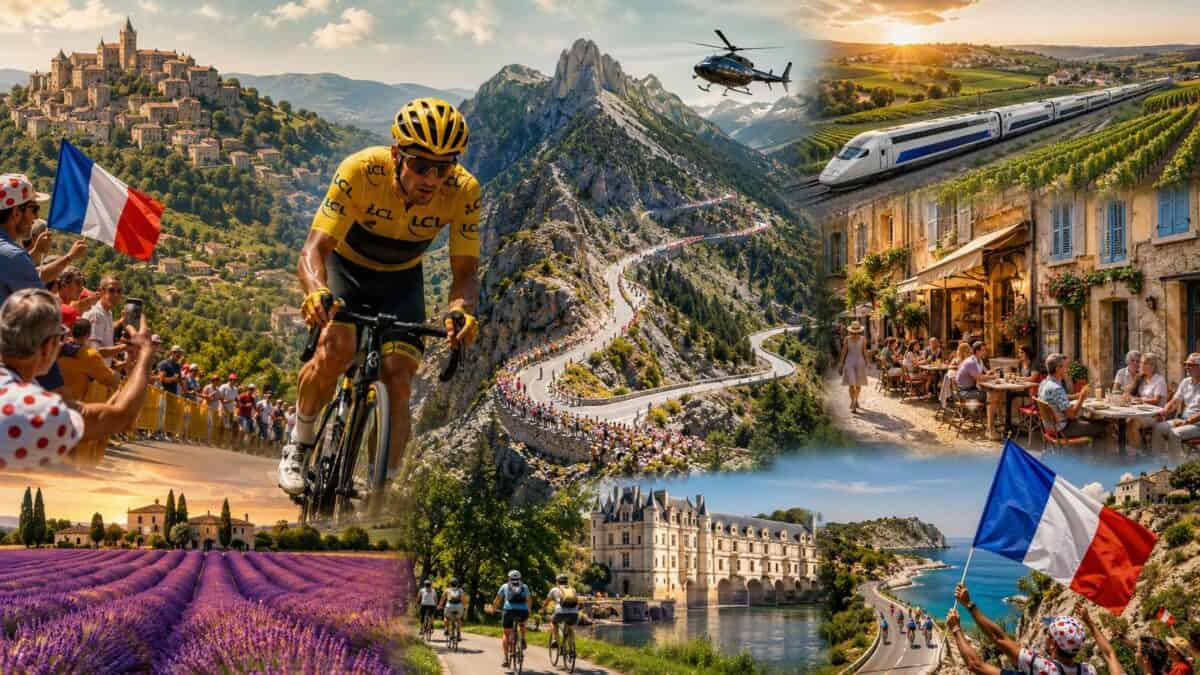
Image generated with Ai
As Tour de France tourism reaches another peak, France is once again experiencing a surge in international visitor interest as millions of spectators follow the world’s most prestigious cycling race across mountains, vineyards, historic villages and iconic cities. While the sporting spotlight remains firmly on Tadej Pogačar’s pursuit of a fifth Tour de France title, the wider travel industry is witnessing a parallel success story. Hotels across host destinations, regional transport operators, restaurants, museums and local tourism businesses are benefiting from one of Europe’s largest annual sporting events, reinforcing the Tour’s status as both a global sporting spectacle and a major tourism driver. The race is increasingly shaping travel decisions far beyond cycling enthusiasts, attracting leisure travellers seeking authentic French cultural experiences.
Beyond the competition itself, the Tour de France has evolved into a powerful destination marketing platform. Every stage showcases France’s diverse landscapes—from Alpine mountain passes and UNESCO-recognised heritage sites to medieval towns and celebrated wine regions—before an international television audience spanning hundreds of territories. As travellers continue seeking immersive experiences, cycling holidays, scenic road trips and sustainable tourism have become increasingly aligned with the Tour’s growing international appeal. For the French tourism economy, the event represents far more than elite sport; it has become a strategic opportunity to inspire future travel while strengthening regional economies across the country.
Advertisement
Advertisement
France’s Biggest Annual Sporting Event Continues to Drive Global Tourism
Every summer, the Tour de France transforms large sections of the country into one of the world’s most visible travel showcases. Unlike sporting championships confined to a single stadium or city, the Tour unfolds across hundreds of kilometres, allowing dozens of destinations to receive unprecedented international exposure.
The race passes through mountain resorts, coastal communities, national parks, vineyards, lakes, historic villages and metropolitan centres, creating a travelling festival that attracts spectators from across Europe, North America, Asia-Pacific, Australia and emerging long-haul markets.
Advertisement
Advertisement
For destinations selected as stage starts or finishes, the economic impact extends well beyond race day. Accommodation providers often report exceptionally strong occupancy, while restaurants, cafés, local attractions and retailers benefit from increased visitor spending before, during and after the event.
Advertisement
Advertisement
Regional tourism authorities also use the Tour as an opportunity to showcase lesser-known destinations that may otherwise receive limited international attention.
How the Tour de France Shapes Visitor Demand Across France
The Tour has become one of the country’s most influential tourism marketing assets because it combines elite sport with destination storytelling. Helicopter broadcasts introduce viewers to castles, vineyards, mountain landscapes, lakes, historic monuments and cultural attractions that frequently inspire future holidays.
For many international visitors, watching the Tour is no longer the sole motivation. Instead, the race becomes part of a broader itinerary that may include wine tourism, gastronomy, heritage exploration, hiking or extended road trips through rural France.
Advertisement
Advertisement
| Tourism Area | Impact During the Tour de France |
|---|---|
| Accommodation | Increased hotel occupancy and holiday rentals in stage towns |
| Restaurants & Cafés | Higher visitor spending throughout race week |
| Regional Transport | Greater demand for rail, coach and local mobility services |
| Attractions | Museums, heritage sites and wineries experience stronger visitor numbers |
| Outdoor Tourism | Growth in cycling holidays, hiking and adventure tourism |
| International Promotion | Extensive television coverage showcases French destinations worldwide |
The diversity of destinations featured each year also encourages repeat visitation. Travellers who previously explored the Alps may later return to experience Normandy, Brittany, Provence or the Pyrenees after discovering them through Tour broadcasts.
Cycling Holidays Continue to Expand Beyond Race Week
The growing popularity of active holidays has strengthened France’s position as one of Europe’s leading cycling destinations. Thousands of kilometres of dedicated cycling routes, well-developed tourism infrastructure and varied landscapes appeal to both recreational riders and experienced cyclists.
Advertisement
Advertisement
Many visitors choose to ride famous mountain climbs that have featured in previous Tours, while others prefer gentler countryside routes linking vineyards, rivers and historic towns.
This expanding interest supports businesses including bicycle rental companies, guided tour operators, boutique hotels, outdoor equipment suppliers and regional visitor centres.
The Tour also reinforces France’s reputation as a destination where sport, culture and gastronomy can be combined into a single travel experience, appealing to families, solo travellers and organised tour groups alike.
International Exposure Creates Long-Term Tourism Value
Unlike conventional advertising campaigns, the Tour provides repeated international visibility over several weeks. Millions of viewers are introduced to destinations through extensive aerial coverage that highlights natural landscapes, architectural landmarks and cultural heritage.
This exposure generates long-term value because many destinations featured during the race subsequently experience increased online searches, itinerary planning and future visitor interest.
Advertisement
Advertisement
Tourism organisations increasingly recognise that sporting events capable of showcasing authentic local experiences offer greater promotional value than traditional destination marketing alone.
Regional Economies Experience a Tourism Dividend During the Race
For many French communities, hosting a Tour de France stage represents far more than a single day of sporting celebration. Preparation often begins months in advance as municipalities coordinate transport planning, visitor services, cultural programming and local business engagement. The objective is not simply to welcome spectators but to convert international attention into long-term tourism growth.
Smaller towns that rarely feature on global television suddenly receive hours of international exposure through panoramic aerial broadcasts, destination storytelling and social media engagement. This visibility can reshape traveller perceptions, encouraging visitors to explore regions that might otherwise remain outside traditional tourism circuits.
The benefits extend across numerous sectors.
| Sector | Tourism Opportunity Created by the Tour |
|---|---|
| Hotels and Guesthouses | Increased occupancy before and during stage days |
| Restaurants and Cafés | Higher spending from domestic and international visitors |
| Retail Businesses | Strong demand for local products and souvenirs |
| Museums and Heritage Sites | Increased footfall from extended visitor stays |
| Adventure Tourism Operators | Growth in cycling, hiking and outdoor excursions |
| Local Producers | Greater exposure for regional food and wine products |
Many destinations also develop themed festivals, food markets and cultural performances alongside the race, creating additional reasons for travellers to extend their stay beyond the sporting event.
Advertisement
Advertisement
Cycling Tourism Continues to Reshape European Travel Trends
Cycling tourism has become one of Europe’s fastest-growing segments within active and sustainable travel. Travellers increasingly seek holidays centred on outdoor experiences, slower exploration and lower-carbon mobility, aligning closely with France’s extensive cycling infrastructure.
The Tour de France reinforces this trend by showcasing routes that appeal to riders of varying abilities. While experienced cyclists often aspire to tackle legendary Alpine and Pyrenean climbs, recreational visitors are increasingly choosing scenic river valleys, vineyard trails and coastal cycling routes inspired by the race.
Several factors continue to drive this growth:
| Emerging Trend | Importance for Travellers |
|---|---|
| E-bike adoption | Makes longer cycling routes accessible to more visitors |
| Multi-day cycling holidays | Combines sport with culture and gastronomy |
| Sustainable tourism | Encourages lower-emission travel choices |
| Guided cycling experiences | Provides support for international visitors |
| Rail-and-bike travel | Enables flexible itineraries across multiple regions |
This evolution has encouraged tourism providers to diversify their offerings, with hotels adding secure bicycle storage, repair facilities and cyclist-friendly amenities.
Transport Networks Play a Critical Role in Managing Visitor Flows
Major sporting events inevitably create temporary pressure on transport infrastructure, and the Tour de France is no exception. Road closures, altered traffic patterns and increased passenger volumes require careful planning from local authorities and transport operators.
Advertisement
Advertisement
International visitors often benefit from combining high-speed rail with regional public transport rather than relying exclusively on private vehicles. France’s extensive rail network provides access to many stage locations while reducing congestion around popular mountain destinations.
Travellers planning to attend future editions of the Tour should consider:
| Planning Consideration | Why It Matters |
|---|---|
| Book accommodation early | Popular host towns often reach high occupancy well in advance |
| Monitor official stage schedules | Road closures can affect local travel |
| Use public transport where possible | Helps avoid congestion and parking limitations |
| Arrive before race day | Allows time to explore local attractions |
| Extend regional stays | Maximises value from cultural and culinary experiences |
Careful itinerary planning can transform attendance at a single stage into a broader holiday encompassing nearby heritage sites, vineyards, national parks and regional cuisine.
France’s Destination Brand Benefits From Worldwide Visibility
The Tour de France functions as one of the country’s most recognisable international tourism showcases. Unlike traditional advertising campaigns, the event presents authentic landscapes, historic architecture and local culture in real time, creating an emotional connection with viewers.
Each broadcast highlights the diversity of France’s tourism offering—from snow-capped mountain passes and lavender fields to medieval villages, Atlantic coastlines and vibrant urban centres. This variety strengthens France’s appeal among repeat visitors seeking experiences beyond the country’s best-known attractions.
Advertisement
Advertisement
For regional tourism organisations, the race provides a platform to promote lesser-known destinations capable of accommodating future visitor growth while encouraging a more geographically balanced distribution of tourism.
Sporting Events Continue to Influence Modern Travel Decisions
The global travel industry increasingly recognises that major sporting events shape destination choice well beyond their competitive significance. Whether travellers are motivated by cycling, cultural exploration or scenic landscapes, events such as the Tour de France demonstrate how sport can inspire longer journeys and deeper engagement with local communities.
As France continues to position itself as a leading destination for sustainable, experiential and active travel, the Tour remains one of its most influential international showcases. The race not only celebrates elite athletic achievement but also highlights the country’s remarkable diversity, encouraging visitors to return long after the yellow jersey has been decided.
Why France Remains the World’s Benchmark for Cycling Tourism
France’s enduring reputation as a premier cycling destination extends far beyond the annual spectacle of the Tour de France. The country has spent decades investing in cycling infrastructure, regional tourism initiatives and heritage preservation, creating an environment where professional sport and leisure travel naturally complement each other.
Thousands of kilometres of dedicated cycling routes, including long-distance EuroVelo corridors and nationally designated Véloroutes, connect historic cities, vineyards, river valleys, coastal landscapes and mountain regions. These routes encourage visitors to experience destinations at a slower pace while supporting local cafés, accommodation providers and family-run businesses.
Advertisement
Advertisement
Many overseas visitors now build entire itineraries around famous Tour climbs, while others choose gentler countryside routes that offer the same scenery without the physical demands of elite mountain stages. This diversity has broadened France’s appeal to families, recreational cyclists, experienced riders and organised tour groups alike.
| Popular Cycling Region | Visitor Experience | Ideal Traveller |
|---|---|---|
| French Alps | Legendary mountain ascents and alpine villages | Experienced cyclists |
| Pyrenees | Iconic Tour passes and nature tourism | Adventure travellers |
| Loire Valley | Castles, vineyards and riverside cycling | Families and leisure visitors |
| Provence | Lavender landscapes, hilltop villages and gastronomy | International holidaymakers |
| Burgundy | Wine tourism combined with scenic cycling | Food and wine enthusiasts |
| Brittany & Normandy | Coastal routes, heritage towns and maritime scenery | Road-trip and cycling travellers |
The combination of sporting heritage and cultural richness allows visitors to personalise their journeys, whether they are chasing challenging climbs or discovering regional cuisine and historic landmarks.
The Race Reflects a Broader Shift Towards Experiential Travel
The growing popularity of the Tour de France coincides with wider changes in global travel preferences. Increasingly, travellers are prioritising experiences over traditional sightseeing, seeking holidays that combine outdoor activities, local culture and meaningful engagement with destinations.
Cycling holidays align closely with these trends because they encourage slower exploration, lower environmental impact and stronger connections with local communities. Visitors often spend more time in smaller towns than conventional tourists, supporting independent businesses and distributing tourism revenue across wider regions.
Travel companies have responded by expanding cycling-focused itineraries that include luggage transfers, guided rides, boutique accommodation, culinary experiences and flexible route options suitable for different levels of fitness.
Advertisement
Advertisement
For destination marketing organisations, the Tour provides annual inspiration for future visitors, demonstrating that France offers much more than iconic landmarks. Rural landscapes, regional traditions and hidden villages receive the same global attention as internationally recognised cities.
What International Travellers Should Know Before Planning a Tour-Inspired Holiday
Visitors hoping to experience France during or after the Tour de France can maximise their trip with careful planning. Demand for accommodation rises significantly in host towns, particularly in mountain regions where hotel capacity may be limited.
Those seeking a quieter experience often choose to visit shortly after the race, when roads reopen, visitor numbers decline and the landscapes remain at their seasonal best.
| Traveller Tip | Benefit |
|---|---|
| Reserve accommodation several months ahead | Greater choice and competitive pricing |
| Follow official stage announcements | Helps avoid unexpected road closures |
| Combine rail travel with regional transport | Easier access to stage towns and reduced congestion |
| Explore beyond host destinations | Discover nearby villages, vineyards and heritage sites |
| Consider shoulder-season cycling holidays | Pleasant weather with fewer crowds |
Travellers should also check local tourism offices for cycling maps, visitor passes and seasonal events that may coincide with their journey.
Official Resources for Travellers
Readers planning a cycling holiday or wishing to attend future editions of the Tour may find the following official resources useful.
Advertisement
Advertisement
| Organisation | Purpose |
|---|---|
| Official Tour de France | Race routes, stage schedules, visitor information |
| Atout France | Official tourism information for France |
| SNCF Voyageurs | Rail services across France |
| France Vélo Tourisme | National cycling routes and itinerary planning |
France’s Cycling Showcase Continues to Inspire Global Travel
As Tour de France tourism continues to evolve, the race demonstrates how a world-class sporting event can become a catalyst for sustainable travel, regional economic development and international destination promotion. While elite athletes compete for cycling’s most prestigious prize, the event simultaneously introduces millions of viewers to the landscapes, heritage and cultural diversity that define France.
For the travel industry, the Tour represents far more than a sporting calendar highlight. It is a powerful marketing platform that stimulates demand for accommodation, transport, gastronomy and outdoor experiences while encouraging visitors to explore regions beyond the country’s traditional tourism hotspots.
With active holidays, experiential travel and cycling tourism expected to remain strong growth segments in the years ahead, France is well positioned to maintain its status as one of the world’s leading destinations for travellers inspired by the enduring appeal of the Tour de France.
Frequently Asked Questions (FAQs)
1. Why is the Tour de France considered one of France’s biggest tourism events?
The Tour de France attracts millions of roadside spectators and a vast global television audience every year. By showcasing France’s mountains, vineyards, historic towns and cultural landmarks, the race encourages international visitors to explore destinations across the country, generating significant tourism and hospitality revenue.
2. How is Tadej Pogačar’s success influencing tourism in France?
Tadej Pogačar’s pursuit of a historic fifth Tour de France title has amplified global interest in the race, inspiring cycling enthusiasts and leisure travellers alike to visit France’s iconic Tour routes, Alpine climbs, Pyrenean passes and picturesque rural regions.
Advertisement
Advertisement
3. Which French regions benefit the most from Tour de France tourism?
Host regions such as the French Alps, the Pyrenees, Provence, the Loire Valley, Burgundy, Brittany and Normandy often experience increased visitor numbers, stronger hotel occupancy, higher restaurant spending and greater international exposure during the Tour.
4. Can travellers ride the same roads used in the Tour de France?
Yes. Many of the Tour’s famous climbs and scenic routes remain open to recreational cyclists throughout the year. Visitors can cycle legendary mountain passes or enjoy gentler routes through vineyards, villages and national parks using France’s extensive cycling network.
5. When is the best time to visit France for a Tour de France-inspired holiday?
Travelling during the Tour offers an unforgettable atmosphere but also higher demand for accommodation. Visitors seeking quieter roads and easier access often choose to visit shortly before or after the race while still enjoying favourable summer weather and iconic cycling routes.
6. How does the Tour de France support France’s travel and tourism industry?
Beyond the sporting competition, the Tour boosts demand for hotels, holiday rentals, rail services, restaurants, local attractions, guided cycling tours and regional businesses. It also serves as a powerful global marketing platform, inspiring future travel to destinations featured throughout the race.
7. Is the Tour de France only for cycling enthusiasts?
No. While cycling fans are a major audience, the event also appeals to families, photographers, food lovers, history enthusiasts and cultural travellers who combine the race with sightseeing, wine tourism, gastronomy, hiking and road trips across France.
8. What should international travellers plan before attending the Tour de France?
Travellers should book accommodation well in advance, review official stage routes and road closures, use France’s rail network where possible, arrive early for popular mountain stages, and allow extra time to explore nearby attractions and regional experiences beyond the race itself.
Advertisement
