
Venezuela’s Simón Bolívar International Airport Shuts Down After Powerful 7.1 Earthquake Damages Runway, Control Tower and Passenger Terminal, Triggering Major Flight Disruptions and Travel Uncertainty Across Latin America – What International Travellers Should Expect Next

Published
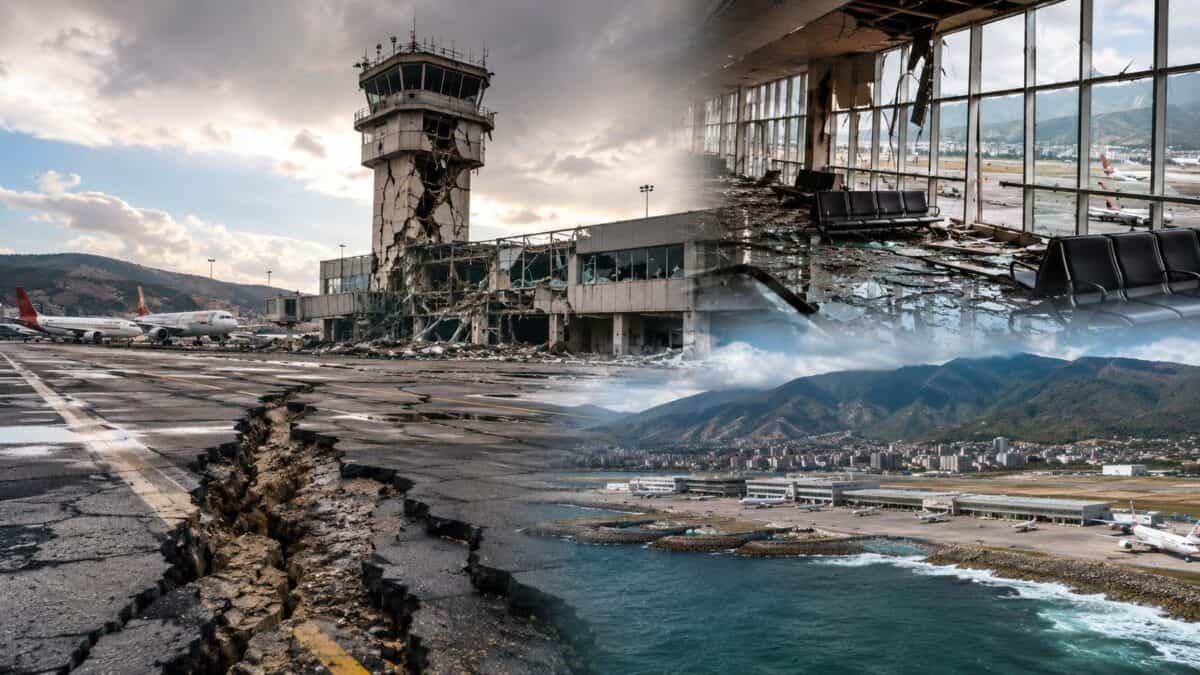
The Simón Bolívar International Airport closure has become one of the most significant travel disruptions in Latin America after powerful earthquakes struck northern Venezuela, forcing authorities to suspend operations at the country’s busiest international gateway. The airport, located in Maiquetía and serving Caracas, sustained extensive infrastructure damage, including cracks on Runway 10R/28L, structural damage to the passenger terminal, and impacts to the control tower, prompting aviation authorities to issue a Notice to Air Missions (NOTAM) keeping the principal runway closed until 2 July 2026.
For international travellers, airlines, tour operators and corporate travel planners, the closure has created widespread uncertainty across South America and beyond. Flights have been cancelled, diverted to alternative airports or placed on hold while engineers inspect the airport’s infrastructure and emergency authorities continue rescue and recovery operations across the affected region. The disruption comes at a particularly sensitive time for Venezuela’s aviation sector, as the airport serves as the country’s primary international gateway, connecting Caracas with destinations throughout Latin America, Europe and the Caribbean. With aftershocks continuing and emergency repairs underway, passengers are being advised to closely monitor airline notifications before travelling to Venezuela.
Earthquake Leaves Venezuela’s Primary International Gateway Partially Inoperable
The disruption followed one of the strongest seismic events recorded in Venezuela in more than a century. Two major earthquakes struck within seconds of each other along Venezuela’s northern coast, causing extensive destruction across several states, particularly La Guaira, where the airport is located.
Emergency assessments revealed damage extending beyond terminal buildings. Airport infrastructure inspections identified visible cracks on the main operational runway, structural damage inside passenger facilities and reported impacts affecting the airport’s operational capability.
Advertisement
Advertisement
Authorities subsequently issued NOTAM A0266/26, confirming that Runway 10R/28L will remain unavailable until at least 2 July 2026, while engineers complete structural evaluations and repair work. Although the secondary runway technically remains available, the airport itself has effectively suspended normal commercial operations because of broader infrastructure concerns.
Airport Operational Status
| Airport Element | Current Status |
|---|---|
| Airport | Closed to normal commercial operations |
| Main Runway 10R/28L | Closed until at least 2 July 2026 (NOTAM A0266/26) |
| Passenger Terminal | Structural damage reported |
| Control Tower | Damage reported |
| Flight Operations | Multiple cancellations and diversions |
| Engineering Assessment | Ongoing |
Why Simón Bolívar International Airport Matters to Global Travel
Often referred to simply as Maiquetía Airport, Simón Bolívar International Airport (IATA: CCS) is Venezuela’s principal aviation hub.
Advertisement
Advertisement
Located approximately 21 kilometres from central Caracas, the airport handled more than 8.24 million passengers in its latest published annual statistics before recent operational changes, making it the country’s busiest aviation gateway. It supports international connectivity between Venezuela and destinations across South America, Central America, the Caribbean and selected long-haul routes into Europe.
Its importance extends beyond tourism.
The airport serves business travellers, diplomatic missions, cargo operators, humanitarian organisations and the country’s growing international airline network. Any prolonged closure therefore has consequences extending well beyond leisure travel.
Airport Profile
| Category | Information |
|---|---|
| Airport Name | Simón Bolívar International Airport |
| IATA Code | CCS |
| ICAO Code | SVMI |
| Location | Maiquetía, La Guaira, Venezuela |
| Distance from Caracas | Approximately 21 km |
| Main Runway | 10R/28L |
| Secondary Runway | 09/27 |
| Latest Published Passenger Volume | 8.24 million annually |
Flights Across Multiple Regions Experience Disruption
Following the airport closure, airlines immediately began reviewing schedules into Caracas.
Several international carriers suspended services, while others diverted aircraft or delayed departures pending operational updates.
Industry reports indicate the airport normally accommodates more than twenty scheduled airlines serving destinations across:
Advertisement
Advertisement
| Region | Examples of Destinations |
|---|---|
| South America | Bogotá, Panama City, Curaçao |
| Caribbean | Barbados, Port of Spain |
| Europe | Madrid, Lisbon |
| North America | Previously restored connections under review |
| Domestic Venezuela | Multiple regional cities |
The operational uncertainty has also affected inbound tourism, outbound leisure travel, business travel and cargo logistics. Several flights destined for Caracas have either been cancelled before departure or rerouted to alternative airports as authorities prioritise emergency operations.
Travellers Face Growing Uncertainty
For travellers, the closure creates several immediate challenges.
Holidaymakers planning trips to Venezuela may encounter itinerary changes extending well beyond the official runway closure period because airlines often require additional time to restore schedules after major infrastructure incidents.
Business travellers could experience significant delays in reaching Caracas, while organised tours may require complete itinerary revisions.
Travel insurers are also expected to receive increased claims relating to flight disruptions, accommodation changes and missed onward connections, particularly for passengers travelling on multi-sector international itineraries.
Passengers holding tickets to Caracas are advised to remain in regular contact with their airline and avoid travelling to the airport until receiving official confirmation that services have resumed. Airlines continue adjusting schedules as engineering inspections progress and emergency authorities assess overall airport safety.
Advertisement
Advertisement
Recovery Timeline Will Depend on Engineering Assessments
Although aviation authorities have identified 2 July 2026 as the current end date for the runway closure under NOTAM A0266/26, aviation specialists caution that reopening timelines following major seismic events can change rapidly. Airport infrastructure must undergo comprehensive inspections to ensure every critical component meets international operational safety standards before commercial aircraft are permitted to resume normal services.
Runways require detailed examinations for surface deformation, subsurface instability, lighting systems, drainage networks and pavement integrity. Likewise, the control tower, navigation aids, communication equipment, passenger terminals, fuel infrastructure and aircraft parking stands must all be certified as safe before airlines can fully restore operations.
Even after the airport reopens, airlines may take several days to reposition aircraft, restore crew schedules and rebuild disrupted networks. Consequently, travellers should prepare for continued schedule adjustments throughout early July.
Expected Recovery Process
| Recovery Stage | Status | Potential Impact on Travellers |
|---|---|---|
| Structural inspections | Underway | Flights remain suspended |
| Runway repairs | In progress | Limited operational capacity |
| Safety certification | Pending | Required before reopening |
| Airline schedule restoration | After airport clearance | Possible delays and reduced frequencies |
| Normal commercial operations | Yet to be confirmed | Gradual return to regular services |
Tourism and Aviation Sector Face Another Operational Challenge
The Simón Bolívar International Airport closure arrives at a difficult time for Venezuela’s travel and aviation industry, which has been gradually rebuilding international connectivity in recent years.
The airport functions as the country’s primary gateway for inbound tourism, business travel, visiting relatives and humanitarian movements. Any prolonged suspension affects not only airlines but also hotels, tour operators, ground transport providers, cruise connections and cargo logistics.
The disruption is particularly significant because Caracas serves as the main hub for domestic onward connections. Travellers intending to visit destinations such as Margarita Island, Los Roques National Park, Mérida or Canaima National Park may experience additional travel complications while domestic schedules are adjusted.
Advertisement
Advertisement
For international travel businesses, the incident highlights the importance of contingency planning in regions exposed to natural hazards. Tour operators are expected to review itineraries, while travel management companies may temporarily reroute corporate travellers through alternative regional gateways where operationally feasible.
Potential Impact Across the Travel Industry
| Sector | Likely Effect |
|---|---|
| Airlines | Flight cancellations, diversions and schedule revisions |
| Hotels | Last-minute booking changes and cancellations |
| Tour operators | Itinerary modifications |
| Corporate travel | Business trip disruptions |
| Cargo operators | Delays to freight movements |
| Travel insurance | Increase in disruption-related claims |
Essential Advice for Travellers Heading to Venezuela
Passengers with upcoming journeys should remain flexible until airport operations return to normal.
Before leaving for the airport, travellers should verify the latest flight status directly with their airline. Those travelling on connecting itineraries should also check whether onward flights remain protected, particularly where separate tickets have been booked.
Travellers are encouraged to review travel insurance policies covering natural disasters, maintain digital copies of travel documents and monitor official aviation notices for updates regarding airport reopening.
Visitors planning holidays in Venezuela over the coming weeks may wish to consider flexible accommodation bookings and refundable transport options where available. Business travellers should similarly consult employers or travel management providers regarding revised itineraries if meetings can be postponed or relocated.
Airport Infrastructure Resilience Under Fresh Scrutiny
The earthquake has once again demonstrated how critical airport resilience has become for global aviation.
Advertisement
Advertisement
International airports are designed to withstand significant seismic activity, particularly in earthquake-prone regions. However, each event requires immediate inspections because even minor runway cracks, displaced pavement, or structural movement can pose unacceptable risks to aircraft operations.
Civil aviation authorities worldwide increasingly invest in seismic monitoring systems, resilient runway engineering and emergency response planning to minimise operational downtime following natural disasters. The current situation in Venezuela illustrates how a single infrastructure failure at a major gateway can affect thousands of passengers and multiple international air routes within hours.
For airlines operating into seismically active destinations, contingency planning remains an essential part of operational risk management, particularly during periods of heightened geological activity.
Travel Outlook Remains Dependent on Safety Clearance
For now, Simón Bolívar International Airport closure remains the defining issue for anyone planning travel to or from Venezuela. While authorities continue engineering assessments and infrastructure repairs, airlines are expected to maintain flexible operations until the airport receives full safety clearance.
The coming days will determine whether repairs progress according to schedule or whether additional work extends operational restrictions beyond the current NOTAM period. Until then, passengers should rely only on official airport, airline and civil aviation updates before making travel decisions.
The incident serves as a reminder that natural disasters can rapidly reshape international travel, reinforcing the importance of flexible planning, comprehensive travel insurance and close monitoring of official aviation advisories whenever significant infrastructure events occur.
Advertisement
