
England Eyes Newcastle Brighton Rail Link as Grand Central Starts Four Trains Securing Travel in 2026

Published
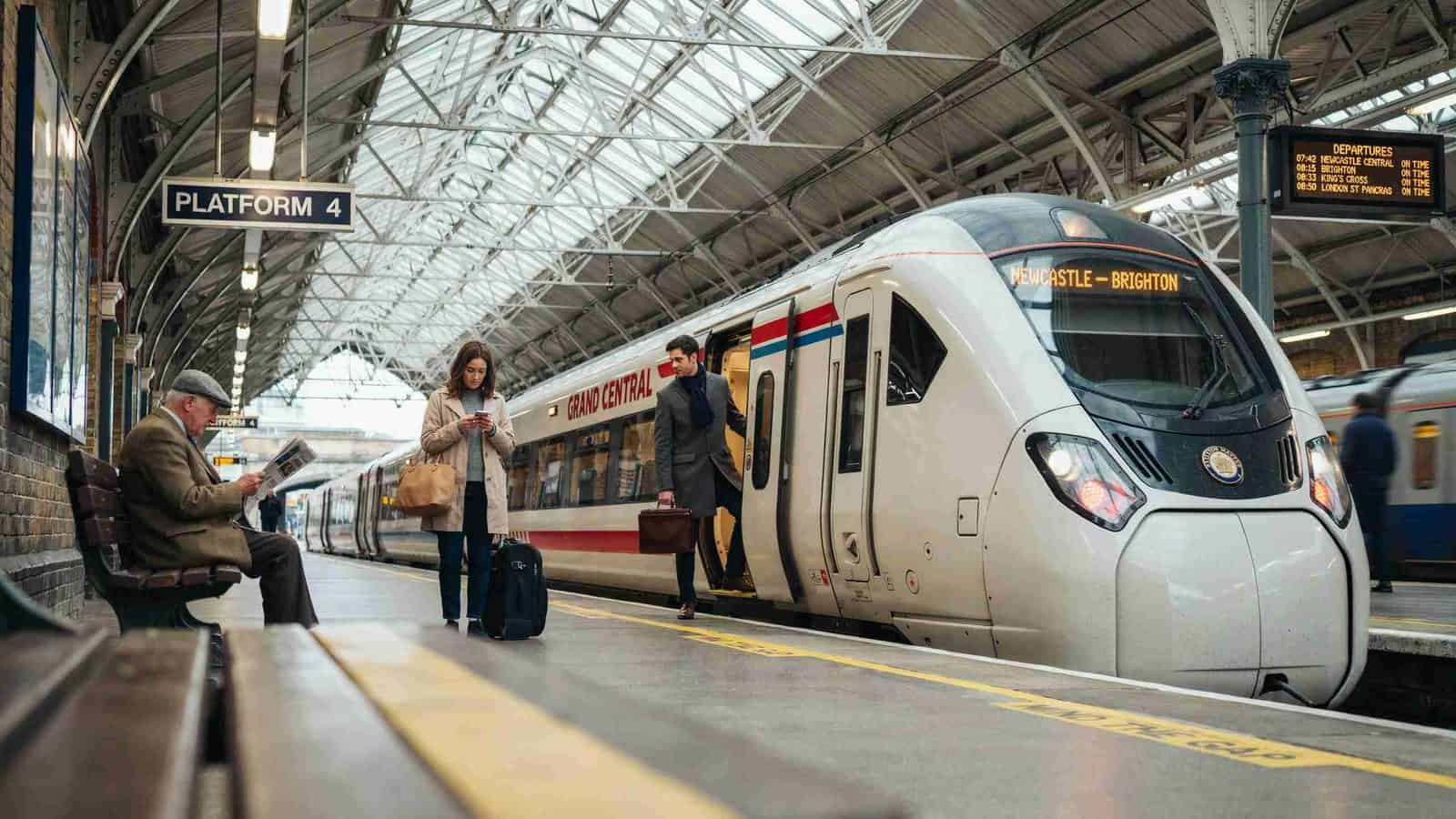
Image generated with Ai
Grand Central may be able to introduce a direct train service from Newcastle to Brighton in the timetable period starting in December 2026, but obtaining four more trains is not the end of the story. The planned expansion of Grand Central occurs against the backdrop of its pending Section 17 application being considered by the Office of Rail and Road as of 4 October 2026. This becomes relevant right now for all those travelling through North East England, Yorkshire, Midlands, Thames Valley, Gatwick and Sussex, because the issue is whether there is room in the busy railway network for a new corridor service. Office of Rail and Road.
The development highlights the way Britain tries to use spare intercity trains for extending long-distance connectivity. In case the plan is approved, the proposed train service would create new direct routes to the North East, Yorkshire, the Midlands, the Thames Valley, Gatwick and the South Coast. For passengers, the most attractive feature of the service might be the opportunity to have fewer changes and easier connections with large cities and London Gatwick Airport. Nevertheless, the service is dependent on approval by ORR, network capacity and operation clearance from Grand Central.
Advertisement
Advertisement
The Four Trains Change the Story but They Do Not Decide It
The headline development appears significant. Four extra five-car Class 180 trains could give Grand Central the fleet needed for its expansion.
Angel Trains’ own June 2026 rolling-stock availability document provides an important piece of verification. It listed exactly four Class 180 units in storage: 180109, 180110, 180111 and 180113. It said they had been available from the second quarter of 2023. Angel separately lists a total Class 180 fleet of 14 five-car trains, capable of up to 125mph. Angel Trains
Advertisement
Advertisement
That means the latest leasing development is not simply about acquiring random spare trains. It potentially brings a defined pool of dormant intercity rolling stock back into productive passenger use.
Yet official documents reveal the crucial distinction.
Advertisement
Advertisement
Having trains is not the same as having an operable railway path.
What Others Are Missing Is the Fleet Ready Track Not Ready Problem
Much of the coverage naturally focuses on four additional trains and a possible Newcastle–Brighton link.
The more important story sits inside the regulatory paperwork.
As of 4 October, ORR continues to list Grand Central’s Section 17 Newcastle–Brighton application among the new contracts it is considering. ORR explains that applications remain on its current-applications page until a decision has been made. Office of Rail and Road
Grand Central’s formal application was lodged on 19 December 2025. It sought a seven-year agreement beginning with the December 2026 Principal Change Date. The applicant had originally stated that it wanted approval or directions by 27 February 2026. Office of Rail and Road
The proposal therefore enters October with trains being secured but regulatory approval outstanding.
Advertisement
Advertisement
That is a far more consequential tension for travellers than the lease agreement alone.
Grand Central Is Really Proposing a New 20 Stop Travel Corridor
The proposal becomes much more interesting when viewed beyond its two terminal cities.
The full calling pattern identified in Grand Central’s ORR application covers Newcastle, Durham, Darlington, Northallerton, York, Doncaster, Sheffield, Derby, Burton-on-Trent, Birmingham New Street, Warwick Parkway, Banbury, Oxford, Reading, Wokingham, Guildford, Redhill, Gatwick Airport, Haywards Heath and Brighton. Office of Rail and Road
That is a potential 20-station inter-regional corridor.
It joins the East Coast Main Line with Yorkshire, the East Midlands, Birmingham, Oxfordshire, the Thames Valley, Surrey, Gatwick and the Sussex coast.
The travel proposition is therefore much bigger than Newcastle versus Brighton. It creates possible single-train journeys between city pairs that currently depend heavily on connections.
Advertisement
Advertisement
Gatwick Could Become the Most Important Stop on the Entire Route
Brighton gives the proposal its southern endpoint. Newcastle gives it its northern identity.
Gatwick could give it its biggest travel-market opportunity.
London Gatwick handled 42.8 million passengers in 2025. The airport says travellers can currently reach more than 120 stations directly and over 700 with one change. Its established rail network is exceptionally strong towards London, Brighton and several southern and eastern markets. Gatwick Airport
Grand Central would attack a different problem.
It proposes direct airport access from places such as Birmingham, Derby, Sheffield, Doncaster, York, Darlington and Newcastle without requiring passengers to cross central London.
For luggage-heavy leisure travellers, international visitors and families, eliminating an interchange can sometimes matter as much as shaving minutes from the published journey time.
Advertisement
Advertisement
Gatwick Expansion Gives This Railway Proposal a Completely New Significance
This is where the new angle becomes even stronger.
Gatwick’s Northern Runway expansion has government consent. In August 2026, the Department for Transport said first flights from the extended Northern Runway were expected from 2030 and that expansion could enable up to 100,000 additional flights annually. The Development Consent Order permits passenger throughput of up to 80.2 million annually following dual-runway operations. GOV.UK
There is also an important surface-access condition.
The consent framework requires, subject to specified exceptions, an annual monitoring report showing at least 54% of airport passenger journeys to and from Gatwick being made by public transport before commencement of dual-runway operations and/or first use of Pier 7. Legislation.gov.uk
Grand Central’s service is not required to deliver that target. Nor should its impact be overstated.
However, a direct train stretching Gatwick’s rail catchment towards the Midlands and North East clearly fits the wider strategic direction.
Advertisement
Advertisement
The Airport Angle Could Matter More Than Newcastle to Brighton Tourism
A traveller boarding at York may have little interest in Brighton.
A passenger in Birmingham may never intend to reach Newcastle.
Yet both could potentially use the same train to reach Gatwick.
That changes how the proposed service should be analysed.
It is not merely an end-to-end intercity product. It could behave as several overlapping markets carried by one train.
Newcastle–York traffic could overlap with East Coast demand. Sheffield–Birmingham would sit inside an established cross-country market. Birmingham–Oxford–Reading creates another flow. Reading–Guildford–Gatwick adds airport traffic. Gatwick–Brighton supplies a further southern segment.
Advertisement
Advertisement
This diversity could strengthen demand.
It also creates the very operational complexity that worries existing railway stakeholders.
One long train path can connect many markets. One late train can also transfer disruption across many networks.
Official Network Rail Evidence Reveals the Biggest Obstacle
Network Rail’s formal representations to ORR are considerably more cautious than the promotional case.
Its January 2026 high-level review assessed Grand Central’s proposed paths against the May 2026 timetable. Network Rail said none of the aspirational services assessed were identified as compliant with that timetable. Office of Rail and Road
It also said 24 of 33 proposed services would use declared congested infrastructure between Northallerton Longlands Junction and Newcastle King Edward Bridge South.
Advertisement
Advertisement
Of those 24, 16 had at least one conflict inside the congested area.
Further interactions were identified with Govia Thameslink services south of Gatwick, South Western Railway around Reading, Wokingham and Guildford, and CrossCountry between Reading and York. Office of Rail and Road
Those findings do not mean approval is impossible.
They explain why securing four trains cannot be treated as securing the route.
The Revived Class 180s Still Face a Route Clearance Issue
There is another detail largely invisible in the simple rolling-stock story.
Network Rail told ORR that, at the time of its representations, Class 180s were not cleared between Brighton and Wokingham Junction or between Leamington Spa Junction and London Road Junction. It also identified an area where they were cleared only for empty coaching stock. Office of Rail and Road
Advertisement
Advertisement
Network Rail said a full gauging study and vehicle compatibility work could be required before operation.
This is critical.
The four stored trains can be refurbished. They can be leased. They can be prepared.
But they cannot simply be dispatched across every section of the proposed route because a commercial agreement exists.
Grand Central acknowledges that further clearance work would be required and says it would take responsibility for vehicle change, gauging and the necessary route-clearance process. Office of Rail and Road
Grand Central Pushes Back and Says the Timetable Can Work
There are two sides to the capacity argument.
Advertisement
Advertisement
Grand Central rejects the suggestion that the proposal is inherently unworkable.
In its response to Network Rail, the operator said its timetable uses standard-hour paths already operating during other parts of the day. It argues that this makes interactions predictable and repeatable. Grand Central also said additional recovery time had been designed into Birmingham New Street and Guildford calls. Office of Rail and Road
It cited independent performance analysis that it says found no material impact between Newcastle and Reading.
Grand Central also argues that future services without firm rights should not automatically block its own proposal.
Therefore, readers should not interpret Network Rail’s concerns as an ORR rejection.
They are objections and evidence being considered by the regulator.
Advertisement
Advertisement
A Forgotten 2008 Railway Decision Makes This Proposal Far More Interesting
One of the most revealing passages comes from the Department for Transport’s response.
DfT observed that much of the proposed Newcastle or York to Reading path follows railway patterns associated with CrossCountry. It also noted that CrossCountry’s restructuring in 2008 included the removal of extensions to Brighton, partly because of performance risk. Office of Rail and Road
That historical detail gives the 2026 proposal an unusual significance.
Britain is effectively revisiting the challenge of sending very long-distance cross-country trains deep into the Brighton railway network.
The circumstances are different. The operator is different. The timetable is different.
But the underlying operational question has returned.
Advertisement
Advertisement
Can a train crossing multiple railway regions deliver enough passenger benefit to justify the risk of carrying delays from one region into another?
That is one of the strongest stories hidden behind the four-train lease.
The Department for Transport Has Formally Opposed the Application
DfT’s position is stronger than simple caution.
Its formal consultation response states that it does not support Grand Central’s application.
The department raised concerns covering Brighton, Reading and Newcastle, as well as the possibility that disruption could spread across a much larger network. It also highlighted platform capacity, existing operators and the economic effects of open-access competition. Office of Rail and Road
Grand Central has challenged those conclusions and argues that its proposal can deliver additional capacity, competition and direct links to underserved markets.
Advertisement
Advertisement
ORR, not DfT or Grand Central, must ultimately assess the application under the relevant regulatory framework.
That makes the final ruling much more important than a routine approval of another train service.
Even the Number of Trains Requires Careful Reading
Public-facing announcements have repeatedly described five trains per day in each direction.
Grand Central’s formal ORR Form P is more complex.
Its executive summary seeks access rights for up to six return services per day. However, the detailed rights table contains a mixture of full Newcastle–Brighton and shorter workings. On weekdays, it shows four Newcastle–Brighton trains in each direction, supplemented by Birmingham–Brighton and Newcastle–Birmingham services. Other shorter patterns appear on weekends. Office of Rail and Road
Grand Central’s subsequent response to Network Rail again refers to five proposed services in each direction. Office of Rail and Road
Advertisement
Advertisement
The practical lesson is straightforward.
Five daily Newcastle–Brighton trains should still be treated as a proposal, not a final passenger timetable.
Times, exact frequencies and operating patterns remain subject to the regulatory and timetable process.
Direct Does Not Necessarily Mean Faster and That Could Be Fine
Grand Central’s own application contains a revealing comparison.
It estimated a proposed Gatwick–Birmingham journey of about three hours, compared with a current fastest rail option of approximately two hours and 40 minutes involving an interchange.
For York–Gatwick, its application uses approximately five hours for the proposed direct train, compared with five hours by car and about eight hours by coach. These are applicant-supplied comparisons rather than independent journey-time guarantees. Office of Rail and Road
Advertisement
Advertisement
That illustrates the commercial proposition.
Grand Central is not necessarily trying to win every market through raw speed.
It can compete through simplicity.
Airport passengers carrying suitcases may prefer sitting on one train for slightly longer rather than navigating stations, changing trains or crossing London.
That is a very different travel-value equation.
Which Travellers Could Gain Most
If the plan clears its regulatory, capacity and route-compatibility hurdles, several traveller groups could see meaningful benefits:
Advertisement
Advertisement
- North East airport passengers could gain a one-seat journey towards Gatwick from Newcastle, Durham and Darlington.
- Yorkshire travellers could connect York, Doncaster and potentially surrounding feeder markets directly with the airport and Sussex.
- Midlands passengers could gain new choices from Sheffield, Derby, Burton and Birmingham.
- Oxford and Thames Valley travellers could receive another long-distance cross-country option beyond established operators.
- International visitors landing at Gatwick could potentially continue directly towards major English cities without entering central London.
- Brighton and Sussex residents could gain direct rail access towards Birmingham, Yorkshire and North East England.
The value is therefore connectivity, not simply another train between two distant terminal cities.
Open Access Is Small but Growing Fast Enough to Matter
The regulatory decision also lands at an important moment for Britain’s open-access railway.
ORR’s September 2026 monitoring report says Grand Central, Hull Trains and Lumo, together with Heathrow Express, carried 9.4 million passenger journeys in 2025–26. That represented only 0.5% of Britain’s 1.83 billion rail journeys. Office of Rail and Road
Yet growth tells another story.
ORR says domestic long-distance open-access passenger numbers were 34% above pre-pandemic levels when Lumo’s impact is excluded and 93% higher when it is included. Contracted long-distance operators were 7% above their pre-pandemic level. Office of Rail and Road
Open access remains small.
Advertisement
Advertisement
Its growth makes decisions about scarce railway capacity increasingly consequential.
Performance Data Shows Why Neither Side Has an Easy Argument
Supporters of open access can point to useful ORR evidence.
For 2025–26, long-distance open-access operators recorded a cancellation rate of 2.3%, compared with 5% for contracted long-distance operators. Time-to-three performance was 68.7% for open access and 68.5% for contracted operators. Office of Rail and Road
However, the picture is not universally positive.
ORR recorded 96 complaints per 100,000 open-access journeys compared with 72 for contracted long-distance services. Complaints among open-access operators also rose significantly over the year. Office of Rail and Road
This is precisely why the Newcastle–Brighton decision cannot be reduced to private operator good or public operator good.
Advertisement
Advertisement
The regulator must examine the specific capacity, competition and passenger consequences of this particular route.
The Taxpayer Question Sits Behind the Passenger Choice Debate
Open-access services can generate genuinely new rail journeys.
They can also take revenue from government-funded operators.
ORR’s 2026 monitoring report cites SYSTRA research estimating around £100 million a year of revenue abstraction from existing East Coast open-access operations in 2024–25. ORR stresses that open access can simultaneously create new demand and passenger benefits. Office of Rail and Road
This is relevant because Grand Central’s new service would overlap portions of markets already served by CrossCountry, LNER, GWR and other operators.
Grand Central argues competition can lower fares and attract new passengers.
Advertisement
Advertisement
DfT worries that revenue transferred from contracted operators can ultimately affect taxpayer subsidy requirements.
ORR must balance those competing effects rather than assessing passenger convenience in isolation.
Britain’s Rail Nationalisation Programme Adds Another Unexpected Dimension
The timing could hardly be more interesting.
Govia Thameslink Railway services, including Southern, Thameslink and Gatwick Express, transferred into public ownership on 31 May 2026. Government said publicly owned operators were then delivering eight in ten passenger journeys that Great British Railways will ultimately oversee. GOV.UK
Chiltern Railways followed into public ownership in September.
Open-access operators such as Grand Central remain outside the scope of that integration. Government’s own rail facts identify Grand Central as a privately operated company without a DfT passenger contract. GOV.UK
Advertisement
Advertisement
Therefore, the Newcastle–Brighton application becomes a fascinating policy test.
Britain is consolidating much of its railway under public control while simultaneously deciding how much capacity independent commercial operators should receive.
Old Diesel Trains and New Battery Hybrids Create a Striking Contrast
There is another angle few headlines capture.
Grand Central is investing heavily in new technology for its existing network.
Arriva announced an investment of about £300 million in nine new Hitachi battery-hybrid trains, comprising 45 vehicles. It says they will provide around 20% more seats and could reduce fuel consumption and emissions by roughly 30%. Arriva PLC
Yet Grand Central’s formal Newcastle–Brighton application proposes initially operating the new corridor with diesel traction.
Advertisement
Advertisement
The company told ORR it had considered future tri-mode operation but proposed diesel because of power-supply and performance considerations on the East Coast Main Line. Office of Rail and Road
So Grand Central could simultaneously modernise its established network with new battery-hybrid trains while using refurbished Class 180 diesels to launch expansion.
That contrast deserves attention.
The Real Story in One Comparison Table
| Issue | Headline impression | Official evidence | What it means for travellers |
|---|---|---|---|
| Rolling stock | Four extra trains bring launch closer | Angel listed four stored five-car Class 180s available since Q2 2023 | A major fleet hurdle could be reduced |
| ORR approval | New route appears close | Application remains listed among current Section 17 cases | Service is not approved yet |
| Route scale | Newcastle to Brighton | Potential 20-stop corridor through Birmingham Reading and Gatwick | Many intermediate markets matter more than end-to-end demand |
| Frequency | Five trains each way | Regulatory documents contain a broader mix of up to six returns and shorter workings | Final timetable remains unsettled |
| Class 180 readiness | Trains can be refurbished | Network Rail identified sections without Class 180 clearance | Leasing does not equal route readiness |
| Network capacity | New paths use spare capacity | Network Rail identified widespread timetable conflicts | Reliability is central to ORR’s decision |
| Gatwick | One useful airport stop | Airport handled 42.8m passengers in 2025 and faces major expansion | Airport demand could become a core market |
| Open access | More competition and choice | ORR finds passenger benefits but also revenue abstraction | Decision carries passenger and taxpayer consequences |
| Sustainability | Rail can replace road trips | Initial proposed traction is diesel while new hybrid trains are for existing services | Environmental case is more nuanced than the headline suggests |
The Stored Trains Could Still Produce an Industrial Benefit
Even before passengers consider journey opportunities, bringing dormant trains back into service carries a secondary economic dimension.
Angel’s June asset document confirms that the four Class 180 units had been stored and available from Q2 2023. Angel Trains
Returning trains that have spent roughly three years out of passenger service would require refurbishment and technical preparation.
Advertisement
Advertisement
The proposed work at Eastleigh therefore transforms the scheme from a timetable application into a rolling-stock regeneration project.
That matters for the rail supply chain.
It also creates a useful contrast with the common assumption that new routes always require new trains.
In this case, Grand Central is attempting to build additional connectivity by giving existing high-speed rolling stock another commercial life.
December 2026 Now Looks Like an Extremely Important Date
Grand Central’s original Form P targeted the December 2026 Principal Change Date for commencement.
As of 4 October 2026, ORR still lists the application as current. Office of Rail and Road
Advertisement
Advertisement
That leaves a compressed period between regulatory resolution and the originally proposed start.
Approval alone would not automatically put trains into passenger service. Refurbishment, driver preparation, route knowledge, vehicle compatibility, final timetable work, station arrangements and other mobilisation requirements would still need to align.
It would therefore be unwise for travellers to build firm December plans around the proposed service today.
No final passenger timetable should be assumed until ORR has ruled and Grand Central publishes confirmed operating details.
Editorial Perspective and Travel Analytics Show Why This Story Is Bigger Than Four Trains
From an editorial travel perspective, the Newcastle–Brighton application matters because it tests a simple but powerful idea: can Britain make long-distance domestic travel easier by routing passengers around London rather than continually routing them through it?
The 42.8 million passengers using Gatwick in 2025 provide the scale. The airport’s expansion creates the longer-term growth story. The 54% public-transport surface-access condition adds strategic importance. The 20-stop proposed railway pattern shows how many markets could potentially feed one service. Gatwick Airport
Advertisement
Advertisement
Travel analytics suggests the most valuable demand may not come from passengers riding from Newcastle all the way to Brighton.
It could come from accumulated shorter and medium-long flows: York to Gatwick, Sheffield to Oxford, Birmingham to Gatwick, Reading to Brighton, or international visitors travelling north after landing.
That is the opportunity.
The risk is exactly the inverse. A service stretching across several railway regions can accumulate passengers from many markets, but it can also accumulate disruption from many infrastructure interfaces.
This is why the four Class 180s are important but not decisive.
Conclusion Grand Central Has Found the Trains but Britain Must Find the Railway Space
Whereas the proposed Newcastle–Brighton route by Grand Central Railway Company is still an abstract idea, it is getting closer to reality now. There are four trains of the Class 180 stored at the company. The Gatwick Airport can become a strong market for the airline. The promised direct connections can remove problems with hard-to-do connections for passengers from many regions of England.
Advertisement
Advertisement
But the other side of this picture which people do not see is quite different.
According to Network Rail there are some capacity problems with Class 180 route clearance which is not finished yet along some parts of the route. There is opposition against the application by DfT. Grand Central Company does not agree with those arguments saying that their schedule is robust enough. The decision of the ORR has not been made yet. Office of Rail and Road
Thus, it becomes one of the most interesting railway decisions for 2026.
The problem is no longer about availability of four trains.
It is about availability of enough space for them in the railway network.
Travellers, tourism businesses and airport operators should now watch the ORR decision rather than the rolling-stock headlines alone. That decision will determine whether this proposed North East–Gatwick–South Coast corridor becomes a genuine new travel option or remains an ambitious plan.
Advertisement
