
Ambroz Valley Teams Up With Gauja National Park and More as Europe’s Hidden Autumn Gems Beckon Global Travellers for the Ultimate Fall Foliage Magic!

Published
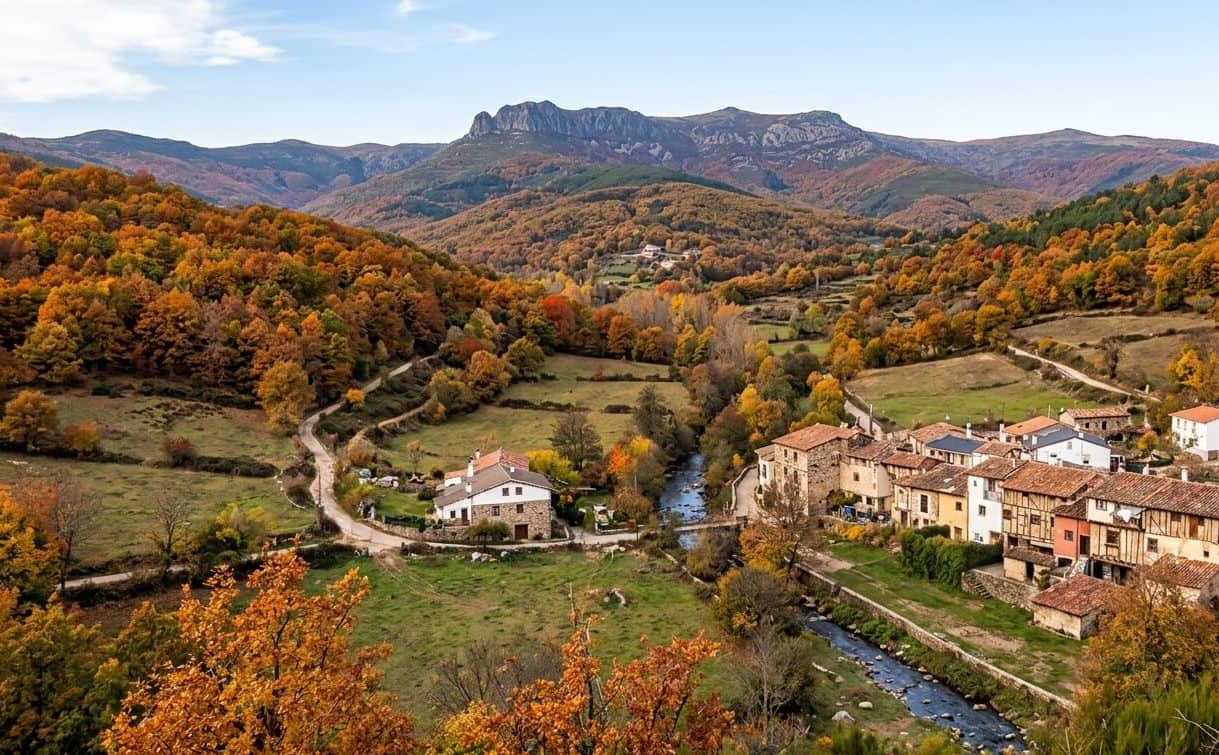
Ambroz Valley Teams Up With Gauja National Park and more to put Europe’s hidden autumn gems in the spotlight for an unforgettable seasonal escape. These spectacular destinations beckon global travellers with golden forests, colourful landscapes and the ultimate fall foliage magic. From Spain’s charming Ambroz Valley to Latvia’s scenic Gauja National Park, Europe’s hidden autumn gems offer incredible opportunities to explore nature, discover local culture and enjoy peaceful countryside holidays. Moreover, these destinations promise memorable experiences for autumn lovers. Travel And Tour World invites global travellers to discover these enchanting escapes, explore their seasonal highlights and plan the ultimate fall foliage adventure.
Six Underrated Autumn Foliage Destinations in Europe for Colourful Forests, Hidden Villages and Unforgettable Seasonal Holidays
Europe’s autumn travel season offers far more than the celebrated streets of Kyoto-style maple destinations or Austria’s famous Danube scenery. Travellers can discover quieter forest valleys, mountain lakes, medieval villages and protected national parks across Spain, Latvia, Croatia, Albania, Romania and Germany. These destinations combine changing foliage with local food, cultural heritage and outdoor adventures, making them appealing alternatives for international tourists seeking a less crowded seasonal escape.
The strongest approach is to plan around landscapes rather than a single peak-colour date. Mountain elevations, local weather and different tree species can change the timing of autumn colours even within the same region. Official tourism authorities and national parks are therefore useful sources for checking seasonal conditions, opening times and trail access.
This guide explores six underrated European destinations, including detailed itineraries, regional dishes, accommodation strategies and the available tourism statistics. One important distinction applies throughout: national visitor totals are not the same as autumn foliage site visits. Where comparable five-year figures for an individual valley or park are unavailable, the article identifies that limitation rather than presenting estimates as verified facts.
Advertisement
Advertisement
At a glance: six lesser-known autumn destinations
| Destination | Best seasonal window to consider | Main foliage experience | Ideal base |
|---|---|---|---|
| Ambroz Valley, Spain | October–November | Oak, chestnut and mountain landscapes | Hervás |
| Gauja National Park, Latvia | Late September–October | Forests, sandstone cliffs and river valleys | Sigulda or Cēsis |
| Plitvice Lakes, Croatia | Late September–October | Woodland, waterfalls and lakes | Plitvička Jezera or nearby villages |
| Albanian Alps, Albania | September–early October | Mountain forests, valleys and alpine scenery | Theth or Shkodër |
| Transylvania, Romania | Late September–October | Carpathian forests, hills and medieval towns | Brașov |
| Bavarian Forest, Germany | September–October | Mixed forests, mountain viewpoints and wildlife | Zwiesel or Bayerisch Eisenstein |
These are suggested planning windows, not confirmed foliage forecasts for 2026. Weather, altitude and local conditions can shift peak colours considerably.
1. Ambroz Valley, Spain: An autumn escape beyond the famous Spanish cities
The Ambroz Valley in Extremadura is an excellent choice for travellers who want woodland scenery, rural culture and regional cuisine without building an itinerary around Spain’s largest cities. The area features oak and chestnut trees, mountain landscapes and historic settlements, with Hervás providing a practical base for exploring the valley. Spain’s official tourism portal highlights the region’s seasonal nature activities, hiking opportunities and annual Otoño Mágico, or Magical Autumn, programme. Visitors should check the current programme because activities vary by year. During a two-day stay, explore Hervás’s historic Jewish quarter, follow accessible countryside routes and visit surrounding villages. Try regional Iberian pork, migas, seasonal mushrooms and chestnut-based dishes where available. Rural guesthouses, country hotels and farm stays are suitable accommodation choices; choose one in or near Hervás to reduce driving. For dining, look for restaurants serving Extremaduran ingredients and seasonal menus rather than relying on international chains. Official Spain tourism guide
Advertisement
Advertisement
2. Gauja National Park, Latvia: Golden forests, sandstone cliffs and medieval heritage
Gauja National Park combines autumn woodland with river scenery, historic castles and small towns. It is a strong option for travellers who prefer walking routes and cultural sightseeing over heavily commercialised attractions. Sigulda and Cēsis are useful bases, with access to trails, viewpoints and heritage sites. Turaida Castle provides a cultural stop, while the Gauja River valley offers opportunities to appreciate the changing landscape from different elevations. Travellers can also visit Cēsis Castle and explore the town’s historic centre. Latvia’s autumn weather can be cool and damp, so waterproof outerwear and shoes with good grip are sensible choices. For meals, seek out Latvian rye bread, grey peas with bacon, seasonal mushroom dishes and local fish. Choose a guesthouse or small hotel in Sigulda or Cēsis for easier access to the park. Restaurants and accommodation should be checked for seasonal opening hours, especially outside weekends. Latvia’s official statistics also show that tourism extends well beyond its capital, with Sigulda and Cēsis municipalities recording accommodation activity. Latvia’s official tourism portal provides destination-planning information.
3. Plitvice Lakes, Croatia: Waterfalls framed by autumn woodland
Plitvice Lakes National Park is one of Croatia’s most rewarding inland destinations for travellers who want woodland scenery alongside lakes and waterfalls. Wooden walkways and designated trails connect parts of the park, allowing visitors to see its interconnected lakes and cascades from different viewpoints. Autumn can bring rich colours to the surrounding beech and oak forests, although rainfall and temperature influence both foliage and water conditions. Plan a full day for the park rather than squeezing it between long transfers. Travellers should buy tickets through the official park website and check which entrances, trails and boat services are operating on their selected date. Stay in a guesthouse or hotel in the surrounding settlements if an early entrance is important. Regional menus commonly feature trout, grilled meats, potatoes and hearty soups. Book accommodation close to the park when travelling without a car, and confirm transfer arrangements before arrival. Croatia recorded 20.7 million tourist arrivals and 94.8 million tourist nights in commercial accommodation in 2025, according to its national statistics office. These are countrywide figures, not Plitvice visitor counts. Official Plitvice Lakes National Park website provides current visitor information and park rules.
Advertisement
Advertisement
4. Albanian Alps, Albania: Mountain colours and traditional village life
The Albanian Alps offer a more adventurous autumn holiday, with dramatic peaks, forested slopes and traditional mountain settlements. Theth is a useful base for travellers interested in village walks, historic stone architecture and mountain scenery. Shkodër provides a practical arrival point, with Rozafa Castle offering a cultural stop before the journey into the mountains. Travellers should plan carefully because rural roads, transport frequency and trail conditions can become challenging as the weather changes. September and early October are generally more practical periods to investigate than late autumn, but conditions must be confirmed locally. Choose a family-run guesthouse and ask about meals, heating, road access and transfers before booking. Traditional dishes may include flija, a layered baked speciality, fresh dairy products, local breads and seasonal mountain fare. For a three-day visit, spend the first night in Shkodër, travel to Theth the following day and reserve a full day for walking or village exploration. Avoid high mountain routes unless current conditions and your experience make them appropriate. Official Albanian tourism information can help with wider destination planning.
5. Transylvania, Romania: Carpathian forests, medieval towns and mountain views
Transylvania provides a compelling mix of autumn scenery and cultural heritage. The Carpathian Mountains contain extensive forests, and changing colours vary with altitude and local weather. Brașov is a convenient base for exploring the region, with a historic centre, mountain surroundings and connections to nearby attractions. Travellers can combine city walks with visits to Bran Castle, the fortified churches of the region and countryside around villages such as Viscri. For nature-focused days, investigate marked trails and protected areas near the mountains, checking access and weather before setting out. Romanian food adds another reason to stay: try ciorbă sour soups, sarmale cabbage rolls, polenta and seasonal mushroom dishes. Small hotels, guesthouses and rural homestays give visitors different ways to experience local life. A four-day itinerary can include Brașov, a castle or fortified village, a guided countryside excursion and a final day for local food and historic streets. Autumn fog can be atmospheric but may reduce mountain visibility, so keep alternative activities available. Romania’s official tourism portal is a starting point for planning regional visits.
6. Bavarian Forest, Germany: Quiet trails and a colourful woodland landscape
The Bavarian Forest offers an alternative to Germany’s busiest autumn city breaks. Its forests, rolling mountains and protected natural areas suit travellers who prefer hiking, wildlife observation and smaller towns. The Bavarian Forest National Park is a focal point, with visitor facilities and marked walking routes. Zwiesel and Bayerisch Eisenstein are practical bases for exploring the surrounding area, although visitors should check transport connections and trail conditions before choosing accommodation. Autumn colours depend on elevation and the mix of tree species, so a lower valley and a higher trail may look different on the same day. Regional food includes Bavarian dumplings, roast dishes, mushroom specialities and seasonal cakes. Stay in a family-run inn, small hotel or guesthouse to make early starts easier. A three-day plan could include a visitor centre, a forest walk, a viewpoint excursion and an evening sampling local food. Germany recorded 497.5 million guest overnight stays in 2025, a national record and a 0.3% increase on 2024. That total covers the country and cannot be used as a measure of visitors to the Bavarian Forest alone. Germany’s official tourism portal and the national park’s website can help with planning.
Tourism statistics: five-year comparison and what the figures really show
National statistics help explain the wider tourism context for these destinations. However, a responsible comparison must distinguish accommodation arrivals from overnight stays, and countrywide totals from visits to individual parks or valleys.
Advertisement
Advertisement
Table 1: Latvia’s accommodation arrivals, 2021–2025
Latvia is a useful case study because its Central Statistical Bureau publishes comparable annual figures for visitors using tourist accommodation establishments. The figures include both domestic and international visitors.
| Year | Accommodation arrivals | Annual comparison | Overnight stays |
|---|---|---|---|
| 2021 | 1.31 million | 10.7% fewer than 2020 | 2.38 million |
| 2022 | 2.20 million | +66.2% year on year | 3.90 million |
| 2023 | 2.44 million | +12.1% year on year | 4.40 million |
| 2024 | 2.70 million | +10.9% year on year | 4.70 million |
| 2025 | 2.80 million | +4.5% year on year | 5.00 million |
Arrivals and overnight stays are rounded. The 2021 release reports 1,306,588 arrivals and 2,379,777 nights. Later figures are taken from the relevant annual releases, with rounding differences possible.
What the data means: Latvia’s accommodation sector recovered strongly after the pandemic-related disruption. Arrivals rose from approximately 1.31 million in 2021 to 2.8 million in 2025, an increase of around 114%. Overnight stays also increased, from approximately 2.38 million to five million. This suggests that Latvia has become a more accessible option for travellers considering smaller towns and nature-based holidays. It does not establish how many visitors specifically explored Gauja National Park in autumn.
Table 2: Croatia’s commercial accommodation performance, 2023–2025
| Indicator | 2023 | 2024 | 2025 |
|---|---|---|---|
| Tourist arrivals | 19.49 million | 20.25 million | 20.7 million |
| Tourist overnight stays | 92.38 million | 93.68 million | 94.8 million |
| Average nights per arrival | Not stated here | 4.6 | 4.6 |
| International arrivals | 16.85 million | 17.38 million | 17.6 million |
| International overnight stays | 84.26 million | 84.96 million | 85.6 million |
Source: Croatian Bureau of Statistics. Figures cover commercial accommodation nationwide, not only Plitvice Lakes.
Croatia’s figures show that tourism is not limited to its Adriatic coastline. The country’s inland attractions offer another way to plan a seasonal trip. Visitors interested in Plitvice Lakes should nevertheless consult park-specific ticket information and visitor guidance rather than using national arrivals as a forecast of crowd levels.
Table 3: Germany’s guest overnight stays, 2021–2025
| Year | Overnight stays | Year-on-year comparison |
|---|---|---|
| 2021 | 310.2 million | Recovery remained constrained |
| 2022 | 450.7 million | +45.3% |
| 2023 | 487.1 million | +8.1% |
| 2024 | 496.0 million | +1.8% |
| 2025 | 497.5 million | +0.3% |
Source: German Federal Statistical Office, annual accommodation statistics. Figures include domestic and international guests at covered accommodation establishments.
Advertisement
Advertisement
The figures demonstrate the scale of Germany’s accommodation sector and a more gradual pace of change in the latest years. For the Bavarian Forest, travellers should use local park reports and regional accommodation information to understand demand at specific locations.
Table 4: Five-year local visitor-data availability
| Destination | 2021–2025 site-level visitor series verified here? | Best official data to consult |
|---|---|---|
| Ambroz Valley | No complete comparable series verified | Spain’s National Statistics Institute and Extremadura tourism authorities |
| Gauja National Park | No complete comparable series verified | Latvia’s Central Statistical Bureau and park authorities |
| Plitvice Lakes | No complete comparable series verified | National park annual reports and Croatian statistics |
| Albanian Alps | No complete comparable series verified | Albania’s tourism authorities and national statistics institute |
| Transylvania | No complete comparable series verified | Romania’s National Institute of Statistics and regional tourism authorities |
| Bavarian Forest | No complete comparable series verified | Bavarian tourism statistics and national park annual reports |
This distinction matters for publishers and travel planners. Annual national totals cannot be presented as park visitor counts, and accommodation arrivals are not necessarily unique people: a traveller staying in several locations may be counted at more than one establishment. Furthermore, the sources cited here do not establish a consistent five-year autumn-only series for all six destinations. Such figures should not be invented or inferred.
What to do, where to stay and what to eat
Table 5: Practical travel planning for the six destinations
| Destination | Main activities | Recommended base | Food to look for | Suggested stay |
|---|---|---|---|---|
| Ambroz Valley | Forest walks, historic quarters, rural excursions | Hervás | Iberian pork, migas, chestnuts | 2–3 nights |
| Gauja National Park | Hiking, castle visits, river viewpoints | Sigulda or Cēsis | Rye bread, mushrooms, grey peas | 2–3 nights |
| Plitvice Lakes | Waterfall walks, lake viewpoints, woodland trails | Near the park entrances | Trout, regional stews, grilled dishes | 2 nights |
| Albanian Alps | Village walks, mountain scenery, cultural visits | Theth or Shkodër | Flija, local dairy, mountain dishes | 3 nights |
| Transylvania | Medieval towns, castles, countryside excursions | Brașov | Sarmale, ciorbă, polenta | 3–4 nights |
| Bavarian Forest | Forest trails, viewpoints, visitor centres | Zwiesel or Bayerisch Eisenstein | Dumplings, mushroom dishes, roast meats | 2–3 nights |
These are itinerary suggestions, not confirmed hotel or restaurant bookings. Accommodation availability, opening schedules and seasonal menus vary, so check directly with providers before travelling.
A detailed 10-day autumn foliage itinerary
Travellers who want to experience more than one landscape can use the following plan as a framework. The six destinations span several countries, so completing the entire route requires multiple flights or long transfers. A more relaxed alternative is to choose two neighbouring destinations or focus on one country per trip.
| Day | Destination | Suggested plan |
|---|---|---|
| 1 | Latvia | Arrive in Riga, explore the historic centre and stay overnight |
| 2 | Sigulda | Travel to Gauja National Park, explore viewpoints and historic sites |
| 3 | Cēsis | Visit the castle area, enjoy a forest walk and sample local food |
| 4 | Germany | Fly or connect onward to Bavaria, allowing time for transfers |
| 5 | Bavarian Forest | Choose a marked forest trail and visit a park information centre |
| 6 | Bavarian Forest | Explore a second woodland area or mountain viewpoint |
| 7 | Spain | Travel to Extremadura and settle in Hervás |
| 8 | Ambroz Valley | Explore the historic quarter, countryside and seasonal programme |
| 9 | Spain | Visit nearby villages or enjoy a guided rural excursion |
| 10 | Departure | Return to the nearest suitable airport after checking connections |
Important: This is a multi-country planning template, not an optimised transport itinerary. Plitvice Lakes, the Albanian Alps and Transylvania are best treated as separate extensions, each requiring additional travel days. Visitors should compare flights, train connections and road transfers before committing to a schedule.
For a simpler trip, choose Gauja National Park with a Riga city break, Plitvice Lakes with Croatia’s inland towns, or Transylvania with Brașov and surrounding villages. These combinations reduce transfer time and leave more room for walking, photography and local experiences.
Advertisement
Advertisement
How to choose the right destination for autumn 2026
The best destination depends on the experience you want. Ambroz Valley is suited to travellers who enjoy rural Spain, regional food and seasonal cultural events. Gauja National Park is ideal for combining forests with medieval heritage. Plitvice Lakes appeals to visitors who want waterfalls and woodland in one protected landscape.
The Albanian Alps suit adventurous travellers prepared to plan carefully around mountain weather. Transylvania combines forest scenery with historic towns, while the Bavarian Forest offers marked trails and a nature-focused holiday.
Before booking, check current foliage conditions, official trail notices, public transport schedules and accommodation opening dates. Pack waterproof layers and footwear suitable for wet paths. For national parks, follow designated routes and local conservation rules.
Europe’s quieter autumn destinations reward travellers who allow enough time to explore beyond the main viewpoints. By combining reliable official information with flexible planning, visitors can discover seasonal scenery, regional cuisine and cultural heritage without relying on unverified visitor statistics or unrealistic foliage guarantees.
Conclusion
Ambroz Valley, Gauja National Park and Europe’s other hidden autumn gems offer global travellers a refreshing way to experience the magic of fall foliage. From Spain’s golden woodlands to Latvia’s colourful river valleys, these destinations combine breathtaking scenery, cultural discoveries and unforgettable seasonal adventures. Moreover, Plitvice Lakes, the Albanian Alps, Transylvania and the Bavarian Forest provide more reasons to explore Europe beyond its famous tourist hotspots. With careful planning, visitors can enjoy scenic trails, regional cuisine and charming villages while discovering quieter autumn escapes. Travel And Tour World encourages travellers to explore these spectacular destinations and plan an unforgettable European autumn holiday.
Advertisement
