

UAE Travel Transformed as Etihad Rail Links Dubai, Abu Dhabi and Fujairah in 2026

Published
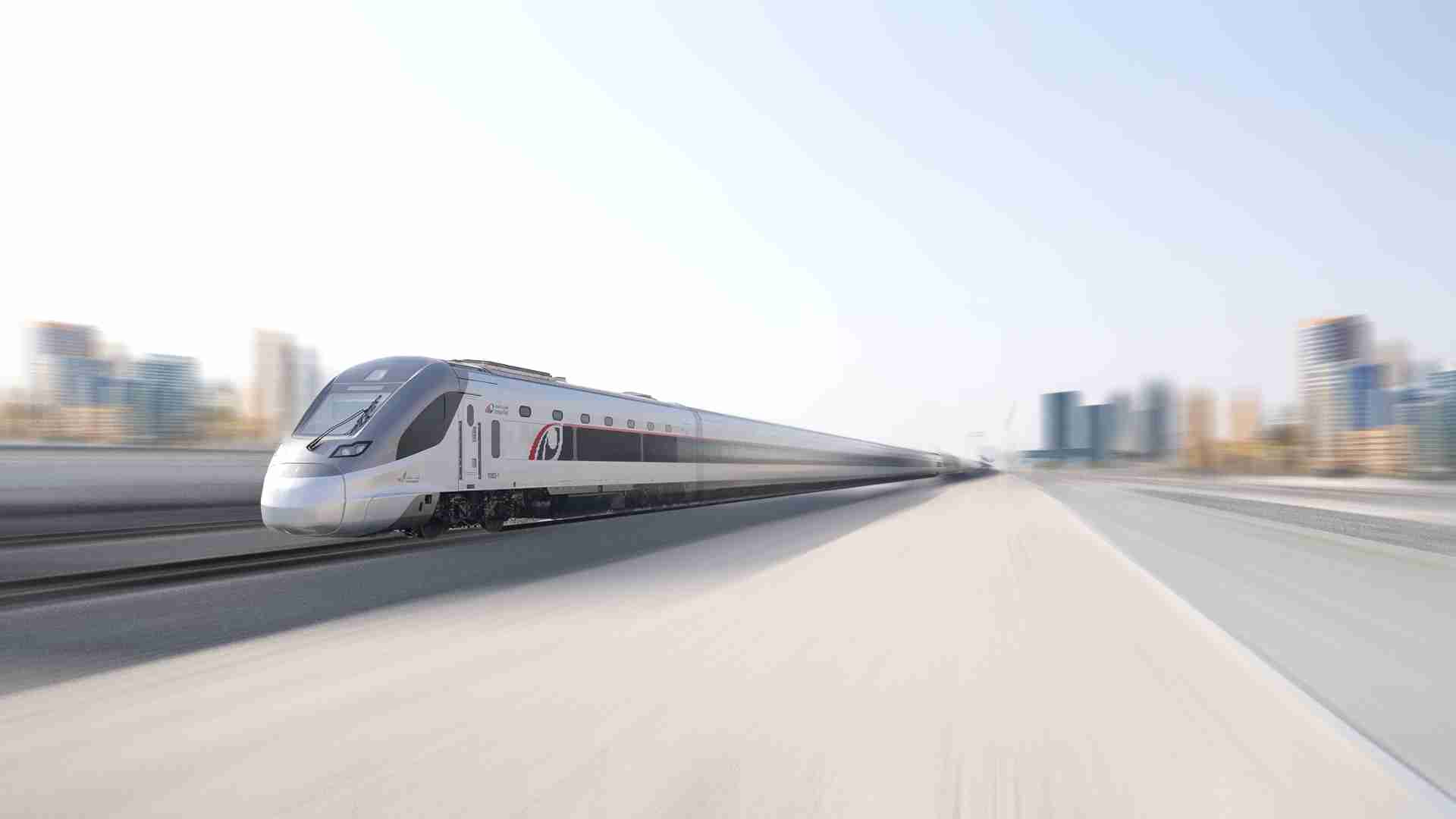
Image credit: Etihad Rail
Traveling in the UAE will soon enter a totally new era, because the Etihad Rail company plans to develop passenger train transport connecting Dubai with Abu Dhabi and Fujairah via the emerging national rail network in the UAE. This is a major step forward since it provides a new type of transport for residents and tourists in the UAE and allows people to enjoy the advantages of a more efficient means of transport, which makes it faster and easier to travel between cities and tourist sites. The fact that the Al Yalayis station in Dubai connects to the Metro and the additional stations are supposed to appear throughout the Emirates leads to the changing of the opportunities for traveling in this region.
Advertisement
Advertisement
What Others Are Missing About the UAE’s New Passenger Rail Era
Much of the attention surrounding Etihad Rail understandably focuses on trains, stations and journey times. For travellers, however, the more consequential development lies outside the railway itself.
The Dubai station creates a physical connection to the Dubai Metro network. Etihad Rail has also introduced integration with Dubai’s Nol transport system. Separately, Etihad Airways and Etihad Rail have agreed to explore ways of creating a more seamless air-and-rail travel experience.
Advertisement
Advertisement
Together, these developments point towards a fundamentally different tourism model.
Instead of treating Dubai, Abu Dhabi, Fujairah and other emirates as separate travel decisions, visitors could increasingly build journeys around one connected transport network.
Advertisement
Advertisement
That matters because tourism growth does not depend only on attracting more people into a country. It also depends on how efficiently visitors can disperse once they arrive.
Dubai’s Al Yalayis Station Could Become More Important Than the Train Itself
Dubai’s Etihad Rail station is strategically significant because of how it connects with existing public transport.
The station is linked to Jumeirah Golf Estates Metro Station through a dedicated pedestrian bridge, giving passengers direct access between the national railway and Dubai Metro.
Dubai’s Nol integration goes further. Passengers can use a single QR code for journeys involving Etihad Rail together with Metro, Tram and bus services.
For international tourists, that reduces one of the biggest problems associated with rail travel: the “last mile”.
A train can move someone rapidly between two cities, but the service becomes considerably more useful when travellers can also continue conveniently to hotels, attractions, shopping areas and business districts.
Advertisement
Advertisement
That is why the Dubai connection represents more than infrastructure.
It turns the railway station into an interchange between national and urban mobility.
For tourists staying in Dubai, Etihad Rail therefore creates another way of exploring the UAE without necessarily hiring a car.
For Abu Dhabi residents and visitors, Dubai becomes accessible through a rail journey that connects directly into one of the world’s largest automated Metro networks.
AED39 Fares Add Another Dimension to Intercity Travel
Official pricing strengthens that proposition.
Etihad Rail says tickets for its expanded passenger services start at AED39 in Comfort Class, while Premium Class fares start from AED109.
Advertisement
Advertisement
Price matters because the railway is not being positioned only as a premium tourism product.
The network is designed for daily mobility, leisure journeys, family trips and business travel.
That potentially gives the system a far wider passenger base than a tourism-exclusive service.
A resident may use the train for work.
A visitor may use the same network for a day trip.
An international passenger could eventually connect an airport arrival with another emirate.
Advertisement
Advertisement
That mix of users could become one of Etihad Rail’s strongest advantages because it supports demand throughout the week rather than relying only on holiday travel.
UAE Passenger Rail Development at a Glance
| Development | Verified position |
|---|---|
| Abu Dhabi–Fujairah passenger operations | Began 30 June 2026 |
| Dubai and Al Dhaid expansion | Began 30 September 2026 |
| Starting Comfort Class fare | AED39 |
| Starting Premium Class fare | AED109 |
| Dubai interchange | Pedestrian connection with Jumeirah Golf Estates Metro |
| Dubai public transport integration | Unified QR journey capability covering rail, Metro, Tram and buses |
| Extra opening-weekend capacity | More than 2,000 additional seats |
| Train operating capability | Up to 200 km/h |
| Capacity per passenger train | Up to 400 passengers |
| Projected annual passenger volume | 36.5 million by 2030 |
| Zayed City and Liwa stations | Scheduled for 30 November 2026 |
| Remaining Al Dhafra stations | Scheduled for 30 December 2026 |
| Sharjah Station | Scheduled for 30 March 2027 |
| Long-term network objective | Connect 11 cities and regions |
Sources: Etihad Rail, Emirates News Agency, UAE Government and Government of Dubai.
More Than 2,000 Extra Seats Reveal the First Big Demand Signal
Perhaps the most interesting development arrived almost immediately after the Dubai service began.
Etihad Rail announced three additional services on Saturday 3 October and three more on Sunday 4 October.
More than 1,000 additional seats were released for each day, taking the weekend capacity increase beyond 2,000 seats.
The figures should not automatically be interpreted as proof of long-term passenger behaviour. Opening-week curiosity can generate unusually strong demand.
Advertisement
Advertisement
But the response still matters.
It demonstrates that travellers were willing to test inter-emirate rail almost immediately.
That gives Etihad Rail an important early indicator as the operator works towards a much larger national passenger network.
The same pattern had already appeared earlier in 2026.
Before the initial Abu Dhabi–Fujairah service began on 30 June, Etihad Rail reported that more than 10,000 tickets had been sold before operations started.
That suggests passenger interest existed even before Dubai—the UAE’s biggest international tourism gateway—joined the system.
Advertisement
Advertisement
Why International Tourists Should Pay Attention
For overseas visitors, passenger rail changes one important calculation: how difficult is it to add another emirate to a UAE holiday?
Historically, many international itineraries have centred primarily on Dubai or Abu Dhabi.
Rail connectivity can make broader itineraries simpler.
A visitor based in Dubai could potentially include Abu Dhabi without organising a private car transfer. Travellers visiting the capital could connect towards Dubai. Fujairah gains greater relevance for travellers interested in the UAE’s eastern coast.
As additional stations open, destinations in Al Dhafra will also enter the passenger network.
That does not guarantee immediate tourism redistribution. Hotels, attractions, local transport and tourism operators must still build convenient products around railway stations.
Advertisement
Advertisement
But the transport barrier is becoming smaller.
That may ultimately prove more important than the train itself.
Fujairah Shows Why Rail Could Redistribute Tourism
Fujairah provides an early example of why Etihad Rail may become important for destination development.
Passenger services between Abu Dhabi and Fujairah began on 30 June 2026, several months before the network’s broader September expansion.
The scheduled journey between Abu Dhabi and Fujairah takes around one hour and 45 minutes, according to Etihad Rail’s launch information. Six daily services formed part of the introductory operational phase.
Fujairah presents a very different tourism proposition from Dubai and Abu Dhabi.
Advertisement
Advertisement
Its eastern location gives travellers access to mountains, coastal landscapes and the Gulf of Oman.
National rail connectivity therefore creates an opportunity to spread visitors from major metropolitan gateways towards destinations offering different experiences.
That is where the tourism significance becomes clearer.
Rail does not merely connect two cities.
It can enlarge the geographical footprint of a visitor’s holiday.
The Next Expansion Could Make the Network Even More Relevant to Tourism
Etihad Rail’s rollout is continuing.
Advertisement
Advertisement
Zayed City and Liwa stations are scheduled to join passenger operations on 30 November 2026.
Additional stations in the Al Dhafra Region are planned for 30 December 2026.
Sharjah Station is scheduled to open on 30 March 2027.
These additions matter because they progressively transform the railway from a limited collection of city pairs into a network.
Networks become more valuable as destinations multiply.
A traveller deciding whether to use rail between two cities may see limited benefit.
Advertisement
Advertisement
A traveller who can choose between Dubai, Abu Dhabi, Fujairah, Sharjah and destinations in Al Dhafra faces a completely different proposition.
For the tourism industry, that opens opportunities for hotels, destination management companies and attractions to package journeys around rail rather than relying entirely on road transfers.
The 36.5 Million Passenger Target Explains the Scale of the Ambition
The UAE is not developing passenger rail as a niche transport experiment.
Government projections show the scale being pursued.
Etihad Rail passenger trains are designed to operate at speeds of up to 200 kilometres per hour.
Each train can accommodate as many as 400 passengers.
Advertisement
Advertisement
By 2030, annual passenger numbers are projected to reach 36.5 million.
The wider national passenger project is intended to connect 11 cities and regions from Al Sila to Fujairah.
Those numbers place the current Dubai opening in a much larger context.
September 2026 is not the end of the project.
It is part of a multi-stage transition towards national-scale passenger rail.
The Tourism Value Goes Far Beyond Ticket Revenue
The UAE Government’s original railway programme identified substantial long-term economic benefits from national rail development.
Advertisement
Advertisement
Official government material estimates that the programme could generate around AED23 billion in tourism benefits over 50 years, alongside wider economic, environmental and infrastructure benefits.
That figure helps explain why tourism belongs at the centre of the Etihad Rail discussion.
Transport investment changes visitor behaviour.
Better connectivity can:
- increase day-trip possibilities;
- reduce dependence on private road transport;
- make lesser-visited destinations easier to reach;
- support hotel demand across multiple emirates;
- strengthen event and business travel;
- encourage longer multi-destination itineraries.
None of these outcomes happens automatically.
But a transport network creates the infrastructure that allows them to develop.
Advertisement
Advertisement
Etihad Airways Partnership Opens an Even Bigger Travel Opportunity
One of the most important developments has received less attention than the railway launch itself.
In September 2026, Etihad Airways and Etihad Rail signed a memorandum of understanding to explore an integrated air-rail travel experience across the UAE.
According to Emirates News Agency, the cooperation aims to make it easier for visitors and residents to connect to destinations around the country while supporting tourism growth, economic diversification and sustainable transport.
This could become particularly important for Abu Dhabi.
Air passengers arriving through the capital currently enter one of the world’s fastest-growing aviation hubs.
If railway connectivity can eventually be incorporated more closely into aviation journeys, Abu Dhabi could function not just as the final destination of a flight but as a gateway into a wider national itinerary.
Advertisement
Advertisement
The commercial details of that integration are still being explored.
Therefore, travellers should not assume that through-ticketing, luggage transfer or guaranteed flight-to-rail connections are currently available.
But strategically, the direction is clear.
The UAE is thinking beyond individual transport systems.
Rail Plus Aviation Could Create a New UAE Visitor Journey
Consider how international tourism itineraries could eventually evolve.
A traveller could arrive by air in Abu Dhabi.
Advertisement
Advertisement
Rail could take them onward towards Dubai or Fujairah.
Urban transport could complete the final connection.
Another visitor might enter through Dubai, use the Metro to reach Etihad Rail and then continue towards Abu Dhabi.
That is considerably different from today’s conventional airport–hotel–road-transfer model.
The significance lies in network effects.
Airports deliver international travellers.
Advertisement
Advertisement
National rail moves them between regions.
Metro and bus networks move them within cities.
When those systems communicate effectively, the entire destination becomes easier to explore.
That is the real opportunity behind Etihad Rail.
Dubai Metro Integration Gives the UAE an Immediate Advantage
Many new intercity rail projects struggle because mainline stations sit outside established public transport networks.
Dubai already has an extensive urban rail system.
Advertisement
Advertisement
Etihad Rail therefore gains immediate access to an existing mobility ecosystem through its Jumeirah Golf Estates connection.
The dedicated pedestrian link reduces friction between the two networks.
The unified QR capability adds another layer of convenience.
For leisure travellers unfamiliar with local transport systems, simplifying payment and interchange can significantly influence whether public transport feels practical.
The less complicated the transfer, the more likely visitors are to consider rail as part of their itinerary.
That makes integration just as important as train speed.
Advertisement
Advertisement
The Railway Is Not the Same as the UAE’s Future High-Speed Train
Travellers should also distinguish between two separate rail developments.
The passenger trains entering service in 2026 form part of the national Etihad Rail network and can operate at speeds of up to 200 km/h.
The UAE has separately announced plans for a high-speed railway between Abu Dhabi and Dubai capable of reaching 350 km/h.
The planned high-speed project is expected to reduce travel time between the cities to approximately 30 minutes.
Government projections estimate that it could contribute AED145 billion to UAE GDP over 50 years.
The high-speed railway remains a future project.
Advertisement
Advertisement
The passenger network operating now is therefore not that 350 km/h system.
Making this distinction is important because the two projects serve complementary rather than identical functions.
The present network provides regional and national connectivity.
The planned high-speed system would focus on extremely rapid movement between major urban centres.
Sustainable Travel Is Also Part of the National Strategy
Rail expansion fits into the UAE’s wider sustainability ambitions.
The Ministry of Energy and Infrastructure says the national rail project forms part of the country’s approach to integrated and sustainable infrastructure.
Advertisement
Advertisement
Government projections indicate that rail development could contribute to cutting around 8.2 million tonnes of carbon dioxide emissions annually while supporting passenger and freight movement.
The broader UAE Railway Programme has also been designed to reduce dependence on road transport and support more efficient mobility.
For international tourism, that matters because sustainability increasingly influences destination planning, corporate travel policies and major event strategies.
Rail gives the UAE another mobility option as the country simultaneously expands aviation, airports, highways and public transport.
What Changes for Hotels, Attractions and Tour Operators?
The biggest commercial opportunity may emerge around stations rather than onboard trains.
Hotels could promote rail-friendly stays.
Advertisement
Advertisement
Tour operators could create inter-emirate packages.
Attractions could coordinate admission times with train schedules.
Destination marketing organisations could promote two- or three-emirate itineraries instead of single-city holidays.
Event organisers may gain another transport option for visitors travelling between major UAE population centres.
Rail stations can therefore become tourism distribution points.
The destinations that make onward travel easiest could benefit most.
Advertisement
Advertisement
For hotels and attractions, the question is no longer simply whether Etihad Rail exists.
The question is how quickly tourism businesses integrate themselves into the passenger journey.
Travel Analytics: Why This Could Alter UAE Visitor Behaviour
From a travel-analytics perspective, the most valuable metric to monitor will not simply be total passenger numbers.
Several behavioural indicators will matter more:
Inter-emirate leisure demand.
How many passengers use the network for tourism rather than commuting?
Weekend utilisation.
The addition of more than 2,000 seats during the first weekend already makes leisure demand worth watching closely.
Advertisement
Advertisement
Destination dispersion.
Do rail passengers increase hotel stays and attraction visits outside Dubai and Abu Dhabi?
Average visitor length of stay.
Easier internal transport could encourage travellers to add another emirate rather than leave the country earlier.
Rail-to-Metro transfers.
High interchange rates would demonstrate that multimodal integration is working.
Air-to-rail demand.
Future cooperation between Etihad Airways and Etihad Rail could reveal whether international passengers view UAE rail as part of their arrival journey rather than merely domestic transport.
Those figures will eventually tell the real tourism story.
Editorial Perspective: The UAE Is Turning Distance Into Tourism Opportunity
Innovative as the idea of the development of passenger transport by Etihad Rail can be seen in comparison with the positioning of the UAE as the state providing interconnectivity between its tourist sites rather than cities individually. The linking of Dubai, Abu Dhabi, and Fujairah via railways opens the possibilities of creating travel routes involving several emirates not necessarily using roads for travelling. The interaction between Etihad Rail and Dubai Metro as well as other kinds of transport is crucial as convenience will become one of the key factors influencing tourists’ behavior. In relation to the tourist industry, there is something more than additional ticket sales here. Numerous hotels, tourist attraction sites, airports, and tour agencies can greatly benefit from the increase of tourist activity due to this railway system.
Advertisement
