
Italy and More Back Oil Windfall Tax as Energy Crisis Raises Travel Costs in Europe

Published
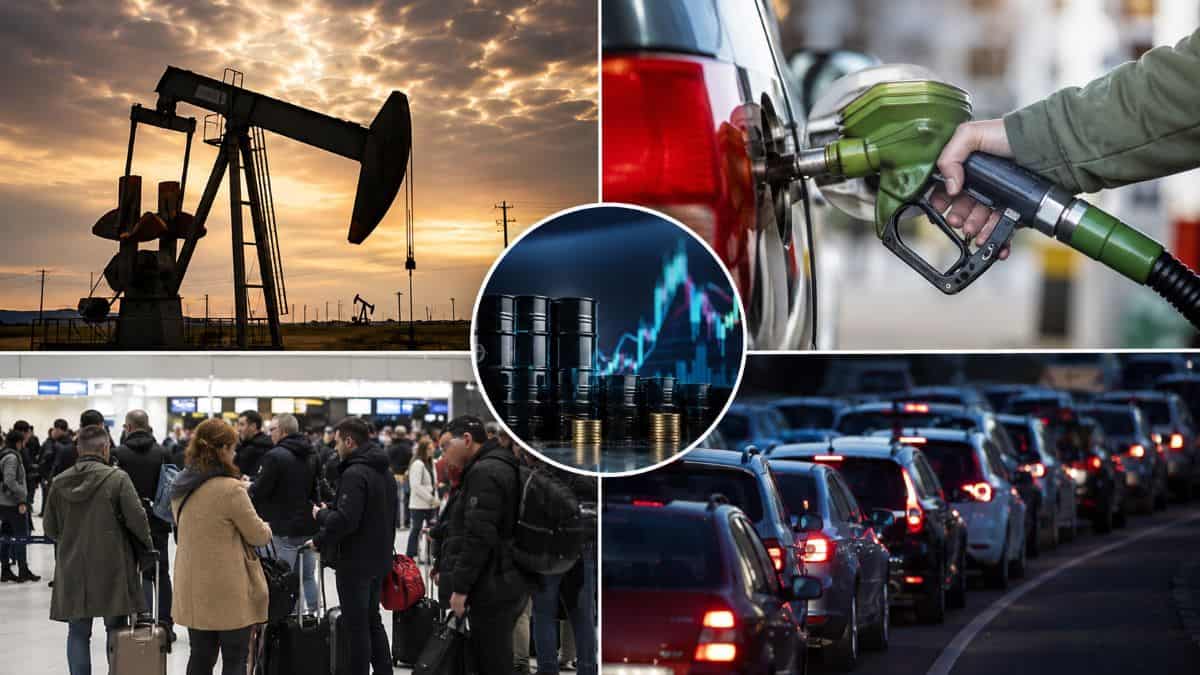
Image generated with Ai
Italy and more European countries are backing an oil windfall tax as the energy crisis raises travel costs in Europe, placing fresh pressure on airlines, road transport, ferries and household holiday budgets. Discussions center around energy profits while governments try to lessen the impact of fluctuating fuel prices on consumers and businesses. For now, travelers are not too concerned with the tax, but are instead concerned with the increasing prices of fuel and its effect on the tourism economy. Prolonged instability of the energy sector will affect airline ticket prices, packaged tours, transportation and spending at tourist destinations, and will affect how connected countries and continents are.
EU Windfall Tax on Oil Profits Moves Into Europe’s 2026 Travel Cost Debate
Europe’s windfall-tax debate is unfolding against a major energy shock. The European Commission reported in July that the EU had spent around €53 billion more on fossil-fuel imports since the Middle East conflict began in February 2026. Oil remains vital because transport consumes around 70% of the EU’s oil supply, while roughly 95% of crude oil used in the bloc is imported. The Commission’s Spring 2026 forecast cut EU economic growth to 1.1% and projected inflation of 3.1%, illustrating how higher energy costs are spreading through the economy. Member states may tax windfall profits under the current framework, but the Commission has not introduced a new 2026 EU-wide windfall levy.
- EU fossil-fuel import costs rose by about €53 billion after the 2026 Middle East conflict began.
- Transport accounts for roughly 70% of EU oil consumption.
- Around 95% of EU crude oil is imported, increasing exposure to external shocks.
- EU inflation is forecast at 3.1% in 2026. (European Commission)
- Windfall taxation currently remains primarily a member-state policy option, not a newly adopted EU levy.
| EU indicator | Latest verified 2026 position | Travel relevance |
|---|---|---|
| EU GDP growth forecast | 1.1% | Slower growth can weaken discretionary travel spending |
| EU inflation forecast | 3.1% | Raises pressure on household holiday budgets |
| Transport share of oil use | About 70% | Aviation, road and maritime travel remain exposed |
| Additional fossil-fuel import spending | About €53bn | Shows the scale of the energy-price shock |
| New EU-wide windfall tax | Not adopted | No direct EU tax impact on fares yet |
Italy Tourism Faces Fuel Cost Pressure as Rome Backs the Wider EU Tax Debate
Italy entered the European windfall-tax discussion while its tourism sector was already recording strong international demand. Portugal’s government confirmed that Italy joined Portugal, Germany, Spain and Austria in an April initiative seeking an EU-level approach to extraordinary energy-company profits. Meanwhile, Italian government monitoring showed how quickly fuel prices reacted to the Middle East crisis. On 6 March, national self-service petrol averaged about €1.76 per litre, while diesel was approximately €1.91, with diesel having risen almost 19 cents from 27 February. Italy later introduced fuel-cost interventions, including excise changes. The travel exposure is substantial: ISTAT recorded 71.6 million overnight stays in the first quarter of 2026, with international visitors accounting for 54.6% of nights.
- Italy participated in the officially documented April EU windfall-tax initiate.
- Self-service petrol stood at roughly €1.76 per litre on 6 March.
- Diesel was approximately €1.91 per litre on the same date.
- Italy recorded 71.6 million tourism nights in Q1 2026.
- Foreign visitors generated 54.6% of those overnight stays.
| Italy 2026 indicator | Official figure | Tourism meaning |
|---|---|---|
| Q1 tourist arrivals | 23 million | Strong travel volumes |
| Q1 overnight stays | 71.6 million | Large accommodation market |
| Foreign share of nights | 54.6% | High international tourism exposure |
| Foreign overnight growth | +12.3% | Strong inbound momentum |
| 6 March diesel price | About €1.91/litre | Higher road and transport costs |
Spain Uses Fuel Tax Relief While Supporting an EU Tax on Extraordinary Energy Profits
Spain has one of the clearest official policy records linking exceptional energy profits with consumer protection. The Spanish government formally requested a coordinated European tax on extraordinary oil and gas profits during the 2026 energy shock. It also adopted a wider €5 billion response plan that reduced taxes on fuels and energy. Fuel-tax relief continued through the summer, with reductions scheduled at 15 cents per litre in July, 10 cents in August and 5 cents in September, subject to the government’s mechanism. Tourism remains highly sensitive to broader cost pressures. INE reported 38.6 million hotel overnight stays in June 2026, while the Hotel Price Index increased 5.6% year on year and average daily room rates reached approximately €137.10.
Advertisement
Advertisement
- Spain formally supported European taxation of extraordinary energy profits.
- Its Middle East crisis response mobilised approximately €5 billion.
- August 2026 fuel-tax relief was scheduled at 10 cents per litre.
- Spanish hotels recorded 38.6 million overnight stays in June.
- Average hotel room rates increased to roughly €137.10.
| Spain 2026 measure/data | Figure | Travel significance |
|---|---|---|
| Crisis response plan | €5bn | Supports households and affected sectors |
| July fuel-tax reduction | €0.15/litre | Helps road transport costs |
| August reduction | €0.10/litre | Direct summer travel relevance |
| June hotel nights | 38.6m | Large peak-season tourism market |
| Hotel price index | +5.6% | Accommodation prices also rising |
Germany Puts Kerosene and Aviation Costs at the Heart of Its Energy Response
Germany’s official financial policy documentation places aviation directly inside the 2026 energy debate. The Federal Ministry of Finance recorded support for addressing exceptional energy profits at European level and specifically identified kerosene among critical fuels requiring attention during the crisis. Germany also introduced a temporary reduction in energy taxation during May and June, giving motorists gross relief of up to approximately 17 cents per litre, with a planned fiscal cost of around €1.6 billion. The country’s tourism economy remains large: Destatis recorded 223.8 million overnight stays during the first half of 2026, the highest first-half total in its data, while foreign visitors generated 36.4 million nights. These figures show why fuel stability matters across domestic mobility and international aviation.
- Germany officially supported consideration of a European windfall tax.
- Federal policy documents specifically identified kerosene as a critical fuel.
- Temporary fuel relief reached roughly 17 cents per litre gross.
- The temporary measure was budgeted at around €1.6 billion
- Germany recorded 223.8 million overnight stays in H1 2026.
| Germany 2026 indicator | Official figure/status | Travel impact |
|---|---|---|
| H1 overnight stays | 223.8m | Record tourism activity |
| Foreign overnight stays | 36.4m | International demand remains important |
| June overnight stays | 48.9m | Major summer travel volume |
| Temporary fuel relief | Up to ~€0.17/litre gross | Reduced short-term road-cost pressure |
| Kerosene | Identified as critical fuel | Direct aviation relevance |
Austria’s Fuel-Price Brake Targets Energy Costs Affecting Road Travel and Tourism
Austria paired its participation in the European windfall-tax discussion with domestic measures designed to restrain fuel costs. The Austrian Finance Ministry’s 2026 fuel-price mechanism combined reductions in mineral-oil taxation with restrictions on fuel-sector margins. In April, the total calculated relief reached 10 cents per litre, comprising five cents of tax relief and five cents through the margin mechanism. Relief was subsequently adjusted during May as market conditions changed. Austria also reduced electricity taxation sharply compared with 2025. These measures matter to a tourism economy highly dependent on car travel, coaches and cross-border visitors. Official Statistik Austria data show that overnight stays during the early part of the 2026 summer season increased by 1.5%, following a record-scale tourism base established in 2025.
Advertisement
Advertisement
- Austria was included in the officially documented April EU tax initiative.
- April fuel-price relief totalled 10 cents per litre.
- Five cents came through mineral-oil tax relief.
- Another five cents came through the fuel-margin mechanism.
- Early 2026 summer-season tourism nights were 1.5% higher.
| Austria 2026 measure | Level | Tourism relevance |
|---|---|---|
| April total fuel relief | €0.10/litre | Helps motorists and road tourism |
| Tax component | €0.05/litre | Directly reduces fuel taxation |
| Margin component | €0.05/litre | Restrains crisis-related price pressure |
| Household electricity tax reduction vs 2025 | 93.3% | Supports household budgets |
| Early summer overnight growth | +1.5% | Travel demand remained resilient |
Poland’s 60% Windfall Tax Plan Faces Legal Review as Cross-Border Travel Expands
Poland moved further than most European countries by designing a national 60% tax on exceptional fuel-sector profits. Government legislation approved in June proposed applying the levy to excess margins generated between March and December 2026. The reference level was based on a company’s average 2025 margin plus 20%, with expected revenue of around PLN4 billion. However, the measure is not currently operational: on 24 July, Poland’s president sent the legislation to the Constitutional Tribunal for preventive review. Travel activity meanwhile remains substantial. Statistics Poland recorded 63.5 million border crossings during the first quarter of 2026, with airport crossings accounting for 20.2% of the total. Spending by Polish residents abroad rose 10.4% year on year, highlighting the importance of transport costs to outbound travel. (Gov.pl)
- Poland proposed a 60% windfall tax on qualifying excess fuel profits.
- Expected revenue was around PLN4 billion.
- The bill is undergoing preventive constitutional review and is not yet operational.
- Poland recorded 63.5 million border crossings in Q1 2026.
- Spending by Polish travellers abroad increased 10.4%.
| Poland 2026 indicator | Official figure/status | Travel significance |
|---|---|---|
| Proposed windfall-tax rate | 60% | Major energy-sector intervention |
| Projected proceeds | ~PLN4bn | Intended to support fuel-cost relief |
| Legal status | Constitutional review | Not an active tax |
| Q1 border crossings | 63.5m | Strong cross-border mobility |
| Airport share | 20.2% | Aviation forms a major travel channel |
Portugal Advances a 33% Oil-Sector Contribution as International Tourism Keeps Growing
Portugal combines European-level support for a windfall tax with its own proposed petroleum-sector contribution. Government records confirm that Portugal joined Germany, Spain, Italy and Austria in seeking European action earlier in 2026. In July, Portugal approved a legislative-authorisation proposal for a 33% Temporary Solidarity Contribution on qualifying 2026 petroleum-sector profits exceeding the 2024–2025 average by more than 20%. The proposal targets crude-oil and refining activities and is intended to help fund fuel-price mitigation. Tourism makes cost stability particularly important. Portugal recorded 9.4 million guests and 23.3 million overnight stays during the second quarter of 2026. Non-residents generated 71.9% of those stays, while total accommodation revenue reached approximately €2.1 billion.
- Portugal participated in the earlier coordinated EU windfall-tax request.
- Its national proposal sets a 33% temporary solidarity contribution.
- The threshold is linked to profits more than 20% above the 2024–25 average.
- Portugal welcomed 9.4 million accommodation guests in Q2.
- International markets generated 71.9% of overnight stays.
| Portugal 2026 indicator | Official figure | Tourism relevance |
|---|---|---|
| Proposed contribution | 33% | Targets exceptional petroleum profits |
| Profit threshold | >20% above reference | Limits tax to exceptional earnings |
| Q2 guests | 9.4m | Strong tourism demand |
| Q2 overnight stays | 23.3m | Large accommodation footprint |
| Non-resident share | 71.9% | High exposure to international travel |
Airlines and Jet Fuel Become the Most Direct Travel Link to Europe’s Energy Shock
Aviation provides the clearest connection between the energy crisis and European travel costs. The European Commission said in July that EU jet-fuel supply remained stable overall, supported by higher refinery output inside Europe and replacement supplies from other markets. Nevertheless, the Commission has prepared regulatory flexibility for potential local shortages, including measures involving airport slots, fuel-uplift requirements and Public Service Obligation routes. Airlines may face higher operating expenditure when oil and jet-fuel prices rise, creating pressure on future ticket pricing. Travellers retain important safeguards: EU rules require airlines to disclose the final ticket price when a booking is made, meaning a carrier cannot later impose an unexpected fuel surcharge simply because energy prices increased after purchase.
- EU jet-fuel supplies were assessed as stable overall in July 2026.
- European refinery production has helped replace disrupted supplies.
- The Commission has contingency measures for local aviation-fuel constraints.
- Higher fuel prices can increase airline operating costs.
- Airlines cannot retroactively impose an unexpected fuel surcharge on an already purchased ticket under EU fare-transparency rules.
| Aviation issue | 2026 EU position | Traveller meaning |
|---|---|---|
| Jet-fuel supply | Stable overall | No bloc-wide aviation-fuel shortage |
| Fuel prices | Elevated/volatile | Pressure on future airline costs |
| Airport fuel shortages | Contingency rules available | Local disruption remains possible |
| Existing tickets | Final price must be disclosed | No retrospective fuel-price surprise |
| PSO routes | Regulatory flexibility available | Helps protect remote connectivity |
Road Trips, Coaches, Ferries and Cruises Also Feel Europe’s Higher Fuel Costs
The 2026 energy shock reaches far beyond airlines. Road passenger transport depends heavily on petrol and diesel, while ferries and cruise ships consume marine fuels whose prices respond to global oil markets. The European Commission’s transport response therefore covers road, rail, inland-waterway and maritime operators, with temporary state-aid flexibility available where energy costs create serious economic pressure. For travellers, prolonged high fuel prices can affect the cost base of airport transfers, sightseeing coaches, rental-car journeys, ferries and organised tours. This does not mean every fare will rise automatically. Pricing depends on contracts, competition, taxation and operators’ fuel-hedging strategies. However, the Commission’s decision to include transport within its 2026 crisis measures confirms that the energy shock has become a material operating issue across European mobility.
- Road transport is exposed to petrol and diesel prices.
- Maritime operators face changes in bunker-fuel costs.
- EU temporary support can cover energy-exposed transport businesses.
- Airport transfers and coach tours can experience higher operating expenses.
- Fuel-cost increases do not automatically translate into identical passenger-fare increases.
| Travel segment | Main energy exposure | Potential traveller effect |
|---|---|---|
| Rental cars | Petrol/diesel | Higher trip running costs |
| Coaches | Diesel | Pressure on excursion and transfer prices |
| Ferries | Marine fuels | Higher operating costs |
| Cruises | Marine fuels | Cost pressure on future deployment/pricing |
| Airport transfers | Petrol/diesel | Higher ground-transport expenses |
Europe’s Tourism Economy Faces a Wider Holiday-Budget Test in 2026
The indirect tourism impact may ultimately be as important as higher transport costs. The Commission’s 3.1% EU inflation forecast for 2026, combined with weaker GDP growth of 1.1%, means households must balance travel against other increasingly expensive necessities. Consumer confidence had also fallen to a 40-month low when the Commission published its Spring Forecast. In such conditions, travellers can respond by taking shorter holidays, choosing closer destinations, travelling outside peak periods or reducing spending on restaurants, attractions and upgrades. Those behavioural effects are economic possibilities rather than confirmed Europe-wide tourism outcomes. Current national tourism data remain mixed and, in several countries, resilient. What is clear is that energy prices can affect tourism twice: first through transport businesses and then through the disposable income available to travellers.
Five key points
Advertisement
Advertisement
- EU inflation is forecast at 3.1% in 2026.
- EU GDP growth is forecast at 1.1%.
- Higher household energy costs can reduce discretionary spending.
- Tourism businesses also face direct transport and utility costs.
- National tourism demand remains resilient in several major European markets.
| Economic pressure | Official 2026 indicator | Possible tourism channel |
|---|---|---|
| Inflation | 3.1% | Household holiday budgets |
| EU GDP growth | 1.1% | Consumer demand |
| Fuel-price volatility | Elevated during crisis | Transport operating costs |
| Consumer confidence | 40-month low at forecast | Booking caution |
| Tourism response | Varies by country | Shorter/cheaper trips possible |
The 2022 EU Windfall Tax Shows Why Governments Are Returning to the Idea
Europe already has a significant precedent for taxing extraordinary energy profits. Under the emergency framework introduced after Russia’s invasion of Ukraine, qualifying surplus profits in specified fossil-fuel sectors were subject to a solidarity contribution with a minimum rate of 33%. The European Commission’s final assessment reported that member states had collected about €26.15 billion for 2022 and 2023 by June 2024. Once remaining 2023 proceeds were included, total revenue was estimated at approximately €28.66 billion, exceeding the Commission’s original €25 billion expectation. That mechanism has expired, but its scale explains why governments facing another large energy shock in 2026 are examining similar tools. The precedent does not mean the EU has automatically reinstated the previous tax.
- The earlier EU mechanism followed the 2022 energy crisis.
- Its minimum contribution rate was 33%.
- Around €26.15 billion had been collected by June 2024.
- Final estimated proceeds were approximately €28.66 billion.
- The former scheme provides a precedent, not an automatically renewed 2026 EU tax.
| Previous EU measure | Official outcome |
|---|---|
| Minimum rate | 33% |
| Initial Commission revenue estimate | €25bn |
| Collected by June 2024 | €26.15bn |
| Estimated final amount | €28.66bn |
| 2026 status | Previous mechanism expired |
What the EU Windfall Tax Debate Means for European Travel in 2026
Italy, Spain, Germany, Austria, Poland and Portugal illustrate how Europe’s energy crisis, taxation debate and travel economy are increasingly connected. Official records confirm coordinated support among Italy, Spain, Germany, Austria and Portugal for European action on exceptional energy profits, while Poland has pursued its own 60% national proposal. Yet no new EU-wide windfall tax on oil profits is currently in force. For travellers, the immediate concern remains fuel costs rather than the tax itself. Jet-fuel supplies are stable overall, but aviation, road transport and maritime travel remain exposed to oil-price volatility. The wider effect can also reach household holiday budgets through inflation. Europe therefore enters the rest of 2026 with tourism demand resilient, but transport costs still vulnerable to global energy disruption.
- The European tax debate remains unfinished, not enacted bloc-wide.
- Fuel prices are already more relevant to travellers than the proposed tax.
- EU jet-fuel supply remains stable overall.
- Airlines, road transport and maritime tourism remain exposed to oil volatility.
- Any future tax would affect travellers indirectly depending on its design and how governments use the revenue.
| Final travel outlook | Position as of 24 August 2026 |
|---|---|
| EU-wide 2026 windfall tax | Not adopted |
| Poland 60% proposal | Under constitutional review |
| Portugal 33% proposal | Legislative process |
| EU jet-fuel supply | Stable overall |
| Main current travel risk | Higher and volatile energy costs |
Conclusion
Italy and more European countries back an oil windfall tax as the energy crisis raises travel costs in Europe, linking energy policy with the wider pressures facing tourism and transport. The proposal has little impact on the hike in fares. Consumers are concerned with volatile fuel prices that will increase travel fares, including flights, road travel, ferries and holiday travel. Governments want to ensure consumers are protected and that the energy markets are stable. Prices will vary based on this balance throughout Europe and will have an impact on tourism in the region, regarding fuel security and the ability to travel to and from the region at a reasonable price.
Advertisement
