
Austria and Poland Converge with Czechia as a New Value-for-Money Tourism Triangle Takes Shape

Published
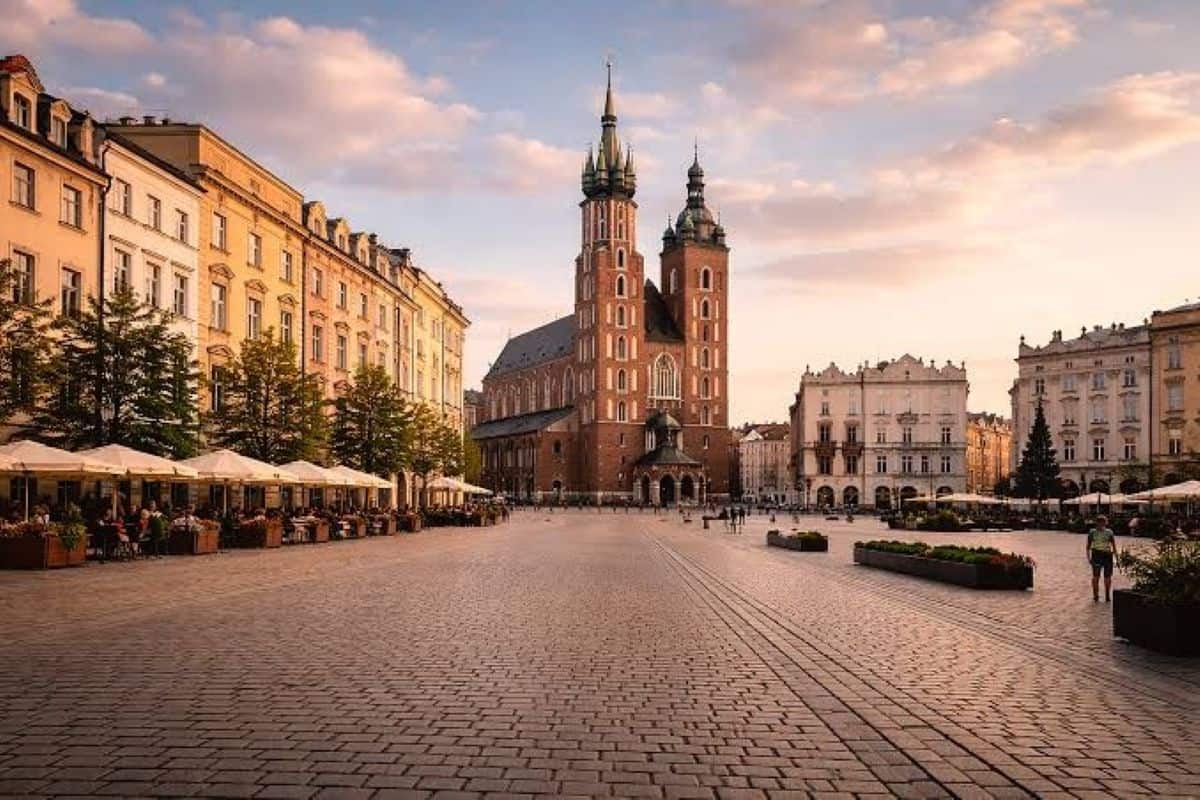
Austria, Czechia and Poland are emerging as a compelling Central European value-for-money tourism triangle, although their propositions differ sharply. Poland combines the lowest overall price level with the fastest tourism growth, while Czechia offers a strong middle ground for urban breaks. Austria remains considerably more expensive, yet its tourism performance shows how premium experiences can still command powerful demand. In 2025, tourism nights rose 7.2% in Poland, 3.3% in Czechia and 1.9% in Austria. Their overall consumer price levels also varied widely, standing at 73.3, 89.4 and 113.0 respectively against the EU average. The result is a three-country corridor where travellers can trade cost against experience, connectivity and destination depth.
Three Countries, Three Distinct Value Equations
Europe’s tourism market is entering a more selective phase, with travellers increasingly balancing accommodation costs, transport efficiency and the quality of experiences. Against that backdrop, Central Europe offers an unusual combination of compact geography and sharply different price structures.
Advertisement
Advertisement
Eurostat’s 2025 price-level data place Poland at just 73.3% of the EU average, while Czechia stood at 89.4%. Austria, by contrast, registered 113.0%. The gap becomes even more revealing for restaurants and hotels, where the corresponding indices were 80.5 for Poland, 69.5 for Czechia and 116.8 for Austria.
| 2025 Indicator | Austria | Czechia | Poland |
|---|---|---|---|
| Overall price level, EU=100 | 113.0 | 89.4 | 73.3 |
| Restaurants and hotels, EU=100 | 116.8 | 69.5 | 80.5 |
| Tourism nights growth | +1.9% | +3.3% | +7.2% |
| Major tourism proposition | Premium nature and culture | Urban and cultural value | Affordability and growth |
This immediately challenges the simplistic idea that all three countries are inexpensive alternatives. Austria is not a budget destination, while Czechia and Poland provide substantially stronger price advantages. Their common strength instead lies in proximity, transport links and the ability to combine several travel styles within one itinerary.
Advertisement
Advertisement
Poland Emerges as the Affordability Engine
Poland currently provides the clearest evidence behind the value argument. Its overall consumer price level was only 73.3% of the EU average in 2025, making it one of the least expensive EU markets for household consumption.
The tourism numbers reinforce that competitive position. Eurostat recorded a 7.2% increase in tourism nights in Poland during 2025, the second-largest increase among EU countries after Malta. That growth substantially outpaced the EU’s overall 2.2% increase.
Advertisement
Advertisement
Poland’s national statistics add another layer. Accommodation establishments hosted 58.9 million tourists in 2025, an 11.6% annual increase. Foreign tourists using accommodation establishments rose 13.1% to 15.2 million, while preliminary estimates put total foreign tourist arrivals at 21.4 million.
Tourism expenditure also expanded. Visitors spent an estimated PLN 94 billion in Poland during 2025, up 9.5% year on year. Foreign visitors alone generated approximately PLN 41.5 billion, an annual increase of 12.8%.
The geography of demand is widening as well. Warsaw recorded 8.7 million tourists, Kraków 5.2 million and Gdańsk 2.9 million in 2025. That creates opportunities for travellers to move beyond the most established European city-break circuit.
Czechia Finds the Middle-Market Sweet Spot
Czechia occupies a particularly interesting position between Poland’s affordability and Austria’s premium pricing. Its overall price level was 89.4% of the EU average, while restaurants and hotels were measured at only 69.5%.
That difference matters because accommodation and dining often dominate short European breaks. A lower service-price environment can allow travellers to redirect part of their budget towards museums, excursions, rail journeys and higher-category accommodation.
Czechia accommodated almost 23.6 million guests in 2025, who generated 59.1 million overnight stays. Foreign guests accounted for 10.9 million arrivals and 26.8 million nights. Tourism demand therefore combines a sizeable domestic market with a substantial international component.
Advertisement
Advertisement
The market also retains strong momentum. Czech tourism nights increased 3.3% during 2025, exceeding the EU-wide growth rate.
| Czechia Tourism 2025 | Result |
|---|---|
| Total guests | 23.6 million |
| Total nights | 59.1 million |
| Domestic guests | 12.6 million |
| Foreign guests | 10.9 million |
| Foreign guest nights | 26.8 million |
| Average nights per guest | 2.5 |
For travellers, Czechia’s attraction extends beyond Prague. Brno, Karlovy Vary, Olomouc and Český Krumlov provide different cultural and architectural experiences, potentially spreading spending beyond the capital.
Austria Makes the Premium-Value Case
Austria complicates the value story in the most useful way. Its 113.0 price-level index places it well above the EU average, while restaurants and hotels reach 116.8.
Yet travellers continue to spend heavily there because the destination sells more than accommodation. Alpine landscapes, winter sports, cultural tourism, wellness, culinary experiences and highly developed regional infrastructure support a premium proposition.
Austria recorded 48.17 million arrivals and 157.29 million overnight stays in 2025, both at record levels. Overnight stays rose 1.9%, while arrivals increased 3.1%.
Tourism also generated around €41.5 billion in visitor expenditure in 2025, according to Austria’s tourism authorities. Tourism contributed an estimated 6.5% of national GDP.
Advertisement
Advertisement
The spending profile explains why Austria should not be compared with Poland simply on room rates. Average tourist expenditure reached €238 per person per night during the 2024/25 winter season and €193 during summer 2025, excluding passenger transport.
Austria is therefore better understood as a high-yield destination where travellers pay more for concentrated experiences. That makes its value proposition different rather than necessarily weaker.
The Hotel Equation Changes the Picture
Accommodation remains one of the most important variables for European travellers, but national price indices do not reveal what happens in individual cities.
A useful comparison therefore looks at major urban hotel markets. Prague generally occupies a more moderate position than Vienna, while Warsaw provides the lower-cost urban option. However, travellers should treat city hotel prices as seasonal and event-sensitive rather than fixed national benchmarks.
| Major City | Traveller Position | Value Implication |
|---|---|---|
| Vienna | Premium | Higher accommodation and dining costs |
| Prague | Mid-market | Strong cultural offering at lower service prices |
| Warsaw | Lower-cost major city | Greater budget flexibility |
The wider accommodation market is also changing. Across the EU, short-stay accommodation booked through online platforms generated 951.6 million guest nights in 2025, up 11.4% from 2024.
Austria recorded around 25 million platform-booked guest nights, Czechia around 12 million and Poland around 44 million. Poland therefore combines relatively low prices with a rapidly expanding alternative-accommodation market.
Advertisement
Advertisement
Connectivity Turns Three Markets Into One Journey
The triangle becomes strategically important because travellers can combine these countries rather than choosing only one.
Vienna provides a major Central European aviation gateway. Vienna Airport handled 32.6 million passengers in 2025, up 2.6% year on year, while its wider airport group handled 43.4 million.
Prague Airport recorded an even stronger recovery. It handled 17.75 million passengers in 2025, an 8.5% increase. Eighty-four airlines served 194 destinations, while 19 new destinations opened during the year.
The airport’s network also demonstrates the breadth of international access. London, Paris, Amsterdam, Istanbul and Frankfurt were among its busiest routes, while new services strengthened connections with Abu Dhabi, Toronto and Seoul.
Poland complements that network through Warsaw and its extensive domestic aviation and rail system. Travellers can therefore construct multi-city journeys without relying on long internal flights.
Rail adds another layer of practicality. Vienna, Prague and Polish cities are linked through established Central European rail corridors, making the triangle particularly suitable for travellers who prefer overland journeys.
Advertisement
Advertisement
The €500 Holiday Test
A fixed-budget comparison provides a more useful consumer lens than simply declaring one country cheaper.
Imagine a traveller allocating €500 for four nights, excluding international flights. In Poland, the lower national price structure leaves more room for accommodation, food and attractions. Czechia offers a similar advantage, particularly outside Prague’s busiest periods.
Austria would place greater pressure on that budget, especially in Alpine destinations and peak winter or summer periods. Yet travellers could offset some costs by choosing regional rail connections, shoulder-season travel and city-based stays.
The important lesson is that value depends on how a traveller spends the budget. A traveller seeking museums, restaurants and urban nightlife may find Czechia particularly efficient. Someone prioritising mountains and outdoor experiences may accept Austria’s higher costs. Poland can offer the broadest room for budget flexibility.
Tourism Growth Is Moving Beyond Traditional Giants
The broader European context makes the shift more significant. EU tourism generated almost 3.1 billion nights in 2025, a 2.2% increase from the previous year.
International demand provided most of the growth, with international nights increasing 3.4%. Poland’s 7.2% expansion therefore stands out sharply, while Czechia also exceeded the European average.
Advertisement
Advertisement
Austria’s slower 1.9% growth should not be interpreted as weakness. Its enormous existing tourism base means that adding nearly three million nights requires considerably more absolute demand than the same percentage growth in a smaller market.
This creates three different stages of tourism development. Poland represents acceleration, Czechia represents sustained expansion, and Austria represents mature high-volume demand.
Regional Escapes Can Stretch the Budget Further
The strongest value strategy may involve avoiding the capital altogether.
In Austria, travellers can examine Graz, Linz and regional destinations outside the busiest Alpine resorts. Vienna remains a major draw, but Austria’s tourism strength extends deep into its provinces.
Czechia offers Brno, Olomouc and Karlovy Vary as alternatives to Prague. These destinations can provide cultural depth without concentrating every travel euro in the capital.
Poland offers the broadest geographic choice. Warsaw and Kraków remain major magnets, but Gdańsk, Wrocław, Poznań, Katowice and Łódź provide additional urban options.
Advertisement
Advertisement
This dispersal matters for travellers and destinations alike. It can reduce pressure on heavily visited centres while allowing visitors to discover places that remain less internationally saturated.
Value Does Not Mean Cheapest
The most useful finding from this comparison is that “value-for-money” cannot be reduced to a low room rate.
Eurostat’s price-level methodology itself cautions against treating price indices as rigid rankings. The indices represent broad national price differences across thousands of goods and services, rather than the exact price a traveller will pay for one hotel room.
Seasonality also matters enormously. Austria’s winter resorts can command premium rates, while Prague can become considerably more expensive during major events. Warsaw and Kraków can also experience sharp peaks around holidays and conferences.
Travellers should therefore compare the total trip rather than one headline price. Accommodation, airport transfers, rail tickets, meals, attractions and the number of experiences achievable within the same budget provide a much more realistic measure.
Why This Triangle Matters Now
Austria, Czechia and Poland are not becoming interchangeable destinations. Their strength comes from their differences.
Advertisement
Advertisement
Poland offers the strongest affordability story and the fastest tourism growth. Czechia provides a compelling balance between cultural richness, connectivity and moderate prices. Austria delivers a premium experience economy that continues to attract record demand despite higher costs.
Together, however, they create a particularly efficient Central European travel circuit. Travellers can begin with Vienna’s cultural and premium tourism offer, continue to Prague for urban heritage and then move towards Poland for greater affordability and expanding destination choice.
That is the real significance of the emerging triangle. It does not promise that every traveller will spend less. Instead, it gives visitors more ways to calibrate their European holiday around budget, experience, transport and travel intensity. As European tourism becomes more price-conscious, that flexibility could prove more valuable than a simple “cheap destination” label.
Key Data At A Glance
| Measure | Austria | Czechia | Poland |
|---|---|---|---|
| 2025 overall price level, EU=100 | 113.0 | 89.4 | 73.3 |
| Restaurants and hotels, EU=100 | 116.8 | 69.5 | 80.5 |
| 2025 tourism arrivals | 48.17m | 23.54m | 58.9m |
| 2025 accommodation nights | 157.29m | 59.10m | Strong annual growth |
| Tourism-night growth | +1.9% | +3.3% | +7.2% |
| 2025 international tourism signal | 33.5m international guests | 10.9m foreign guests | 21.4m foreign visitors |
| Strongest proposition | Premium experiences | Balanced urban value | Affordability and growth |
Traveller Takeaway
For travellers planning a Central European trip, the smartest approach is not to ask which country is cheapest. Instead, ask where each euro delivers the experience you value most.
Poland currently offers the strongest affordability advantage. Czechia offers an unusually attractive compromise between price and cultural density. Austria costs more, but its tourism infrastructure and experience portfolio support a premium proposition.
The triangle becomes particularly powerful when travellers combine all three. A single itinerary can therefore move from Austria’s Alpine and cultural depth through Czechia’s historic cities and into Poland’s expanding urban and regional tourism landscape.
That makes Central Europe less a collection of separate destinations and more a flexible travel ecosystem where price, accessibility and experience can be traded against one another.
Advertisement
