

Malaysia Moves With Japan and Other Asian Markets in the SAF Push as Greener Flying Raises New Questions for Travellers

Published
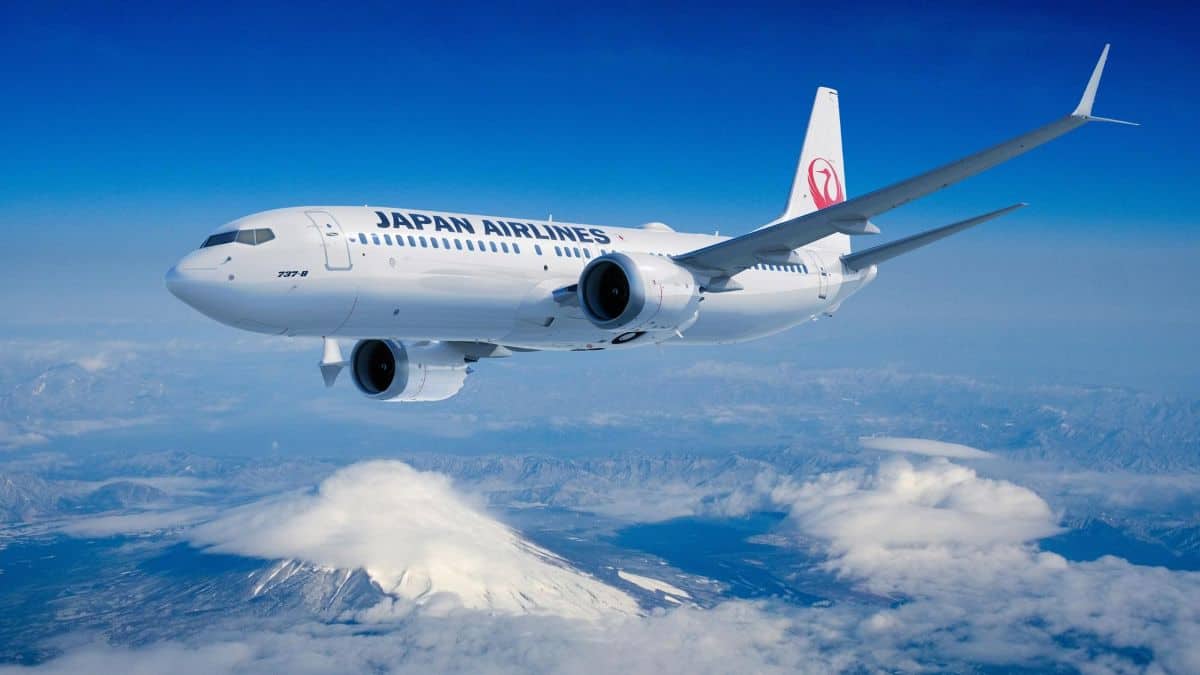
Japan, South Korea, Singapore, China and Malaysia are advancing sustainable aviation fuel in Asia through national targets, production investments and regulatory initiatives. Their approaches could influence airline operating costs, international connectivity and the environmental credentials of regional travel. Singapore has established a passenger levy for eligible flights departing from 1 January 2027, while Japan targets replacing 10% of domestic airlines’ fuel consumption with SAF by 2030. China is expanding production capacity, South Korea is developing blending requirements, and Malaysia is pursuing a broader aviation decarbonisation roadmap. However, global SAF production is expected to reach just 2.4 million tonnes in 2026, representing 0.8% of aviation fuel consumption. The challenge now is turning ambitious policies into affordable, verifiable emissions reductions.
Five Asian Aviation Strategies Take Different Routes
The emerging SAF landscape reflects different national priorities. Japan is targeting domestic fuel substitution, South Korea is leveraging its refining industry, Singapore is coordinating procurement, China is developing industrial capacity, and Malaysia is pursuing a comprehensive sector-wide transition.
Advertisement
Advertisement
These strategies matter because Asia combines major international aviation hubs with rapidly growing travel markets. Airlines need dependable fuel supplies, airports require suitable infrastructure, and governments must reconcile climate commitments with connectivity and tourism growth. Consequently, the region’s progress will depend on more than announcing targets.
The International Air Transport Association (IATA) estimates that global SAF production will reach 2.4 million tonnes in 2026, up from 1.9 million tonnes in 2025. Nevertheless, the projected 2026 volume represents only 0.8% of annual jet fuel consumption. IATA also estimates that the industry’s SAF-related fuel costs will reach US$4.3 billion this year.
Advertisement
Advertisement
The figures expose a central weakness in the transition. Production remains small relative to aviation’s enormous fuel requirements, while higher costs discourage airlines from switching more quickly. Therefore, national policies must stimulate demand, expand supply and improve the economics of production simultaneously.
Japan Targets a Ten Per Cent Fuel Shift
Japan has established a target for SAF to replace 10% of domestic airlines’ aviation fuel consumption by 2030. The government is pursuing domestic production, supply-chain development and international certification to support the transition. It also recognises that reliable supplies at competitive prices will determine whether airlines can meet the target.
Advertisement
Advertisement
The practical challenge extends beyond manufacturing. Producers must process suitable feedstocks, blend the resulting fuel with conventional jet fuel, meet quality requirements and deliver it to airports. Japan’s experience will therefore offer a useful test of whether national production and imported supplies can work together efficiently.
For travellers, the target does not mean that every flight departing Japan will immediately contain 10% SAF. It applies to fuel consumption by Japanese airlines, rather than guaranteeing an identical blend on every route or aircraft. Nor does it automatically establish a passenger surcharge comparable with Singapore’s levy.
Japan’s approach also connects aviation policy with industrial development. Building a dependable domestic supply chain could strengthen energy resilience and create opportunities for refiners and technology providers. However, the government must ensure that production economics, feedstock availability and certification keep pace with its ambition.
Singapore Makes the Passenger Levy a Reality
Singapore offers the clearest example of aviation decarbonisation reaching the ticket counter. The Civil Aviation Authority of Singapore (CAAS) will apply its SAF levy to eligible origin-and-destination passengers travelling on flights departing from 1 January 2027. The charge applies to tickets sold from 1 October 2026 and must appear as a distinct item in the fare breakdown.
The government originally planned an earlier introduction but deferred implementation in March 2026, citing the impact of the Middle East conflict on airlines and passengers. The revised timetable illustrates a difficult policy balance: governments want to accelerate cleaner fuel adoption without adding pressure during periods of aviation-cost volatility.
The levy varies according to destination and cabin class. Longer journeys generally fall into higher charging bands because they consume more fuel. The collected money enters a statutory SAF Fund, which will purchase SAF and associated environmental attributes, alongside administrative costs.
Advertisement
Advertisement
| Illustrative destination from Singapore | Economy and premium economy | Business and first class |
|---|---|---|
| Bangkok | S$1.00 | S$4.00 |
| Tokyo | S$2.80 | S$11.20 |
| London | S$6.40 | S$25.60 |
| New York | S$10.40 | S$41.60 |
Scheduled per-passenger charges published by CAAS. Amounts depend on the applicable destination band and cabin category. These are not universal SAF charges across Asia.
For travellers, the immediate financial impact is relatively transparent. An economy passenger travelling from Singapore to London faces a scheduled S$6.40 levy, while a business-class passenger faces S$25.60. These figures are policy charges, not estimates of the full additional cost of SAF across an airline’s operations.
Singapore has also set a 1% SAF target for 2027, with a goal of increasing the share to 3–5% by 2030, subject to global developments and wider availability. The country is therefore combining a demand target with a funding mechanism.
However, the levy does not mean every departing aircraft will physically receive the same proportion of SAF. The programme can purchase fuel and associated environmental attributes, so passengers should distinguish the policy’s collective emissions benefits from claims about the exact fuel loaded onto their aircraft.
South Korea Builds a Binding Supply Framework
South Korea has moved from early commercial SAF operations towards a defined blending roadmap. In September 2025, its transport and industry ministries announced a mandate requiring SAF blending for international flights departing the country from 2027. The initial requirement is set at 1%, with later targets dependent on production capacity and market conditions.
The roadmap sets a 3–5% range for 2030 and a 7–10% range for 2035. Authorities plan to determine the later requirements after reviewing domestic production capabilities, overseas mandates and global market developments. The approach gives refiners and airlines a forward timetable while retaining some flexibility over future obligations.
Advertisement
Advertisement
| Milestone | South Korean SAF blending roadmap |
|---|---|
| 2027 | 1% |
| 2030 | 3–5% |
| 2035 | 7–10% |
Government roadmap announced in September 2025. Later percentages are ranges, not fixed final requirements.
Importantly, the initial obligation falls on aviation fuel suppliers, including refiners and importers. The government has also outlined implementation flexibility and a phased approach to penalties. This places responsibility across the supply chain instead of relying solely on airlines to procure fuel independently.
For travellers, the first change may be largely invisible. A mandated fuel blend does not necessarily produce a separate ticket charge, although airlines could pass some additional operating costs into fares. Competition, fuel contracts, route economics and other expenses will determine the actual effect.
China Pursues Scale Through Aviation Trials
China’s strategy centres on building an industry capable of supporting larger-scale SAF adoption. In September 2024, authorities launched an application pilot involving Air China, China Eastern Airlines and China Southern Airlines. Twelve flights were initially scheduled for SAF refuelling across Beijing Daxing, Chengdu Shuangliu, Zhengzhou Xinzheng and Ningbo Lishe airports.
The pilot brought airlines, fuel suppliers, airports and public agencies into a coordinated programme. This matters because scaling SAF requires more than a production facility. Producers need dependable buyers, while airlines and airports require quality assurance, distribution arrangements and suitable refuelling infrastructure.
China’s industrial base could become an important regional supply source. Nevertheless, production capacity must not be confused with actual SAF output. Even a large announced capacity figure cannot establish how much certified fuel is produced, sold or consumed annually.
Advertisement
Advertisement
For passengers, wider domestic production could eventually improve supply availability and reduce some cost pressures. Yet those benefits depend on commercial utilisation, feedstock prices, certification and distribution costs. Greater capacity alone cannot guarantee cheaper tickets or lower emissions on a specific journey.
Malaysia Explores a Regional Fuel Advantage
Malaysia launched its Aviation Decarbonisation Blueprint on 5 September 2024. The roadmap supports the country’s long-term aspirational goal of achieving net-zero carbon emissions in aviation by 2050. It combines SAF adoption with aircraft technology, operational improvements and market-based measures.
The breadth of this framework is significant. Fuel substitution can reduce lifecycle emissions, but airlines can also improve fuel efficiency through better flight planning, operational procedures and aircraft performance. Meanwhile, airports can reduce emissions from their buildings, ground vehicles and energy use.
Malaysia’s agricultural and waste-processing industries could provide opportunities for developing suitable SAF feedstocks. However, the environmental value depends on traceability and production methods, not simply on whether a feedstock is described as renewable. Waste-derived materials must still meet sustainability and lifecycle-emissions criteria.
For Southeast Asian tourism, a dependable regional fuel industry could support international connectivity and create opportunities for refiners, airports and aviation service providers. Still, Malaysia’s blueprint should not be interpreted as a binding national SAF blending percentage equivalent to South Korea’s roadmap or Singapore’s levy mechanism.
Five Countries Compared on Delivery
| Country | Main policy direction | Passenger relevance |
|---|---|---|
| Japan | Replace 10% of domestic airline fuel consumption with SAF by 2030 | Supply development could affect airline costs and future fuel sourcing |
| South Korea | 1% blending requirement in 2027, rising through planned later targets | Fuel costs may influence fares, although no equivalent universal passenger levy is specified |
| Singapore | 1% target for 2027; 3–5% by 2030, with a passenger levy | A separately itemised charge gives travellers a visible cost |
| China | National application pilots and industrial development | Greater supply could support future availability, subject to commercial deployment |
| Malaysia | National aviation decarbonisation roadmap targeting net zero by 2050 | Broader operational improvements complement SAF adoption |
The comparison reveals different implementation models rather than a single Asian strategy. Singapore has made the passenger charge explicit, South Korea has published a staged blending roadmap, Japan has a defined fuel-replacement ambition, China is testing and developing supply, and Malaysia is pursuing multiple decarbonisation measures.
Advertisement
Advertisement
For industry observers, the crucial indicators will be actual fuel production, verified deliveries, certified lifecycle savings and compliance with national requirements. For travellers, the practical indicators will be transparent charges, credible airline reporting and evidence that sustainability claims reflect measurable emissions reductions.
SAF Offers a Different Measure of Carbon Savings
SAF is produced from eligible renewable or waste-derived resources rather than relying entirely on fossil-based crude oil. Depending on the pathway, feedstocks can include used cooking oil, agricultural residues and other qualifying materials. Synthetic aviation fuel can also be produced using hydrogen and captured carbon dioxide, although production costs and access to low-carbon electricity remain significant constraints.
Unlike a completely new aircraft technology, approved SAF can be blended with conventional jet fuel and used in compatible existing aircraft. This makes it particularly important for long-haul aviation, where battery-electric aircraft face substantial weight and energy-density limitations.
However, the environmental benefit depends on the fuel’s entire lifecycle. The International Civil Aviation Organization (ICAO) accounts for emissions from feedstock collection, processing, transport, fuel production, distribution and combustion. It also applies sustainability criteria to eligible fuels used under its international aviation emissions framework.
Consequently, claims that SAF reduces lifecycle emissions by up to 80% must be treated as pathway-dependent estimates, not universal guarantees. A fuel’s actual performance depends on its feedstock, conversion process, energy inputs and land-use impacts. Lower lifecycle emissions do not mean zero exhaust emissions, nor do they eliminate aviation’s non-CO₂ climate effects.
Higher Fuel Costs Could Reach Airfares
SAF remains more expensive than conventional jet fuel, creating a significant barrier to widespread adoption. IATA’s June 2026 assessment put the additional global airline fuel cost associated with SAF at US$4.3 billion for the year. That figure represents an industry-wide estimate, rather than an automatic surcharge on every passenger ticket.
Advertisement
Advertisement
The eventual effect on fares will vary. Airlines may absorb some costs, pass others to passengers, or respond through fuel procurement contracts and operational efficiencies. Government support and blending requirements can also influence the price difference between conventional fuel and SAF.
For travellers, the most important distinction is between an explicit policy levy and an indirect fare increase. Singapore has published a separate charge, whereas the other four countries’ initiatives do not establish an identical universal passenger fee. Travellers should therefore check the final fare breakdown instead of assuming that every airline will add the same amount.
Feedstock Sustainability Remains Essential
Expanding production also creates environmental and economic trade-offs. Used cooking oil and agricultural residues can offer promising feedstocks, but supplies are limited and competing industries may also need them. As demand rises, traceability becomes essential to prevent fraudulent sourcing and exaggerated sustainability claims.
SAF production must also avoid shifting environmental damage elsewhere. Unsustainable land conversion, excessive water use, competition with food production and carbon-intensive processing can undermine the benefits. ICAO’s sustainability framework therefore assesses lifecycle emissions and broader environmental and socioeconomic criteria.
In the longer term, synthetic e-fuels could diversify supply, but they require substantial quantities of low-carbon electricity and suitable hydrogen and carbon sources. Neither bio-based fuels nor synthetic alternatives can scale indefinitely without investment, credible certification and carefully managed resource use.
What Travellers Should Expect Next
The most immediate changes will probably concern fuel procurement, sustainability disclosures and selected passenger charges rather than aircraft interiors or booking procedures. Singapore’s levy offers a concrete example, while South Korea’s 2027 mandate provides another milestone for monitoring regional adoption. Japan’s 2030 target and Malaysia’s broader roadmap offer longer-term measures of progress.
Advertisement
Advertisement
Passengers should examine whether an airline publishes independently verified lifecycle emissions data, explains its SAF accounting and distinguishes actual fuel use from purchased environmental attributes. A sustainability claim is more informative when it identifies the fuel pathway, certification method and emissions-reduction basis.
Ultimately, SAF can make aviation less carbon-intensive without making flying emission-free. Asia’s five national approaches will test whether governments and industry can build dependable supplies while protecting affordability and connectivity. The decisive measure will not be the number of announced projects, but the quantity of verified fuel delivered and the lifecycle emissions it genuinely avoids.
Advertisement
