
Air Canada Drives Global Growth as New Routes Target Markets Beyond Weaker US Travel Demand

Published
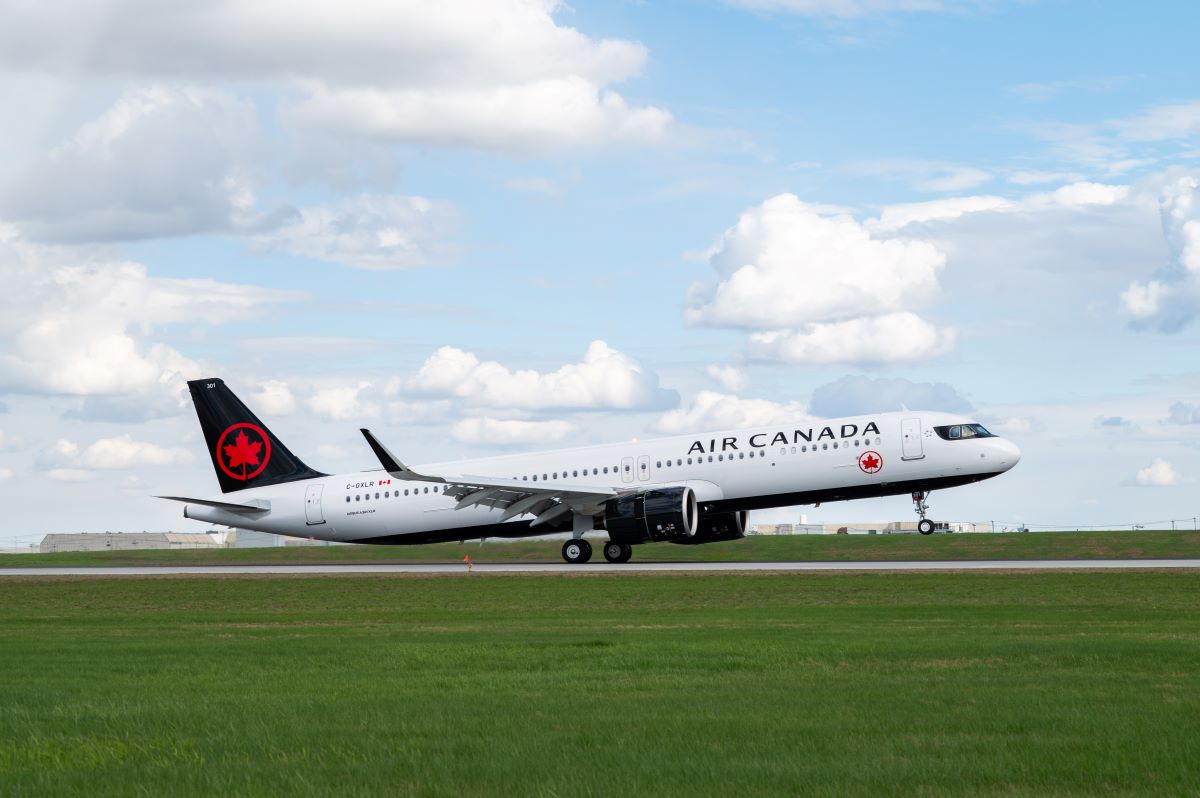
Air Canada is growing faster as the airline makes connections with markets around the world. Meanwhile Canada‑US travel is getting weaker. Official Canadian data shows a change in travel habits. Traffic heading to the US from Canadian airports fell again in June 2026. At the time traffic going to places outside the US rose a little. Air Canada reacted by adding routes to Latin America, Europe and Asia opening new destinations and boosting capacity on chosen markets. Air Canada’s new Airbus A321XLR also brings chances for long‑haul growth. Together these changes show how Canada’s aviation network is changing as airlines look for customers, beyond the US market.
Air Canada is looking beyond the US as global aviation demand changes
Air Canada is entering a significant period of network change. The airline is expanding its international reach at a time when travel between Canada and the United States remains below earlier levels in several important measures.
Advertisement
Advertisement
The shift is not simply about adding more destinations. It reflects a broader change in how Canadian aviation demand is developing. International travel, particularly to markets outside the United States, has become increasingly important for Canadian airlines seeking to grow passenger volumes, cargo opportunities and connecting traffic.
Statistics Canada provides an important backdrop. In June 2026, 5.2 million passengers passed through security screening at Canada’s eight largest airports. That was 0.6% higher than in June 2025. Domestic traffic rose 1.8% to 2.5 million passengers, while international traffic outside the United States increased 0.6% to 1.4 million.
Advertisement
Advertisement
The picture was very different for trans border travel.
Advertisement
Advertisement
Passenger traffic to the United States fell 2.0% year over year in June to 1.2 million screened passengers. Statistics Canada said this marked the 17th consecutive month of year-over-year decline in trans border passenger traffic.
That contrast is important.
Canada’s aviation market is not simply shrinking. Instead, demand is moving unevenly across markets. Domestic and non-US international traffic showed growth, while US trans border traffic continued to struggle.
This creates an obvious strategic opportunity for an airline with a large international network.
Air Canada has been building that network steadily through new routes, additional frequencies and fleet investment.
Advertisement
Advertisement
US travel remains a weak point in Canada’s aviation market
The United States has traditionally been one of Canada’s most important travel markets.
The two countries share a long border and extensive economic, family, business and tourism links. Canadian airlines therefore depend heavily on trans border traffic.
However, official data shows that the market has faced sustained pressure.
Statistics Canada’s June airport figures show that trans border traffic to the United States fell 2.0% from June 2025. It was the 17th consecutive month in which passenger traffic to the US recorded a year-over-year decline.
The declines were visible at several major Canadian airports.
Advertisement
Advertisement
Vancouver International Airport recorded a 3.5% fall in trans border screened passengers. Montréal/Pierre Elliott Trudeau International Airport declined 4.3%, while Calgary International Airport fell 4.9%.
Toronto Pearson was the exception.
Passenger traffic to the United States from Toronto Pearson increased 0.7% in June. It was the airport’s first year-over-year increase after 16 consecutive months of decline.
That detail matters because Toronto is Air Canada‘s largest global hub.
It suggests that the US market is not disappearing. Rather, demand is uneven and remains sensitive to changing travel patterns.
Advertisement
Advertisement
Statistics Canada’s broader travel data also shows how significant the longer-term change has been.
In April 2026, Canadian residents returned from 2.4 million trips to the United States. That represented a 1.8% increase from April 2025 and was the first year-over-year monthly increase since January 2025.
But the comparison with April 2024 remained stark.
Canadian-resident trips to the United States were 26.7% below April 2024 levels. Air travel was particularly affected, with Canadian residents making 805,900 return trips by air from the US in April 2026, down 7.1% year over year.
This helps explain why international diversification has become strategically important.
Advertisement
Advertisement
Canada is seeing stronger opportunities outside the US
While US travel has remained under pressure, several international indicators have been more encouraging.
Statistics Canada reported that Canadian residents made 1.4 million return trips from overseas countries in April 2026. That was 2.7% higher than in April 2025.
The contrast between air travel to the US and overseas travel is especially relevant for Air Canada’s network strategy.
Canadian residents still travelled extensively. But the destination mix was changing.
At the same time, Canada continued to receive visitors from the United States.
Advertisement
Advertisement
In April 2026, US residents made 1.5 million trips to Canada, an increase of 6.9% from April 2025. Air arrivals from the United States increased 7.8% to 366,600.
Therefore, the market is more complex than a simple collapse in Canada-US travel.
The data points to a two-way shift.
Canadian outbound travel to the US remained well below 2024 levels, while travel from the US into Canada showed signs of recovery compared with 2025.
For airlines, however, the most important issue is where aircraft can generate sustainable demand.
Advertisement
Advertisement
That is where international diversification becomes significant.
Air Canada has been expanding its global network
Air Canada‘s international expansion did not begin with the current market conditions.
The airline has been developing its network for several years, with a particular focus on international destinations where it sees opportunities for tourism, business and connecting traffic.
In January 2026, Air Canada announced its winter 2026–27 network with new service to Quito, expanded Latin American operations and additional European flying.
The announcement included new Montréal-Quito service beginning in December 2026 and a weekly Toronto-Quito service.
Advertisement
Advertisement
The airline also planned to make Toronto-Manchester and Toronto-Copenhagen services year-round from October 2026.
This is strategically important.
Rather than relying only on the busiest summer travel season, year-round flying can provide a more balanced use of aircraft and airport infrastructure.
The expansion also included additional service to Latin America.
Air Canada planned expanded winter operations to Rio de Janeiro, Lima and Santiago. It also planned new Calgary services to Cancún and Puerto Vallarta from December 2026.
Advertisement
Advertisement
These markets serve different types of demand.
Some are major leisure destinations.
Others provide opportunities for business, trade, visiting friends and relatives, cargo and connecting passengers.
The result is a more diversified network.
Latin America has become a major growth target
One of the clearest elements of Air Canada’s international strategy is its growing focus on Latin America.
Advertisement
Advertisement
In February 2026, Air Canada announced an 18% increase in seat capacity to Mexico for summer 2026 compared with summer 2025.
The airline introduced new year-round Montréal-Guadalajara flights from June 2026.
It also increased frequencies on several established routes.
Montréal-Cancún increased to 11 weekly flights.
Toronto-Monterrey increased to four weekly flights.
Advertisement
Advertisement
Vancouver-Mexico City increased to 11 weekly flights.
Vancouver-Puerto Vallarta increased to two weekly flights.
These changes show how Air Canada is attempting to put additional capacity where it sees demand.
The Mexico strategy is also linked to wider economic relationships.
Air Canada said the expanded network would support tourism and commercial links between Canada and Mexico. The announcement also highlighted Canada’s efforts to diversify trade and develop new business relationships.
Advertisement
Advertisement
This is an important point for understanding Air Canada global growth.
International airline networks are not only about holidays.
They support business travel, cargo, investment, trade and connections between companies.
A route can therefore serve several markets at the same time.
Guadalajara adds more than a leisure destination
The Montréal-Guadalajara route is a useful example.
Advertisement
Advertisement
Guadalajara is an important Mexican business and industrial centre. The new route gives Canadian passengers direct access while also strengthening opportunities for Mexican travellers to reach Canada.
Air Canada planned the route as a year-round service rather than a purely seasonal operation. Flights began on 2 June 2026 from Montréal to Guadalajara, with return service beginning the following day.
This type of route can help airlines build more stable networks.
A seasonal leisure service depends heavily on peak holiday demand.
A year-round route can draw from multiple sources of traffic.
Advertisement
Advertisement
Business passengers can travel during the week.
Leisure passengers can travel during holiday periods.
Families and visiting friends can use the route throughout the year.
Cargo can also benefit from additional belly capacity.
That combination can make a route strategically valuable.
Advertisement
Advertisement
Air Canada is also strengthening Europe
Europe remains one of Canada’s most important long-haul markets.
Air Canada has been increasing its European reach through new routes and higher frequencies.
Its summer 2026 network included new international destinations in Europe and Asia, including Montréal-Catania and Montréal-Palma de Mallorca. The airline also planned to restore non-stop Toronto-Shanghai and Toronto-Budapest services and increase flights to Prague.
The strategy is significant because Europe offers multiple sources of demand.
It attracts Canadian leisure travellers.
Advertisement
Advertisement
It supports business travel.
Air Canada’s Montréal and Toronto hubs therefore play a major role.
Passengers do not necessarily need to start or finish their journey in Canada.
They can connect through Canadian hubs to other international destinations.
This connecting traffic is a major part of a global network strategy.
Advertisement
Advertisement
The Airbus A321XLR is changing Air Canada’s route possibilities
Fleet modernisation is another major part of Air Canada’s growth strategy.
In June 2026, Air Canada marked the entry into scheduled service of its first Airbus A321XLR.
The aircraft is important because it combines characteristics of a narrow-body aircraft with long-range capability.
Air Canada said the aircraft would support new destinations, strengthen existing markets and provide greater flexibility in its network.
The A321XLR also introduces a premium cabin with lie-flat seats.
Advertisement
Advertisement
Air Canada’s configuration includes 14 Signature Class seats and 168 Economy Class seats. The aircraft also has seatback entertainment throughout the cabin.
The aircraft’s range gives Air Canada another tool for international expansion.
Traditional wide-body aircraft can provide large capacity, but they may not always be suitable for markets where demand is developing.
A smaller long-range aircraft can allow an airline to open thinner international routes.
That can be particularly useful for destinations that cannot support a larger aircraft every day.
Advertisement
Advertisement
The A321XLR supports disciplined international growth
The arrival of the A321XLR is therefore more than a fleet announcement.
It could change how Air Canada evaluates international routes.
An airline needs enough demand to justify a route. But demand can vary by season and market.
A large aircraft may create too much capacity during weaker periods.
A smaller aircraft with long-range capability can offer more flexibility.
Advertisement
Advertisement
Air Canada said it planned to integrate the A321XLR progressively into its schedule to support growth across its network. The airline also highlighted its suitability for changing seasonal demand and evolving market opportunities.
The airline has committed to a substantial A321XLR fleet.
Air Canada said 30 A321XLR aircraft were expected to enter its fleet over coming years, with 15 leased and 15 acquired directly from Airbus.
The fleet plan also includes 14 Boeing 787-10 Dreamliners and eight Airbus A350-1000 aircraft, while the airline continues receiving Airbus A220 aircraft. Five Boeing 737 MAX aircraft had already been delivered in 2026 by the June announcement.
That combination points to a long-term fleet strategy.
Advertisement
Advertisement
Air Canada is not relying on one aircraft type or one market.
It is building a range of aircraft capable of serving different demand levels.
Canada’s international airport network is also evolving
The airline’s expansion is taking place alongside changes across Canada’s airport network.
Statistics Canada’s June 2026 data showed that international passenger traffic outside the United States increased 0.6% year over year to 1.4 million at the eight largest Canadian airports.
Halifax Stanfield International Airport recorded particularly strong growth.
Advertisement
Advertisement
International traffic there increased 21.7% year over year in June following the launch of additional European routes in May.
This shows that international growth is not limited to Toronto and Montréal.
Canadian airports outside the two biggest hubs can also benefit from new international connections.
For airlines, this creates opportunities to distribute traffic more widely.
It can also support regional tourism and business development.
Advertisement
Advertisement
A new direct flight can make a destination more accessible to international visitors.
It can also reduce the need for passengers to connect through another city.
Toronto remains central to Air Canada’s global strategy
Despite the push towards diversification, Toronto remains critical.
Toronto Pearson is Canada’s largest international aviation gateway and Air Canada’s primary global hub.
The June data provides an interesting signal.
Advertisement
Advertisement
While trans border traffic declined at several major Canadian airports, Toronto Pearson recorded a 0.7% increase in screened US passenger traffic. This followed 16 consecutive months of decline.
Toronto’s role goes beyond the US market.
Air Canada has used the airport as a base for international expansion, including new services to Asia, Europe and Latin America.
The airport’s geographic position also supports connections across North America and between North America and overseas markets.
For Air Canada, that makes Toronto a key platform for global growth.
Advertisement
Advertisement
Montréal is another major international gateway
Montréal is equally important to Air Canada’s international strategy.
The airline has used Montréal-Trudeau as a major transatlantic and international hub.
The airport is particularly well positioned for European connections.
Air Canada’s Montréal network has also expanded towards Latin America.
The airline’s new Quito service, for example, is planned to operate three times weekly from Montréal. The flights are designed to connect through Air Canada’s Canadian hubs with North American and European markets.
Advertisement
Advertisement
The A321XLR is also connected to Montréal’s international growth strategy.
Air Canada scheduled its first international A321XLR flight from Montréal to Toulouse in June 2026.
This gives the Montréal hub another tool for developing long-haul routes.
Vancouver gives Air Canada a Pacific advantage
Vancouver provides another strategic advantage.
The airport is Canada’s major Pacific gateway.
Advertisement
Advertisement
Air Canada has been using Vancouver to develop its Asia-Pacific network and connect western Canada with international markets.
The airline previously announced a new Vancouver-Sapporo service for its winter network. It described the route as the only non-stop service from North America to Hokkaido.
The Vancouver hub is important because western Canada’s geography makes direct Asia-Pacific connections particularly valuable.
It can also serve passengers travelling between the United States and Asia through Canada.
This creates opportunities for connecting traffic beyond Canada’s domestic market.
Advertisement
Advertisement
The global strategy is also about trade
The expansion should not be viewed only through the lens of tourism.
Air Canada’s international network also has a cargo dimension.
The airline’s commercial leadership has repeatedly linked international expansion with passenger and cargo demand.
The Mexico expansion, for example, was explicitly connected with trade diversification and commercial ties.
That is important because passenger aircraft carry substantial amounts of cargo.
Advertisement
Advertisement
A new route can therefore create value for exporters and importers even when passenger demand alone is not enough to tell the full story.
Direct air links can reduce travel times.
They can also help businesses maintain closer relationships with overseas partners.
For Canada, stronger international air links can support wider efforts to diversify economic relationships.
Tourism could benefit from a broader network
The tourism implications are also significant.
Advertisement
Advertisement
International flights make destinations easier to reach.
More direct services can reduce journey times and eliminate connections.
This can help attract visitors who might otherwise choose another destination.
Canada also benefits when international visitors travel beyond its largest cities.
Air connections can distribute visitors across provinces and regions.
Advertisement
Advertisement
The Statistics Canada figures show that international demand is already moving differently across airport markets.
Halifax’s 21.7% increase in international traffic in June illustrates how additional European routes can have a visible effect on airport traffic.
However, route expansion does not automatically guarantee tourism growth.
Airlines still need strong demand.
Hotels, attractions, airports, ground transport and local tourism businesses also need to be ready for additional visitors.
Advertisement
Advertisement
That is why aviation growth should be seen as one part of a wider tourism ecosystem.
The US market is still important despite the decline
It would be wrong to interpret Air Canada’s international expansion as an exit from the United States.
The US remains deeply connected to Canada.
Air Canada continues to operate a large trans border network.
Statistics Canada data also shows that travel demand is not moving in only one direction.
Advertisement
Advertisement
US-resident trips to Canada increased 6.9% year over year in April 2026. Air arrivals from the US increased 7.8%.
That means Canada remains an attractive destination for US travellers.
The weakness is more visible in Canadian outbound travel to the United States.
In April, Canadian air return trips from the US fell 7.1% year over year.
For airlines, this distinction is crucial.
Advertisement
Advertisement
The question is not whether the US market still matters.
It clearly does.
The question is how much capacity should be allocated to a market that has recently shown weaker demand compared with other international opportunities.
What the official data says about the wider travel shift
The most useful conclusion from Canada’s official statistics is that travel is becoming more uneven.
Domestic travel remains resilient.
Advertisement
Advertisement
Non-US international traffic is growing modestly.
US trans border traffic remains weaker.
Overseas travel by Canadians is also showing signs of improvement.
In April 2026, Canadian residents returned from 1.4 million overseas trips, up 2.7% year over year.
At the same time, Canadian trips to the US remained substantially below 2024 levels.
Advertisement
Advertisement
This creates a more complex market for airlines.
They must balance existing networks against new opportunities.
Air Canada appears to be doing this through targeted capacity increases rather than a single dramatic shift.
Its network changes include Mexico, Latin America, Europe and Asia.
Its aircraft strategy also provides additional flexibility.
Advertisement
Advertisement
The economic implications extend beyond airlines
Airline expansion can have effects well beyond ticket sales.
New international services can support airports.
They can increase demand for airport services, catering, maintenance, ground handling and other aviation businesses.
Tourism businesses can benefit from additional visitors.
Hotels can gain from international arrivals.
Advertisement
Advertisement
Restaurants, attractions and transport providers can also see additional demand.
Business travel can create another layer of economic activity.
When a city gains a direct connection to an international market, companies may find it easier to develop relationships in that market.
Trade missions can also become easier to support.
The Montréal-Guadalajara announcement illustrates this connection between aviation and economic diversification. Air Canada linked the route with Canada’s wider trade-diversification efforts and stronger Canada-Mexico commercial relationships.
Advertisement
Advertisement
Therefore, international aviation is not simply a tourism product.
It is part of Canada’s economic infrastructure.
Fuel efficiency is becoming more important
Airlines must also manage the cost of growth.
Aircraft efficiency is increasingly important as carriers expand their networks.
Air Canada and Airbus highlighted the A321XLR’s fuel-efficiency advantages. Airbus said the aircraft could deliver a 30% reduction in fuel burn per seat compared with previous-generation aircraft and could operate with up to 50% sustainable aviation fuel.
Advertisement
Advertisement
For Air Canada, this can be relevant when developing routes where operating economics are critical.
A more efficient aircraft can potentially support international routes with lower capacity requirements.
That does not eliminate the commercial risks of launching a new route.
But it can provide greater flexibility.
This is especially useful when demand is seasonal or developing.
Advertisement
Advertisement
Air Canada is building flexibility into its network
The broader strategy can therefore be understood through three connected areas.
First, the airline is diversifying destinations.
Second, it is increasing capacity where demand appears stronger.
Third, it is modernising the fleet to give the network more flexibility.
The Mexico expansion demonstrates the first two.
Advertisement
Advertisement
The A321XLR demonstrates the third.
The winter 2026–27 expansion combines all three.
New Quito service adds a destination.
Additional Latin American frequencies increase capacity.
Year-round Manchester and Copenhagen operations improve network continuity.
Advertisement
Advertisement
The A321XLR provides a tool for operating international routes with different demand levels.
Together, these developments form a coherent growth strategy.
The road ahead for Canadian aviation
The future of Canadian aviation will depend on how travel demand develops across different regions.
The US will remain a major market.
But the official data shows why airlines cannot depend on it alone.
Advertisement
Advertisement
International traffic outside the US was growing in June 2026.
Domestic traffic was also higher.
Meanwhile, US trans border traffic had declined for 17 consecutive months.
That does not guarantee that international routes will all succeed.
Airlines still face fuel costs, aircraft availability, airport constraints, changing consumer behaviour and geopolitical uncertainty.
Advertisement
Advertisement
Statistics Canada noted that international travel in June was taking place amid continued uncertainty linked to the conflict in Iran and elevated jet-fuel prices.
These factors can quickly influence demand and operating costs.
Air Canada therefore needs to remain flexible.
Its fleet strategy and diversified network give it more options.
Why Air Canada global growth matters for travellers
For travellers, the expansion can mean more choice.
Advertisement
Advertisement
New routes can reduce connection times.
Additional frequencies can make schedules more convenient.
Year-round flights can make international travel possible outside traditional peak seasons.
The A321XLR can also allow direct services between cities that might not support larger aircraft.
For Canadian travellers, this could make destinations in Latin America, Europe and Asia easier to reach.
Advertisement
Advertisement
For international visitors, stronger Air Canada connections can make Canada a more useful gateway into North America.
The benefit is therefore not limited to Canadians.
It can extend across the wider international travel market.
A more diversified Canadian aviation map is emerging
The strongest message from the official data is that Canada’s aviation map is changing.
The US remains essential.
Advertisement
Advertisement
But it is no longer the only growth story.
Air Canada is expanding its network across multiple international regions while investing in aircraft capable of supporting new markets.
Mexico has received additional capacity.
Latin America is expanding.
Europe remains a major focus.
Advertisement
Advertisement
Asia-Pacific connections are being strengthened.
The new A321XLR adds another layer of flexibility.
Meanwhile, Statistics Canada data confirms that non-US international passenger traffic at Canada’s largest airports was growing in June 2026, even as trans border traffic continued to decline.
This does not mean a complete transformation overnight.
Airline networks take years to develop.
Advertisement
Advertisement
But the direction is clear.
Air Canada global growth is increasingly tied to a wider international strategy, with the US market remaining important but no longer standing alone as the central growth opportunity.
Conclusion
Air Canada global growth is shaping by expanding connectivity adding more capacity and investing heavily in fleet. Official Canadian data shows why Air Canada strategy matters. US trans border passenger traffic fell for the consecutive month in June 2026 while non-US international traffic increased modestly. Air Canada responds with links to Mexico, Latin America, Europe and Asia supported by the long-range A321XLR. Air Canada strategy does not mean abandoning the United States. Instead Air Canada shows an effort to spread demand across more markets. For travellers and businesses that could mean routes, stronger connections and a broader Canadian gateway, to the world.
[Source:- BNN Bloomberg]
Image Credit:- Air Canada
Advertisement
