

Slovenia Gems In Ljubljana And Lake Bled Show Exactly How To Experience Pure European Travel Magic Without The Crowds

Published
Planning my trip, to Slovenia felt like discovering a hidden treasure. Slovenia is one of those places that touches your heart the moment you arrive. There are misty alpine lakes and ancient castle walls that tell stories of the past. Looking at a map cannot show you how much wonder is packed into this paradise.
Analyzing the Deep Global Impact and Strategic Paradigm Shifts in Modern International Tourism Preferences Across Worldwide Markets
Advertisement
Advertisement
International tourism dynamics are evolving at an unprecedented pace as modern tourists actively seek out compact yet highly diverse destinations that successfully minimize their individual carbon footprints and eliminate long-distance travel fatigue. Slovenia serves as a prime operational example of how smaller nations can capture massive international attention by offering a multifaceted ecosystem housed within a tightly contained geographical boundary. Industry analysts note that contemporary travelers increasingly prefer destinations where vibrant urban culture, pristine alpine wilderness, and relaxing coastal environments coexist seamlessly without requiring extensive or complex cross-border transits. This notable shift encourages international tourism boards and regional authorities to rethink their long-term marketing strategies, placing primary emphasis on operational efficiency, localized community exploration, and rigorous environmental preservation over sheer mass-market visitor volume.
Furthermore, the global hospitality sector benefits immensely from this evolving trend because incoming tourists distribute their financial spending much more evenly across various micro-regions rather than concentrating their economic impact solely within overcrowded mega-cities. As modern visitors enthusiastically embrace structured, highly balanced itineraries that prioritize genuine regional authenticity over superficial sightseeing, local economies experience consistent, sustainable growth alongside significantly reduced seasonal bottlenecks.
Advertisement
Advertisement
Consequently, independent travel agencies and international tour operators worldwide are actively redesigning their standard tour packages to mirror these efficient exploration models. This structural evolution is fundamentally transforming how global citizens perceive, plan, and navigate emerging European travel destinations in the contemporary era.
Uncovering the Vibrant Cultural Heritage and Architectural Marvels Woven Within the Charming Historic Streets of Ljubljana
Advertisement
Advertisement
Ljubljana offers an exceptionally compact, highly walkable, and infinitely charming urban environment that serves as the absolute quintessential starting point for any comprehensive Central European travel itinerary. Observers highlight that the historic city center, lined with picturesque cafes, bustling restaurants, and historic bridges stretching along the winding Ljubljanica River, provides an immensely inviting atmosphere for international visitors eager to immerse themselves in authentic local daily life. Furthermore, Ljubljana Castle towers majestically above the capital skyline, offering sweeping panoramic views across the metropolitan basin and providing deep historical context that richly enhances the traveler’s comprehensive understanding of the nation’s cultural heritage and architectural evolution.
Beyond the vibrant central riverbanks, incoming visitors can easily unwind in the lush, manicured expanses of Tivoli Park or venture directly into alternative cultural districts like Metelkova, which is globally renowned for its radical alternative cultural scene and distinctive street art installations. Industry experts strongly recommend dedicating approximately two full days to this dynamic capital city to ensure a wonderfully relaxed, completely unhurried pace before embarking on wider regional explorations across the country. This balanced urban introduction allows global tourists to transition smoothly from bustling metropolitan life straight into the serene natural wonders that wait quietly just beyond the municipal borders.
Advertisement
Advertisement
Venturing Far Beyond Traditional Postcard Views Into the Pristine Wilderness of Lake Bled and Triglav National Park
Lake Bled remains Slovenia‘s most iconic and widely recognized postcard view, consistently captivating global audiences with its pristine glacial waters, dramatic cliffside fortress, and charming island church steeple. However, seasoned travel analysts strongly emphasize that savvy visitors should never stop merely at the superficial surface of this world-famous landmark, but should instead venture significantly deeper into the majestic Julian Alps. By exploring the tranquil, mirror-like shores of Lake Bohinj and the rugged, untouched wilderness terrain of Triglav National Park, international travelers discover breathtaking alpine nature accompanied by significantly fewer crowds and a profoundly deeper sense of peaceful, restorative isolation.
This deeper alpine exploration reflects a much broader global movement toward responsible eco-tourism and active outdoor adventure travel, where modern visitors deliberately seek out protected natural habitats and authentic wilderness encounters. The careful preservation of these pristine alpine environments clearly demonstrates how local conservation efforts can successfully and harmoniously coexist with rising international tourism demands. Ultimately, exploring these elevated mountain valleys encourages travelers worldwide to appreciate delicate, high-altitude ecosystems while thoroughly enjoying world-class hiking, refreshing swimming sessions, and exceptional nature photography in entirely unpolluted natural settings.
Exploring the Extraordinary Subterranean Mysteries and Venetian-Gothic Coastal Elegance Found Along Piran and the Karst Region
Advertisement
Advertisement
Beneath its lush, verdant surface, Slovenia meticulously conceals a world-famous subterranean cave network that routinely leaves international geologists and curious tourists utterly spellbound. Both Postojna Cave and Škocjan Caves showcase massive, awe-inspiring stalactites, monumental stalagmites, and roaring underground rivers that continuously carve intricate pathways through the ancient limestone landscape. Observers note that these extraordinary underground marvels provide a dramatic, striking geological contrast to the sunlit alpine lakes, proving beyond any doubt that the nation’s diverse topography holds breathtaking surprises at every single turn of the journey.
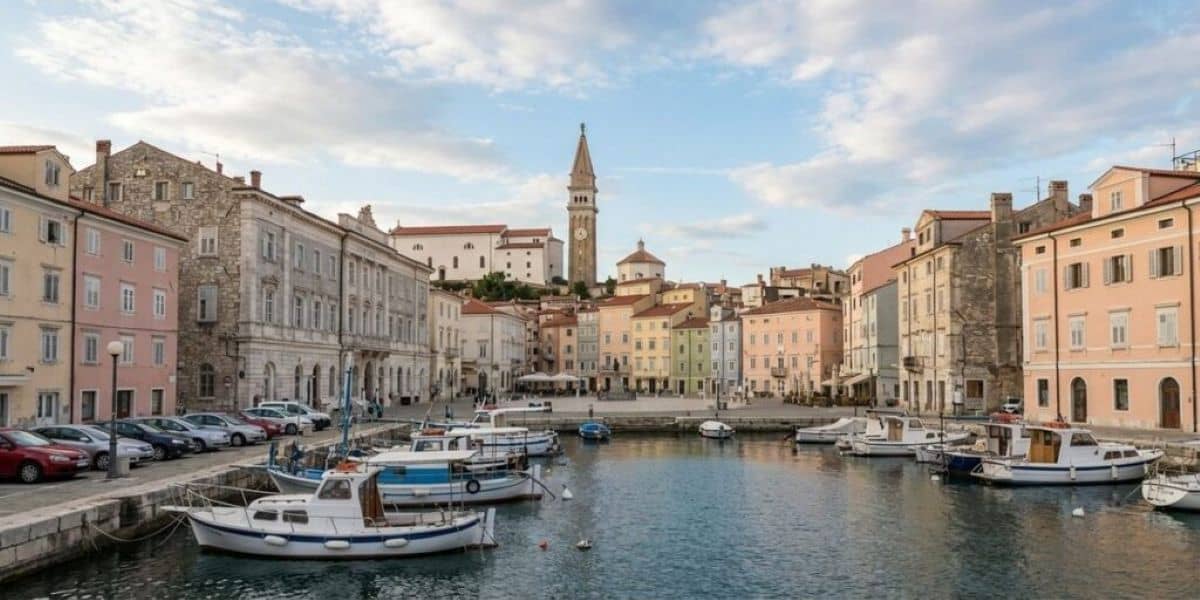
Transitioning fluidly from the deep subterranean underworld back out into the bright open air, the short but stunning Adriatic coastline introduces travelers to the enchanting seaside town of Piran. Characterized by breathtaking Venetian-Gothic architecture, narrow and winding medieval alleyways, and delightful fresh seafood dining options situated directly along the bustling waterfront, Piran offers a genuinely wonderful Mediterranean escape. This vibrant coastal contrast enriches the broader global travel narrative, beautifully demonstrating how a single compact country can effortlessly bridge grand alpine wilderness with rich Venetian maritime heritage to create a completely unforgettable destination for international explorers.
Evaluating the Comprehensive Economic Impacts and Sustainable Tourism Metrics Across Local Slovenian Municipalities
Industry analysts emphasize that Slovenia maintains a robust travel economy, where the broader tourism sector accounts for approximately 12% of the nation’s total Gross Domestic Product while supporting upwards of 60,000 jobs nationwide. Observers note that government planners utilize the pioneering Green Scheme of Slovenian Tourism to certify more than 150 unique destinations, public parks, and registered agencies under exceptionally rigorous ecological benchmarks. Experts point out that these deliberate sustainable tourism policies successfully distribute incoming economic benefits evenly between bustling urban centers and quiet rural communities, which effectively minimizes damaging over-tourism while maximizing long-term local revenue generation. Furthermore, this structured financial distribution ensures that local small-business owners and traditional craftspeople retain a fair share of tourist expenditures, fostering a resilient regional economy that withstands seasonal fluctuations without compromising environmental integrity or cultural heritage.
Analyzing Meteorological Patterns, Microclimate Variations, and Optimal Seasonal Timing for International Explorers
International travel planners report that Slovenia experiences distinct seasonal shifts, with average summer temperatures regularly reaching 25°C to 28°C in July across the valleys, while high alpine regions like Lake Bled and the majestic Julian Alps see winter snowpacks averaging 1 to 2 meters deep between December and February. Travel commentators explain how these dramatic microclimate variations heavily influence overall travel logistics and packing requirements for incoming visitors. Industry specialists strongly highlight the shoulder seasons of May through June and September through October as the absolute ideal window for global tourists seeking to balance pleasant sightseeing weather with significantly lower visitor density. Consequently, navigating the country during these transitional months allows travelers to bypass peak-season congestion while enjoying comfortable ambient temperatures across both mountainous terrain and coastal landscapes.
Advertisement
Advertisement
Uncovering Culinary Heritage, Foraging Traditions, and Gastronomic Tourism Innovations in Michelin-Starred Slovenian Eateries
Culinary historians observe that Slovenia boasts an impressive culinary landscape featuring over 10 elite Michelin-starred dining establishments—such as the world-renowned Hiša Franko led by celebrated chef Ana Roš—conveniently spread across compact geographic zones alongside more than 14,000 distinct boutique wineries producing premium white and red varietals. Food and wine critics explain that contemporary gastronomic tourism thrives on authentic farm-to-table culinary movements, ancient foraging traditions, and specialized regional wine-tasting routes situated throughout fertile wine districts like Goriška Brda. Observers emphasize that these gourmet innovations are completely redefining luxury food travel, offering discerning international visitors an exquisite blend of indigenous ingredients, centuries-old recipes, and sophisticated modern culinary presentation that honors the nation’s rich agricultural roots.
Examining Infrastructure Development, Electrified Rail Networks, and Eco-Friendly Public Transit Connecting Regional Hubs
Transportation experts highlight that the national railway network efficiently connects Ljubljana to major regional hubs such as Kranj, Jesenice, and the coastal border via modern electrified rail lines that handle over 15 million passenger journeys annually while cutting carbon emissions by up to 40% compared to traditional private car rentals. Urban planners detail the operational excellence of integrated municipal bus networks, extensive bike-sharing initiatives in the capital, and specialized eco-trains that make car-free travel across rugged mountainous regions entirely viable for first-time international visitors. Analysts note that these seamless public transit connections drastically reduce vehicular congestion on winding alpine roads, allowing tourists to explore remote valleys and historic towns with minimal environmental impact and maximum convenience.
Investigating Health, Wellness Tourism, and Hydrotherapy Powered by Natural Thermal Mineral Water Springs
Health and wellness analysts report that Slovenia features over 87 officially recognized natural thermal and mineral water springs, with specialized thermal spas and medical health resorts generating more than 35% of the country’s total annual overnight tourist stays. Medical tourism commentators discuss how historic spa towns like Rogaška Slatina and Terme Čatež seamlessly integrate therapeutic hydrotherapy, specialized medical wellness retreats, and holistic recovery programs into contemporary vacation itineraries. Observers note that these restorative facilities attract thousands of international guests seeking natural healing, preventative healthcare, and mental rejuvenation, thereby positioning the nation as a premier destination for holistic health tourism in Central Europe.
Advertisement
Advertisement
Reviewing Architectural Preservation Laws and UNESCO World Heritage Sites Spanning Centuries of European History
Cultural heritage experts document that Slovenia houses multiple prestigious UNESCO designations, including the fascinating prehistoric pile dwellings discovered around the Ljubljana Marshes dating back over 4,500 years alongside the globally protected quicksilver heritage sites located in Idrija. Historians examine how rigorous architectural conservation municipal laws and targeted government funding programs actively protect medieval town squares, ancient Venetian fortresses, and historic bridges from commercial overdevelopment and degradation. Observers emphasize that these strict preservation measures ensure future generations of international travelers can witness authentic, untouched historical structures that reflect centuries of intricate European architectural evolution.
Detailing Outdoor Adventure Tourism Safety Protocols and High-Altitude Search-and-Rescue Infrastructure
Mountain safety specialists note that dedicated rescue teams operating within the Julian Alps manage over 500 specialized rescue operations annually, supported by an extensive network of more than 160 high-altitude mountain huts meticulously maintained by the Alpine Association of Slovenia. Adventure travel analysts provide essential data-backed insights regarding alpine safety, emphasizing advanced weather warning systems, digital trail registration apps, and mandatory gear requirements for hikers tackling rugged terrain within Triglav National Park. Experts stress that adhering to these structured safety protocols is vital for mitigating risks associated with rapid mountain weather shifts, ensuring that adventure seekers enjoy thrilling outdoor expeditions safely and responsibly.
Assessing Digital Nomad Infrastructure, Fiber-Optic Broadband Speeds, and Remote Work Integration Across Regional Hubs
Technology infrastructure analysts indicate that Slovenia currently ranks within the top 20 globally for digital network speed, boasting average fiber-optic broadband speeds exceeding 150 Mbps nationwide and over 2,500 designated free public Wi-Fi hotspots located across major urban centers. Workplace researchers analyze the rapid rise of collaborative co-working spaces, specialized short-term rental accommodation frameworks, and comprehensive long-stay lifestyle integration programs that successfully attract international remote professionals to scenic mountain villages and peaceful coastal towns. Observers conclude that this robust digital foundation allows remote workers to maintain high-productivity careers while immersing themselves in Slovenia’s tranquil natural beauty and vibrant local culture.
Advertisement
Advertisement
The Final Verdict
Leaving Slovenia feels like finishing a trip. It also feels like saying goodbye to a close friend. Even after you return to your home the quiet magic of misty mountain peaks stays with you. The sound of turquoise waters touching the shore the smiles, in sunlit cobblestone squares, these moments remain in your heart. It reminds you why people travel in the place. Not just to see places but to feel truly alive.
Advertisement
