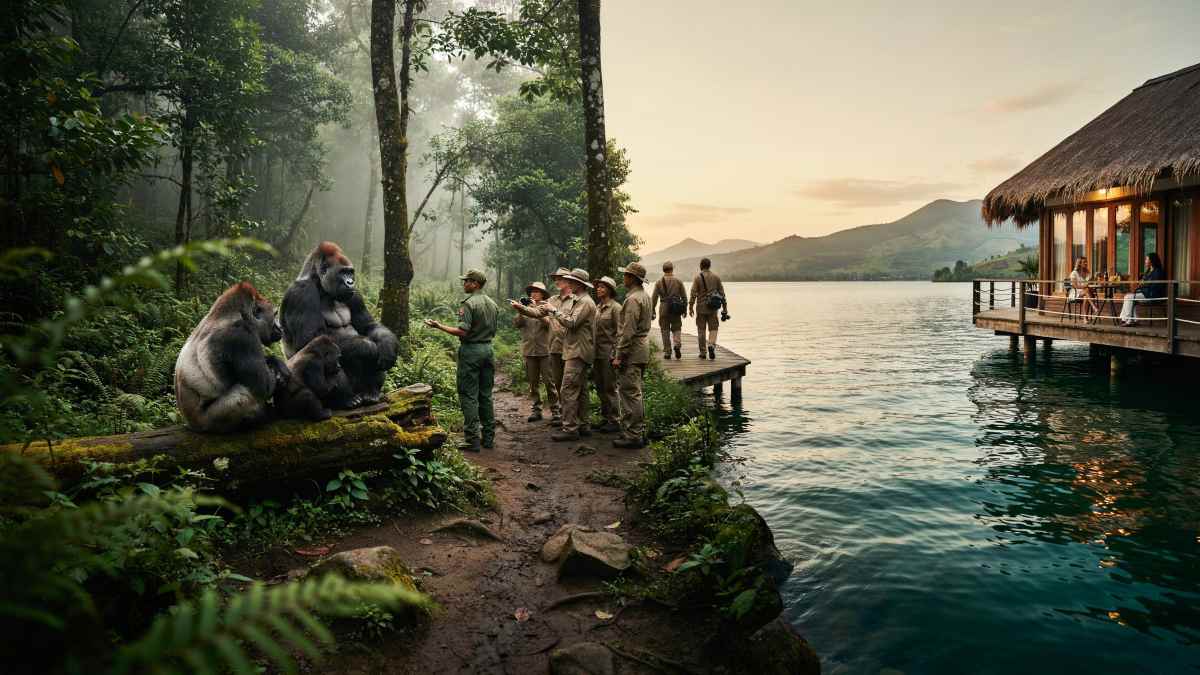
Image generated with Ai
Rwanda is expanding its tourism to develop a more comprehensive approach that includes gorilla trekking, Big Five Safaris, lake-based wellness tourism and domestic tourism. In the framework of Invest in Rwanda, the management deals for the Akagera Game Lodge have been sorted out along with new luxury resort facilities on the shores of Lake Kivu.
Rwanda’s tourism offer is increasingly being structured around multi-destination journeys rather than individual attractions. The development of management partnerships at Akagera Game Lodge and luxury accommodation around Lake Kivu creates additional opportunities to combine wildlife and leisure experiences.
Akagera National Park provides a savannah-based safari environment where visitors can experience Big Five wildlife. Lake Kivu offers a contrasting setting centred on lakeside accommodation, relaxation and wellness activities.
Gorilla tracking provides a third component, allowing international travellers to combine wildlife viewing in different environments with premium accommodation and leisure experiences.
Advertisement
Connecting these products can increase the number of nights visitors spend in Rwanda. A traveller can include gorilla tracking within a wider itinerary incorporating a safari in Akagera and a lakeside stay around Lake Kivu.
The model also creates connections between different tourism businesses, including lodges, resorts, guides, transport providers and activity operators.
Akagera remains an important part of Rwanda’s safari proposition. Its savannah landscape provides a distinct experience from the mountain environment associated with gorilla tracking.
The development of accommodation and management partnerships around the park supports the infrastructure required for wildlife-focused holidays. Luxury safari accommodation can form part of itineraries designed for international travellers seeking several premium experiences during one trip.
For visitors already travelling to Rwanda for gorilla tracking, adding Akagera creates an opportunity to experience another major wildlife environment without leaving the country.
This approach also gives tourism operators greater scope to develop longer packages that combine different regions and activities.
Lake Kivu is adding another dimension to Rwanda’s high-value tourism offer through new luxury resort assets and wellness-oriented itineraries.
The lake’s setting provides opportunities for travellers seeking relaxation after wildlife-focused activities. A lakeside stay can be positioned before or after gorilla trekking or a safari, creating a more varied holiday experience.
Wellness tourism can include accommodation-based relaxation, lakeside activities and experiences designed around longer stays. When combined with safari and gorilla tourism, it creates an itinerary spanning wildlife, nature and leisure.
The development also expands tourism beyond Rwanda’s best-known attractions, giving visitors additional reasons to travel through different parts of the country.
Rwanda is also strengthening its domestic tourism market as part of a dual-track approach designed to reduce dependence on premium international visitors.
Domestic park visits increased by 8.1% to nearly 60,000, indicating growing participation in nature-based travel among residents.
Urban destinations are contributing to this expansion. Nyandungu Eco-Park in Kigali provides residents and visitors with an accessible green space within the capital, extending the country’s ecotourism offer beyond major national parks.
Sports tourism is also supporting domestic and regional travel. Sporting events can attract visitors from neighbouring countries while generating demand for accommodation, restaurants, transport and other tourism services.
The combination of domestic parks, urban eco-destinations and sports events provides additional channels for tourism activity outside the international luxury segment.
Rwanda’s premium gorilla tourism model includes permits priced at around $1,500, placing gorilla tracking within a high-value international travel segment.
To broaden participation, the Rwanda Development Board has introduced differentiated pricing tiers alongside regional wellness itineraries.
Different pricing structures can allow tourism products to serve multiple visitor markets while maintaining premium experiences for international travellers. Regional visitors and domestic tourists can be targeted with products that reflect their travel patterns and spending levels.
The approach also supports greater use of Rwanda’s wider tourism infrastructure. Visitors who may not participate in premium gorilla trekking can instead explore national parks, urban eco-parks, wellness destinations or sports tourism experiences.
The combination of international luxury tourism, regional travel and domestic visitation is creating a broader foundation for Rwanda’s tourism sector.
Premium North American and European visitors remain an important market, particularly for gorilla tracking, but domestic and regional tourism provide additional sources of demand.
Akagera and Lake Kivu strengthen the country’s ability to build multi-destination itineraries, while Kigali provides an urban base for eco-tourism and sports-related travel.
For international visitors, combining gorilla tracking with a Big Five safari and a Lake Kivu wellness stay can create a longer and more varied Rwanda holiday. For domestic and regional travellers, differentiated pricing and accessible tourism products provide additional opportunities to experience the country.
The development of tourism in Rwanda is becoming more and more about creating connections between the country’s unique experiences. Gorillas continue to be one of the biggest attractions of Rwanda for international tourists, yet the experience offered by Akagera and the wellness opportunities of Lake Kivu are contributing to additional reasons for spending time in the country. With investments in the hospitality industry and growing interest of Rwandans in visiting parks and eco-tourism in cities, Rwanda is developing a tourism network around wildlife, wellness, nature, sports and city experiences. Thus, by integrating international tourism with domestic and regional tourism, Rwanda is building a more diverse tourism product.
Advertisement
Advertisement
Advertisement











Wednesday, September 2, 2026
Wednesday, September 2, 2026
Wednesday, September 2, 2026

Wednesday, September 2, 2026
Wednesday, September 2, 2026
Tuesday, September 1, 2026
Wednesday, September 2, 2026
Wednesday, September 2, 2026