
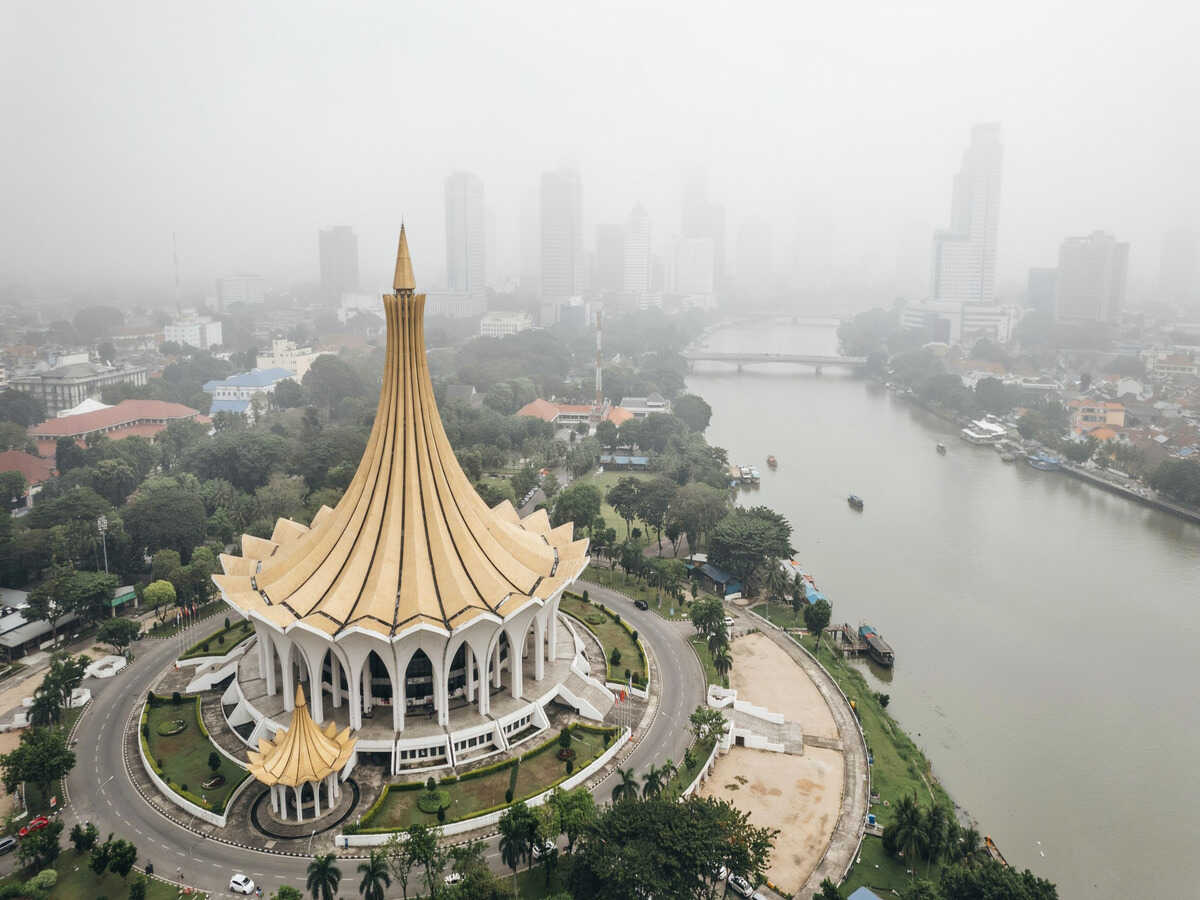
Image generated with Ai
Threat to Malaysian Tourism Due to Indonesian Haze. Indonesian Smoke from Wildfires Threatens Malaysian Tourism. The Malaysian tourism industry is threatened because the haze caused by Indonesian wildfires has led to some areas of Sarawak declaring an emergency situation. In addition, the Malaysian Borneo tourism has been affected due to the air pollution level being above the critical level in Malaysia. The emergency situation has occurred since the pollution levels in Serian exceeded the critical level in Malaysia.
Sarawak, one of Malaysia’s most important nature tourism destinations, relies heavily on rainforest adventures, wildlife encounters, cultural experiences and outdoor attractions. With thick smoke reducing visibility and creating health concerns, tourism businesses are preparing for possible short-term disruptions while authorities work to restore normal conditions.
The current crisis has been linked to forest and peatland fires in Indonesia, particularly in areas of Kalimantan on Borneo Island. During the dry season, smoke from large-scale fires can travel across borders, affecting neighbouring countries including Malaysia, Singapore and Brunei.
Sarawak has become one of the worst-affected Malaysian states, with haze conditions worsening as smoke settled over communities and major urban areas. The problem intensified after prolonged dry conditions increased wildfire activity across Indonesia.
Advertisement
Satellite monitoring recorded hundreds of fire hotspots in Indonesia, highlighting the scale of the wildfire situation. Authorities in Indonesia have also increased firefighting efforts, including weather modification and water-bombing operations, to control the spread of fires.
For Malaysia’s tourism industry, the location of the fires is significant because Sarawak shares the island of Borneo with Indonesian Kalimantan. This geographical connection means that smoke movement can quickly affect popular tourism areas, especially those dependent on clear skies and outdoor exploration.
The emergency declaration was issued in Serian after the Air Pollutant Index (API) reached extremely dangerous levels. The API reading climbed above 500, reaching approximately 519–521, exceeding the threshold required for an emergency response.
The declaration applies specifically to Serian district, covering an area of around a 20-kilometre radius. The measure allows authorities to introduce stronger restrictions, including possible limits on non-essential activities and outdoor operations. Essential services such as supermarkets, petrol stations and banks continue to operate.
Advertisement
Advertisement
The situation has also affected nearby Kuching, Sarawak’s capital and one of the state’s main tourism gateways. Kuching recorded hazardous air quality levels, with API readings reaching around 311, creating concerns for visitors planning sightseeing and outdoor activities.
Sarawak’s tourism identity is closely connected with nature. The state attracts international travellers through its rainforests, national parks, wildlife conservation areas and adventure experiences.
However, hazardous haze conditions can directly affect many of these tourism activities.
The areas facing possible disruption include:
Reduced visibility can significantly change the visitor experience. Tourists travelling to Sarawak often expect panoramic rainforest views, wildlife sightings and outdoor exploration. Thick haze can make landscapes appear unclear while limiting opportunities for photography and nature observation.
For adventure travellers, the health risks associated with prolonged outdoor exposure may also influence travel decisions, particularly among families, elderly visitors and travellers with respiratory concerns.
Kuching plays a central role in Sarawak’s tourism economy as the primary entry point for many international visitors. The city offers access to attractions including cultural landmarks, heritage areas, wildlife centres and nearby rainforest destinations.
However, hazardous haze conditions have created challenges for tourism operators.
Potential impacts include:Tourism Sector Possible Impact Outdoor sightseeing Reduced visitor interest due to poor visibility Nature excursions Possible itinerary changes Photography tourism Lower-quality scenic experiences Outdoor events Possible postponements Guided tours Reduced duration or modified routes Visitor confidence Travellers may delay trips
While tourism facilities remain open, the quality of visitor experiences can be affected when the environment does not meet traveller expectations.
The haze emergency has also resulted in widespread public safety measures. Schools in affected areas have been closed because Malaysia’s guidelines require closures when pollution levels reach dangerous levels.
Authorities have advised residents and visitors to reduce outdoor exposure, particularly when API levels remain hazardous.
Cloud-seeding operations have also been carried out as part of efforts to encourage rainfall and improve air quality.
For tourism operators, these measures create uncertainty, particularly for businesses dependent on outdoor activities. Tour companies may need to adjust schedules, while travellers may seek alternative indoor experiences until conditions improve.
Haze events across Southeast Asia have historically affected transport networks because reduced visibility can create challenges for aviation, road travel and marine operations.
Although major airport closures have not been reported as part of the current emergency, travellers heading to Sarawak should continue checking flight information and local advisories.
Kuching International Airport remains a key gateway for visitors travelling to destinations such as:
Any prolonged deterioration in visibility could create additional pressure on transport services.
Sarawak has built a strong international reputation as a destination for sustainable nature tourism. Attractions featuring orangutans, tropical forests and biodiversity are among the state’s biggest tourism strengths.
However, haze creates challenges for wildlife tourism because many experiences depend on outdoor conditions.
Tourists may experience:
A prolonged haze episode could affect visitor reviews and destination perceptions, particularly among international travellers planning once-in-a-lifetime rainforest holidays.
Hotels, restaurants, tour operators and attraction managers are monitoring the situation closely.
Possible short-term impacts include:
However, indoor tourism activities such as museums, shopping areas, restaurants and cultural attractions may continue operating with fewer disruptions.
Sarawak’s tourism industry has previously managed seasonal challenges, and operators are expected to adapt quickly as air quality conditions change.
The impact of the Sarawak haze emergency on tourism will largely depend on how quickly wildfire activity in Indonesia is controlled and whether rainfall improves air quality.
The immediate impact is expected to remain concentrated on outdoor tourism rather than causing a complete shutdown of travel across Malaysia.
Authorities are focusing on:
For travellers, Sarawak remains accessible, but visitors should monitor official air quality updates before planning outdoor activities.
Pressure is brought on Malaysia Tourism by the Sarawak haze as Indonesian wildfire smoke results in dangerous air quality, affecting the outdoor tourist experiences.
Malaysian tourism industry has been temporarily facing an environmental challenge due to wildfire smoke from Indonesia testing Sarawak’s resilience. While the haze has brought about pressure on nature tourism and outdoor experience, recovery is contingent upon favorable weather conditions and regional wildfire control.
Advertisement
Advertisement
Advertisement













Saturday, September 5, 2026

Saturday, September 5, 2026
Saturday, September 5, 2026

Saturday, September 5, 2026

Saturday, September 5, 2026
Saturday, September 5, 2026
Saturday, September 5, 2026

Saturday, September 5, 2026



