
Riviera Travel Pauses Rhine and Danube Cruises as Low Water Disrupts Summer Journeys

Published
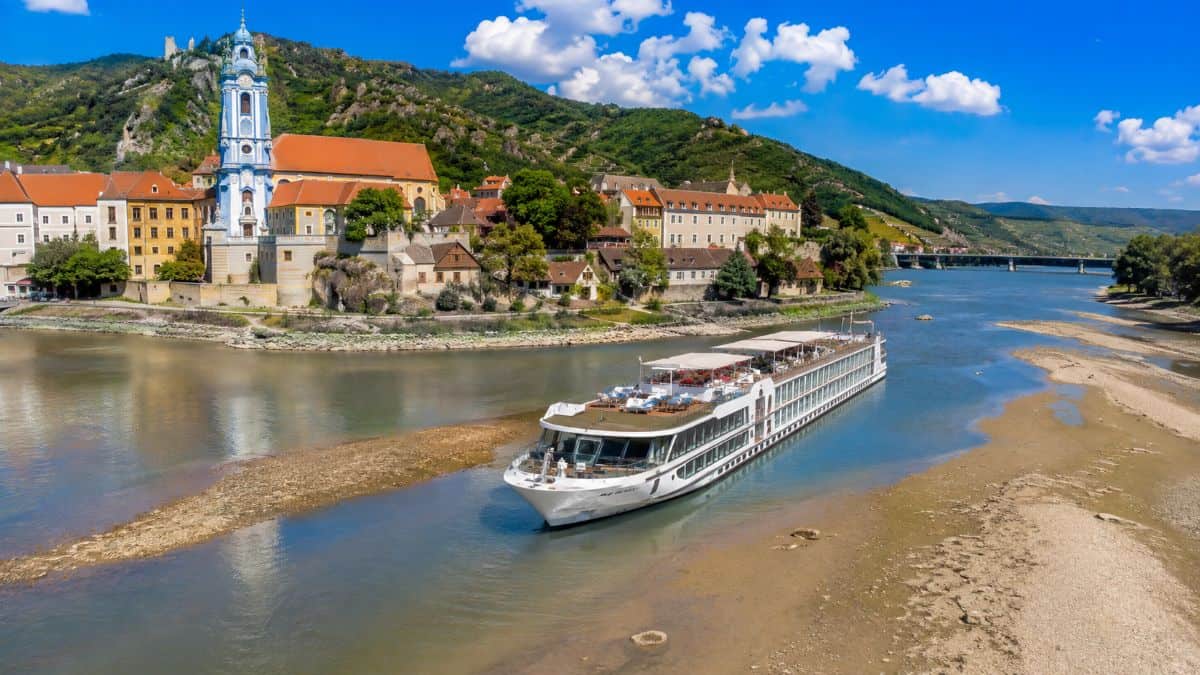
Image generated with Ai
Riviera Travel has temporarily paused sales of selected Rhine and Danube river cruises scheduled through mid-September as unusually low water levels continue to disrupt European waterways. The decision affects departures planned between now and mid-September, while the cruise operator has confirmed that the affected journeys have not been cancelled. Sales are expected to resume across markets from 13 September, subject to river conditions and the company’s ability to deliver the intended cruise experience.
For travellers planning an autumn river holiday, the development highlights the growing influence of extreme weather on Europe’s cruise season. Prolonged heat and drought have reduced water levels on major rivers, creating operational challenges for vessels navigating important cruising corridors. Rather than substantially replacing sailing sections with lengthy coach transfers, Riviera Travel has chosen to pause sales while conditions remain uncertain. The approach places the quality of the passenger experience at the centre of the decision and provides travellers with greater clarity before committing to affected departures. The situation also underlines why river cruise passengers should assess weather conditions, itinerary policies and operator communications when planning journeys during periods of unusual environmental disruption.
Advertisement
Advertisement
Rhine And Danube Face Challenging Summer Conditions
The Rhine and Danube are among Europe’s most important river cruise routes, linking major cities, historic settlements, vineyards and cultural attractions across several countries. Their popularity makes water-level disruptions particularly significant for the wider travel industry.
This year’s prolonged heat and drought have produced difficult navigation conditions in parts of both rivers. Lower water can restrict vessel movement, affect the amount of cargo or passenger capacity a ship can carry and, in severe circumstances, make particular stretches difficult or impossible to navigate safely.
Advertisement
Advertisement
River cruise operators must therefore continuously balance itinerary commitments with changing conditions. Unlike ocean cruises, which have greater flexibility to navigate deep waters, river vessels operate within waterways where depth can vary considerably according to rainfall, seasonal conditions and prolonged periods of drought.
Advertisement
Advertisement
Executives within the river cruise sector have described the current summer as the most difficult since 2018, demonstrating the scale of the operational pressure facing companies and travellers.
Riviera Travel Protects The Intended Cruise Experience
Riviera Travel’s decision reflects a broader issue affecting river tourism: whether an itinerary can still provide the experience passengers originally purchased.
The company has indicated that it does not want significant sections of a river voyage replaced by repeated, long-distance coach journeys simply to maintain a published schedule. For holidaymakers, this distinction is important because river cruising is built around travelling by water while enjoying landscapes, riverside towns and destinations along the route.
Advertisement
Advertisement
The temporary sales pause allows the operator to assess whether conditions will support a genuine river cruise rather than an itinerary dominated by road transportation. Travellers already booked on affected departures may therefore need to remain attentive to operational updates as conditions develop.
The decision also demonstrates the importance of transparent communication in weather-sensitive tourism. Clear information about possible changes can help passengers make informed decisions and reduce uncertainty before departure.
Advertisement
Advertisement
What Low Water Means For River Cruise Travellers
Low water does not automatically mean that every river cruise will be cancelled. The operational impact depends on the precise location and severity of the water-level reduction, vessel requirements and the operator’s ability to modify an itinerary without compromising safety or the holiday experience.
| Travel consideration | Potential impact |
|---|---|
| Low river levels | Can restrict navigation on shallow sections |
| Extreme heat | Can increase evaporation and worsen drought conditions |
| Drought | May prolong difficult cruising conditions |
| Coach transfers | Could replace parts of an itinerary when navigation is restricted |
| Sales pauses | Give operators time to assess future departures |
| Itinerary changes | May affect scheduled ports or sightseeing arrangements |
| Passenger communication | Helps travellers understand changing arrangements |
For travellers considering a Rhine or Danube cruise, flexibility is increasingly valuable. Checking the operator’s latest departure information before travelling can help passengers understand whether an itinerary remains operational and whether alternative arrangements are being considered.
European River Cruising Faces A Changing Climate
The disruption illustrates a longer-term challenge for European river tourism. Climate variability can create both high-water and low-water risks, making conditions increasingly difficult to predict well in advance.
River cruise companies have developed contingency measures over the years, but prolonged drought can test the limits of those arrangements. When water levels fall substantially, operators may need to adjust routes, alter passenger logistics or reconsider whether a journey can proceed in its intended form.
For the travel market, the issue extends beyond one operator or two rivers. Europe’s river cruise network supports tourism in numerous cities and smaller destinations, meaning disruption can influence accommodation, excursions, restaurants, transport providers and local attractions.
Advertisement
Advertisement
The immediate focus remains on river conditions and the ability of operators to provide safe, authentic itineraries. Riviera Travel’s planned sales restart on 13 September will depend on whether circumstances allow the company to maintain that standard.
What Travellers Should Consider Before Booking
Travellers booking European river cruises during periods of extreme weather should examine cancellation and amendment policies carefully and understand how operators handle unavoidable itinerary changes.
Passengers can also benefit from choosing travel dates with greater flexibility and keeping alternative sightseeing expectations in mind. River levels can change quickly after rainfall, but prolonged drought can also make recovery slower.
The current Rhine and Danube situation reinforces a fundamental lesson for modern travel planning: environmental conditions can influence holidays just as significantly as transport schedules or accommodation availability. Reliable operator communication and realistic expectations remain essential when booking weather-sensitive journeys.
FAQs
1. Why has Riviera Travel paused some river cruise sales?
Sales have been temporarily paused because low water levels are creating difficulties for Rhine and Danube cruises scheduled through mid-September.
Advertisement
Advertisement
2. Have the affected Riviera Travel cruises been cancelled?
No. The cruises have not been cancelled, although operating conditions remain subject to change.
3. When are sales expected to resume?
Riviera Travel expects sales for the affected cruises to resume across markets from 13 September.
4. Which rivers are affected by the sales pause?
The temporary measure concerns selected cruises on the Rhine and Danube.
5. Why are river levels unusually low?
Extreme heat and prolonged drought have contributed to reduced water levels in parts of Europe’s major rivers.
6. Can low water levels affect a river cruise itinerary?
Yes. Shallow sections can restrict navigation and may require itinerary changes or alternative transportation arrangements.
Advertisement
Advertisement
7. Could passengers be transferred by coach?
Coach transportation can be used when river navigation is restricted, although Riviera Travel has indicated that it does not want significant sections replaced by lengthy coach journeys.
8. Why are low water levels important for river cruise operators?
River vessels require sufficient water depth to navigate safely and maintain their planned routes.
9. Is the Rhine still a popular river cruise destination?
Yes. The Rhine remains one of Europe’s major river cruising corridors, connecting numerous cultural and scenic destinations.
10. What should travellers do before a river cruise departure?
Travellers should monitor operator updates, review booking conditions and remain prepared for possible itinerary changes caused by river conditions.
Advertisement
