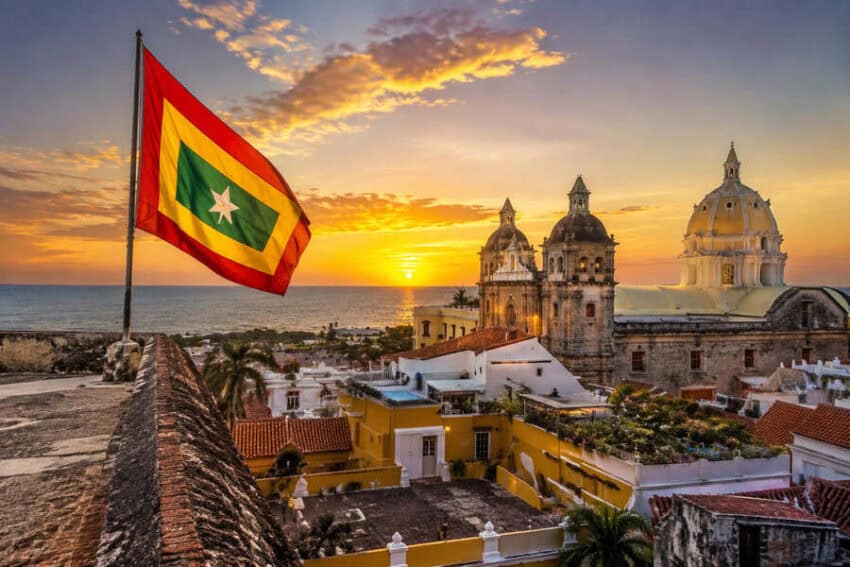
Image generated with Ai
Cartagena Sustainable Heritage City is attracting fresh attention from Travellers seeking meaningful destinations. Cartagena Sustainable Heritage City now offers Travellers 15 compelling reasons to look closer at its heritage, culture and tourism growth. Moreover, the city combines historic landmarks with vibrant communities, coastal experiences and responsible tourism opportunities. These developments make Cartagena an increasingly interesting choice for global Travellers. At the same time, its sustainable heritage story adds another reason to explore Colombia’s Caribbean destination. Travel And Tour World urges readers to read the entire story to discover all 15 reasons, key tourism figures and practical insights behind Cartagena Sustainable Heritage City and its growing appeal among Travellers.
Cartagena’s recognition among Europe and Latin America’s most sustainable heritage cities comes as visitor numbers continue to expand. A National University of Colombia study assessed 105 UNESCO heritage cities across four sustainability dimensions: cultural, economic, social and environmental. Cartagena ranked seventh, with an overall efficiency score of 0.96 out of 1. The research compared 73 European and 32 Latin American cities using data from 2021–2023.
For travellers, the most important point is that sustainability does not mean reducing tourism completely. Instead, Cartagena’s model seeks to keep tourism connected with residents, heritage, culture, employment and environmental protection.
| No. | Indicator | Cartagena data | Period/source |
|---|---|---|---|
| 1 | Heritage cities assessed | 105 | 2021–2023 |
| 2 | European cities assessed | 73 | Study |
| 3 | Latin American cities assessed | 32 | Study |
| 4 | Cartagena sustainability position | 7th | Study |
| 5 | Overall efficiency | 0.96/1 | Study |
| 6 | Latin America cultural average | 0.658 | Study |
| 7 | Europe cultural average | 0.598 | Study |
| 8 | Latin America social average | 0.720 | Study |
| 9 | Europe social average | 0.816 | Study |
| 10 | Latin America economic average | 0.909 | Study |
| 11 | Europe economic average | 0.927 | Study |
| 12 | Cartagena visitors | 5.5 million | 2025, through November |
| 13 | Foreign visitors | about 856,000 | 2024 |
| 14 | Domestic share of air passengers | 81% | Recent data |
| 15 | Homicide rate | 40.5 per 100,000 | Recent city data |
The 5.5-million figure represents passengers arriving through air, land and cruise channels through November 2025. It should not be treated as an exact count of unique tourists because transport statistics can include repeated movements.
Advertisement
Advertisement
A crucial distinction is needed before comparing Cartagena’s monthly visitor numbers. Colombia’s Ministry of Commerce, Industry and Tourism publishes monthly national tourism statistics, but Cartagena’s available official datasets do not provide one consistent five-year series of total unique visitors for every month from 2021 through 2025. Therefore, presenting 60 invented monthly totals would be misleading.
The most comparable official measure is foreign non-resident arrivals.Year Cartagena foreign non-resident arrivals Change 2021 190,737 — 2022 532,385 +179.1% 2023 636,550 +19.6% 2024 ~856,000 Strong further growth 2025 5.5m total arrivals through Nov. Different methodology
The 2021 and 2022 figures come from Migración Colombia data compiled by ProColombia. Cartagena’s foreign arrivals rose from 190,737 in 2021 to 532,385 in 2022, representing a 179.1% increase.
For 2023, ProColombia recorded 636,550 foreign non-resident arrivals, giving Cartagena a 15.6% share of the leading Colombian destination-city total in that dataset. The organisation also warned that changes in how Migración Colombia collected destination information could affect city comparisons.
Cartagena’s District Planning Secretariat reports approximately 856,000 foreign visitors in 2024, describing a 332% increase since 2021.
The leading source markets were the United States with 276,000 visitors, followed by Peru with 64,000, Mexico with 56,000 and Ecuador with 46,000.
Women represented approximately 422,000 visitors, or 49%, while men accounted for around 434,000, or 51%.
Cartagena’s 2025 tourism picture demonstrates why total visitor numbers should be separated from foreign arrivals.
By November, Corpoturismo reported 5.5 million passengers entering the city through air, land and cruise transport. The city promoted eight tourism segments, including cultural, gastronomic, cruise, romantic, sports, religious, marine-coastal and MICE tourism.
The city’s air connectivity also strengthened. Cartagena reported 7.5 million air passengers during 2024, representing a 16.5% increase from 2023. By August 2025, the figure had already reached 5.1 million, with more than 559,917 international passengers recorded during the cited period.
Official monthly national data shows strong seasonality in Colombia’s international tourism market. For example, total non-resident arrivals nationwide reached 605,965 in January 2024 and 568,282 in January 2025, a decline of 6.2%.
However, those figures represent Colombia, not Cartagena. They should not be incorrectly presented as Cartagena monthly visitor numbers.
The Ministry itself states that its tourism reports are monthly and cover foreign non-residents, Colombians living overseas, international cruises, air connectivity, domestic tourism and accommodation. It also notes that methodology changes mean historical series are being updated.
Cartagena recorded 3,584,262 air passengers in 2022, up 54.83% from 2021 and 24.38% above 2019, according to the Cartagena District Government.
Cruise tourism also recovered. During the 2021–2022 season, Cartagena received 80 cruise calls and approximately 137,856 passengers and crew, according to the city government.
By 2022, the city had also recorded 67,720 Colombian visitors through free-entry programming at the Castillo de San Felipe de Barajas.
During Colombia’s October 2023 school-break period, Cartagena welcomed 145,034 visitors between October 7 and 16.
Air travel accounted for 95,342 arrivals, or about 66%. Of those air arrivals, 81% were domestic and 19% international. Another 46,360 visitors arrived by land, while 3,332 arrived by sea.
This demonstrates why Cartagena’s sustainability model cannot focus exclusively on overseas travellers. Domestic tourism represents a substantial part of demand.
The December 2024–January 2025 holiday period produced approximately 930,000 tourists according to one official city update, representing a 35% increase over the previous season.
Cruise arrivals contributed 76,425 people, including 53,693 passengers and 22,732 crew, across 32 cruise calls. The reported economic impact was approximately US$8.1 million.
Another city report covering a slightly different measurement period estimated 950,000 visitors, illustrating why travellers and analysts should always check the precise dates and methodology behind each statistic.
Cartagena’s sustainability ranking is significant because tourism growth is occurring alongside attempts to preserve its living heritage.
UNESCO inscribed Cartagena’s Port, Fortresses and Group of Monuments in 1984. Its heritage area includes the historic districts of Centro, San Diego and Getsemaní.
The city’s challenge is therefore not simply attracting visitors.
It must manage visitor pressure while keeping historic spaces accessible to residents. Travellers can support that objective by using local guides, exploring community tourism, respecting protected areas and spending with locally owned businesses.
Cartagena’s visitor statistics show a rapidly expanding tourism economy. Its sustainability ranking shows the other side of the story: growth must remain compatible with culture, community and conservation. For international travellers, that makes Cartagena more than a Caribbean sightseeing destination. It becomes an example of how a famous heritage city is attempting to manage tourism while keeping its historic identity alive.
Advertisement
Tags: caribbean travel, Cartagena Colombia travel, Cartagena heritage tourism, Cartagena Sustainable Heritage City, Cartagena sustainable tourism
Advertisement
Advertisement












Wednesday, September 2, 2026

Wednesday, September 2, 2026
Wednesday, September 2, 2026

Wednesday, September 2, 2026

Wednesday, September 2, 2026

Wednesday, September 2, 2026

Wednesday, September 2, 2026

Wednesday, September 2, 2026