
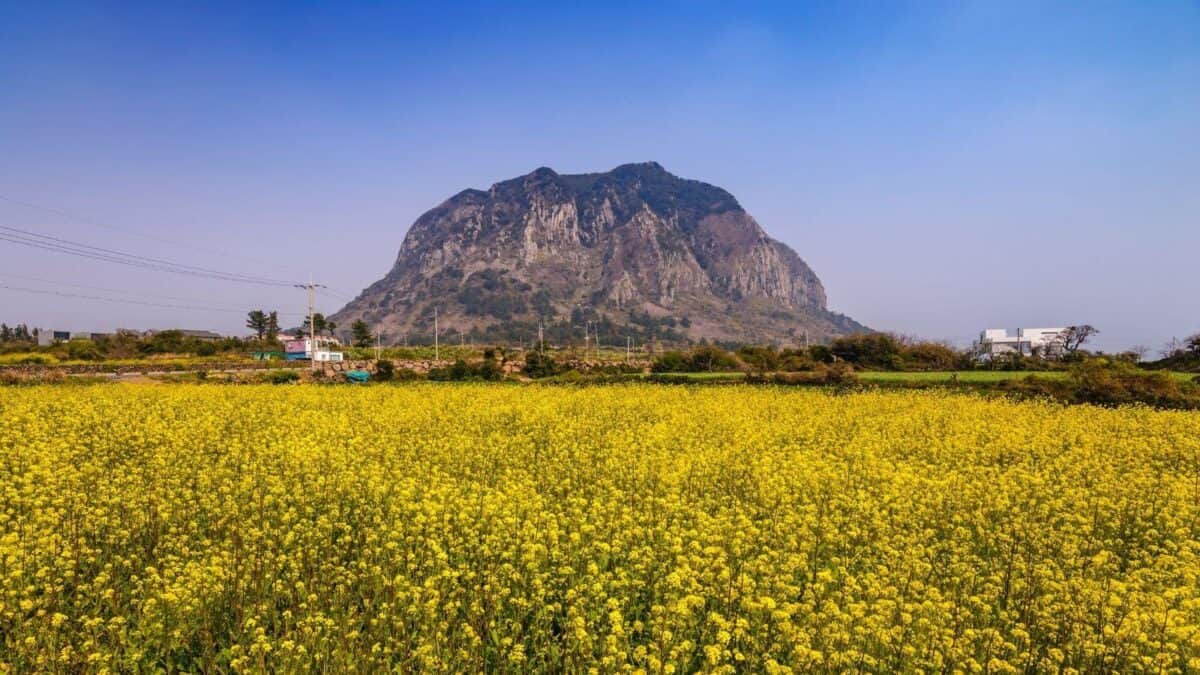
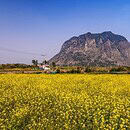
Image generated with Ai
Jeju Island is seeing tourism rise as safer journeys and lesser-known gems attract more travellers. Today, Jeju Island tourism is gaining attention as travellers seek safer journeys, quieter escapes, and authentic gems. Moreover, these lesser-known gems are giving every traveller fresh reasons to explore beyond famous sights. As tourism rise continues, Jeju Island offers longer stays, local culture, coastal beauty, and memorable journeys. Safer journeys also make exploration more appealing for global travellers. Meanwhile, these lesser-known gems reveal another side of Jeju Island. Travel And Tour World urges readers to discover how Jeju Island, safer journeys, tourism rise, and hidden gems are reshaping travel.
Jeju Island is increasingly encouraging visitors to stay longer and experience more than its famous headline attractions. That direction is particularly relevant for travellers looking for quieter villages, coastal walks, forests, local food and community-based experiences.
The island welcomed 13,767,350 visitors in 2024, according to Jeju tourism statistics. That included 11,861,654 domestic visitors and 1,905,696 international visitors. International arrivals increased sharply from 709,350 in 2023 to 1,905,696 in 2024.
Provisional 2025 figures show another shift. Jeju recorded approximately 13.8469 million visitors, up about 0.6% from 2024. Domestic visitors fell approximately 2.2%, while international visitors rose about 17.7% to 2.244 million.
Advertisement
This makes lesser-known parts of the island increasingly important for spreading tourism geographically.
For travellers, six areas stand out: Gujwa, Jocheon, Hallim, Hangyeong, Daejeong and Pyoseon.
The official annual statistics provide a clear picture of Jeju’s tourism recovery and changing visitor mix.Year Total visitors Domestic visitors International visitors Key change 2021 12,008,437 11,960,159 48,278 International market remained extremely small 2022 13,889,502 13,803,058 86,444 Domestic tourism reached a strong post-pandemic level 2023 13,370,529 12,661,179 709,350 International recovery accelerated 2024 13,767,350 11,861,654 1,905,696 International arrivals surged 2025* ~13,846,900 ~11,602,700 ~2,244,200 Total arrivals edged higher; foreign market expanded 2026** 1.47m international arrivals by July — 1.47m International arrivals were reported 15.1% higher year-on-year
*2025 figures are provisional reported totals.
**The 2026 figure refers to international arrivals through July, not total annual visitors.
The five-year pattern is significant.
Total arrivals rose from 12.01 million in 2021 to 13.89 million in 2022, before easing to 13.37 million in 2023. The total recovered to 13.77 million in 2024.
The bigger transformation occurred in international tourism.
Foreign visitors increased from only 48,278 in 2021 to 86,444 in 2022, then jumped to 709,350 in 2023 and 1.906 million in 2024.
Jeju’s tourism economy is still heavily influenced by domestic travel, but the international component is becoming considerably more important.
Official 2024 statistics show that domestic visitors declined 6.3% from 2023, while international arrivals rose 168.7%.
The island is therefore looking for ways to make visitors stay longer and distribute their spending beyond the busiest attractions.
The official Visit Jeju platform divides the island into areas including Aewol, Hallim, Hangyeong, Jocheon, Gujwa, Seongsan, Daejeong, Andeok, Jungmun, Namwon and Pyoseon.
These areas provide a useful framework for travellers who want to build multi-day itineraries rather than concentrate on one resort zone.
There is no reliable official five-year annual visitor series publicly available for Gujwa, Jocheon, Hallim, Hangyeong, Daejeong and Pyoseon individually.
Therefore, the table below does not falsely assign island-wide visitor totals to individual districts.Destination Administrative area Official five-year visitor total published? Useful official tourism measurement Gujwa Jeju-si Not published as comparable annual district total Sehwa Beach, Olle Route 20, nearby attractions Jocheon Jeju-si Not published as comparable annual district total Hamdeok Beach, Seoubong, 4.5-km coastal road Hallim Jeju-si Not published as comparable annual district total Hallim Park, 330,000-sq-metre park, Hyeopjae/Geumneung Hangyeong Jeju-si Not published as comparable annual district total Suwolbong, 77-metre peak, 2-km coastal cliffs Daejeong Seogwipo-si Not published as comparable annual district total Moseulpo Port, Songaksan, Olle Routes 10 and 11 Pyoseon Seogwipo-si Not published as comparable annual district total 250,000-sq-metre Pyoseon Beach, 12-km coastal road
This distinction is important because website lookups, reviews and page views are not equivalent to actual physical visitor counts.
Gujwa is one of the strongest choices for travellers seeking a slower northeastern Jeju experience.
Its standout location is Sehwa Beach, a relatively small coastal area formed from shell sand over basalt. Its sandy section changes with tides, sediment movement and erosion. During low tide, visitors can walk across the exposed white sand. The beach is connected with Jeju Olle Trail Route 20, which runs between Gimnyeong and Hado.
The area works particularly well for independent travellers.
A practical day can begin at Sehwa Beach before continuing toward the Sehwa Folk Fifth-day Market and the Jeju Haenyeo Museum. The market operates on dates ending in five or zero, providing an opportunity to observe local trading traditions. Nearby attractions also include Byeolbangjin Fortress, Jongdal-ri Hydrangea Road, Tokkiseom’s natural habitat and Bijarim Forest.
For food, travellers should prioritise Jeju specialties rather than international chains. Official Visit Jeju guidance highlights dishes including braised cutlassfish, braised mackerel, abalone hotpot, sea-urchin seaweed soup and Jeju black pork.
For accommodation, choose a guesthouse, pension or locally operated property in the Gujwa-Sehwa area. Visit Jeju lists accommodation categories ranging from guesthouses and rural B&Bs to hotels and resorts.
A good two-day plan is Sehwa Beach and the local market on day one, followed by Haenyeo culture, Bijarim Forest and the eastern coast on day two.
Jocheon combines a more accessible seaside experience with forest landscapes.
Hamdeok Beach is its best-known coastal attraction, but the wider area can still support a slower itinerary. The beach is associated with Seoubong, a volcanic cone rising beside the coast. It forms part of Jeju Olle Route 19.
In 2025, Hamdeok became the first Jeju beach designated to allow swimming with dogs. During the 2026 beach season, a dedicated Ham Dog Beach area operates near Seoubong. Official swimming hours for 2026 are 10:00 to 19:00, with nighttime swimming prohibited.
For a quieter experience, travellers can explore Seonheulgot Dongbaek-Dongsan.
This evergreen forest developed over lava formations and contains wetlands, volcanic features and diverse vegetation. It is recognised as a Ramsar wetland and Global Geopark location.
Another useful option is the Jocheon-Hamdeok Coastal Road, which is approximately 4.5 kilometres long. It follows the northeastern shoreline and provides views of the sea and villages.
For food, seafood, abalone, mackerel and Jeju black pork are logical choices based on the island’s official culinary recommendations. Travellers can stay around Hamdeok or select a guesthouse or rural accommodation in Jocheon.
A three-day itinerary works well: Hamdeok and Seoubong on day one, Seonheul forest on day two, and the coastal road and nearby villages on day three.
Hallim is more established than some of the other destinations on this list, but it offers enough space and variety for visitors to move away from the busiest sightseeing pattern.
Hyeopjae Beach and Geumneung Beach are the main coastal attractions.
Hyeopjae is part of Jeju Olle Route 14 and has shallow water, a gentle slope and views toward Biyangdo Island. The surrounding area includes cafés, restaurants and accommodation.
The official 2026 designated beach period for Hyeopjae runs from June 24 to September 6, generally from 10:00 to 19:00, with extended nighttime operation from July 15 to August 15 until 21:00. The published 2026 rates are KRW20,000 for a parasol and KRW30,000 for a wooden platform.
Geumneung sits directly beside Hyeopjae and is described by Visit Jeju as offering a relatively more relaxed atmosphere. Its shallow water, fine sand and Biyangdo views make it useful for families and slower beach days.
Hallim Park adds another major experience.
The official tourism listing describes the park as covering approximately 330,000 square metres and containing nine themed areas.
Travellers can combine Hallim Park, Hyeopjae and Geumneung over two days.
Food options should include black pork, seafood and abalone-based dishes. Accommodation is plentiful, with hotels, pensions, guesthouses and resorts available through the official tourism accommodation directory.
For a three-day visit, reserve the first day for beaches, the second for Hallim Park and western landscapes, and the third for cafés, village roads and Olle walking.
Hangyeong is particularly attractive for travellers interested in geology, landscapes and walking.
Its signature attraction is Suwolbong Peak, which stands approximately 77 metres above sea level. The site provides views toward Chagwido, while dramatic coastal cliffs extend for about 2 kilometres from the peak.
The surrounding landscape forms part of Jeju’s geological heritage.
A coastal trail reveals layers of volcanic deposits, while freshwater springs emerge from the cliffs. Suwolbong also has a cultural story involving the siblings Nokgo and Suwol, which is preserved in local tradition.
The Suwolbong Geo Trail is suitable for visitors who want to combine walking with geological interpretation. Official tourism information identifies the area as a Geo Trail and UNESCO-associated geological landscape.
Travellers can plan a western sunset trip around Suwolbong, followed by a meal in nearby communities.
For food, choose fresh seafood, Jeju black pork, abalone or local seasonal dishes. Visit Jeju’s culinary guidance emphasises seafood and island-grown ingredients as central to Jeju cuisine.
Accommodation is best selected around nearby coastal villages or western Jeju hubs.
A two-day plan is sufficient for many visitors: Suwolbong and the coastal geological landscape on day one, followed by nearby western attractions and a slower food-focused day on day two.
Daejeong offers a different perspective on Jeju.
Instead of concentrating entirely on beaches, visitors can experience the island through fishing, ports, volcanic landscapes and maritime history.
Moseulpo Port is particularly important. It is the terminus of Jeju Olle Route 10 and the starting point of Route 11. It is also described by Visit Jeju as a major southwestern port and southern fishing base.
The port was designated a national fishing port in 1971. Routes from Moseulpo connect with Marado, Korea’s southernmost island, and Gapado, known for its green barley landscapes.
Daejeong also provides access to Songaksan Mountain.
The volcanic landscape includes a cinder cone inside a tuff ring, with a crater depth of approximately 69 metres. However, travellers need to note an important current restriction: the summit area and summit trail are closed for vegetation restoration until July 31, 2027. Other areas remain accessible.
This makes Daejeong particularly useful for responsible nature tourism.
Food should focus on seafood, local fish preparations and Jeju black pork. Travellers staying around Moseulpo can build a food-and-walking itinerary around the port.
A three-day plan can combine Moseulpo and Olle Route 10 on day one, Marado or Gapado on day two, and accessible areas around Songaksan and southwestern Jeju on day three.
Pyoseon is one of the strongest options for travellers seeking a balance between nature and traditional culture.
Pyoseon Beach covers approximately 250,000 square metres, with around 160,000 square metres of white sand, according to Visit Jeju. At low tide, the beach reveals broad sand areas; at higher tide, the water creates a shallow pond-like landscape.
The area is also close to Jeju Folk Village, creating an easy combination of beach and cultural tourism.
Visit Jeju’s current Pyoseon recommendations include Ttarabi Oreum, Seongeup Village, Jeju Folk Village, Pyoseon Beach and the eastern coastal road. It also recommends Olle Trail Route 4, connecting Jeju Folk Village and Namwon Port.
The Pyoseon-Sehwa Coastal Road adds another major experience.
The route is approximately 12 kilometres long, with views of Tokkiseom, Udo, Seongsanpo Port and the Hado-ri migratory bird sanctuary.
For an even quieter experience, travellers can visit Pyoseon Sogeummak Beach. Visit Jeju describes it as a peaceful southeastern beach with silver sand, clear water and black rock formations. However, it is not an official beach, so swimming requires additional caution.
Food choices should centre on local seafood, black pork and seasonal Jeju ingredients.
For accommodation, Pyoseon has hotels, resorts, pensions and local lodging. Haevichi Hotel & Resort Jeju is located in the area, while the official tourism directory provides broader accommodation categories.
A three-day itinerary can cover Seongeup and Ttarabi Oreum first, Pyoseon Beach and the Folk Village second, and the coastal road and Olle Route 4 on the final day.
| Destination | Best for | Major official attraction | Key statistic | Recommended stay |
|---|---|---|---|---|
| Gujwa | Villages, coastal walks, culture | Sehwa Beach | Olle Route 20 | 2–3 nights |
| Jocheon | Beach, forest, wellness | Hamdeok/Seonheul | 4.5-km coastal road | 2–3 nights |
| Hallim | Beaches, families, geology | Hallim Park | 330,000 sq m | 2–3 nights |
| Hangyeong | Geology, walking, sunsets | Suwolbong | 77-m peak; 2-km cliffs | 2 nights |
| Daejeong | Ports, islands, hiking | Moseulpo/Songaksan | 69-m Songaksan crater depth | 2–3 nights |
| Pyoseon | Heritage, beach, cycling | Pyoseon Beach | 250,000 sq m beach; 12-km coastal road | 2–3 nights |
| Indicator | 2021 | 2022 | 2023 | 2024 | 2025 |
|---|---|---|---|---|---|
| Total visitors | 12.01m | 13.89m | 13.37m | 13.77m | 13.85m* |
| Domestic | 11.96m | 13.80m | 12.66m | 11.86m | 11.60m* |
| International | 48,278 | 86,444 | 709,350 | 1.91m | 2.24m* |
| International growth | — | +79.1% | +720.4% | +168.7% | +17.7% |
| Total trend | — | +15.7% | -3.7% | +3.0% | +0.6% |
*2025 figures are provisional.
The numbers show a clear structural change.
Jeju has not simply returned to its earlier tourism pattern. International tourism has become a much larger component of demand.
The island’s official statistics show foreign arrivals rising nearly 40-fold between 2021 and 2025, from 48,278 to roughly 2.24 million.
Jeju’s food culture is another reason to stay longer.Food What it is Why travellers should try it Jeju black pork Local pork traditionally grilled One of Jeju’s signature dishes Galchi-jorim Braised cutlassfish Strong seafood flavour Godeungeo-jorim Braised mackerel Traditional local seafood Jeonbok-ttukbaegi Abalone hotpot Rich seafood-based meal Sung-gae miyeok-guk Sea-urchin seaweed soup Distinctive island seafood Bracken dishes Seasonal fern-based dishes Strong connection to local ingredients Horse cuisine Traditional Jeju meat dishes Historic island speciality
Visit Jeju specifically identifies cutlassfish, mackerel, abalone, sea-urchin soup and black pork among Jeju’s distinctive foods.
Its official culinary guide also identifies black pork, horse cuisine and pheasant-based dishes among local specialities.
Travellers who want to follow the longer-stay philosophy can connect the six areas instead of choosing only one.Day Base Suggested experience 1 Jocheon Hamdeok Beach and Seoubong 2 Jocheon Seonheulgot Dongbaek-Dongsan 3 Gujwa Sehwa Beach and coastal villages 4 Gujwa Haenyeo Museum, Bijarim and Olle Route 20 5 Hallim Hyeopjae and Geumneung 6 Hallim Hallim Park and western coast 7 Hangyeong Suwolbong Geo Trail 8 Hangyeong Western coastal exploration and local food 9 Daejeong Moseulpo Port and Olle Route 10 10 Daejeong Marado or Gapado, subject to ferry conditions 11 Pyoseon Seongeup Village and Ttarabi Oreum 12 Pyoseon Pyoseon Beach, coastal road and Olle Route 4
This itinerary deliberately avoids treating Jeju as a checklist of famous attractions.
Instead, it creates a progression through forest, coast, village, food, culture, geology and local life.
Jeju’s current tourism strategy places greater emphasis on safer exploration.
Travellers should check official weather information before coastal walks and mountain activities.
Swimming should be limited to officially managed areas during designated periods. This is particularly important at beaches such as Hyeopjae and Hamdeok, where official operating hours and designated zones apply.
Visitors should also respect temporary conservation closures.
Songaksan’s summit and summit trail, for example, remain closed until July 31, 2027 for vegetation recovery.
At unofficial beaches such as Sogeummak, travellers should not assume that swimming conditions are equivalent to those at designated beaches.
Jeju’s tourism numbers demonstrate why the island is looking beyond short sightseeing visits.
More than 13 million visitors have travelled to Jeju annually since 2022, while international tourism has recovered dramatically.
The challenge now is not simply attracting more people.
It is encouraging visitors to stay longer, spend more time in communities and explore responsibly.
For global travellers, the six areas above provide a practical way to do exactly that.
Gujwa offers village life and coastal walking. Jocheon combines forest and beach. Hallim delivers western coastal scenery. Hangyeong brings geology and sunsets. Daejeong adds fishing-port culture and island excursions. Pyoseon combines beaches with traditional heritage.
Together, they create a more complete version of Jeju.
For travellers planning a longer South Korea holiday, that may be the most compelling reason to move beyond the island’s most famous postcard locations.
Jeju Island is entering an exciting new chapter as tourism rise creates fresh opportunities for travellers. Safer journeys, longer stays, and lesser-known gems are making the destination even more appealing. From quiet coastal villages to cultural attractions, forests, beaches, and local food, Jeju Island offers experiences beyond its famous landmarks. These hidden gems also encourage travellers to explore responsibly and spend more time within local communities. As safer journeys continue to shape tourism, visitors can discover a more authentic side of the island. Travel And Tour World encourages global travellers to look beyond the usual attractions and explore these lesser-known Jeju gems.
Advertisement
Tags: Jeju Island tourism, Jeju Island travel, Jeju tourism rise, Jeju Travel, lesser-known Jeju gems
Advertisement
Advertisement












Monday, September 7, 2026

Monday, September 7, 2026
Monday, September 7, 2026

Monday, September 7, 2026

Sunday, September 6, 2026
Saturday, September 5, 2026
Monday, September 7, 2026
Monday, September 7, 2026



