
US Rivals Australia and Germany as Nascar Roval 400 Accelerates the Global Race for Motorsport Tourists in 2026

Published
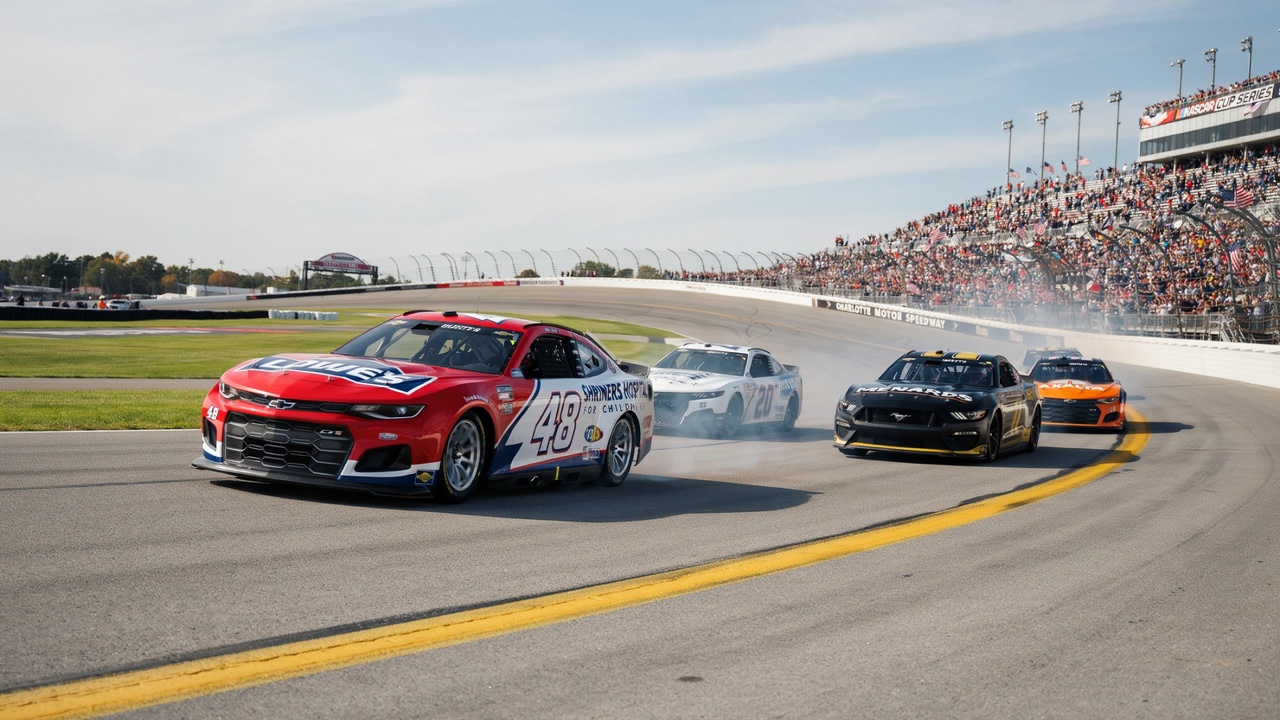
Image generated with Ai
US Rivals Australia and Germany as Nascar Roval 400 Accelerates the Global Race for Motorsport Tourists in 2026.Grandstand infrastructure, infield staging facilities, and regional transport arteries across Mecklenburg and Cabarrus counties have entered maximum operational readiness as the 2026 Bank of America ROVAL 400 prepares to take the green flag on Sunday, October 11, 2026. Staged at the legendary Charlotte Motor Speedway complex in Concord, North Carolina, the race functions as a marquee Round of 12 elimination fixture in the NASCAR Cup Series Playoffs.
By fusing the blistering velocity of high-banked oval turns with a technical 17-turn infield road course, the ROVAL has become a tactical, cutthroat crucible in stock-car motorsport. Beyond deciding championship survival for NASCAR’s title contenders, the multi-day speedway weekend serves as a massive economic catalyst, generating high-density sports tourism, interstate road travel, and vital county tax receipts across the Charlotte metropolitan region.
Advertisement
Advertisement
Venue Staging, Layout Architecture, and Participating Roster
The race is hosted at Charlotte Motor Speedway, located roughly 13 miles northeast of uptown Charlotte along Concord Parkway:
- The Course Profile: The hybrid “ROVAL” layout combines the high-banked 1.5-mile superspeedway with a sprawling 2.32-mile, 17-turn road-course infield. Featuring blind crests, heavy-braking chicanes on the backstretch and frontstretch, and steep 24-degree banking, the venue demands specialized aero configurations and aggressive tire strategy.
- Playoff Eliminators & Cup Field: The 36-to-40-car starting field features NASCAR’s championship hierarchy. The race serves as the definitive elimination showdown for the Playoff Round of 12, forcing title hopefuls—such as Kyle Larson, William Byron, Christopher Bell, Ryan Blaney, Chase Elliott, Tyler Reddick, and Denny Hamlin—into bumper-to-bumper combat where only eight drivers advance.
- Under-Card Grid: The weekend schedule includes full support fields from the NASCAR Xfinity Series (Drive for the Cure 250) and developmental touring series, ensuring continuous track activity from Friday qualifying through Sunday’s main feature.
Audited Five-Year Attendance Trajectory (2021–2025)
Charlotte Motor Speedway’s autumn playoff date has experienced substantial post-pandemic growth, maintaining steady ticket velocity supported by camping sellouts and expanded international broadcast integration:
Advertisement
Advertisement
| Year | Edition | Audited Turnstile Attendance | Grandstand Occupancy Rate | Operational & Box-Office Dynamics |
| 2021 | 4th ROVAL | ~67,500 | ~78.5% | Post-pandemic grandstand return; strong regional drive-market turnout. |
| 2022 | 5th ROVAL | ~74,000 | ~86.0% | Complete infield camping sellout; high interstate ticket velocity. |
| 2023 | 6th ROVAL | ~78,200 | ~90.9% | AJ Allmendinger victory; surge in corporate hospitality and suite bookings. |
| 2024 | 7th ROVAL | ~82,500 | ~95.9% | Reconfigured Turn 6–7 hairpin debut; grandstand sellout across major towers. |
| 2025 | 8th ROVAL | ~84,000+ | ~97.6% | Peak international visitor volume; record trackside merchandise sales. |
Global Equivalents: Which Other Countries Host Parallel Events?
The specific Bank of America ROVAL 400 is proprietary to Charlotte Motor Speedway; however, motorsport cultures worldwide stage equivalent road-and-oval hybrid showcases and high-stakes touring spectacles:
- Australia (Supercars Championship – Repco Bathurst 1000): Staged at Mount Panorama, Bathurst, this flagship endurance classic challenges touring cars across grueling vertical drops and public road tarmac.
- Germany (ADAC RAVENOL 24h Nürburgring): Integrates the modern Grand Prix circuit with the legendary Nordschleife, pushing GT and production cars to dynamic limits comparable to Charlotte’s hybrid road course.
- United Kingdom (British Touring Car Championship – Brands Hatch / Donington): The premier tin-top series in Europe, famous for close-quarter contact, drafting duels, and technical elevation changes.
- Brazil (Stock Car Pro Series – Interlagos / Goiânia): South America’s top V8 stock-car championship, featuring fender-to-fender road course racing with international ex-Formula 1 and endurance talent.
- Japan (Super GT – Suzuka / Fuji Speedway): Asia’s top closed-wheel sports car series, featuring multi-class drafting and complex road layouts.
Inbound Travel Feeder Corridors: Origin Demographics
Visitor movement metrics gathered through regional aviation telemetry and mobility analytics identify distinct visitor pipelines into the Charlotte racing hub:
- Southeastern & Mid-Atlantic Drive Core (NC, SC, VA, GA, TN): Accounts for approximately 62% of physical attendees. Fans commute along the Interstate 85, Interstate 77, and Interstate 40 corridors, filling speedway campgrounds and surrounding regional motels.
- Midwest & Rust Belt Feeder Markets (OH, PA, IN, MI): Makes up roughly 23% of ticket holders, traveling 6 to 10 hours by road or via short-haul flights into Charlotte Douglas International Airport (CLT) to follow heritage racing legacies.
- International Motorsport Enthusiasts: The remaining 15% is comprised of international race fans from Canada, the United Kingdom, Australia, Mexico, and Germany, heavily drawn by specialized NASCAR travel package partnerships and motorsport bucket-list tours.
Economic and Tourism Impact: Primary Beneficiary
The United States—and explicitly the State of North Carolina, Cabarrus County, and the City of Charlotte—serves as the primary economic beneficiary.
- Direct Regional Economic Footprint: According to statutory indicators from the Economic Development Partnership of North Carolina and statewide economic research published by the State of North Carolina (NC.gov), North Carolina’s motorsports industry produces over $3.8 billion in annual statewide economic impact. The ROVAL 400 weekend alone channels an estimated $35 million to $45 million in direct and indirect consumer transactions into regional businesses.
- Hospitality and Accommodations: Hotels throughout Concord, University City, Uptown Charlotte, and Lake Norman achieve weekend occupancy rates between 91% and 96%, driving up Average Daily Rates (ADR) and yielding millions in county occupancy and food-and-beverage tax collections.
- Infield and RV Tourism: With thousands of self-contained campers and luxury motorhomes populating the infield and outer perimeters, the event generates direct retail commerce for local grocery chains, fuel distributors, and trackside equipment vendors.
- Workforce & Industry Retention: Because more than 80% of Cup Series race shops and technical headquarters are based within a 50-mile radius of Charlotte (Mooresville, Concord, Huntersville), the race weekend retains high-wage engineering capital and advanced manufacturing jobs within the state.
Advertisement
