Image generated with Ai
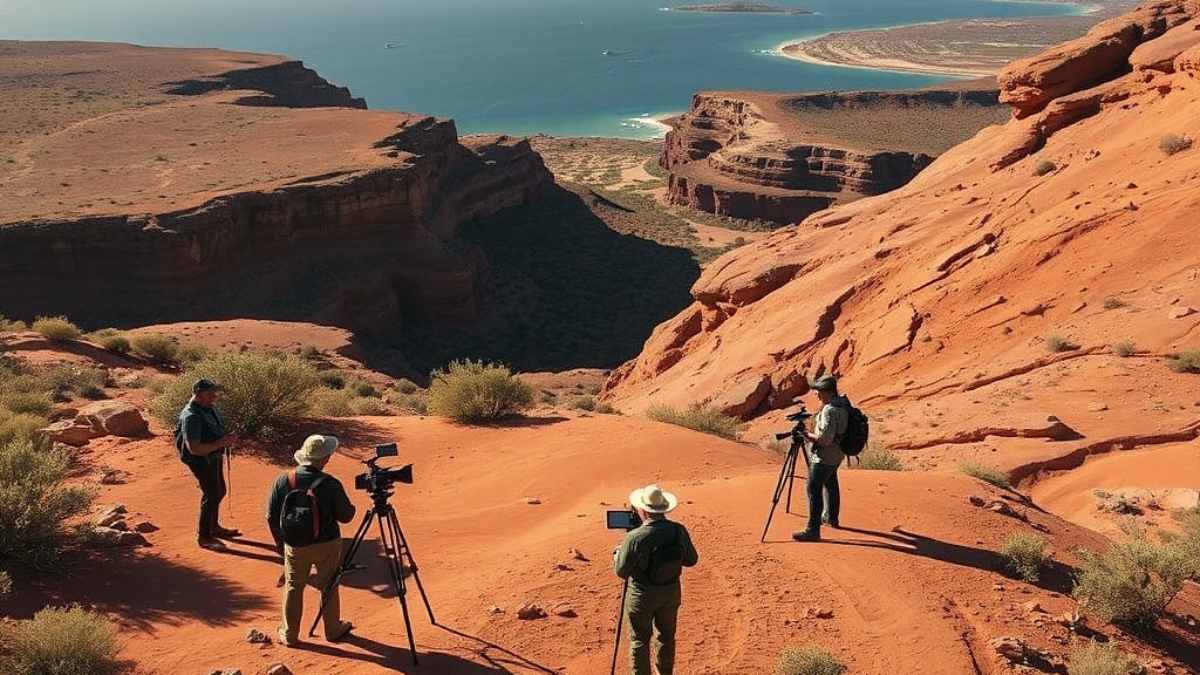
The remote regions of Australia have entered a brand new era of tourism through the transformation that has been brought about by the development of screen, film and digital creative industries. In the past few decades, some of the remote locations relied highly on nature tourism and natural resource extraction to create their economy. However, today the locations such as East Arnhem Land, Kimberley and Broken Hill are able to establish new economic corridors through story telling, culture and film making.
Remote regional destinations across Australia have historically operated under structural economic vulnerabilities defined by extreme geographic isolation, harsh climatic seasonality, and an over-reliance on volatile primary industries. For decades, destination marketing across jurisdictions such as East Arnhem Land, the Kimberley, and Far West New South Wales adhered to an outdated promotional paradigm. Tourism bodies relied almost exclusively on passive landscape marketing that depicted pristine wilderness to attract self-drive four-wheel-drive travelers, recreational fishers, and grey nomads.
Advertisement
While this market segment provides a seasonal baseline of transit activity, it delivers a low economic yield per visitor-day, concentrates environmental and municipal strain along narrow unsealed transport corridors, and exhibits severe seasonal compression. During the tropical monsoonal wet season in Northern Australia or extreme summer heatwaves in the arid interior, leisure visitation largely ceases, stranding hospitality and transport capital.
This traditional tourism model is insufficient for remote towns undergoing industrial restructuring. Viewed through the theoretical framework of evolutionary economic geography, single-industry towns—particularly those tethered to finite mineral extraction—suffer from acute institutional lock-in and path dependency.
Advertisement
Advertisement
When large-scale resource extraction operations enter their closure phases, host communities face regional depopulation, the collapse of commercial property values, and the withdrawal of corporate-subsidized transport networks. Replacing mining revenue purely with casual leisure tourism rarely bridges the structural deficit due to the seasonal volatility and lower average expenditure associated with drive-market holidaymakers.
To achieve economic resilience, remote hubs are reconfiguring their visitor economies by treating screen, film, and digital creative media as dynamic industrial catalysts. Rather than positioning arts and cultural expression as subordinate promotional collateral, progressive regional frameworks establish creative production as a standalone commercial sector.
By embedding media festivals directly into enterprise trade initiatives, building community-controlled digital laboratories, and leveraging local stories for international distribution, remote regions are activating a resilient dual-revenue economic model.
First, the sector attracts production-based travel, drawing cast, crew, media executives, digital technicians, and festival delegates who inject high corporate expenditures into regional lodging, catering, and logistical services during traditionally vacant shoulder and off-peak months.
Second, the resultant screen intellectual property (IP)—ranging from commercially released feature films and streaming series to internationally exhibited immersive installations and viral music videos—serves as authentic, high-impact place branding that drives year-round, high-yield cultural tourism.
East Arnhem Land, situated in the northeastern corner of the Northern Territory, serves as Australia’s primary contemporary laboratory for creative-led economic diversification. Geographically demarcated by the Arafura Sea and the Gulf of Carpentaria, the region’s commercial node is Nhulunbuy on the Gove Peninsula, originally established as a company mining town to support the Rio Tinto Gove bauxite mine and alumina refinery. Adjacent to Nhulunbuy lies Yirrkala, an internationally prominent Yolŋu community renowned for its legacy of Indigenous political advocacy, ceremonial authority, and artistic innovation.
The region is confronting a profound structural transition driven by the scheduled cessation of bauxite mining operations. In response, regional development authority Developing East Arnhem Limited (DEAL)—in close alignment with Yolŋu traditional owner corporations including the Rirratjingu Aboriginal Corporation and the Gumatj Aboriginal Corporation—is executing long-term diversification strategies to transition the regional economy from mineral extraction to cultural tourism, marine services, light industry, and digital commerce. Central to this transition is the strategic integration of screen and digital media into the regional commercial landscape.
The operationalization of this synergy is demonstrated by the integration of the Arnhem Voices Film Festival (Arnhem Voices Creative Media Festival) within the Northern Territory Government’s flagship October Business Month (OBM) in Nhulunbuy. Conventionally, regional trade events maintain a strict bifurcation between commercial enterprise programs and community arts events. The East Arnhem model breaks this divide by integrating creative media showcases, technical workshops, and screen industry panels directly into the commercial B2B calendar.
Hosted through partnerships involving the Rirratjingu Aboriginal Corporation, The Gove Art Theatre, and cultural enterprises such as Yanawal Experiences, the Arnhem Voices program reframes screen production from a passive recreational pursuit into an active supply-chain economic driver. The festival’s headline commercial forum, Arnhem Voices Film Festival: Creating Economic Opportunities Through Film, gathers visiting screen directors, commercial producers, regional small business owners, and traditional owners at the Gunditpuy Community Centre.
The program focuses directly on industrial capacity building, outlining how regional businesses can supply visiting feature film, documentary, and commercial productions. The required services encompass transport, accommodation, remote bush logistics, commercial fabrication, electrical services, catering, and paid cultural advisory roles.
Simultaneously, the festival addresses the technical skills pipeline by co-hosting professional workforce development sessions, such as intensive broadcast and podcast training delivered on-site by the Australian Film Television and Radio School (AFTRS).
Complementing professional forums, the Arnhem Voices Short Film Competition engages community-level storytellers, youth, and independent creators under commercial themes such as “Embracing Change – Shift, Adapt, Evolve”. By requiring participants to produce short-form cinematic works on mobile devices, the competition fosters grassroots digital literacy and generates original content that is publicly screened during festival finales at commercial venues like the Walkabout Lodge.
This structure bridges remote Indigenous creators and corporate buyers, transforming local cultural storytelling into licensed commercial assets while booking out regional hospitality capacity during October—a critical shoulder period preceding the monsoonal wet season.
While Nhulunbuy acts as the administrative and logistical gateway, Yirrkala functions as the cultural and technological engine of the East Arnhem model. Within the internationally recognized Buku-Larrnggay Mulka Centre, The Mulka Project operates as a world-class Indigenous digital archive, production house, and new media laboratory.
Established to repatriate, preserve, and digitize ancestral Yolŋu audiovisual records, The Mulka Project has evolved into an advanced multimedia production facility equipped with high-end digital cinematography packages, professional sound engineering suites, and Extended Reality (XR) post-production capabilities.
The critical innovation of The Mulka Project is its strict institutional governance regarding Indigenous Cultural and Intellectual Property (ICIP). In conventional tourism models, remote Indigenous cultures are frequently captured through an extractive lens by external film crews, returning little commercial dividend or narrative authority to local communities.
The Mulka Project subverts this dynamic by enforcing cultural law (Rom) through digital media sovereignty. All media generated within the center is directed, shot, edited, and authorized by Yolŋu technicians and elders.
The economic returns from this digital media laboratory are substantial and diversified:
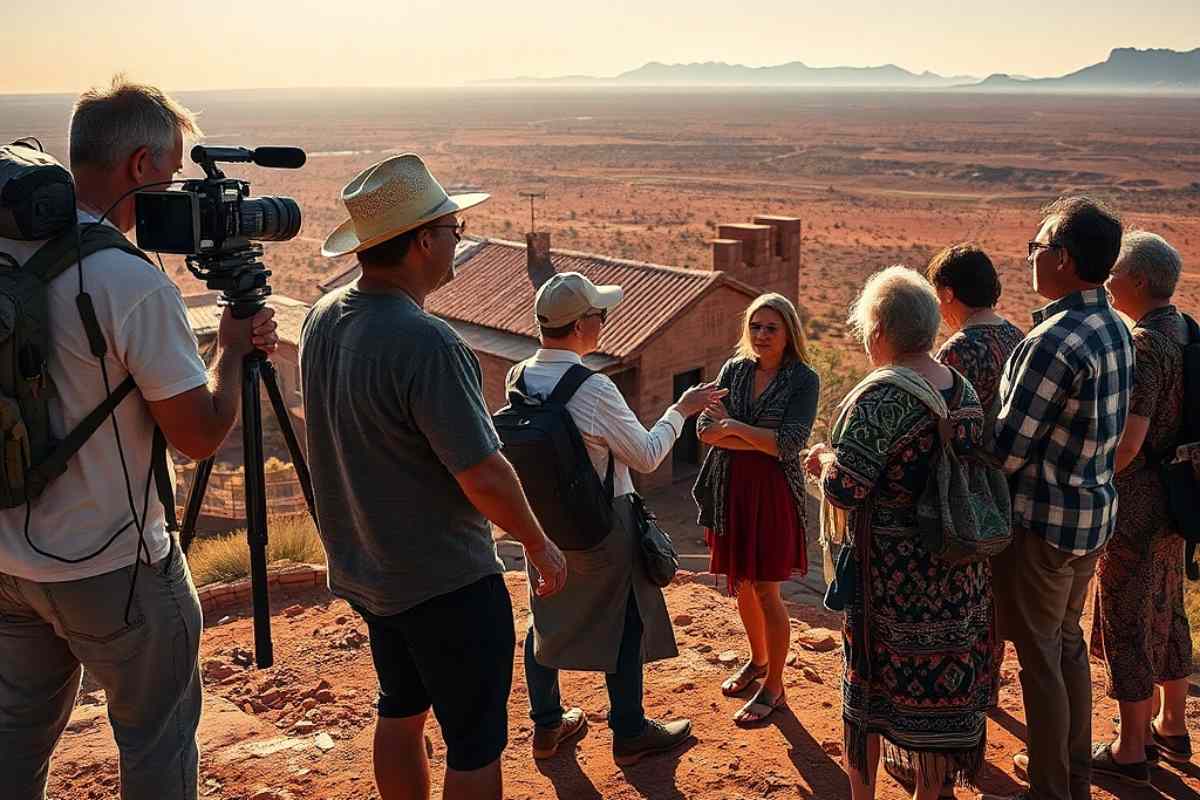
Image generated with Ai
The commercial resonance of East Arnhem’s screen and digital ecosystem extends directly into contemporary youth culture and mainstream music media. The explosive national and international rise of Yirrkala-based rock band King Stingray demonstrates how music videos, documentary shorts, and digital content can transform destination perception.
Singing in Yolŋu Matha and English, the band blends traditional manikay rhythms with surf rock, with music videos filmed against the backdrop of East Arnhem’s coastlines, red bauxite cliffs, and homelands communities.
The band’s viral domestic and international media footprint generates an organic promotional campaign that reaches demographics unresponsive to traditional state-sponsored tourism marketing. This digital reach translates directly into physical visitor flow through regional music events like East Arnhem Live.
Originally conceived during the COVID-19 pandemic as a digital concert broadcast to highlight local musical talent and regional beauty to a locked-down global audience, East Arnhem Live developed into an in-person, multi-day cultural event hosted in Nhulunbuy at sites such as Hindle Oval and coastal recreation areas.
The festival brings together touring national bands and local Yolŋu groups, drawing music journalists, documentary film crews, event technicians, and adventurous cultural travelers. Because access to Nhulunbuy requires either expensive commercial airfare or navigating a 700-kilometer unsealed track subject to seasonal road conditions, attendees represent a dedicated, high-yield visitor cohort.
During event weeks and related media shoots, local hospitality providers—including the Walkabout Lodge and luxury wilderness operations such as Banubanu Beach Retreat on Bremer Island—experience near-total occupancy, filling rooms outside the core mid-year dry season and proving the viability of media-driven cultural tourism packages.
To comprehend the strategic value of the screen sector in remote regional diversification, regional development planners must differentiate the economic profile of standard leisure tourists from that of inbound screen and media professionals.
Remote Australian tourism has historically been dominated by self-contained drive tourists. While valuable for basic fuel turnover, this cohort yields a modest daily direct spend.
Data from regional Western Australian and Northern Territory visitor profiles indicates that the average daily spend of a regional leisure tourist typically hovers between $168 and $226 per day. A significant portion of this expenditure is spent on self-procured provisions (canned foods, bulk diesel, camping supplies) purchased in major metropolitan supply centers before departure, bypassing the remote host community’s retail ecosystem. Furthermore, self-contained campers and caravan travelers predominantly utilize low-cost unpowered campsites or informal rest areas, generating negligible revenue for regional commercial accommodation providers.
In contrast, production-based travel—encompassing screen crews, commercial directors, digital capture teams, sound engineers, actors, and trade specialists—operates on corporate-funded expenditure profiles. Daily per-person expenditure for visiting screen production crews typically averages between $350 and $650 per day.
Because production logistics demand rapid mobility and high connectivity, crews cannot rely on low-cost camping infrastructure; they block-book commercial hotel rooms, serviced chalets, or executive rental properties, directly underwriting the revenue models of remote hospitality operators.
The table below provides a comparative analysis of the economic footprint of traditional leisure drive tourists versus production-based travel crews within remote Australian destinations:Economic and Operational Metric Traditional Leisure Drive Tourism Production-Based Travel (Cast, Crew, Media Executives) Average Daily Spend per Person $168 – $226 $350 – $650+ (inclusive of per diems, lodging, logistics) Primary Accommodation Type Low-cost unpowered campsites, caravan parks, rest stops Commercial hotel rooms, executive suites, leased residences Seasonality Profile Rigidly concentrated in the dry/winter season (June–August) Flexible, non-seasonal, and counter-cyclical across the calendar Average Length of Stay 1 to 3 nights per transit hub 10 to 60+ nights during pre-production and principal photography Local Supply-Chain Engagement Limited to fuel outlets, basic groceries, vehicle repairs Broad across hospitality, equipment hire, catering, trades, security Labor & Advisory Hire Yield Incidental service tips; minimal direct formal hiring Direct professional hire: cultural advisors, fixers, local crew Intellectual Property Creation Nil; private consumption of destination imagery High; generates globally licensed films, series, and promotional media
The economic injection delivered by production travel extends far beyond accommodation revenue, penetrating deep into the secondary and tertiary business ecosystem of remote communities. A medium-scale regional shoot (such as a 6-to-8-week episodic streaming drama or feature film) requires a comprehensive support apparatus:
Because screen production companies can schedule principal photography to accommodate narrative weather conditions—often deliberately shooting during stormy build-up months or early autumn to capture dramatic cloudscapes and specific lighting conditions—production spend is counter-cyclical.
When leisure holidaymakers depart at the onset of seasonal heat, inbound screen crews maintain hotel Revenue Per Available Room (RevPAR), preserving year-round regional hospitality employment that would otherwise be shed in seasonal layoffs.
The strategic value of the screen-tourism nexus demonstrated in East Arnhem Land is validated across other remote Australian creative hubs. In Broome (The Kimberley, Western Australia) and Broken Hill (Far West New South Wales), targeted screen strategies, infrastructure investments, and festival platforms have decoupled local economies from exclusive reliance on mining and conventional holidaymakers.
Broome serves as the commercial hub of Western Australia’s remote Kimberley region. The town’s creative ecosystem is anchored by CinefestOZ Kimberley, Australia’s first Indigenous-led film festival. Held annually, the festival integrates red-carpet premieres on Cable Beach with industry symposiums and community screenings dispersed across the remote Dampier Peninsula, including communities such as Beagle Bay and Djarindjin.
The economic model developed in the Kimberley leverages regional production incentives administered by Screenwest and the State Government’s Western Australian Regional Screen Fund (WARSF). These incentives require recipient production companies to spend a defined percentage of their production budgets within the regional footprint, drawing film and television projects directly into remote outback environments.
This architecture yields two distinct tourism outcomes:
Broken Hill in Far West New South Wales provides Australia’s most mature example of a mining city that has diversified its economic base through film production and screen-induced cultural tourism. Australia’s first National Heritage-Listed city, Broken Hill’s distinctive 19th-century architecture, sweeping desert light, and vast arid landscapes have made it the premier outback filming location for more than a century, hosting over 100 films, television dramas, and commercial shoots.
The city’s screen activities are coordinated through Screen Broken Hill, an industry-led entity established in 2018 that operates under the regional arts development organization West Darling Arts from the Arts and Media Hub on Blende Street. Screen Broken Hill acts as a single-point facilitation office for inbound producers, matching productions with local trades, catering providers, equipment rentals, and accommodation operators.
The economic impact of this production footprint is substantial:
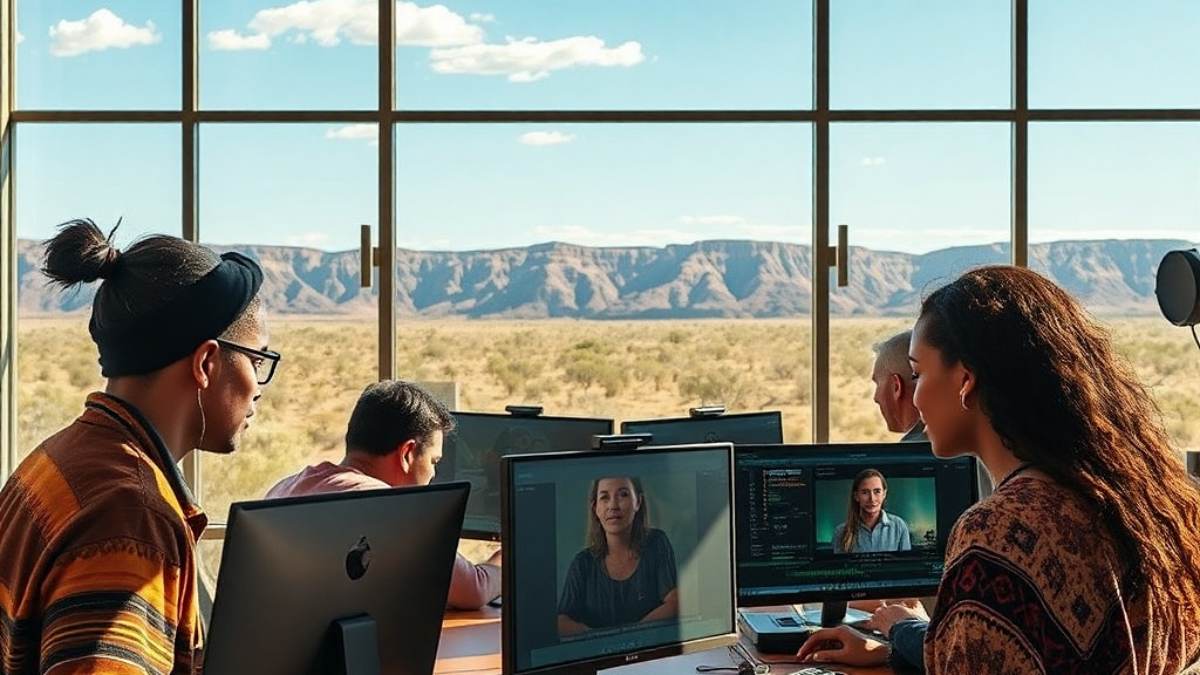
Image generated with Ai
The table below provides a comparative synthesis of the screen and creative tourism architectures across East Arnhem Land, Broome, and Broken Hill:Strategic Dimension East Arnhem Land (Nhulunbuy / Yirrkala) Broome & The Kimberley Broken Hill & Far West NSW Primary Economic Anchor Post-mining diversification; Rio Tinto bauxite closure Maritime logistics, pearling heritage, seasonal nature tourism Transitioning mining center; historic silver-lead-zinc mining Creative Infrastructure Asset Buku-Larrnggay Mulka Centre / The Mulka Project Cable Beach production zone; Kimberley Aboriginal art and ranger hubs Broken Hill Arts & Media Hub; Screen Broken Hill; Silver City Cinema Flagship Screen Festival Arnhem Voices Film Festival / Media Festival CinefestOZ Kimberley (First Nations-led) Perfect Light Film Festival; Broken Heel Festival Enterprise Cross-Over Point Embedded within October Business Month (OBM) Cable Beach Industry Media Summit & supplier networking Local Government Area procurement; West Darling Arts MOU Key Cultural / Media Assets Yolŋu digital archives; XR exhibits (Yalu); King Stingray media Indigenous documentary series; Dampier Peninsula coastal features Mad Max 2, Priscilla, The Lost Flowers of Alice Hart, Furiosa[cite: 36, 41, 47] Primary Tourism Yield Mechanism Dual-revenue model: off-peak production crew spend + high-yield cultural travelers Direct spend dispersal across remote homelands; shoulder RevPAR lift Mass event tourism (Broken Heel); year-round set-jetting heritage trails
Takeaways: Co-Investing in Regional Media Facilities
The empirical evidence from East Arnhem Land, the Kimberley, and Broken Hill confirms that creative media is not merely an artistic amenity; it is an economic driver capable of addressing regional seasonality, industrial displacement, and geographic remoteness.
For regional development agencies, state screen bodies (such as Screen Territory, Screenwest, and Create NSW), and municipal councils, maximizing this synergy requires moving beyond discretionary cultural grants toward systemic capital co-investment.
Policymakers should structure regional visitor economy strategies around four core interventions:
Regional development funds must prioritize capital co-investment into shared, common-user creative facilities in remote logistical gateways. Emulating the Buku-Larrnggay Mulka model, public authorities should co-fund high-bandwidth digital production suites, sound recording studios, and flexible mini-sound stages in regional centers.
In post-mining regions such as Nhulunbuy, regional development authorities like DEAL are uniquely positioned to repurpose decommissioned industrial workshops, engineering sheds, and corporate residential assets transferred from mining operators into digital production spaces.
Establishing plug-and-play production infrastructure substantially lowers the logistics and equipment mobilization costs for visiting commercial production companies while giving local creators access to commercial-grade technology.
State economic development and tourism agencies should dismantle the administrative divide separating business trade summits from arts and screen festivals. Following the East Arnhem blueprint of integrating the Arnhem Voices Film Festival into October Business Month, future regional policy should mandate the co-location of regional business forums with screen media showcases.
Under this integrated operational model, regional enterprise and tourism authorities implement a unified dual-track schedule within a single regional program:
By uniting these tracks under one administrative umbrella, regional authorities achieve three primary outcomes:
Sustainable creative screen economies in remote Australia depend entirely upon cultural integrity and First Nations community consent. State screen agencies and tourism bodies must establish mandatory ICIP compliance frameworks as an eligibility prerequisite for regional location production rebates and travel subsidies.
Screen agencies should collaborate with regional Indigenous land councils and art centers to establish standardized, transparent licensing schedules and cultural monitoring tariffs.
Funding must be allocated to support community-controlled digital archiving desks—such as The Mulka Project—to manage content licensing, enforce moral rights, and ensure that commercial revenues derived from digital storytelling remain permanently anchored in remote homelands.
Tourism organizations and local chambers of commerce should build localized screen-production directories and vendor-readiness programs. By auditing and upskilling local catering, transport, trade, safety, and cultural guiding providers to meet screen-industry production standards, remote communities can retain a far larger share of multi-million-dollar production budgets.
Furthermore, state governments should introduce an explicit “Remote Regional Production Uplift” within existing state screen incentives. Providing an additional 5% to 10% rebate on qualifying production expenditure when productions hire a minimum threshold of remote residents, engage local First Nations advisors, and utilize regional post-production or XR facilities will offset travel costs and structurally channel screen capital into remote Australia.
Through this coordinated policy model—linking infrastructure investment, trade-aligned screen festivals, intellectual property protection, and local supply-chain enablement—remote communities can transition from passive, seasonal postcard destinations into thriving, year-round creative media economies.
The rising screen tourism economic movement in Australia shows us the way we can use creativity as a tool to develop economically isolated communities. By investing in whole range of digital facilities, traditions and cultures, film-making and indigenous entertainment, remote regions of the country move beyond dependence on seasonal tourism. The model of East Arnhem gives hope of a time ahead when local stories will attract international attention and serve as a way of job creation and empowerment of local community.
Advertisement
Tags: Australia regional tourism, australia tourism, creative industries, Digital Storytelling, East Arnhem Land
Advertisement
Advertisement











Wednesday, September 2, 2026

Tuesday, September 1, 2026

Wednesday, September 2, 2026
Wednesday, September 2, 2026
Tuesday, September 1, 2026
Tuesday, September 1, 2026

Wednesday, September 2, 2026

Wednesday, September 2, 2026



