
Misfat Al Abriyyin Lead the Middle East’s Affordable Heritage Travel Boom Beyond Luxury Cities

Published
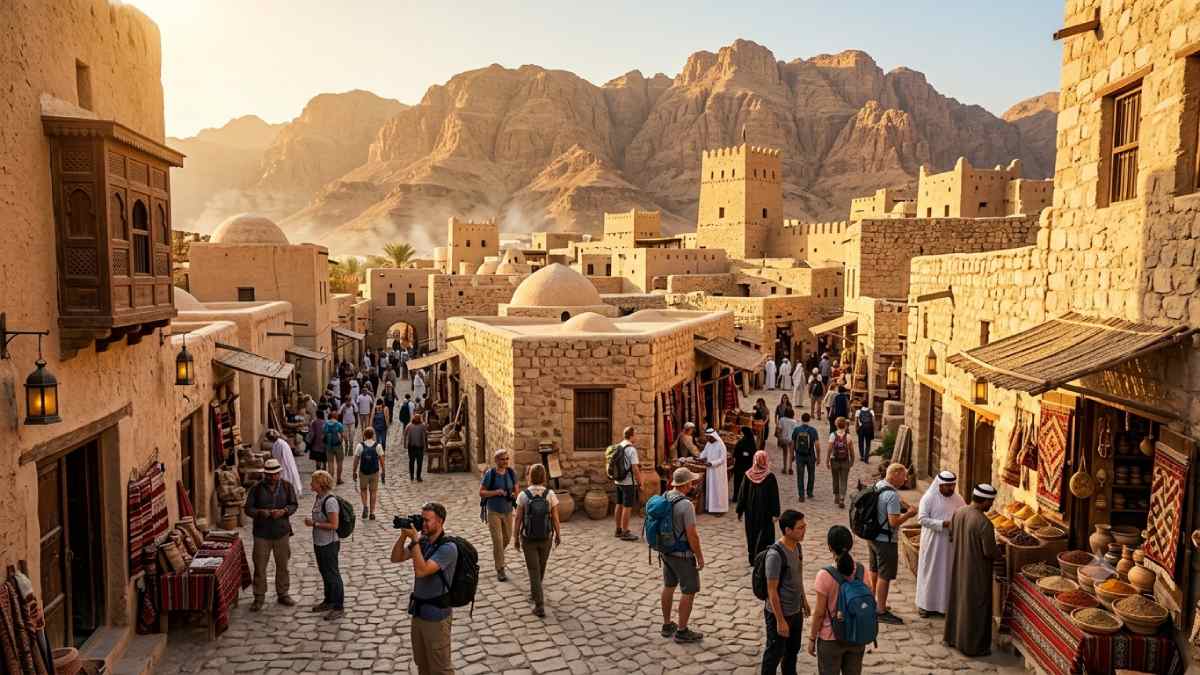
With increasing cost of living and hotel prices making holidays too expensive in all of the world’s popular tourist spots, discerning tourists have begun to rethink and rework their holiday plans. With secondary destinations in the Middle East forming a strong economic response to the trend, the lesser known destinations of Oman, Saudi Arabia, Jordan and the UAE have found that through grassroots conservation and inexpensive transportation and heritage-based hospitality, true heritage can be enjoyed at very little cost. This has led to a revival of cultural travel at an unheard-of level, showcasing how decentralized tourism can still allow for a great experience, preserve historic buildings and keep travelers safe from inflation.
Macroeconomic Realities: Global Inflation and the Pivot to Regional Micro-Destinations
The international tourism sector has confronted sustained price volatility, driven by escalating aviation fuel costs, elevated municipal lodging taxes, and commercial real estate speculation. Established gateway metropolises throughout Europe and the Middle East—such as Barcelona, Amsterdam, Dubai, and Doha—have recorded persistent increases in their average daily room rates, dining tariffs, and entry fees for heritage sites. According to the United Nations Tourism World Tourism Barometer, while international arrivals grew by a modest 0.4% during the first half of 2026, travellers worldwide have consistently adjusted their spending habits, actively seeking greater value for money and gravitating towards secondary destinations, rural itineraries, and regional enclaves to counter persistent cost pressures.
Advertisement
Advertisement
This structural realignment in consumer sentiment has triggered a notable expansion in Middle East secondary destination tourism. For decades, regional tourism strategies concentrated heavily on capital-intensive mega-projects, luxury seaside resorts, and architectural superlatives in primary capitals. While these projects captured global headlines, they often generated significant financial friction for independent travellers, cultural researchers, and families seeking extended stays. In contrast, smaller settlements across the Arabian Peninsula and the Levant are proving that historical preservation does not require prohibitive pricing.
By grounding tourism development in pre-existing vernacular settlements, civic adaptive reuse, and municipal services, regional micro-enclaves circumvent the heavy amortisation costs that inflate urban hospitality. The operational cost structures of these smaller municipalities highlight the substantial divergence between primary urban gateways and emerging rural alternatives:
Advertisement
Advertisement
| Expenditure Category | Primary Regional Gateway Average (USD) | Heritage Micro-Destination Average (USD) | Observed Variance (%) | Primary Operational Efficiency Driver |
| Boutique Heritage Lodging (per night) | $280 – $450 | $45 – $85 | -78% to -81% | Community cooperative operations; vernacular passive cooling |
| Authentic Regional Dining (per day) | $65 – $120 | $12 – $22 | -81% to -82% | Local agricultural networks; elimination of wholesale brokers |
| Cultural Heritage Site Access | $30 – $60 | $4 – $10 | -83% to -87% | Publicly managed municipal assets; civic trust frameworks |
| Regional Transit (Point-to-Point) | $40 – $90 (Private taxi/ride-hail) | $1.50 – $7.00 | -92% to -96% | Subsidised public transport links; municipal shuttle loops |
| Total Average Daily Outlay | $415 – $720 | $62.50 – $124 | -83% to -85% | Disintermediation of corporate hospitality supply chains |
This operational divergence is not merely a temporary discounting strategy; it represents an alternative philosophy of destination management. Rather than relying on imported corporate labour and debt-financed luxury construction, regional settlements draw upon ancestral building techniques, family-owned enterprises, and municipal public transit. As a consequence, these historic towns can offer affordable cultural travel that remains economically viable, environmentally sound, and culturally authentic.
Oman’s Mountain and Oasis Havens: Ancestral Infrastructure as an Operational Buffer
In the interior valleys of the Ad Dakhiliyah Governorate, the Sultanate of Oman provides a compelling blueprint for how ancestral infrastructure can naturally insulate tourism operations from utility inflation. Here, ancient settlements such as Misfat Al Abriyyin, Nizwa, and Al Hamra have successfully integrated community-driven hospitality with living conservation initiatives supported by the Ministry of Heritage and Tourism and the Omran Group.
Advertisement
Advertisement
Thermal Thermodynamics and Mud-Brick Architecture in Misfat Al Abriyyin
Perched approximately 1,000 metres above sea level on the steep southern slopes of Jebel Shams, Misfat Al Abriyyin is an ancient agricultural settlement characterised by dense mud-brick houses, carved stone stairs, and lush date palm terraces. Crucially, the town functions around an active Falaj (plural Aflaj) irrigation system—a collection of UNESCO-inscribed subterranean and surface gravity-fed aqueducts that distribute mountain spring water throughout the domestic quarters and terraced agricultural plots.
When local residents, working through heritage societies, converted abandoned multi-storey earthen homes into heritage guesthouses, they intentionally preserved traditional construction methods. The thick mud-brick walls and dense stone foundations possess high thermal inertia, absorbing midday heat and slowly releasing warmth during chilly highland nights. Furthermore, the perpetual circulation of water through the Aflaj channels generates continuous evaporative cooling throughout the narrow, shaded corridors of Harat Al Abriyyin.
This ancestral engineering delivers tangible financial dividends. Independent guesthouses report heating, ventilation, and air conditioning (HVAC) utility costs up to 60% lower than modern concrete hotels in coastal Muscat. By avoiding high baseline electricity bills, community-run lodges can maintain stable, accessible overnight rates while returning operational profits directly to communal restoration funds.
Direct Producer Markets and Artisan Cooperatives in Nizwa
Further south along the interior plain, the historic oasis city of Nizwa demonstrates how the preservation of traditional commercial channels keeps consumer costs low while strengthening local livelihoods. Under guidance from the Ministry of Heritage and Tourism designed to diversify revenue across Ad Dakhiliyah, Nizwa’s historic city centre has retained its traditional mercantile character.
At the heart of the town sits the historic Nizwa Souq, adjacent to the 17th-century fortified round tower of Nizwa Fort. Unlike urban retail environments that feature multi-tiered distributor networks, Nizwa’s markets operate through direct artisan supply chains. Local pottery masters from Bahla, coppersmiths, silver jewelers, and date farmers from surrounding palm oases sell directly to the public without intermediary fees.
Because regional producers bypass middle-tier distributors and national retail distribution costs, average daily expenditure on artisanal items, traditional Omani dining, and regional fortress tours remains approximately 70% lower than in Muscat or Dubai. Visitors experience authentic cultural transactions in an active marketplace, while primary producers capture equitable margins without artificially inflating end-consumer prices.
Advertisement
Advertisement
Saudi Arabia’s High-Altitude Bastions and Red Sea Ports: Climatic and Cooperative Arbitrage
As Saudi Arabia continues implementing its Vision 2030 economic transformation, national authorities are increasingly recognising that large-scale global tourism must be balanced by grassroots heritage preservation. Away from headline-grabbing developments, the Kingdom’s regional development authorities are preserving historic settlements that deliver distinctive cultural encounters at accessible rates.
Passive Energy Arbitrage and Stone Husun Conservation in Rijal Almaa
Located in the Asir region roughly 45 kilometres west of Abha, the fortified village of Rijal Almaa represents one of the Arabian Peninsula’s most sophisticated examples of vernacular defensive architecture. The village consists of around 60 multi-storey stone towers (husn) built entirely from locally quarried basalt and slate without structural concrete or steel framing.
Rijal Almaa’s mountainous setting produces a significant economic advantage: natural energy arbitrage. Situated high within the Asir mountain range, the settlement experiences moderate highland temperatures between 10°C and 25°C throughout most of the year. This temperate climate creates a natural microclimatic buffer, allowing heritage guesthouses and open-air walking tours to operate during summer months with minimal mechanical air conditioning.
The institutional framework behind Rijal Almaa also prioritises local access. Conservation efforts, backed by the Asir Development Authority and Soudah Development, are coordinated directly with the Tourist Villages Cooperative Society of Rijal Almaa. This collaboration includes emergency stabilization work on historic buildings, such as the Sheikh’s Fortress, ensuring historic properties are restored through traditional masonry rather than costly speculative developments. Community management keeps visitor entry fees accessible at SAR 15 to SAR 25 (USD 4 to USD 6.70). Visitors enjoy access to an extensive village museum housing over 2,800 community-donated artefacts and preserved murals of Al-Qatt Al-Asiri—the UNESCO-inscribed female architectural wall art—at rates far below typical urban museum admissions.
Coral-Stone Architecture and Municipal Stewardship in Yanbu Al Bahr
Along the northern Red Sea coastline, the historic port of Yanbu Al Bahr (specifically the Historic Al-Sur District) showcases an effective municipal approach to coastal heritage regeneration. Dating back centuries as an essential transhipment port for spice merchants and regional pilgrims, Yanbu Al Bahr features traditional architecture constructed from fossilised coral stone, detailed teak timbering, and ornate rawshan (mashrabiya) latticework.
Restoration initiatives supervised by the Royal Commission for Jubail and Yanbu alongside the Saudi Tourism Authority have successfully revived the Al-Sur district while preventing runaway commercialisation. The natural porosity of coral limestone provides exceptional thermal insulation against the humid coastal heat, maintaining temperate interiors through passive sea-breeze ventilation.
Advertisement
Advertisement
Furthermore, the Royal Commission’s direct public management of the coastal waterfront, public open spaces, and restored historic night markets ensures that concessionaires do not impose inflated commercial fees. Visitors can explore historic mosques, coastal alleys, and public plazas without admission fees, while dining on fresh catches at the historic municipal fish auction at baseline local rates.
Jordan’s Living Heritage Hubs: Artisan Clusters and Social Solidarity Economics
While international travellers visiting Jordan have traditionally focused on major archaeological sites like Petra and the luxury resorts of the Dead Sea, rising travel expenses have prompted growing interest in Jordan’s northern cultural capitals. Cities such as As-Salt and Madaba offer rich historical exploration supported by community networks that keep everyday travel costs exceptionally manageable.
Communal Living and Pedestrian Hospitality in As-Salt
Located in the Balqa highlands roughly 30 kilometres northwest of Amman, the hillside city of As-Salt represents a functioning model of community-based tourism. Inscribed on the UNESCO World Heritage List in 2021 under the designation “As-Salt: The Place of Tolerance and Urban Hospitality”, the city is celebrated for its distinctive late Ottoman architecture constructed from local golden-yellow limestone. Between the 1860s and 1920s, skilled masons constructed hundreds of urban residences combining Ottoman domed layouts, arched loggias, and Neo-Colonial details.
The foundational premise of As-Salt’s heritage listing rests upon its living civic traditions. The urban fabric is bound together by two enduring communal customs: Madafa (communal guest gathering spaces, known locally as Dawaween) and Takaful Ijtima’i (mutual social solidarity). When the Jordan Tourism Board and the As-Salt Development Corporation formalised the town’s heritage walking circuits—most notably the Religious Harmony Trail running through Hammam Street—they intentionally structured them around public spaces rather than gated commercial paths.
By navigating shared public stairways and pedestrian paths that link mosques and churches, travellers directly patronise independent street stalls, family bakeries, and neighbourhood craft shops. Because visitors can obtain complimentary trail maps from the Abu Jaber Folklore Museum or hire local community guides directly, revenue remains concentrated within the local neighbourhood. Furthermore, the city’s culture of hospitality ensures that visitors frequently receive coffee, food, and unscripted historical insights from local residents without financial solicitation, highlighting the social fabric that distinguishes the town from transactional tourism enclaves.
Raw Mineral Sourcing and Craft Guilds in Madaba
South of the capital, along the historic King’s Highway, the market city of Madaba demonstrates how raw material independence supports sustainable heritage conservation and low-cost cultural workshops. Known worldwide as the “City of Mosaics”, Madaba contains an extraordinary concentration of Byzantine and Umayyad mosaic pavements, headlined by the famous 6th-century cartographic mosaic map of Jerusalem in the Church of Saint George.
Advertisement
Advertisement
Madaba avoids the high operational markups that often accompany fine art tourism by relying on local materials. Local stone-crafting studios and schools source their raw minerals—including white limestone, red dolomite, and black basalt—directly from the surrounding geological deposits of the Balqa plateau. Operating under the technical supervision of the Ministry of Tourism and Antiquities and the Department of Antiquities, the Madaba Institute for Mosaic Art and Restoration (MIMAR) trains young craftspeople in traditional stone preparation and conservation techniques.
Because materials are sourced nearby and artisans receive accredited vocational education locally, production costs remain modest. Independent travellers can take multi-hour mosaic-making workshops, tour functioning artisan ateliers, and purchase authentic stone works directly from family cooperatives at a fraction of the prices found in high-end galleries in Amman or international airports.
The UAE’s Northern Enclaves: Subsidised Mobility and Municipal Leisure Networks
While the United Arab Emirates is widely recognised for luxury high-rises and major urban resort projects, its northern exclaves and coastal towns offer an alternative model of leisure infrastructure. Through public planning initiatives, government bodies in Dubai and Sharjah have established affordable leisure corridors that connect major population centres with the rugged mountains and coastal scenery of the northern regions.
Public Transit Integration and Civic Access in Hatta
Surrounded by the steep Hajar Mountains on the border with Oman, the inland exclave of Hatta demonstrates how deliberate public transit investments can unlock mountain tourism for budget-conscious travellers. Traditionally accessible only via private cars or chartered tour vehicles, Hatta has been systematically woven into the public transportation grid by Dubai’s Roads and Transport Authority (RTA).
The RTA operates two connected transit services designed to minimise transportation costs:
- The Hatta Express Bus (Route H02): Operating deluxe intercity coaches departing every two hours from Dubai Mall directly to Hatta Main Bus Station, this service costs AED 25 (USD 6.80) per trip, payable via the integrated Nol Card. Budget travellers can also opt for the regional intercity bus (Route E16) from Deira’s Sabkha Bus Station for approximately AED 10 (USD 2.72).
- The Hatta Hop-On Hop-Off Bus (Route H04): Operating on a 30-minute loop, this internal shuttle connects Hatta Bus Station with major sites—including Hatta Dam, the Hatta Heritage Village, Hatta Wadi Hub, and Hatta Hill Park—for a fare of just AED 2 (USD 0.54) per stop.
These subsidised transit networks remove the need for expensive private vehicle hire or commercial transfers. Once visitors arrive in the enclave, accessing the Hatta Heritage Village, walking the trail networks of the Hajar foothills, and visiting public parklands costs nothing, providing a budget-friendly outdoor alternative to the urban attractions of central Dubai.
Advertisement
Advertisement
Non-Monetised Outdoor Assets in Khorfakkan
On the eastern seaboard along the Gulf of Oman, the Sharjah enclave of Khorfakkan highlights how municipal capital investment can support free public recreational infrastructure. Overseen by the Sharjah Commerce and Tourism Development Authority (SCTDA) and the Sharjah Investment and Development Authority (Shurooq), Khorfakkan has experienced significant civic and cultural restoration.
Rather than restricting scenic coastal and mountain landscapes behind private resort developments, Sharjah municipal authorities have developed high-grade public facilities:
- The Al Rabi Hiking Trail: Starting from the historic Al Rabi Tower—a stone watchtower built in 1915 at an elevation of 379 metres—this maintained 4-to-5-kilometre trail provides panoramic views of Khorfakkan bay and the surrounding peaks. The entire trail facility, including signposting and resting areas, remains completely free to the public.
- Public Cultural and Coastal Amenities: The restored Al Sharq Souq, the waterfront corniche, and the Khorfakkan Amphitheatre public plazas provide civic gathering points that remain accessible without admission charges.
By investing in high-quality civic infrastructure rather than closed commercial developments, local authorities demonstrate how secondary enclaves can achieve aesthetic and cultural excellence while keeping public access open and affordable.
Comparative Economic Framework: How Micro-Destinations Deliver Affordable Cultural Travel
The price differences between primary metropolitan hubs and regional micro-destinations are rooted in distinct operational and financial models. Understanding these underlying mechanics clarifies how secondary destinations sustain affordable visitor rates over time without compromising service quality or financial stability.
The operational parameters that separate metropolitan tourism from heritage micro-destinations highlight these structural differences:
| Operational Dimension | Metropolitan Corporate Tourism Ecosystem | Secondary Heritage Micro-Destination Ecosystem |
| Real Estate and Land Acquisition | Speculative land purchases, steep long-term ground leases, and premium capital expenditure per room. | Ancestral familial tenure, agricultural trusts, and non-speculative communal land holdings. |
| Structural Architecture & Maintenance | Glass-curtain walls, heavy steel construction, high HVAC loads, and ongoing mechanical service contracts. | Earthen, basalt stone, and coral masonry providing high thermal mass and passive ventilation. |
| Workforce and Human Capital | Multi-tier corporate management structures with contracted expatriate hospitality labour. | Local resident-operators, family enterprises, and guild-trained regional artisans. |
| Supply Chain Logistical Complexity | Multi-port import freight, industrial cold-storage requirements, and distributor commissions. | Hyper-local agricultural sourcing, seasonal harvests, and direct municipal market auctions. |
| Intermediary Channel Commissions | Heavy reliance on Global Distribution Systems and Online Travel Agencies with 15% to 25% commissions. | Direct bookings through public tourist portals, local word-of-mouth, and public transit links. |
| Pricing Resilience to Inflation | Dynamic yield algorithms driving aggressive seasonal price spikes and margin buffering. | Grounded in community baseline living costs, local cooperative pricing, and municipal transport fares. |
This comparative breakdown demonstrates that the lower costs found in secondary destinations do not reflect inferior travel experiences. Instead, they represent the removal of expensive intermediaries, speculative real estate overheads, and energy-intensive building designs. As a result, visitor spending supports local host communities directly rather than servicing corporate overheads.
Advertisement
Advertisement
Policy Implications and Macro-Regional Socioeconomic Ripple Effects
The growth of secondary cultural enclaves carries meaningful socioeconomic and spatial implications across the Middle East. As regional governments adapt their economic diversification strategies for the future, community-managed heritage offers a balanced alternative to high-density resort real estate development.
Capital Retention and Mitigating Rural Depopulation
Metropolitan tourism development tends to concentrate capital within a small number of urban centers, directing visitor expenditure toward major hotel management firms, commercial property owners, and international retail brands. In contrast, travel across secondary heritage destinations redistributes capital directly into rural regional economies.
When visitors book rooms in local guesthouses in Misfat Al Abriyyin, dine at family-owned eateries in As-Salt, or purchase handmade stonework in Madaba, economic leakage is substantially reduced. Revenue stays within the local governorate, financing the maintenance of heritage properties, supporting independent workshops, and providing jobs for regional youth. By establishing viable local livelihoods, heritage tourism helps counteract rural flight toward congested metropolitan capitals.
Living Intangible Heritage Versus Museumification
Commercial real estate development often displaces traditional communities, transforming historic districts into static monuments devoid of local residents. In contrast, cooperative management approaches in regions like Asir and Balqa ensure that conservation works in tandem with daily community life.
By connecting visitor revenues to active traditions—such as Al-Qatt Al-Asiri wall painting in Saudi Arabia, Falaj canal maintenance in Oman, and Takaful community solidarity in Jordan—these micro-destinations help keep intangible cultural traditions economically viable. Residents participate as custodians and proprietors of their living heritage rather than performative actors, preserving the authentic character that draws travellers in the first place.
Gateway Infrastructure Relief and Spatial Dispersal
Directing inbound visitors beyond primary gateways also helps national governments manage critical infrastructure more effectively. Dispersing travellers across regional mountain and coastal towns alleviates seasonal congestion on central road systems, airport transit corridors, and municipal utilities. In addition, because traditional stone and earthen buildings require less operational energy than glass high-rises, the environmental footprint per visitor day remains significantly lower, aligning well with broader regional sustainability commitments.
Advertisement
Advertisement
Strategic Future Outlook: Institutionalising Secondary Destination Viability
Looking ahead toward 2030, the lasting success of Middle Eastern secondary destinations will rely on expanding visitor access without compromising the community structures that keep costs affordable. Regional tourism authorities are responding by establishing institutional policies that protect these unique operational frameworks.
Digital Platforms and Democratic Visitor Discovery
In previous decades, smaller towns suffered from low visibility, leaving independent travellers dependent on costly guided excursions. Today, the spread of open civic digital platforms is bridging that gap. Initiatives like the Sultanate of Oman’s Experience Oman platform connect verified heritage guesthouses, local guides, and community operators directly with international visitors through a single digital registry. Similar public sector systems across Saudi Arabia and the UAE allow independent travellers to book subsidised intercity buses, buy municipal museum tickets, and secure community lodging directly from their mobile phones.
As digital payment systems expand throughout Jordan and regional Saudi Arabia, travellers can pay local artisans and family-run guesthouses directly without third-party commission deductions. This digital connectivity broadens the reach of regional enterprises while preserving transparent pricing for consumers.
Regulatory Frameworks Against Speculative Commercialisation
The primary challenge facing low-cost regional heritage models is the potential for unchecked gentrification. If external developers buy up traditional housing stock to build luxury hotels, the authentic community presence and modest operating costs of these settlements can erode quickly.
To prevent this outcome, regional governing entities are implementing focused preservation and zoning ordinances:
- Cooperative Ownership Charters: In Saudi Arabia’s Asir highlands, municipal development plans require external conservation teams to coordinate directly with village cooperative societies, ensuring local families retain title to ancestral properties.
- Strict Architectural Covenants: In towns such as As-Salt and Nizwa, municipal building codes prevent the demolition of traditional stone and earthen structures while restricting modern concrete builds within historic core zones. These rules encourage vernacular construction techniques and prevent the construction of out-of-scale corporate developments.
- Public Transport Guarantees: Municipal transport agencies in Dubai and Sharjah continue to fund and expand public intercity transit routes, maintaining low passenger fares to guarantee accessible public mobility into regional mountain and coastal areas.
By combining careful heritage preservation with public transit support, local artisan supply networks, and community-led guesthouses, secondary towns across the Middle East are establishing a compelling blueprint for regional tourism. They prove that meaningful cultural travel does not require excessive spending, providing an authentic and budget-friendly model for international exploration in an era of rising global costs.
Advertisement
Advertisement
Conclusion
In response to the growing dissatisfaction of international tourists with the rampant inflation within cities, heritage towns in the Middle East provide a long-term solution. Instead of considering heritage a form of extraction of a luxury item, the community cooperatives in Oman, Saudi Arabia, Jordan, and the United Arab Emirates show that decentralization leads to sustainability. With the focus on the local agriculture system, pedestrian zones and the subsidization of transportation systems, these heritage routes preserve their architectural heritage and develop the region. In the end, placing emphasis on community-based heritage ensures that accessible tourism is possible.
Advertisement
