
Seattle Travel Gets New Choice As SeaPort Airlines Promises Faster Regional Connections Than Amtrak Trains

Published
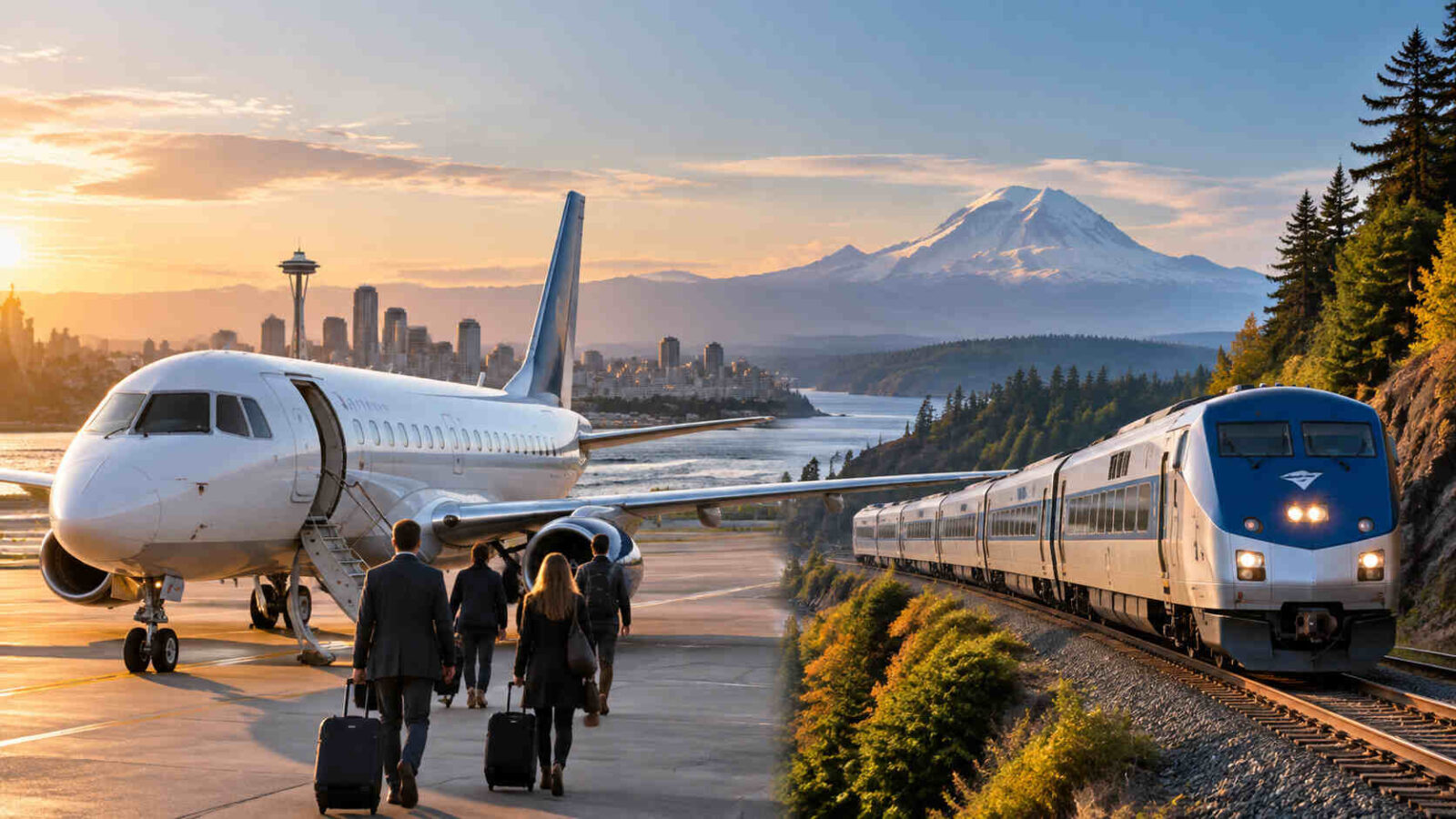
Image generated with Ai
While Amtrak has invested a significant amount of money into its new trains, a small airline out of the Pacific Northwest is proving a more convenient way to travel. SeaPort Airlines shows how travel can be quick and easy by using small aircraft to shuttle passengers. Because SeaPort is using smaller aircraft, they don’t need to invest as much time or money into airport infrastructure. Because of less delays, SeaPort focuses on speed and can get travelers to their destinations more quickly than public transportation.
Operating from Seattle’s Boeing Field, SeaPort Airlines connects travellers with frequent daily flights to key regional destinations, including Portland and Spokane. The airline’s model focuses on reducing the time traditionally lost during short-distance journeys by offering a streamlined airport experience combined with significantly shorter travel times.
Passengers using SeaPort Airlines can arrive shortly before departure, benefit from free parking options and avoid many of the lengthy procedures often associated with larger airports. The entire journey between major Pacific Northwest cities can be completed in about an hour, making it possible for business travellers and day visitors to complete meetings and return home on the same day.
The airline’s approach contrasts with traditional rail travel between Seattle and Portland, where journey times remain affected by existing infrastructure limitations. Passenger trains operating on shared rail corridors must often coordinate with freight traffic, creating longer travel schedules and reducing flexibility for travellers seeking quick regional connections.
Advertisement
Advertisement
The Seattle-Portland rail journey, despite improvements planned through future train upgrades, continues to require several hours each way. For many travellers, this can limit the possibility of convenient day trips and increase the time commitment required for short regional journeys.
SeaPort Airlines has built its service around the idea that time is one of the most valuable resources for modern travellers. By focusing on direct connections, smaller airport operations and frequent schedules, the airline aims to provide an option for passengers who prioritise efficiency and convenience.
Advertisement
Advertisement
The carrier’s regional aviation model uses existing transportation infrastructure rather than requiring major new construction projects. This approach allows services to operate with a focus on immediate connectivity while avoiding the long development timelines associated with large transportation programmes.
Regional travel demand across the Pacific Northwest continues to grow as businesses, communities and travellers look for faster ways to move between major cities. While rail investment remains a major part of future transportation planning, smaller aviation networks are also seeking to fill gaps where speed and flexibility are key priorities.
SeaPort Airlines argues that regional flights provide benefits beyond travel time savings. By operating from a smaller airport environment, passengers can avoid the congestion often experienced at larger commercial airports. The simplified process allows travellers to spend less time waiting and more time reaching their final destinations.
The airline also highlights the economic advantages of enabling same-day business travel between cities such as Seattle, Portland and Spokane. Faster connections allow professionals to attend meetings, complete work commitments and return home without needing overnight stays or additional travel arrangements.
Future passenger rail development remains a major topic in the region, including discussions around expanded high-speed rail concepts connecting communities across the Pacific Northwest. However, questions continue around project costs, construction timelines and long-term operational requirements.
Large-scale transportation projects require significant investment, planning and public funding, while regional aviation operators often rely on existing airports and aircraft networks to provide immediate services. This difference represents two contrasting approaches to improving regional mobility: expanding infrastructure for future capacity or maximising existing systems for faster current connections.
Advertisement
Advertisement
SeaPort Airlines continues to promote its service as a practical solution for travellers seeking efficient regional transportation. The airline’s focus remains on reducing journey times, improving convenience and providing an alternative option for passengers who need reliable connections across the Pacific Northwest.
The debate between rail and air travel reflects a wider discussion about how regions can balance investment, accessibility and passenger experience. As new transportation projects develop, travellers are increasingly comparing not only ticket prices but also total journey time, convenience and overall efficiency.
For many passengers, the future of regional travel may depend on finding the right combination of transportation options. While major rail projects aim to transform long-distance mobility over time, smaller aviation networks continue to provide fast connections using infrastructure that already exists today.
SeaPort Airlines’ message is centred on a simple idea: regional transportation should save travellers time while providing practical and accessible connections. As the Pacific Northwest prepares for major changes in its transportation landscape, competition between different travel modes is likely to continue shaping how people move between cities.
Conclusion
Reconstructing rail will help regional transit, but air travel illustrates that improving transit infrastructure can help fulfill the demand for inter-regional travel. Improving air travel and enhancing regional connections can provide solutions for faster, more efficient travel.
SeaPort Airline’s focus on lessening transit time and improving the travel experience reflects shifting preferences of travelers. Passengers are willing to pay for travel that reduces their time spent traveling and/or waiting to travel. Travel that facilitates same-day trips will flourish.
A more responsive and flexible air or rail service will give passengers the ability to travel at times that best suit them, improving the transportation industry’s ability to best meet passenger demands. With the goals of improving connectivity and ease of transport between population centers, both air and rail services will foster the ability for passengers to travel to and from their desired locations.
Advertisement
