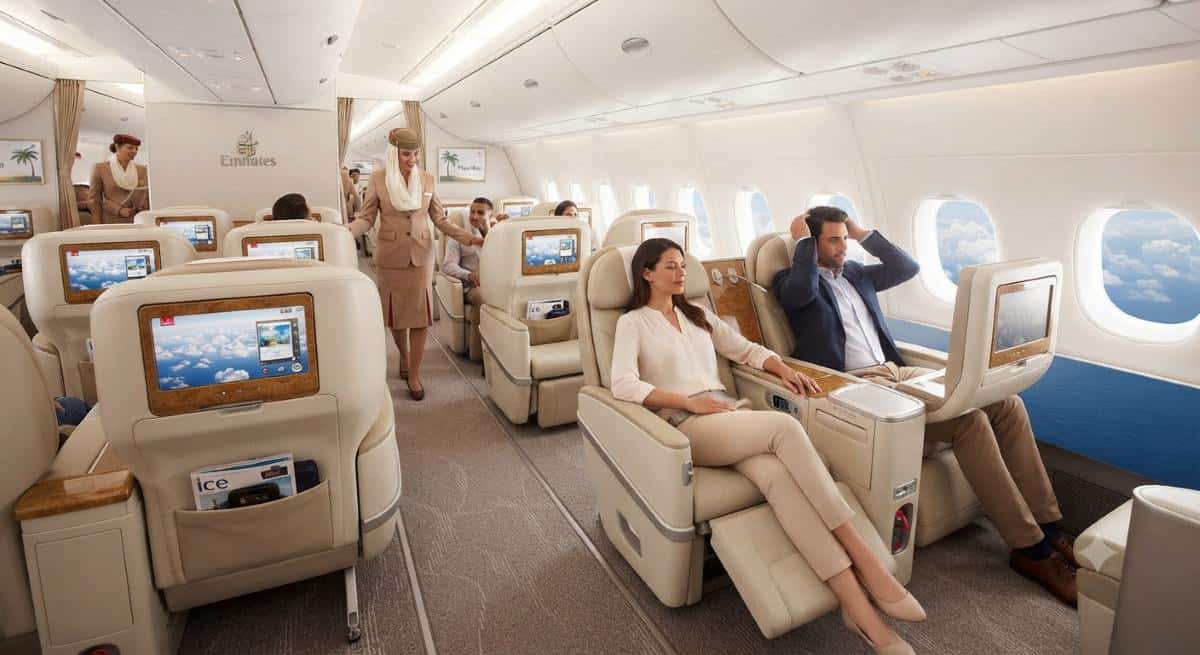
Image generated with Ai
The deployment of the acclaimed service class by Emirates to Mauritius has been officially scheduled. Operations are set to commence on September 1, 2026, marking a significant milestone for aviation networks connecting the Middle East with the Indian Ocean. The strategic integration brings the highly-sought-after cabin choice to two out of the three daily frequencies operating between Sir Seewoosagur Ramgoolam International Airport and Dubai International Airport.
This service expansion underscores long-standing commercial partnerships and ongoing investments within the region, where operations have been continuously maintained since 2002. By incorporating these configurations, the airline aims to satisfy growing demands for enhanced travel experiences in one of the continent’s prominent tourism-driven economies.
Passengers embarking on journeys between Mauritius and Dubai will experience a distinct elevation in comfort and flexibility. The restructuring introduces 80 upgraded seats across selected widebody aircraft, specifically utilizing the flagship Airbus A380 on flights EK703 and EK704, alongside a retrofitted Boeing 777 deployed on routes EK709 and EK710.
Travelers booking these cabins gain access to approximately 70 international destinations across Europe, Asia, and the Americas via seamless connections in Dubai, including all six daily services to London Heathrow and selected flights to Bangkok. Furthermore, ground-level enhancements such as priority boarding and dedicated check-in lanes at Dubai International Airport streamline the overall airport transit process for ticket holders.
Advertisement
Advertisement
The introduction of intermediate luxury cabins reflects broader shifts in global commercial aviation strategies. Major carriers increasingly focus on multi-tier service segmentation to accommodate changing passenger expectations without requiring a full upgrade to business-class pricing.
By retrofitting aircraft like the Boeing 777 and utilizing high-capacity Airbus A380 frames, airlines maximize space efficiency while addressing the rising commercial appetite for privacy, ergonomic support, and customized onboard products. Market analysts note that such deployments reinforce competitive advantages on lucrative leisure and business corridors, particularly in key tourism markets where regional connectivity drives economic growth.
Tickets featuring the newly introduced service class are currently available for purchase through official web portals, local travel storefronts situated at The Docks 2 in Caudan, or accredited travel agents. The physical layout on the Airbus A380 accommodates 56 intermediate seats alongside 76 business class and 437 economy seats, while the configured Boeing 777 houses 24 intermediate seats, 38 business class seats, and 214 economy seats. Onboard amenities have been meticulously curated to maximize passenger well-being during long-haul transits.
Each seat offers a 19.5-inch width, generous recline, six-way adjustable headrests, cushioned leg rests, wood-finished cocktail tables, in-seat charging ports, and a 13.3-inch personal entertainment display. Dining standards feature welcome beverages in fine glassware, multi-course regional menus prepared with seasonal ingredients, service on Royal Doulton china, and an extended beverage list including fine wines and liqueurs. Additionally, passengers are provided with sustainable amenity kits, recycled plastic blankets, and specially designed pillows.
Historically, operations on the Mauritius corridor offered a traditional two-class or three-class setup where passengers faced a sharp transition between standard economy seats and upper-tier business facilities. Previous configurations lacked an intermediate product tier on these specific flight numbers, limiting options for travelers seeking moderate upgrades in comfort, enhanced dining, and specialized seating without incurring higher business-class fares.
The latest rollout rectifies this gap by aligning regional routes with the carrier’s broader global strategy of standardized multi-class modernization, superseding older cabin layouts that featured fewer amenities and less ergonomic flexibility.
Advertisement
Tags: Africa, Airbus A380, aviation, boeing 777, Dubai Flights
Advertisement
Advertisement












Wednesday, September 2, 2026

Tuesday, September 1, 2026

Wednesday, September 2, 2026

Wednesday, September 2, 2026
Tuesday, September 1, 2026

Tuesday, September 1, 2026

Wednesday, September 2, 2026
Wednesday, September 2, 2026