
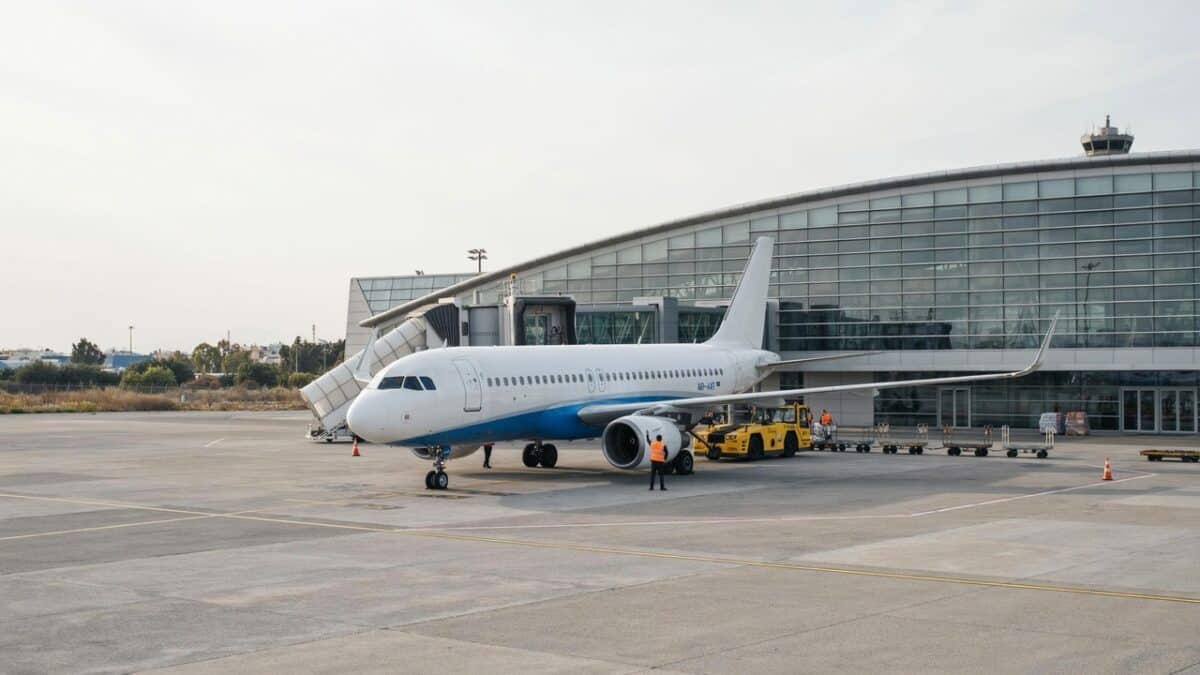
Image generated with Ai
Greece’s leading airline will overhaul its Miles+Bonus loyalty programme from 5 November 2026. The revision raises Silver and Gold qualification thresholds, introduces flight-count pathways and creates a new Platinum tier. Although some members may find status harder to retain, enhanced AEGEAN Travel Perks will include seating, baggage, lounge access, upgrades and Wi-Fi. Frequent passengers should review their tier periods, eligible sectors and earning totals before booking additional journeys.
Frequent travellers using Greece as a destination or connection point will face substantially revised Miles+Bonus rules from 5 November 2026. The programme will change how members upgrade to Silver and Gold or retain their existing status. It will also introduce Platinum as the highest available tier, supported by an expanded package of airport, baggage, seating and onboard benefits.
The overhaul could reshape AEGEAN Travel Perks by encouraging members to take more flights with AEGEAN or Olympic Air. Travellers who previously relied heavily on Star Alliance services may face a more difficult qualification path. However, the announcement concerns airline loyalty only. It does not change Greek visas, passports, Schengen entry requirements, residence rights or immigration rules.
Members will receive three broad qualification choices for Silver and Gold. They can complete a specified number of eligible flights, combine tier miles with a minimum number of eligible sectors or reach a substantially higher mileage-only target. This structure may help frequent short-haul passengers while preserving a separate pathway for travellers earning miles across the wider airline alliance.
Advertisement
Advertisement
Platinum follows a different model. It requires both flight-earned tier miles and a substantial number of AEGEAN or Olympic Air sectors. The programme will also expand several membership benefits. Transition arrangements will depend on each member’s retention-period end date, meaning not every existing member moves to the new retention thresholds simultaneously.
Tier miles determine whether a member can qualify for or retain status. They are different from award miles and cannot be treated as a reward balance.
Award miles can be redeemed for eligible flights, services or other rewards under the programme’s conditions.
Eligible flights are qualifying services operated by AEGEAN or Olympic Air that satisfy the applicable earning rules.
Upgrade means moving from one status tier to a higher level.
Retention means keeping an existing tier for another membership period.
Flight-earned tier miles are collected through qualifying flying activity rather than purchases or non-air partners.
The revised system gives members several ways to qualify, but each pathway must be completed correctly. Someone using a mixed route can reach the required mileage total and still fail if the minimum number of eligible flights has not been completed. Members should therefore track flight numbers and tier miles separately.Tier goal Flight-count pathway Mixed pathway Mileage-only pathway Silver upgrade 16 eligible flights 12,000 tier miles and four eligible flights 36,000 tier miles Silver retention 16 eligible flights 9,000 tier miles and four eligible flights 36,000 tier miles Gold upgrade 32 eligible flights 24,000 tier miles and 12 eligible flights 72,000 tier miles Gold retention 32 eligible flights 18,000 tier miles and 12 eligible flights 72,000 tier miles Platinum upgrade No separate flight-only route 72,000 flight-earned tier miles and 32 eligible flights Not available Platinum retention No separate flight-only route Same requirement as upgrading Not available Effect on AEGEAN Travel Rewards frequent direct activity Combines miles and sectors Requires significantly more miles
Programme definitions, qualifying-flight rules and booking-class conditions should always be checked before tickets are purchased. The flight appearing in an itinerary does not automatically prove that it will count towards every membership pathway.
A new or lower-tier member can reach Silver by completing 16 AEGEAN or Olympic Air flights within 12 months. Alternatively, the traveller can collect 12,000 tier miles while taking at least four eligible flights. The third route requires 36,000 tier miles but does not carry the four-sector condition.
Silver retention has the same flight-only and mileage-only totals. However, its mixed pathway requires 9,000 tier miles and four eligible flights. The difference means an existing Silver member may need fewer tier miles than someone upgrading. Occasional travellers should calculate the complete ticket cost before booking unnecessary journeys solely to achieve status.
A Silver member can reach Gold by completing 32 eligible flights, collecting 24,000 tier miles with 12 eligible flights or earning 72,000 tier miles. These thresholds must be achieved within the applicable 12-month period. The flight-count route may appeal to travellers who regularly take domestic, regional or short international services.
Gold retention requires 32 eligible flights, 18,000 tier miles with 12 eligible flights or 72,000 tier miles. Gold members planning regular AEGEAN Travel Perks must monitor both miles and sectors because partner-airline activity may not satisfy every pathway’s direct-flight requirement. Existing Gold membership does not guarantee renewal under the revised conditions.
Platinum will sit above Gold from 5 November 2026. Members must collect 72,000 flight-earned tier miles, including at least 32 AEGEAN or Olympic Air flights within 12 months. The same combination applies when retaining Platinum for another period.
The term “flight-earned” is central to the requirement. Purchased tier miles, award miles and earnings from non-air partners cannot replace the qualifying flight activity. Partner-airline journeys alone also cannot satisfy the 32-sector condition. Platinum is therefore aimed at passengers who demonstrate substantial and repeated use of the airline’s own network.
Platinum provides the strongest collection of AEGEAN Travel benefits, but nearly every privilege remains subject to availability, airport participation or published programme conditions. Travellers should assess the benefits against their normal flying pattern instead of assuming that every feature will apply on every route.Platinum benefit What it provides Important condition Complimentary seating Standard, Up Front and Extra Legroom seats Membership number and programme conditions apply Business Class upgrades Four upgrades during the tier-validity period Dedicated upgrade availability is required Additional baggage Two extra checked pieces Weight limits follow the booked cabin Guaranteed Economy booking Access to a seat on eligible services Aircraft and advance-notice rules apply Business lounge access Member plus up to eight companions Same booking, flight and entry time required Companion Fast Track Faster security processing Participating airports and booking limits apply Dedicated assistance Support by telephone, email or messaging Available to the eligible member Complimentary Gold status Gold membership for one nominated member Valid for 12 months Additional award miles 30% more award miles Eligible flight activity only Stream Wi-Fi Higher-speed onboard internet Equipped aircraft and routes only Birthday benefit 3,000 award miles Birth date must be registered
Business Class upgrade requests must be submitted online and can be made until two hours before departure. Complimentary Stream Wi-Fi applies on equipped flights to or from Greece. The advertised package offers speeds of up to 15 Mbps, although actual availability depends on the operating aircraft and service.
The guaranteed Economy booking benefit requires at least 24 hours’ notice for Airbus flights. A 72-hour deadline applies to services operated by a 72-seat ATR aircraft. Flights using a 37-seat Dash 8-100 or 48-seat ATR aircraft are excluded. The benefit guarantees an Economy cabin seat, not a particular fare or preferred seating position.
Platinum members can access designated business lounges with up to eight companions, creating a maximum eligible party of nine people. All travellers must appear in the same booking, take the same flight and enter together. Companion Fast Track is similarly limited to people on the same booking, where participating airports offer the service. Group bookings above nine passengers are excluded.
Gold and Platinum members also receive Star Alliance Gold recognition. Benefits include priority check-in, boarding and baggage handling, additional baggage allowances, waitlist priority and standby priority. Members may access more than 1,000 participating lounges, generally with one eligible guest travelling on the same flight. The eight-companion allowance does not extend across every alliance lounge.
Members whose retention period ends on or before 4 November 2026 can use the existing retention requirements. Those with periods ending from 5 November onwards will move to the revised system. The programme states that affected members will receive at least 12 months to meet the applicable new retention target.
This does not mean that every membership year restarts on 5 November. Each member has a personal qualification and retention calendar. For example, a period ending on 3 November falls under the current retention rules. A period ending after 4 November must be reviewed against the revised thresholds and the adjustment time shown in the member’s account.
Members should confirm the operating airline, flight number, booking class and ticket eligibility before relying on a sector. They should also verify the tier-mile earning rate and whether the service counts towards the AEGEAN or Olympic Air requirement. Codeshare flights can involve a marketing airline and a different operating airline, which may affect qualification.
Reward tickets, cancelled services and rebooked sectors should not be assumed to earn status credit. A booking displaying an airline code may not meet every requirement if another carrier operates the flight. Members should consult the programme conditions and retain their booking and account records when planning qualification.
Official figures show that Greece welcomed 43.312 million inbound travellers in 2025, an increase of 6.4% from 2024. Travel receipts rose 9.4% to €23.627 billion, while the average spend per trip increased 2.8% to €545.50. Leisure journeys produced €20.647 billion, representing 87.4% of total travel receipts.
The positive movement continued during the first half of 2026. Travel receipts increased 14.8% compared with the same period of 2025. Accommodation establishments recorded 5,580,961 arrivals and 24,061,112 overnight stays in June alone. Non-residents generated 82% of arrivals and 89.5% of nights, showing why international connectivity remains central to the country’s visitor economy.
Flight-count pathways may encourage members to connect through Athens or Thessaloniki and add domestic sectors to Heraklion, Chania, Rhodes, Corfu, Mykonos, Santorini, Kos and other regional destinations. Such journeys could support repeat AEGEAN Travel Perks, especially when passengers combine business meetings, city breaks and island holidays.
However, the loyalty changes will not automatically increase tourist arrivals. Any effect will depend on whether members make genuine additional journeys, stay overnight and spend money in local communities. Airport connections without longer stays provide a different economic outcome from holidays involving hotels, transport, attractions and hospitality businesses.
Frequent domestic passengers may find the flight-count route useful because regular return journeys can generate several eligible sectors. Business travellers could value lounge access, priority services, baggage allowances and guaranteed Economy bookings. Greece-based members may also find it easier to consolidate their annual flying within one programme.
Connecting passengers using Athens may accumulate eligible flights faster, while alliance travellers must check how partner services fit their chosen pathway. Occasional holidaymakers are less likely to gain enough value if qualification requires additional spending. The richer benefits should therefore be measured against each traveller’s existing habits, rather than treated as a reason to fly unnecessarily.
The revised programme could encourage passengers to concentrate more journeys within the Greek network. That behaviour may support repeat visits, business travel, conferences, airport services, hotels, ground transport and off-season journeys. Island destinations could benefit when qualifying travellers add domestic connections to international itineraries.
Nevertheless, no official forecast links the programme overhaul to a specific increase in arrivals, hotel occupancy or tourism revenue. The revision does not add routes, aircraft capacity or accommodation supply. Tourism gains will depend on whether additional flying produces longer stays and local spending rather than airport transfers alone.
This is not a Greek visa-policy announcement. It does not change Greece’s membership of the Schengen Area, passport-validity rules, permitted lengths of stay, employment rights or residence requirements. Loyalty status cannot replace a visa, residence permit or other entry authorisation.
Gold Track may provide faster security or immigration processing at participating airports. It does not remove passport control, guarantee entry, provide visa-free travel or exempt passengers from security checks. Travellers remain responsible for meeting every entry and transit condition attached to their nationality and destination.
Before changing flight plans, members should:
Careful account monitoring will help frequent flyers gain value from the programme without booking unnecessary flights solely to reach a status threshold.
The revised upgrade system and Platinum tier will launch on 5 November 2026. Members should monitor their account displays, eligible-sector totals, tier-mile balances and benefit availability. They should also check aircraft-specific Wi-Fi, guaranteed-seat conditions, lounge rules and upgrade inventory before making decisions.
Programme conditions can change, so members should retain or review the rules applying to their qualification period. The overhaul introduces more demanding Silver and Gold thresholds while creating flight-count alternatives and a benefit-rich top tier. For successful AEGEAN Travel, members must understand their dates, select the correct pathway and decide whether the rewards justify the required activity.
The changes take effect on 5 November 2026.
A member can take 16 eligible flights, earn 12,000 tier miles with four eligible flights or collect 36,000 tier miles.
The options are 16 eligible flights, 9,000 tier miles with four eligible flights or 36,000 tier miles.
Members need 32 eligible flights, 24,000 tier miles with 12 eligible flights or 72,000 tier miles.
Platinum requires 72,000 flight-earned tier miles and at least 32 AEGEAN or Olympic Air flights within 12 months.
No. Platinum requires flight-earned tier miles and a minimum number of eligible airline sectors.
No. The applicable rules depend on the end date of each member’s retention period.
Platinum provides four upgrades, but their use remains subject to dedicated upgrade availability and programme conditions.
No. It applies only to appropriately equipped aircraft operating on eligible services.
No. Airline status does not alter passports, visas, immigration checks or entry requirements.
Advertisement
Advertisement
Advertisement













Friday, September 4, 2026

Friday, September 4, 2026

Friday, September 4, 2026

Thursday, September 3, 2026

Wednesday, September 2, 2026

Friday, September 4, 2026

Friday, September 4, 2026