
Singapore Ranks 13th Globally as Tourism Strength Meets Big Travel Costs

Published
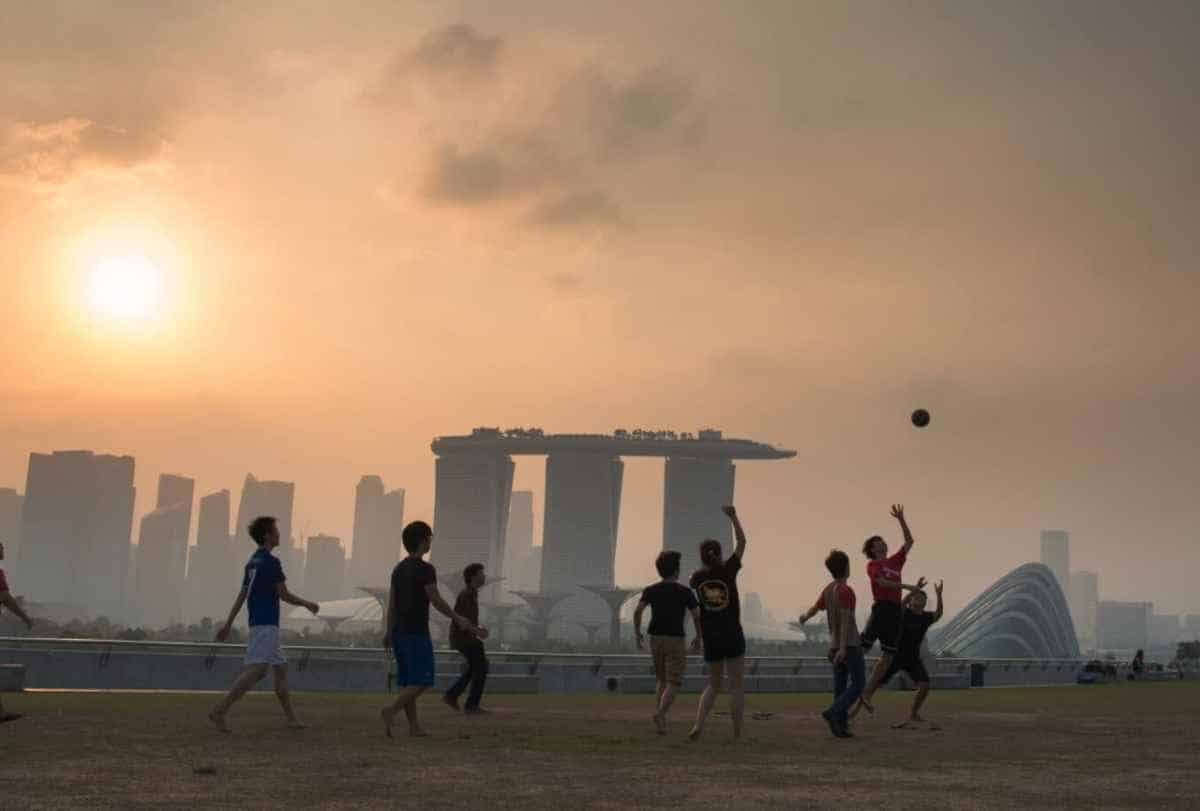
Singapore has retained a place among the world’s strongest tourism economies, ranking 13th globally in the World Economic Forum’s Travel & Tourism Development Index 2026. The city-state also holds the highest position among ASEAN economies in the latest assessment, ahead of Indonesia, Malaysia, Thailand and other regional competitors. The ranking reflects the depth of Singapore’s transport infrastructure, tourism services, safety, health systems, business environment and international connectivity. Its overall TTDI score also improved from the previous edition. Yet the latest index highlights a challenge that is increasingly important for established tourism destinations. Price competitiveness remains a relative weakness for many advanced economies, even as their infrastructure and visitor services remain among the strongest in the world. Singapore is facing that same tension. Tourism demand remains robust, but higher airfares, transport costs and other expenses can matter more to price-sensitive leisure travellers.
Singapore Remains ASEAN’s Tourism Leader
The WEF placed Singapore 13th among 110 economies in its 2026 index.
Japan leads the global ranking, followed by the United States, Spain, Australia, France, Germany, the United Kingdom, China, Switzerland and Italy.
Singapore’s position is particularly notable within Southeast Asia. Indonesia ranks 23rd, Malaysia 26th, Thailand 38th, Vietnam 52nd, the Philippines 57th and Laos 75th.
Advertisement
Advertisement
The TTDI measures the conditions that enable travel and tourism to develop, rather than simply counting international visitors. Its framework covers areas including business environment, safety and security, health and hygiene, air transport infrastructure, ground and port infrastructure, tourism services, natural resources, cultural resources, sustainability and price competitiveness.
Singapore performs strongly across many of these categories.
Advertisement
Advertisement
High Costs Are Becoming a Tourism Consideration
The WEF’s 2026 report identifies affordability as one of the major constraints affecting tourism competitiveness.
Across the 110 economies assessed, travel and tourism-related prices have risen faster than inflation in many markets. The report found that price competitiveness declined in three-quarters of the economies between 2024 and 2026.
Singapore’s latest inflation data provide a current example of the pressure travellers can face.
Consumer prices rose 2.3% year on year in August 2026, while airfares increased 12.9% and point-to-point transport services rose 12.3%.
Those figures do not establish a decline in Singapore’s leisure tourism volume. They do, however, show why affordability is becoming an important consideration for visitors comparing destinations across Southeast Asia.
Tourism Demand Remains Strong
There is little evidence of a broad collapse in Singapore leisure demand.
Advertisement
Advertisement
Singapore welcomed 16.9 million international visitors in 2025, an increase of 2.3% from 2024. Tourism receipts reached approximately S$32.8 billion, the highest annual figure recorded at the time.
The government expects international visitor arrivals in 2026 to reach between 17 million and 18 million, with tourism receipts projected at S$31 billion to S$32.5 billion.
Singapore also recorded about 4.4 million international visitors during the first quarter of 2026, representing 3% growth from the same period a year earlier.
The data therefore point towards continued expansion rather than a contraction in tourism.
Singapore Is Targeting Higher-Value Tourism
Where the supplied claim does have some basis is in Singapore’s deliberate emphasis on attracting visitors who generate stronger economic value.
The Ministry of Trade and Industry has said that the Singapore Tourism Board is pursuing high-growth visitor segments and markets with a higher propensity to spend.
Advertisement
Advertisement
This approach forms part of Singapore’s broader Tourism 2040 strategy.
Rather than depending solely on larger visitor volumes, Singapore is developing experiences across luxury accommodation, entertainment, business events, MICE, cruise tourism, retail, dining and integrated resorts.
That strategy is visible in major infrastructure investment. Marina Bay Sands and Resorts World Sentosa have committed approximately S$10 billion combined to expansion projects, including new accommodation, entertainment, attractions, dining and retail facilities.
Medical Capabilities Remain a Major Strength
Singapore also has a highly developed healthcare system, although the WEF tourism index does not establish a global ranking of oncology or transplant leadership.
Singapore’s Ministry of Health reported that 973 organ transplants were performed between 2021 and 2025, including 309 living-donor and 664 deceased-donor transplants.
The country has advanced specialist hospitals and medical capabilities covering complex treatments, including cancer care and transplantation.
Advertisement
Advertisement
However, describing Singapore as having “absolute dominion” over these procedures would go beyond the available evidence.
For tourism reporting, the more defensible point is that world-class healthcare infrastructure strengthens Singapore’s wider international-city proposition, including for visitors seeking specialist medical services.
Regional Competition Is Intensifying
Singapore’s challenge is not a lack of tourism infrastructure. It is maintaining its competitive position while neighbouring destinations continue improving.
Indonesia, Malaysia, Thailand and Vietnam are investing heavily in airports, hotels, attractions and destination infrastructure while generally offering lower costs.
This creates a different competitive equation.
Singapore can command demand through connectivity, safety, premium accommodation, business events, healthcare, entertainment and service quality. Nearby destinations can compete more aggressively on accommodation, food, transport and longer-stay value.
Advertisement
Advertisement
The WEF’s findings reinforce that distinction. Advanced tourism economies generally hold major advantages in infrastructure and services, but emerging destinations can gain ground through competitive pricing and expanding tourism assets.
What This Means for Travellers
To visitors, Singapore is one of the most developed and easily accessible places in Asia. Changi Airport allows visitors to enjoy plenty of international connections, while the MRT system ensures that the key points of interest can be easily reached. Nevertheless, in terms of tourism and sightseeing, Marina Bay, Gardens by the Bay, Sentosa, Orchard Road and the cultural areas of culture of Singapore are still relevant. In fact, a much more significant development is the aspect of prices. When comparing Singapore to other Asian destinations like Kuala Lumpur, Bangkok and Bali, visitors will notice that in Singapore the prices for lodging, transport and daily costs are usually higher. However, tourists spend a lot of money due to connectivity, infrastructure, safety, business tours, high-end experiences, and the presence of tourist services. Hence, the 2026 WEF report reflects the success of tourism in Singapore with an increasingly significant problem of affordability.
Advertisement
