
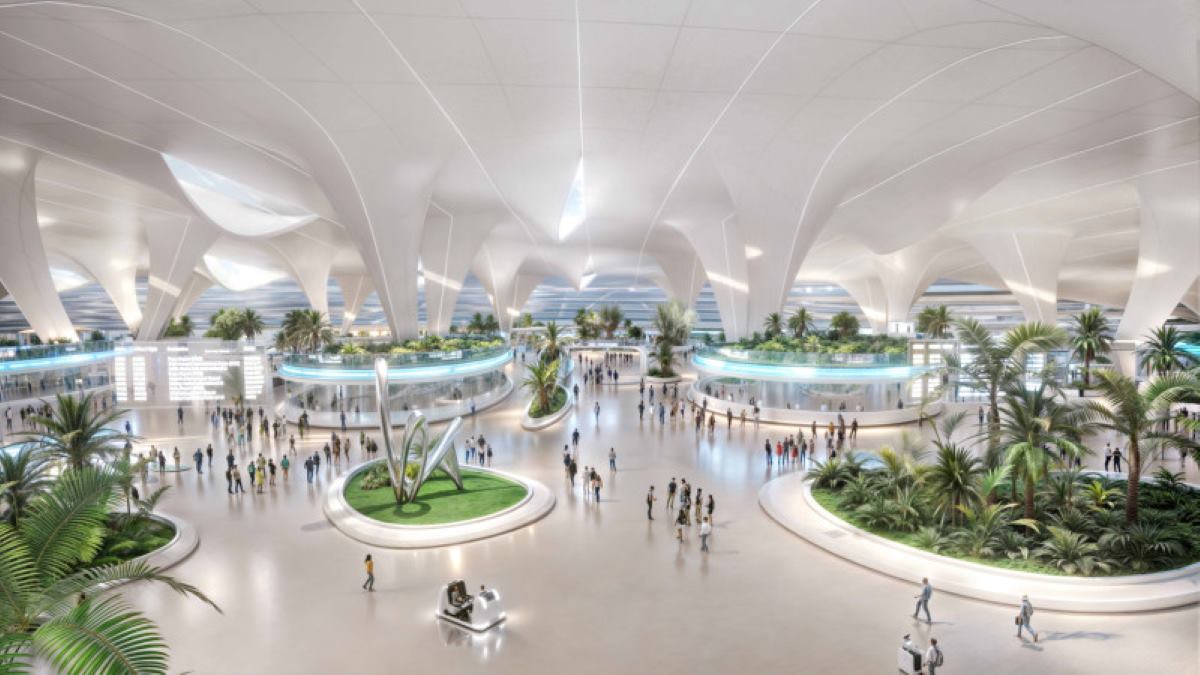
Image: Al Maktoum Airport
Dubai is developing Dubai World Central (DWC) as its next major international airport. DWC will enable passengers to use cutting edge digital technology to skip lines and use automated security systems. Passengers of the future DWC airport will also use AI along with biometrics and smart passenger technology to eliminate waiting during commercial flights. Dubai has ambitious plans that will allow it to be prepared for the next biggest boom in international air travel.
Advertisement
DWC will allow Dubai to process more international passengers in the future while improving the overall efficiency of the airport. DWC will replace Dubai’s current major international airport, Dubai International Airport, in the future. Thanks to its massive volume of international air travel, Dubai is a perfect location for a futuristic airport.
The upcoming Al Maktoum International Airport development focuses on removing many of the traditional barriers that slow down international travel. Instead of passengers moving through multiple manual checkpoints, the airport will rely on intelligent systems that allow travellers to progress through key stages with limited physical interaction.
Advertisement
Advertisement
The queue-free security vision aims to transform airport security from a process where passengers wait in lines into an automated experience where technology completes identification and screening in the background. Dubai’s approach follows a global aviation trend where airports are increasingly adopting biometric technology, artificial intelligence and automated passenger processing to improve operational efficiency. Similar smart systems are already being introduced across UAE airports to reduce document checks and accelerate passenger movement.
A major part of Al Maktoum International Airport’s future passenger experience will be powered by artificial intelligence and biometric recognition. Advanced facial recognition systems can identify passengers through digital profiles, allowing airports to verify identities without requiring repeated manual passport and boarding pass checks. These technologies are designed to create a smoother journey while maintaining security standards.
Dubai has already tested AI-powered passenger processing systems at Dubai International Airport, where biometric technology has been used to support faster movement through airport procedures. These developments provide a foundation for the wider smart airport vision planned for future facilities. The objective is to create an airport environment where passengers spend less time waiting at security points and more time using airport services, lounges and retail facilities.
Al Maktoum International Airport is at the centre of Dubai’s long-term aviation expansion strategy. The airport’s planned development includes a major new passenger terminal and infrastructure designed to support huge future growth in international travel. The expanded airport is expected to become one of the largest aviation facilities in the world, with plans for significantly increased passenger capacity, multiple runways and advanced airport facilities. The project forms part of Dubai South, a major economic and logistics development built around aviation connectivity.
Advertisement
Advertisement
The airport’s future role is closely connected with Dubai’s ambition to remain one of the world’s leading aviation and tourism centres. With international passenger demand continuing to rise, the new airport is designed to provide the capacity and technology required for future decades.
Traditional airport security procedures often require passengers to arrive early because of long queues, manual document checks and security screening delays. Dubai’s future airport model aims to reduce these challenges through automation. A queue-free security system could allow passengers to move through terminals with fewer interruptions. Smart scanners, digital identity verification and automated processing could reduce congestion during busy travel periods.
For international travellers, this could mean:
The shift towards smart security reflects a broader transformation in global aviation, where airports are moving from traditional processing models towards technology-driven travel ecosystems.
Dubai has built its reputation as one of the world’s most important aviation and tourism hubs. The development of Al Maktoum International Airport supports this position by combining large-scale infrastructure with advanced technology. The airport is expected to support growing demand from international tourists, business travellers and connecting passengers. By focusing on speed, automation and passenger convenience, Dubai aims to create a travel experience that matches the expectations of future global travellers.
The move towards queue-free security also supports Dubai’s wider smart city vision, where digital technology is integrated into everyday services to improve efficiency and user experience.
The passenger journey designed for Al Maktoum International Airport envisions a dramatic transformation in the system used by passengers to interact with airports. The future may involve more invisible digital systems operating behind the scenes and fewer physical checkpoints.
Alongside other airports, Dubai is using advanced AI and biometric technology to reduce the time and friction of passenger travel while maintaining and improving the safety of the travel process. Al Maktoum International Airport is expected to be one of the first major hubs in the shift of global aviation. Dubai is building an airport that is adapted to modern day travel and designed to accommodate future trends in international aviation with the use of security lanes designed to process passengers without the need to stand in line, as well as other automated passenger systems and advanced airport infrastructure.
Advertisement
Tags: Biometric Airport Technology, Dubai Al Maktoum International Airport, Dubai Travel, future aviation hub, queue-free airport security
Advertisement
Advertisement













Saturday, September 5, 2026

Saturday, September 5, 2026
Saturday, September 5, 2026

Saturday, September 5, 2026

Saturday, September 5, 2026
Saturday, September 5, 2026

Saturday, September 5, 2026

Saturday, September 5, 2026



