
Kenya Ebola Outbreak Escalates as Nairobi Records First Imported Death From Rare Bundibugyo Virus

Published
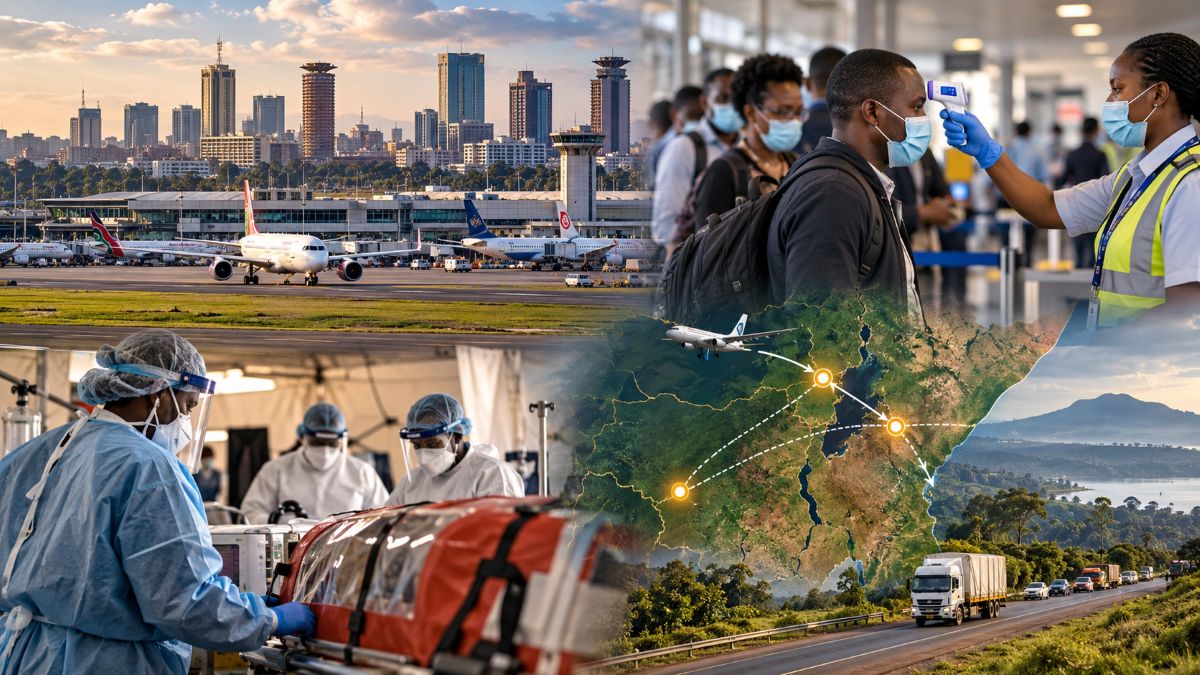
Kenya has confirmed its first imported Ebola case, after a Kenyan citizen who had lived in the Democratic Republic of the Congo died in Nairobi. The patient travelled from the DRC through Uganda before flying into Kenya on Saturday, October 3. Health authorities have identified 28 contacts, including relatives and healthcare workers, while tracing passengers and crew linked to the flight. The case involves the Bundibugyo virus, a rare Ebola species with no approved vaccine or virus-specific treatment. The development widens the geographical footprint of the outbreak beyond the DRC after earlier transmission reached Uganda. For travellers, Kenya remains operational, but public health surveillance has entered a more consequential phase.
Kenya’s First Case Changes the Travel Picture
The confirmed infection represents an imported case rather than evidence of established community transmission in Kenya. That distinction matters considerably for airlines, airports, tour operators and international travellers assessing immediate disruption risks.
The patient had reportedly lived in the DRC for seven years and became ill about a month before returning to Kenya. He travelled overland to Kampala before boarding a flight to Nairobi, creating a clear cross-border movement chain for health authorities to investigate.
After arriving at Jomo Kenyatta International Airport, the passenger underwent routine public health screening. He was subsequently taken to a Nairobi hospital by relatives and later transferred to an isolation facility.
Advertisement
Advertisement
Health authorities then identified close contacts and began tracing other people connected with the journey. The response is therefore centred on rapid detection, isolation and contact monitoring, rather than broad restrictions on international movement.
Kenya had already spent months strengthening its Ebola preparedness. The Ministry of Health previously reported that more than 71,000 travellers had been screened at airports and land borders by early June. It had also investigated 22 Ebola alerts, all of which tested negative at that stage.
Advertisement
Advertisement
That earlier preparation now provides an important operational foundation as officials investigate the country’s first confirmed imported infection.
The DRC Outbreak Remains Vastly Larger
The immediate Kenyan case must be viewed against the much wider outbreak in the DRC. WHO reported 7,890 confirmed cases and 3,799 deaths as of 23 September, producing a crude case-fatality ratio of 48.1%. The outbreak had reached 63 health zones across seven provinces by that date.
Advertisement
Advertisement
The scale has increased dramatically since the outbreak was first recognised in May. WHO initially reported only dozens of confirmed infections, but transmission subsequently expanded across several provinces.
The DRC outbreak is being driven by Bundibugyo virus, one of the Ebola virus species capable of causing severe viral haemorrhagic disease. WHO says there are currently no approved Bundibugyo-specific vaccines or therapeutics, although candidate vaccines and treatments are being assessed.
The epidemiology also explains why transport networks matter. Ituri, where the outbreak was first identified, is a major movement corridor with commercial, mining and healthcare links.
Consequently, the risk does not stop at the boundary of an affected health zone. Cross-border mobility can move exposed individuals between communities before symptoms become sufficiently obvious for immediate detection.
Advertisement
Advertisement
Uganda’s Experience Offers Important Context
Uganda became involved early in the outbreak after imported infections arrived from the DRC. WHO reported confirmed infections in Kampala in May, demonstrating how rapidly established transport connections can bridge national borders.
Uganda subsequently mounted an intensive response and was declared free of Ebola in August after completing the required monitoring period. However, that achievement did not eliminate the regional risk because movement between Uganda, the DRC and neighbouring countries continued.
Kenya occupies a particularly important position within this network. Nairobi serves as a major aviation gateway for East Africa, while Kenya’s western border connects directly with Uganda and wider regional trade corridors.
WHO previously noted that more than 3,000 people cross the Busia border daily, alongside substantial freight traffic. Such movement makes border communities important points for early detection and information sharing.
The Kenyan case therefore carries significance beyond one patient. It tests whether regional surveillance systems can identify and contain infections moving through complex commercial and aviation networks.
What Travellers Should Expect Now
For ordinary travellers, the immediate issue is not a blanket shutdown of Kenya’s aviation system. Instead, passengers should expect public health authorities to place greater emphasis on health screening, contact tracing and traveller information.
Advertisement
Advertisement
WHO’s temporary recommendations specifically reject blanket flight suspensions and border closures as a standard response. They instead call for stronger surveillance, cooperation with transport operators and rapid communication when suspected cases travel internationally.
Travellers arriving from affected or high-risk areas may therefore encounter additional health questions or follow-up procedures. These measures can vary according to exposure history, symptoms and the public health assessment at the time.
People travelling to areas where Bundibugyo virus is circulating should also understand the 21-day monitoring period. WHO guidance advises travellers to remain alert for symptoms during that period and seek medical attention promptly if illness develops.
Importantly, travellers should not confuse enhanced surveillance with a general travel ban. WHO continues to advise against broad restrictions on international travel and trade based solely on the outbreak.
The practical message is straightforward. Travellers should check official health information before departure, retain their itinerary details and disclose relevant travel history if they become unwell.
Airlines Face A New Contact-Tracing Test
The Nairobi case also highlights the growing importance of airline cooperation during infectious-disease events. Passenger manifests can become critical public-health tools when authorities need to identify people who shared a flight with an infected traveller.
Advertisement
Advertisement
WHO’s recommendations call for coordination with transport operators to facilitate timely communication about suspected cases. They also support international contact tracing involving passengers and crew on affected journeys.
That process can create operational pressure for airlines. Carriers may need to provide passenger information quickly, coordinate with health authorities and communicate with affected customers.
However, such measures do not automatically mean flight cancellations. WHO has specifically stated that suspension of flights from countries experiencing community transmission is not recommended under its current temporary recommendations.
For travel companies, the bigger challenge may therefore be managing passenger confidence. Clear communication can prevent unnecessary cancellations and counter misinformation while maintaining appropriate caution.
The Kenyan case also demonstrates why aviation health preparedness extends beyond airport screening. A traveller can pass routine screening and later develop symptoms, making post-arrival surveillance and rapid referral equally important.
Kenya Had Built Capacity Before Confirmation
Kenya’s preparedness programme had already expanded considerably before this case emerged. In July, the Ministry of Health received a five-tonne consignment of Ebola preparedness supplies, including protective equipment, rapid diagnostic kits and infrared thermometers.
Advertisement
Advertisement
The ministry said the supplies would strengthen the country’s strategic emergency stockpile and support 22 designated Ebola isolation units.
Kenya had also trained rapid response teams and strengthened surveillance at airports and land crossings. Officials specifically identified the country’s role as a regional transport, trade and travel hub as a reason for heightened preparedness.
That infrastructure now becomes operational rather than precautionary. Health authorities can draw on existing isolation capacity, laboratory systems, surveillance networks and trained personnel while investigating the imported infection.
The response also demonstrates an important lesson from previous epidemics. Preparedness investments often appear excessive during periods without confirmed cases, yet become indispensable when an imported infection crosses a border.
How Travel Policies Differ From Earlier Outbreaks
The current international response also differs from the broad travel restrictions sometimes seen during previous health emergencies. WHO has repeatedly resisted blanket border closures during the Bundibugyo outbreak.
The organisation’s reasoning centres on maintaining monitored and transparent travel channels. Closing borders can redirect movement towards informal crossings, potentially making surveillance more difficult rather than strengthening it.
Advertisement
Advertisement
The contrast can be summarised clearly:
| Travel-health measure | Current Bundibugyo approach | Traveller implication |
|---|---|---|
| International flight suspension | Not generally recommended | Scheduled services can continue |
| Blanket border closure | Not recommended | Cross-border movement remains possible |
| Screening in affected areas | Strengthened | Travellers may face health checks |
| Contact tracing | Strongly emphasised | Passenger information may be requested |
| Suspected or confirmed cases | Travel should be restricted | Medical evacuation is the exception |
| Contacts | Monitoring for 21 days | International travel may be restricted |
| Public information | Increased | Travellers should follow official updates |
This framework is important for the tourism sector because it separates targeted health controls from indiscriminate travel restrictions.
What Tourism Businesses Need to Monitor
Hotels, destination-management companies, tour operators and airlines should focus on operational readiness rather than assume widespread disruption.
First, businesses should maintain clear escalation procedures for guests or employees who develop compatible symptoms. Staff should know how to contact local health authorities and how to avoid unnecessary physical exposure.
Second, companies selling travel to the DRC and neighbouring destinations should update pre-departure information. Advisories should explain current risks without overstating the likelihood of infection for ordinary travellers.
Third, corporate travel managers should monitor official health advisories rather than rely on social-media reports. The distinction between an imported case and sustained community transmission remains crucial for business decisions.
Advertisement
Advertisement
Finally, operators should prepare flexible customer communication. If screening requirements change, travellers need concise information about documentation, arrival procedures and potential health follow-up.
The commercial objective is not simply to preserve bookings. It is to maintain traveller confidence through credible, evidence-based information.
Practical Guidance for International Travellers
Travellers heading to Kenya should continue to monitor official health information before departure. Those travelling onward to or from affected areas should pay particular attention to current route-specific guidance.
Anyone who develops symptoms compatible with Ebola after possible exposure should seek medical care immediately. They should also disclose their recent travel history and any known contact with a suspected or confirmed case.
The principal risk is associated with direct contact with infected people or their bodily fluids, rather than casual proximity to passengers in an airport. Travellers should therefore avoid contact with symptomatic individuals and follow instructions from public health authorities.
People returning from affected areas may also need to remain reachable during the monitoring period. WHO guidance places particular emphasis on monitoring for 21 days after exposure or relevant travel.
Advertisement
Advertisement
The CDC similarly says the overall risk to travellers remains low outside affected areas, while maintaining enhanced guidance for people returning from countries linked to the outbreak.
Nairobi Now Becomes a Regional Watchpoint
The Kenya Ebola outbreak changes the regional picture because Nairobi is a major international aviation hub. Yet one imported fatal case does not, by itself, demonstrate sustained transmission inside Kenya.
The next phase will depend heavily on contact tracing. Authorities have already identified 28 contacts, while additional passengers and crew linked to the patient’s flight are being traced.
That investigation will provide the clearest indication of whether the case remained isolated or generated further transmission. Until those findings emerge, the travel industry should avoid both complacency and alarm.
Kenya’s months of preparedness provide an established response framework. Meanwhile, WHO’s current position continues to favour targeted surveillance rather than sweeping restrictions.
For travellers, the Kenya Ebola outbreak is therefore a reason to stay informed, not an automatic reason to abandon travel plans. The most responsible approach remains simple: check official guidance, disclose relevant exposure, follow health instructions and monitor symptoms after potential exposure.
The Kenya Ebola outbreak also reinforces a wider lesson for global travel. Modern disease control depends increasingly on rapid information sharing across airports, airlines, borders and health systems. For East Africa’s travel industry, that coordination may prove as important as the medical response itself.
Advertisement
