
Sustainable Tourism Across Germany Highlights New Models For Responsible Travel

Published
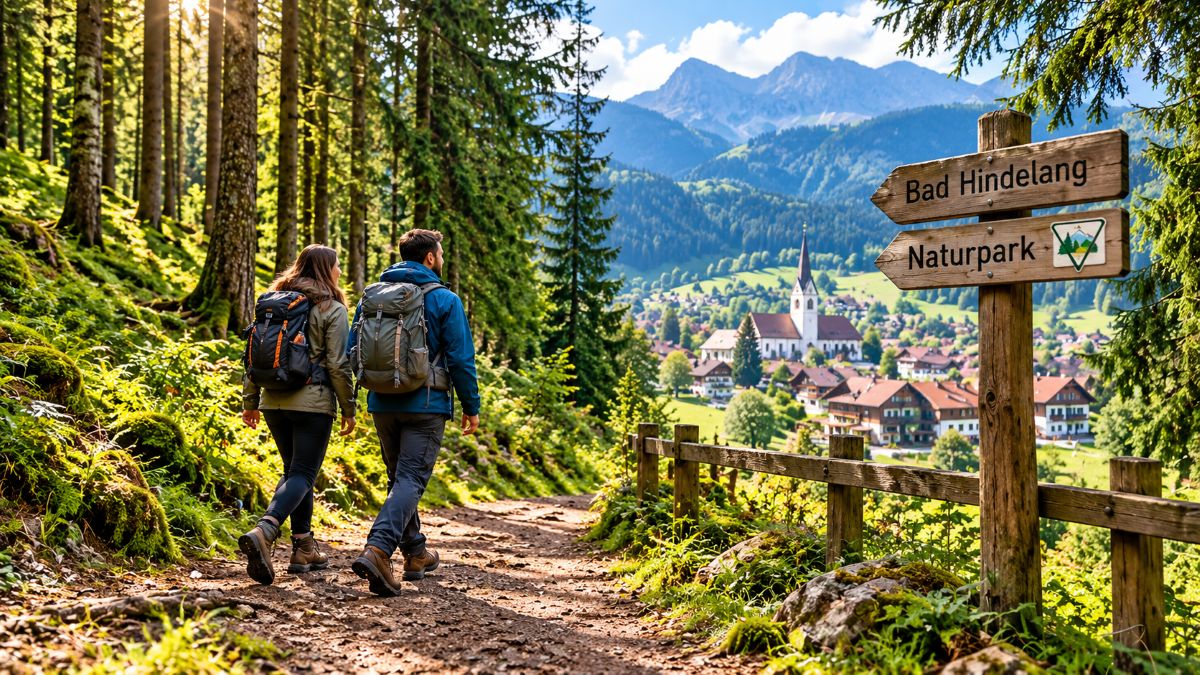
A holiday spent entirely outdoors does not immediately constitute responsible holidaymaking across European landscapes today. Genuine sustainable tourism in Germany demands that visitors balance conservation priorities, patronise independent village enterprises, and respect the living spaces of long-term regional populations. Travellers seeking low-impact journeys must recognise that sensitive wilderness zones cannot absorb limitless seasonal traffic without irreversible degradation.
Modern holidaymakers are increasingly reassessing transport choices, overnight lodgings, and their broader footprints in fragile alpine meadows and coastal mudflats. When eco-conscious travellers choose family-run guest houses, dine on regional organic produce, and adhere to designated hiking corridors, holiday spending strengthens the domestic community rather than extracting local resources. Achieving balance requires pragmatic visitor management alongside personal restraint across every stage of the journey.
Understanding The Core Framework Of Sustainable Tourism
Sustainable holiday planning rests upon three interconnected pillars: ecological stewardship, regional economic development, and cultural consideration. When holidaymakers bypass multinational corporate resort chains in favour of family-owned alpine pensions, capital remains directly within the host economy.
- Environmental Preservation: Reducing greenhouse gas emissions through electrified rail transit, minimising single-use waste, and avoiding shortcuts across fragile alpine flora.
- Economic Support: Ensuring tourist expenditure directly remunerates local farmers, craft workers, transport drivers, and independent hospitality staff.
- Social Respect: Preserving the customary rhythm of village life, preventing housing displacement driven by holiday rentals, and respecting local heritage.
Comparative Framework Of Sustainable German Destinations
| Destination | Federal State | Core Conservation Model | Low-Impact Transit Method | Community Economic Direct Benefit |
| Bad Hindelang | Bavaria | Alpine pasturing protection and eco-farming | Electric local buses and guest card transit | Direct purchase of allgäu artisan cheeses |
| Black Forest National Park | Baden-Württemberg | Strict zoning preserving ancient mixed woodland | Comprehensive regional rail and KONUS guest card | Independent woodland inns and regional timber craft |
| Wadden Sea Coast | Lower Saxony / Schleswig-Holstein | Tidal flat protection and bird sanctuary zoning | Intercity rail, electric car-carrying ferries, and cycling | Locally sourced North Sea seafood and certified guides |
| Harz National Park | Lower Saxony / Saxony-Anhalt | Rewilding pine forests and peat bog protection | Narrow-gauge railway connections and network buses | Traditional mountain tavern dining and farm shops |
| Eifel National Park | North Rhine-Westphalia | Wilderness recovery and quiet night-sky zoning | Wilderness express trains and cycling corridors | Village guest houses and regional bio-produce |
Regional Value Creation And Community Empowerment
The foundation of genuine eco-travel involves keeping monetary value rooted firmly inside destination communities. When visitors eat seasonal ingredients harvested by neighbouring family farms, agricultural viability improves without reliance on long-haul transport corridors.
Advertisement
Advertisement
Public programmes across Baden-Württemberg have demonstrated how targeted municipal strategies enhance green tourism. By offering community stakeholders a seat at development tables, local councils prevent over-commercialisation while guaranteeing fair hospitality wages.
Alpine Preservation And Low-Impact Mountaineering
Mountaineering villages across the Bavarian Alps represent an exceptional model of low-impact, traditional leisure. These communities voluntarily renounce intrusive mega-resort infrastructure, such as expansive lift networks, to safeguard biodiversity.
Advertisement
Advertisement
In locations such as Bad Hindelang, visitors encounter mountain farming traditions that preserve open meadows from erosion. Staying at traditional mountain huts that serve certified regional dishes ensures historical landscape stewardship remains viable for coming generations.
Managing Visitor Pressures And Avoiding Overtourism
Even destinations operating with the highest environmental standards experience critical pressure when visitor concentrations exceed environmental carrying capacities. Sustainable tourism requires rigorous visitor diversion schemes to shield vulnerable flora and fauna from overcrowding.
Effective conservation relies on clear trail signage, designated boardwalks, and seasonal access limits during wildlife breeding periods. Travellers must actively respect these controls rather than treating natural landscapes as open playgrounds.
Practical Steps For Lowering Your Travel Impact
- Journey to regional destinations by passenger rail or long-distance coach networks whenever timetables allow.
- Book accommodations certified by verified environmental labels that use renewable electricity and bio-sourced thermal heating.
- Select seasonal menus at independent inns rather than relying on globalised supermarket chains.
- Keep strictly to demarcated nature trails to prevent soil compaction and forest habitat fragmentation.
| System / Pass | Protected Region | Scope & Implementation |
| KONUS | Black Forest National Park & Biosphere Reserve | Integrated across ~150 municipalities and 9 transit districts. |
| GUTi (Gästeservice-Umweltticket) | Bavarian Forest National Park | Integrates the Waldbahn rail system and Igelbus (hedgehog bus) park shuttles via local spa cards. |
| HATIX (Harz-Gastkarte) | Harz National Park | Covers all municipal bus and tram networks across districts in Lower Saxony, Saxony-Anhalt, and Thuringia. |
| VGS Guest Ticket | Saxon Switzerland National Park | Bundles S-Bahn lines along the Elbe Valley, local bus links, and historic tramways (Kirnitzschtalbahn). |
Decarbonising Rural Gateways: The Mechanical Architecture of Zero-Emission Park Transit
Protected landscapes across Germany face a fundamental ecological contradiction: the demand for immersive wilderness experiences often drives heavy vehicular traffic into the very valleys and plateaus designated for conservation. In regions like the Black Forest, the Harz Mountains, and the Bavarian Forest, private car congestion along winding mountain passes historically led to roadside habitat erosion, airborne particulate deposition, and severe noise pollution in fragile avian nesting zones. To reconcile tourism with conservation mandates, German federal and state authorities engineered integrated rural mobility networks that treat transit infrastructure as an ecological management tool.
Central to this transformation is the decoupling of rural leisure from personal car ownership. By linking heavy-rail corridors directly with electrified regional shuttles, micro-mobility hubs, and coordinated bus networks, national park authorities have reshaped visitor movement. Rather than building expansive multi-storey car parks within core conservation buffer zones, regional development agencies deploy comprehensive mobility frameworks that remove cars before they reach ecologically sensitive trailheads.
- Intermodal Rail-to-Trail Hubs: Mainline regional trains feed directly into timed bus spurs, eliminating long wait times and ensuring seamless transitions into remote wilderness valleys.
- Reduction of Perimeter Congestion: Peripheral park-and-ride facilities capture transit traffic well outside sensitive national park boundaries, protecting local microclimates.
- Protection of Wildlife Corridors: Minimising private vehicular throughput reduces animal road strikes, tyre noise disturbances, and habitat fragmentation along ridge lines.
- Equitable Wilderness Access: Free public transit integration eliminates financial barriers for low-income travellers, students, and car-free households.
Financial Engineering: The Solidary Tourist Tax Mechanism
The operational foundation of regional guest passes such as KONUS in the Black Forest, GUTi in the Bavarian Forest, and HATIX in the Harz Mountains rests on a universal, levy-financed economic mechanism rather than discretionary public subsidies. Traditional transit networks often fail in sparsely populated regions because single-ticket revenue cannot cover rural operating overheads. Germany’s regional passes bypass this vulnerability by turning overnight hospitality into a collective funding pool.
Advertisement
Advertisement
Under this framework, every participating municipality integrates a modest public transport surcharge into its standard local visitor tax (Kurtaxe). This levy is collected automatically by hoteliers, campsite operators, and guesthouse proprietors upon guest check-in. Because the fee applies universally across all registered overnight guests—irrespective of whether an individual chooses to ride a bus or walk—the cumulative pool generates substantial, risk-free annual capital for participating transport associations.
- Predictable Long-Term Revenue: Regional transport authorities receive steady bulk payments quarterly, shielding rural lines from off-season ticket revenue shortfalls.
- Zero Marginal Cost for Travellers: Because the transit entitlement is bundled directly into the guest card, the psychological and administrative friction of purchasing regional tickets vanishes.
- Widespread Municipal Buy-In: Over 150 local councils in the Black Forest alone contribute to the pooled fund, unifying municipal marketing budgets under one ecological brand.
- Direct Merchant Benefit: Guesthouses gain an attractive marketing asset at negligible cost, driving longer average visitor stays across shoulder seasons.
Cross-Jurisdictional Governance Across Fragmented Transit Districts
The greatest administrative hurdle to rural mobility in Germany has historically been the balkanisation of public transport authorities (Verkehrsverbünde). A journey traversing 60 kilometres of alpine terrain might cross through three municipal districts, two administrative counties, and separate rail ticketing networks, requiring multiple complex fare zones. Regional visitor passes resolve this operational fragmentation by acting as an overarching legal clearinghouse.
In the Black Forest, the KONUS framework unifies nine independent transport federations across an area exceeding 11,000 square kilometres. Through unified compensation formulas, transit federations agree on revenue-sharing ratios calculated from passenger route surveys, passenger-kilometre data, and accommodation bed counts. This coordination ensures that a guest boarding a suburban bus in Baden-Baden can transfer onto a regional train to Freiburg and a rural post-bus to Mount Feldberg using a single card.
- Unified Ticketing Across Borders: Travellers cross multiple administrative counties without needing to understand differing local tariff structures or boundary stations.
- Standardised Visual Verification: Simple QR codes or physical pass formats allow quick on-board inspection by bus drivers and train conductors across varied operator fleets.
- Fleet Modernisation Incentives: Guaranteed passenger volumes encourage regional operators to invest in low-floor, wheelchair-accessible electric and low-emission buses.
- Synchronised Timetables: Coordinating previously competing municipal bus lines creates reliable cross-valley connections optimised for hikers and commuters alike.
Strategic Visitor Dispersion and Active Trailhead Stewardship
Beyond lowering transport emissions, regional transit passes operate as precision instruments for ecological visitor flow management (Besucherlenkung). Popular nature attractions frequently suffer from localized overtourism, while neighbouring forest tracts remain unvisited. National park managers actively collaborate with regional transport schedulers to tune service frequencies, directing foot traffic toward areas resilient to human presence while steering crowds away from protected core zones.
Specialised trail-shuttle services, such as the Igelbus (Hedgehog Bus) network in the Bavarian Forest National Park, run on tight cadences during peak hiking months to deliver visitors to designated educational wilderness trails. Furthermore, free inter-valley transit transforms hiking dynamics from rigid loop paths into linear point-to-point treks, expanding the geographic distribution of visitors across broader geographical corridors.
- Elimination of Point Parking Crises: Remote high-elevation parking areas can be closed or strictly limited, allowing tarmac surfaces to be re-naturalised into meadows.
- Protection of Riparian and Bog Zones: Shuttle drop-offs are placed exclusively at hardened trailheads equipped with raised timber boardwalks, preventing indiscriminate trampling.
- Support for Outlying Village Economies: Hikers finish linear routes in lesser-known peripheral valleys, spreading dining and retail expenditure beyond major tourist hubs.
- Real-Time Dispatch Flexibility: Transport operators monitor real-time passenger loads and deploy supplemental double-decker or articulated buses when sunny weekends spike demand.
Fleet Electrification and the Future of Zero-Emission Mountain Corridors
The current frontier in German park transit focuses on transitioning rural bus fleets from standard diesel engines to battery-electric and hydrogen fuel-cell traction. Mountain topography presents unique engineering challenges: steep gradients, extreme winter temperature fluctuations, and heavy passenger payloads demand significant battery capacity and smart energy regeneration systems.
Advertisement
Advertisement
Pilot corridors across the Black Forest and the Bavarian Alps now deploy zero-emission electric buses equipped with regenerative braking. When descending steep alpine passes, these vehicles capture kinetic energy to recharge onboard battery reserves, drastically reducing brake pad wear and particulate emissions along forest highways. Combined with solar photovoltaic arrays installed on depot roofs and transit interchanges, the resulting infrastructure closes the loop on truly zero-emission leisure travel.
- Regenerative Braking Systems: Electric drivetrains harness descent physics on steep mountain roads, recovering energy to power return climbs.
- Acoustic Peace in Core Preserves: Electric propulsion eliminates diesel engine noise, preserving natural soundscapes for both human contemplation and wildlife behaviour.
- Clean Energy Integration: Regional bus charging depots tap into local hydro-electric and rooftop solar networks, avoiding fossil-fuel generation upstream.
- Integrated Micro-Mobility: Terminus transit hubs increasingly feature electric bike rental docks and secure luggage lockers, facilitating car-free excursions across the final mile.
Frequently Asked Questions
What does sustainable tourism mean in practice?
Sustainable tourism represents an approach to travel that minimises environmental impact, protects cultural identity, and delivers tangible economic benefits directly to host communities through responsible visitor decisions.
Which areas in Germany lead the way in sustainable holidays?
Leading regions include the Allgäu around Bad Hindelang, the Black Forest National Park, the Harz Mountains, the Bavarian Forest, and the protected tidal zones of the Wadden Sea National Park.
How does staying in family-run guest houses help local conservation?
Advertisement
Advertisement
Family-run guest houses invest income directly back into the local economy, employ local workers, and frequently purchase ingredients from nearby organic farmers, reducing long-distance supply chain emissions.
Why is visitor management crucial in national parks?
Visitor management guides guests along maintained paths and away from sensitive breeding or regeneration zones, preventing severe soil erosion and wildlife disruption in fragile nature preserves.
Can long-distance train travel replace domestic flights completely?
Germany’s extensive rail system provides dense intercity and regional connectivity, allowing travellers to reach mountain valleys, coastal villages, and forested nature parks comfortably without air travel.
What should travellers look for when choosing eco-friendly accommodation?
Advertisement
Advertisement
Look for hotels and inns that utilise 100 percent renewable power, source seasonal regional food, implement comprehensive waste prevention policies, and hold verified third-party sustainability certifications.
What is a mountaineering village?
A mountaineering village is an alpine settlement that purposefully eschews high-intensity ski lifts and mega-resorts, dedicating itself instead to quiet, natural mountain sports, local culture, and nature protection.
How does purchasing local produce reduce a traveller’s carbon footprint?
Locally grown goods bypass carbon-heavy international shipping, cold-storage warehousing, and long-haul road haulage, ensuring fresh seasonal nutrition while bolstering regional agriculture.
What problems are caused by shortcutting off designated trails?
Advertisement
Advertisement
Departing from designated trails damages sensitive plant roots, destabilises fragile alpine scree or forest soil, accelerates rainwater erosion, and frightens nesting birds and woodland mammals.
Is sustainable travel necessarily more expensive for holidaymakers?
While organic dining and certified hotels may occasionally cost more due to fair local wages, choosing rail transit, tiny homes, self-guided hiking, and farm shops often results in affordable, highly rewarding holidays.
Advertisement
