
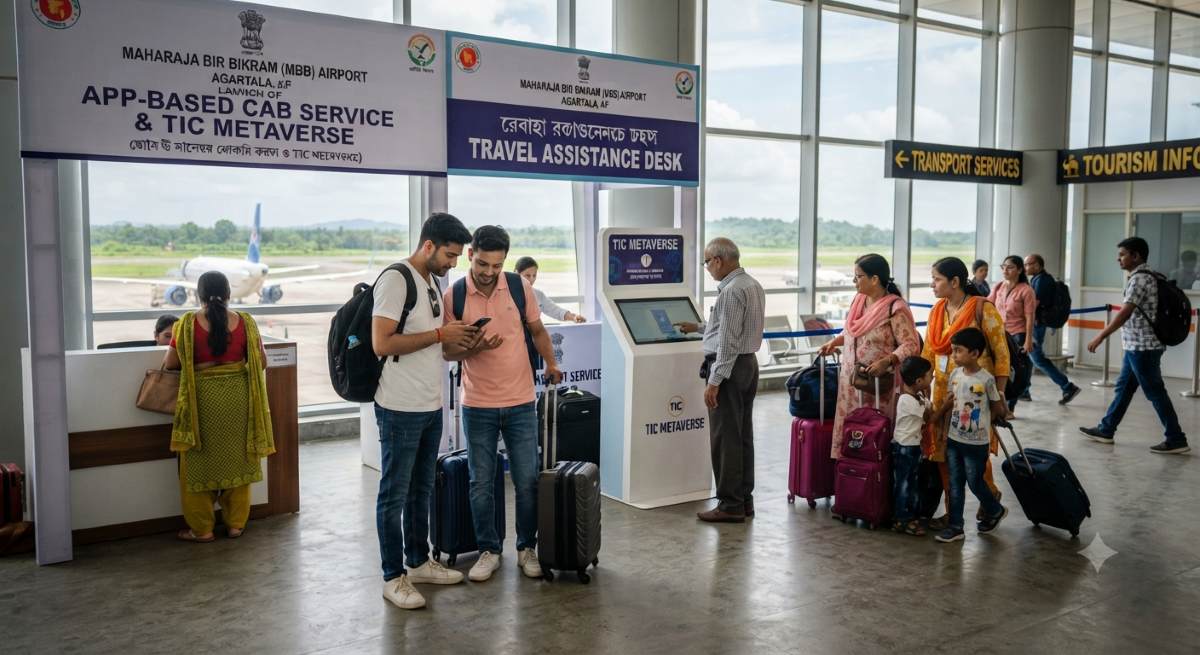
Image generated with Ai
The modernization of regional transport networks has been given a massive push with the formal introduction of digital travel solutions in Agartala. The minister for transport and tourism Sushanta Chowdhury officially unveiled a transformative phase in regional connectivity by launching an app-based cab service right at the Maharaja Bir Bikram (MBB) Airport. Alongside this digital integration, a newly established Tourism Information Centre (TIC) featuring innovative TIC Metaverse service was opened to the public.
Furthermore, key transit points like the Jogendra Nagar railway station were connected virtually to streamline multi-modal transport access. These developments were rolled out to bridge the gap between world-class aviation infrastructure and ground-level mobility, ensuring that visitors arriving in the region are greeted with advanced, reliable facilities from the moment they step off their flights.
Advertisement
For everyday commuters and leisure voyagers alike, navigating the state has historically presented certain logistical hurdles, particularly concerning last-mile connectivity outside aviation terminals. With the implementation of these online ride-hailing networks, arriving visitors are liberated from dependency on traditional transit negotiations and arbitrary fare structures. Passengers can effortlessly book verified vehicles using mobile applications, removing the anxiety associated with sudden transit arrangements.
Additionally, the integration with railway hubs allows seamless transitions between air and train journeys. The inclusion of the metaverse-enabled tourism center further equips travelers with immersive digital previews of local attractions, helping them plan itineraries accurately and elevating their overall journey quality.
Advertisement
Industry observers note that destination competitiveness heavily relies on frictionless ground transportation and digital readiness. When major air terminals lack synchronized, modern transit options, the initial impression formed by incoming tourists can be negatively impacted, despite the presence of state-of-the-art terminal buildings.
By aligning local mobility frameworks with national digital aggregators like Uber, the transport administration has addressed a critical bottleneck in the hospitality ecosystem. Experts highlight that blending physical infrastructure with immersive digital tools—such as metaverse tourism exhibits—sets a progressive benchmark for regional tourism boards across the country, proving that remote or emerging destinations can successfully leverage technology to scale up their service standards.
The newly launched services are fully operational at crucial gateways, primarily centered around MBB Airport while extending virtual connectivity to Jogendra Nagar railway station. Travelers possess the flexibility to choose between online app-cabs and regulated prepaid auto-rickshaws depending on individual preferences and luggage requirements.
Senior dignitaries, including tourism and transport secretary U.K. Chakma, director of MBB Airport K.M. Nehra, SP Namit Pathak, director of tourism department Prashant Badal Neg i, and transport commissioner Subrata Choudhury, were present during the rollout to ensure administrative backing for the initiative. Assistance desks and the newly minted information kiosk remain staffed to guide visitors through booking procedures and digital exploration tools.
In preceding periods, transport options outside the main aviation hub relied heavily on conventional, unorganized auto-rickshaw pools or standard prepaid counters, which frequently triggered passenger grievances regarding availability, pricing disputes, and lack of transparency.
Although past administrative measures—such as the distribution of standardized uniforms for prepaid drivers—attempted to bring order to the sector, they fell short of offering the dynamic flexibility demanded by modern tech-savvy travelers. Unlike those rigid, legacy frameworks, the current policy embraces an agile, app-driven ecosystem. This evolution signifies a definitive shift from localized manual transport management toward a comprehensive, digital-first cab mobility model designed to match standards seen in major metropolitan zones.
Advertisement
Tags: app-based, CAB, cab service, Digital, India
Advertisement
Advertisement













Sunday, September 6, 2026

Saturday, September 5, 2026

Saturday, September 5, 2026

Saturday, September 5, 2026

Saturday, September 5, 2026

Saturday, September 5, 2026

Saturday, September 5, 2026