
Tianshan Shengli Tunnel: A 22.13km Engineering Marvel Opens in Xinjiang, Changing Travel Between Urumqi and Korla
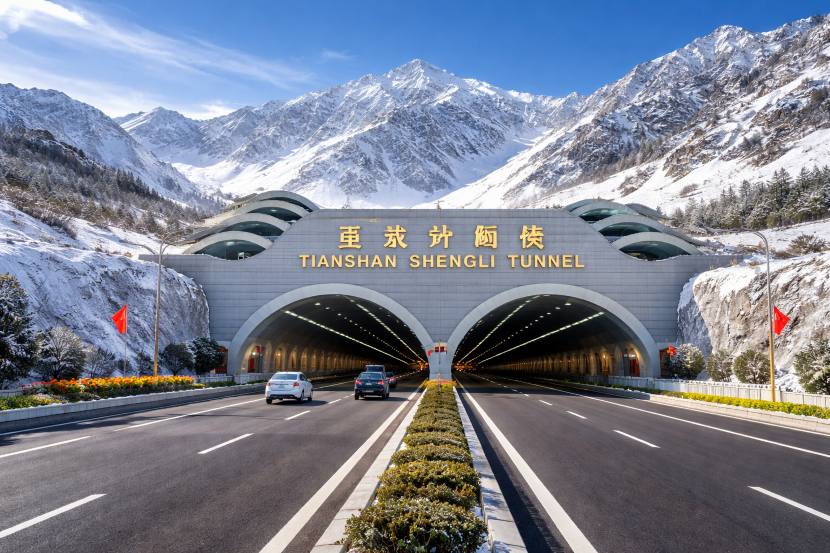 Image generated with Ai
Urumqi, Xinjiang, Dec. 26, 2025 – The Tianshan Shengli Tunnel, located on the Urumqi-Yuli Expressway in the Xinjiang Uygur Autonomous Region, has officially opened to traffic, setting a new world record as the longest expressway tunnel in the world. Spanning an impressive 22.13 kilometers, the tunnel now offers a significantly faster and safer route across the Tianshan Mountains, cutting travel time between Urumqi and Korla in half.
This engineering marvel not only marks a milestone in China’s infrastructure development but also boosts economic and social connections within the Xinjiang region, promoting greater integration between the northern and southern parts of the province.
Advertisement
Advertisement
The Tianshan Shengli Tunnel is part of the larger G0711 Urumqi-Yuli Expressway project, which officially began operating on the same day. The expressway spans a total length of 324.7 kilometers, transforming travel in the region and dramatically improving the accessibility of both northern and southern Xinjiang.
Transforming Travel Through the Tianshan Mountains
The Tianshan Mountains, a vast mountain range stretching 2,500 kilometers across central Xinjiang, have long been a natural barrier separating the two largest cities of the region, Urumqi in the north and Korla in the south. Prior to the construction of the tunnel and expressway, the journey between the two cities took over 7 hours, primarily due to the difficult terrain and challenging mountain passes.
Advertisement
Advertisement
With the new tunnel, travel time between Urumqi and Korla has been slashed to approximately 3 hours, creating new opportunities for business, tourism, and daily commutes. This will likely have a profound impact on local economic integration, as the region will now benefit from more seamless transportation for goods and people across northern and southern Xinjiang.
The tunnel also serves as a critical artery for external exchanges, connecting Xinjiang more efficiently with other parts of China and neighboring countries. By cutting down the travel time, it becomes a vital corridor for trade, tourism, and cultural exchange, which are expected to further develop in the coming years.
Advertisement
Advertisement
World-Class Construction Challenges
The construction of the Tianshan Shengli Tunnel was no small feat. It involved overcoming a range of extreme engineering challenges, many of which are unparalleled in the construction of expressway tunnels. The tunnel was built under incredibly harsh conditions, with engineers having to address several major difficulties that arose during the project.
Key construction challenges included:
Advertisement
Advertisement
- High ground stress: The tunnel passes through areas of intense pressure due to the natural geological formations, demanding advanced techniques to manage the stress.
- High seismic intensity: Xinjiang is a region prone to seismic activity, which posed a significant challenge in designing a structure that could withstand potential earthquakes.
- Extreme cold and high altitude: The tunnel’s construction took place at significant altitudes, with temperatures often plunging to extreme lows, making the work environment difficult and dangerous.
- Geological complexities: The tunnel crosses 16 geological fault zones, requiring careful planning and execution to avoid rockfalls and landslides during construction.
- Environmental requirements: Environmental protection was a top priority, with measures in place to minimize the impact on the surrounding ecosystem.
Despite these challenges, the tunnel was completed in just five years, marking the project as a remarkable achievement in China’s infrastructure sector. The total investment in the Urumqi-Yuli Expressway, including the tunnel, amounted to 46.7 billion yuan (about 6.63 billion U.S. dollars).
Table: Key Facts About the Tianshan Shengli Tunnel and Urumqi-Yuli Expressway
| Feature | Details |
|---|---|
| Tunnel Length | 22.13 kilometers |
| Maximum Burial Depth | 1,112.2 meters |
| Time to Complete | 5 years |
| Total Investment | 46.7 billion yuan (about 6.63 billion USD) |
| Geological Fault Zones Crossed | 16 |
| Total Length of Urumqi-Yuli Expressway | 324.7 kilometers |
| Original Travel Time Between Urumqi and Korla | 7 hours |
| New Travel Time Between Urumqi and Korla | 3 hours |
Impact on Xinjiang’s Economic and Social Integration
The Tianshan Shengli Tunnel and the larger Urumqi-Yuli Expressway will have far-reaching effects on Xinjiang’s economic integration. Previously, the northern and southern parts of the region were somewhat isolated, both geographically and economically. However, with the reduction in travel time, the expressway is expected to facilitate business activities, improve logistical operations, and enhance the overall connectivity of Xinjiang with other provinces in China.
By improving transportation efficiency, the tunnel also fosters better social integration. The residents of northern Xinjiang can now easily access southern Xinjiang’s agricultural goods, while those in the south gain easier access to industrial and technological centers in the north. This integration will promote greater economic stability and cultural exchange across the region.
Additionally, the expressway serves as a lifeline for tourism in Xinjiang, which is home to many scenic destinations, including the Tianshan Mountains, Karakol Lake, and the Kyzylsu River Valley. The tunnel and expressway will help tourists reach these sites faster, thus boosting the region’s tourism industry.
Advertisement
Advertisement
Conclusion: A New Era for Xinjiang’s Connectivity
With the opening of the Tianshan Shengli Tunnel, Xinjiang enters a new era of improved connectivity and economic prosperity. This groundbreaking infrastructure project not only makes travel faster and safer between Urumqi and Korla, but also serves as a critical catalyst for economic integration across the region. The expressway and tunnel are vital for the continued growth and development of Xinjiang, creating new opportunities for both locals and visitors alike.
As this world-class project sets new standards in infrastructure, the future of Xinjiang looks brighter, more connected, and more prosperous than ever before.
Advertisement
