
United States Aligns with Canada and Mexico to Advance a New Trilateral Air Travel Corridor

Updated
Published
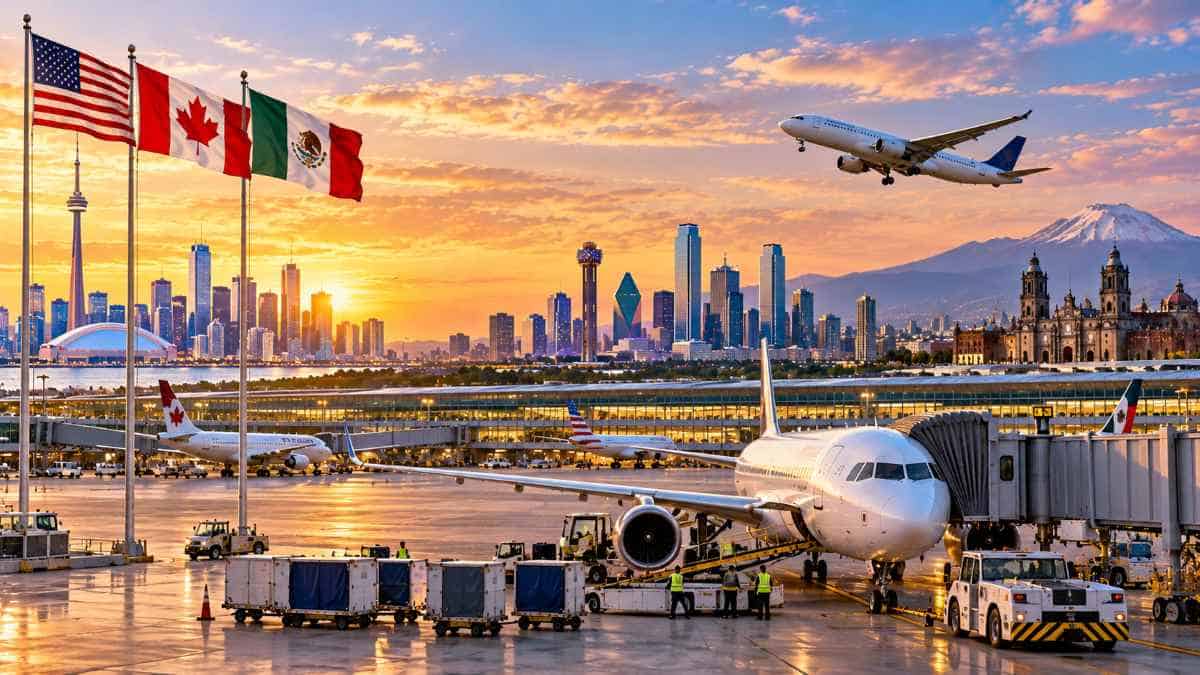
United States Aligns with Canada and Mexico to Advance a New Trilateral Air Travel Corridor. The United States, Canada and Mexico have agreed to enhance cooperation in regard to air travel among them with the help of an accord involving a trilateral process to facilitate easier passage for passengers, baggage transfer and aviation coordination among the three nations. This accord is going to be signed by the civil aviation and border protection authorities of the three nations, with Toronto, Dallas/Fort Worth and Mexico City being some of the major gateways of the new network. The agreement, termed the Tri-National Seamless Sky Accord, is based on the process of digital identity verification, customs document coordination and improved passenger connections among international flights. In addition, the accord suggests that the process of collecting and transferring baggage from one flight to another is to be minimised among the involved nations in compliance with customs and security conditions. The planned accord becomes effective as of 14 October 2026, while its implementation needs official confirmation from the concerned government and aviation authorities of the involved nations.
Toronto, Dallas and Mexico City Form Key Aviation Gateways
The proposed corridor places three major metropolitan aviation markets at the centre of North American connectivity.
Advertisement
Advertisement
Toronto Pearson International Airport (YYZ) is Canada’s principal international aviation gateway and an important connection point for passengers travelling between North America, Europe and Asia. Its extensive international network makes Toronto a significant starting point for visitors exploring Canada’s largest city and other destinations across Ontario.
Dallas Fort Worth International Airport (DFW), located between Dallas and Fort Worth in Texas, is one of the major aviation hubs in the United States. Its extensive domestic and international connections provide access to destinations across the country, including major tourism markets in the southern and western United States.
Advertisement
Advertisement
Mexico City International Airport (MEX), also known as Benito Juárez International Airport, serves Mexico’s capital and supports connections to domestic destinations and international markets. Its location provides access to the city’s historic centre, museums, archaeological attractions and wider cultural tourism infrastructure.
More coordinated passenger processing between these airports could improve connecting journeys for international visitors travelling across the three countries.
Advertisement
Advertisement
Digital Identity Verification Could Reduce Airport Processing Delays
A central element of the proposed framework is the integration of digital identity verification across participating border and aviation authorities.
The initiative identifies the US Customs and Border Protection (CBP), the Canada Border Services Agency (CBSA) and Mexico’s immigration and civil aviation authorities as important participants in the coordination process.
Advertisement
Advertisement
Digital identity systems could help authorities verify passenger information before arrival, reducing repeated document checks and improving the handling of international connections.
For travellers, this could mean more predictable airport procedures when moving between participating countries. However, digital identity verification would not automatically remove passport, visa, customs or immigration requirements.
Passengers would still need to comply with the entry conditions of their destination country, including any applicable electronic travel authorisations or visa requirements.
International Baggage Transfers Could Improve Connecting Journeys
The proposed agreement also focuses on international baggage transfers, an important consideration for passengers travelling on multi-country itineraries.
Advertisement
Advertisement
Under the described framework, participating airlines and airport operators would coordinate baggage handling to reduce the need for passengers to collect and recheck their luggage during qualifying connections.
This could be particularly useful for travellers arriving in Toronto before continuing to the United States, or passengers using Dallas/Fort Worth as a connecting point before flying to Mexico City.
Such arrangements would require participating airlines to establish compatible baggage systems and agree on customs inspection procedures. Not every passenger or itinerary would necessarily qualify, particularly where separate tickets, different carriers or specific border regulations apply.
North American Tourism Could Benefit from Easier Multi-Country Travel
The United States, Canada and Mexico offer significantly different tourism experiences, making the region suitable for extended international itineraries.
In Canada, Toronto provides access to the CN Tower, Royal Ontario Museum, waterfront attractions and cultural districts. Visitors can also organise excursions to Niagara Falls, approximately 130 kilometres from central Toronto by road.
The United States offers a broad range of urban, natural and cultural attractions. Dallas combines museums, performing arts and sporting events, while Fort Worth is known for its Western heritage and Stockyards National Historic District. Travellers can also use Dallas/Fort Worth as a gateway to other American destinations through its extensive domestic flight network.
Advertisement
Advertisement
Mexico City adds another dimension through its historic architecture, food culture and archaeological heritage. The Zócalo, Chapultepec Park, the National Museum of Anthropology and the ancient city of Teotihuacan are among the attractions available to international visitors.
A more coordinated aviation system could make it easier for tour operators to develop packages combining these destinations within one holiday.
Joint Aviation Coordination Targets Cross-Border Bottlenecks
The proposed trilateral coordinating council would oversee cooperation on air traffic flow management, customs documentation and international passenger movements.
Synchronised customs manifests could help participating authorities exchange relevant travel information more efficiently, while improved coordination between aviation agencies could support the management of high-density international routes.
The wider framework would also require cooperation between airports, airlines, ground-handling companies and border agencies to ensure that passenger transfers remain compliant with national security and immigration requirements.
For the aviation industry, the potential benefits extend beyond passenger convenience. More predictable connecting procedures could help airlines manage transfer times, improve network planning and strengthen connections between major North American markets.
International Air Connectivity Remains Central to Regional Tourism
United States Aligns with Canada and Mexico to Advance a New Trilateral Air Travel Corridor. In essence, the US, Canada, and Mexico are interconnected through a well-established network of international flights. The significance of this initiative from the point of view of tourism will be determined by the airlines involved, the airports included in the system and, to a certain degree, the use of digital identity and baggage handling. Considering that the implementation of this initiative has been set for 14 October 2026, according to the information provided in the supplied proposal, it is safe to assume that the proposed initiative will focus on the processing of passengers, coordination of airports and cross-border aviation connectivity.
Advertisement
