
Australia’s Sydney Airport Opens Wider Coastal Tourism Pathways with Rising Global Connectivity

Published
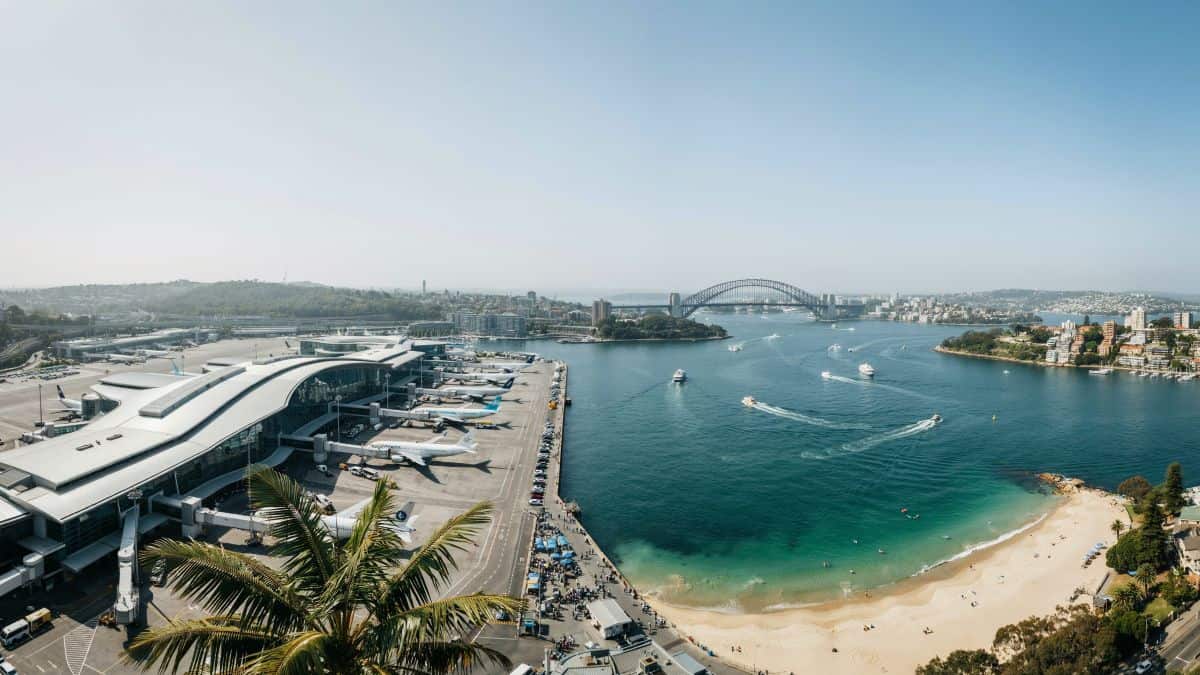
Sydney Airport, located in Australia, has become a significant point of access for the development of coastal tourism due to increased international connectivity and enabling travelers to have access to some of the most renowned ocean destinations within the country. As rated by OAG’s international connectivity index in 2026, Sydney Kingsford Smith Airport has been ranked as the best airport in Australia and provides thousands of flight options that will help travelers connect to coastal tourism destinations in the country.
Sydney Takes Australia’s Top Connectivity Position
OAG’s Megahubs 2026 ranking placed Sydney Kingsford Smith Airport at number 35 in the world. No other Australian airport appeared in the global top 50.
Sydney recorded 11,807 possible connections in the study. It served 101 destinations during the measurement period. Its connectivity index score was 116.9. Qantas was the dominant airline at the airport, operating about 39% of flights.
The result makes Sydney the country’s leading airport for international transfer opportunities. This matters because many travellers do not fly only from one city to another. They change planes. They may arrive from one country, wait at the airport and then travel to another city.
Advertisement
Advertisement
For example, a traveller may fly into Sydney from Asia and then continue to a city in Australia. Another passenger may arrive from a regional Australian airport and connect to an international flight. More flight choices can make these journeys easier to plan.
However, the figure of 101 destinations needs careful reading. It does not mean Sydney has 101 international non-stop routes. The total includes domestic destinations. It is a measure of the full network available from Sydney during the study period.
Advertisement
Advertisement
The 2026 ranking was published on 16 September 2026. It compared the connection choices available through the world’s major airports.
What Does Most Connected Airport Really Mean?
The phrase “most connected airport” sounds simple. Yet it has a special meaning in aviation.
Advertisement
Advertisement
It does not only mean the airport with the most passengers. It does not only mean the airport with the most flights. It does not always mean the airport with the most direct destinations either.
In this case, OAG looked at possible flight connections. It counted ways that passengers could arrive on one flight and leave on another flight. The connection had to fit within a set time window. At least one flight had to be international.
OAG based its 2026 study on Sunday, 2 August 2026, described as the busiest day for global aviation during the period it examined. It used flight schedules from September 2025 to August 2026. The company counted possible connections within a maximum six-hour period. It also used minimum connection times set for each airport.
This method is useful because it looks at how well an airport works as a travel hub. A hub is a place where flights meet and passengers can continue their journey.
Advertisement
Advertisement
A large airport may have huge passenger numbers but fewer practical ways to connect. Another airport may have fewer passengers but a better pattern of arrival and departure times. That airport may offer more useful connections.
The index compares the number of possible connections with the number of destinations served. This is why a connectivity ranking is different from a simple passenger ranking.
For travellers, this means Sydney’s top Australian result reflects connection opportunities. It does not promise the cheapest ticket. It does not guarantee the shortest airport queues. It also does not mean every transfer will suit every passenger.
Sydney Remains Australia’s Biggest International Gateway
Australian aviation data gives another strong reason why Sydney matters. Sydney handled 1,262,659 international passenger movements in June 2026.
That was 37.2% of all Australia’s international passenger traffic in the month.
Melbourne was second with 913,395 international passenger movements. Brisbane recorded 540,431. Perth recorded 423,097.
Advertisement
Advertisement
| Australian airportInternational passenger movements in June 2026Share of Australia’s international traffic | ||
|---|---|---|
| Sydney | 1,262,659 | 37.2% |
| Melbourne | 913,395 | 26.9% |
| Brisbane | 540,431 | 15.9% |
| Perth | 423,097 | 12.5% |
Sydney handled 349,264 more international passenger movements than Melbourne during the month. This shows the scale of Sydney’s lead.
Sydney also handled 48.3% of Australia’s international air freight in June 2026. This proves that the airport is important for more than holidays. It also supports goods moving between Australia and the world.
The figures do not mean that all passengers were tourists. They include people travelling for work, study, family visits, trade and other reasons. They also include both people arriving and leaving.
Still, the results show how central Sydney is to international movement. When Sydney has a strong network, it can support many parts of the visitor economy. Hotels, attractions, restaurants, tour operators, shops and transport companies can all benefit from easier access to the city.
Sydney’s Ranking Fell but Its Australian Lead Held Firm
Sydney was ranked 30th in OAG’s 2025 list. It moved to 35th in 2026. This was a fall of five places in the global ranking.
The change does not mean Sydney stopped being Australia’s top connected airport. It remained the only Australian airport in the world’s top 50. It also stayed ahead of other Australian airports in the international connectivity comparison.
Advertisement
Advertisement
A ranking can move even when an airport stays busy. This is because rankings are relative. Other airports may add flights, new destinations or better connecting schedules. A few changes at major hubs can move airports up or down.
The 2026 global list shows that many airports in Asia and Europe are growing fast. Istanbul became the world’s most connected airport. London Heathrow ranked second. Amsterdam Schiphol ranked third. Kuala Lumpur ranked fourth. Chicago O’Hare ranked fifth.
Kuala Lumpur remained Asia’s most connected airport. Seoul Incheon, Tokyo Haneda, Singapore Changi, Bangkok Suvarnabhumi, Shanghai Pudong, Guangzhou Baiyun and Hong Kong also performed strongly in the Asia-Pacific region.
This shows how fierce the global race has become. Sydney is competing with huge airport hubs that sit closer to large populations and major travel routes.
No specific reason has been given for why Sydney moved down five places. It would be wrong to say that it lost its position because of one airline, one route or one airport. The available information only confirms the ranking change itself.
The more accurate story is this: Sydney remains Australia’s connectivity leader, but other major world hubs are expanding and improving their networks at the same time.
Advertisement
Advertisement
Asian Routes Help Sydney Stay Strong
Sydney Airport’s own results show that its network has been changing as travel patterns change.
In the first half of 2026, more than 20.7 million passengers travelled through Sydney Airport. International passenger traffic reached 8.44 million, up 2.1% from the same period in 2025. Domestic passenger traffic reached 12.29 million, up 1.0%.
Sydney Airport said its broad Asian network helped support travel during a period when Middle East disruption affected some Europe-bound journeys.
Guangzhou showed the strongest growth in the second quarter of 2026. Passenger traffic on the route rose 50.5% from the same period a year earlier. Hong Kong and Kuala Lumpur both grew by more than 14%.
Singapore, Seoul and Tokyo also remained important markets.
This is a powerful sign for Australia’s travel links. Asia is not only a source of visitors. It is also a major place for travellers making onward connections. A passenger travelling from Sydney to Europe may use an Asian airport. Another person may fly to Sydney through Singapore, Hong Kong or Seoul.
Advertisement
Advertisement
When one region becomes harder to use, passengers and airlines may look at other paths. Sydney’s Asia links can offer more choice.
Growth across Asia helped offset weaker demand on some routes through the Middle East.
This does not mean that every traveller changed their route. It means Sydney had a broad enough network to support different travel choices.
New Shenzhen Flights Could Add More Strength
Sydney’s connectivity story is not standing still. New services are planned, and they could give travellers more options.
Shenzhen Airlines is set to launch a four-times-weekly service between Shenzhen and Sydney on 14 December 2026. The service will use an Airbus A330-300 aircraft.
Sydney Airport said the route is expected to add about 130,000 seats each year. It could support around 100,000 passengers annually.
Advertisement
Advertisement
This planned route will connect Sydney directly with Shenzhen, a major city in southern China. Shenzhen is known for technology, trade and business. It also gives passengers access to a wider airline network across China, Asia and Europe.
The route is important because China remains one of Sydney’s key international markets. Sydney Airport said Chinese nationals were its second-largest international traveller group and had grown 13.9% year on year in the period covered by its release.
The airport also said Shenzhen was Sydney’s seventh-largest mainland China destination in 2025 for direct passenger travel between the two cities. Passenger numbers on that city pair rose 16% year on year to reach 56,000.
The new service is expected to take the number of airlines operating at Sydney Airport to a record 55. Shenzhen Airlines will become Sydney Airport’s tenth Chinese-based carrier.
However, the timing matters. The service was announced in September, but it will begin in December 2026. It should not be described as already operating in September.
EgyptAir Plan Could Open a Fresh Travel Path
Sydney Airport also announced plans for a new EgyptAir service from 2027. The proposed route would link Cairo, Singapore and Sydney.
Advertisement
Advertisement
This would create a new travel option between Australia and Egypt. It could also give travellers more connections across Africa, Europe, the Middle East and EgyptAir’s wider network.
Egypt is a large unserved African market for Australian travellers. A new airline link could support leisure travel, business travel, education, family visits and trade.
Cairo is a major world city. It gives access to famous places such as the Pyramids of Giza, the Sphinx and the Mediterranean coast. It can also act as a point for onward journeys.
Yet the route remains a plan. Sydney Airport said the service is subject to regulatory approvals. Full schedules, aircraft details and ticket sales will be announced closer to launch.
The service also includes Singapore. It should not be called a non-stop Sydney-to-Cairo flight.
That detail is important for travellers. A route can still be valuable even if it includes a stop. It may offer a new airline choice, a new connection point and access to more destinations.
Advertisement
Advertisement
Brisbane and Melbourne Tell a Different Connectivity Story
Sydney leads Australia in OAG’s international connection ranking. Yet Brisbane and Melbourne also have important strengths.
Brisbane Airport says it has direct links to 62 domestic destinations and 32 international destinations. It operates 24 hours a day, seven days a week. The airport describes its domestic network as Australia’s most connected.
This is a different measure from Sydney’s global transfer ranking. Brisbane’s claim focuses on domestic destination reach. That matters greatly for people travelling across Queensland and the rest of Australia.
For many families, workers and holidaymakers, a direct domestic flight is more useful than a complex international transfer. Brisbane’s network can be especially important for regional travel, domestic tourism and access to Queensland.
Melbourne Airport highlights a different advantage. It operates 24 hours a day without a curfew. It also has a single terminal precinct. Melbourne Airport says this helps it offer a strong connection proposition and low minimum connection times.
A simpler airport layout can help travellers who need to change flights. It can reduce the difficulty of moving between services. Melbourne also remains Australia’s second-largest international airport by passenger traffic.
Advertisement
Advertisement
Each airport has a role. Sydney is Australia’s leading international connectivity hub in OAG’s 2026 study. Brisbane has very wide domestic reach. Melbourne highlights its 24-hour operation and terminal set-up.
The lesson is clear. “Best connected” depends on the question being asked.
Sydney’s Terminals Still Matter for Travellers
Sydney’s ranking is strong. But a good connection still needs careful planning.
Sydney’s international terminal is called T1. Its domestic terminals are T2 and T3. The international and domestic terminals are separate. Passengers cannot walk between them.
Sydney Airport provides a free terminal transfer bus. It runs every 15 minutes between 5:30am and 10:30pm. The trip takes about 10 minutes.
There is also a train between the terminals. The train journey takes around two minutes. However, passengers need to pay for the service.
Advertisement
Advertisement
Travellers must think about more than the bus or train time. They may need to collect luggage. They may need to pass border checks. They may need to check in again. They may need to clear security.
This is why passengers should always check the rules of their airline before booking a connection. A connection that looks easy on a timetable may still be too tight in real life.
Sydney Is Planning for an Even Bigger Future
The connectivity of Sydney Airport in 2026 demonstrates not only the strength of its aviation infrastructure but also indicates the role that international hubs play in shaping the future of Australia’s coastal tourism industry. Given that Sydney Airport already serves over 8.44 million international visitors in the first half of 2026 through its extensive network of routes, the airport still ensures that tourists gain access to the various tourism destinations of Australia. New routes that will be established in the future, such as those of Shenzhen Airlines and EgyptAir, may help tourists gain further access to additional markets; however, such routes are still hypothetical rather than operational.
Advertisement
