
Daegu Travel for Repeat Korea Travellers: Why South Korea’s Food Capital Rewards a Second Visit

Published
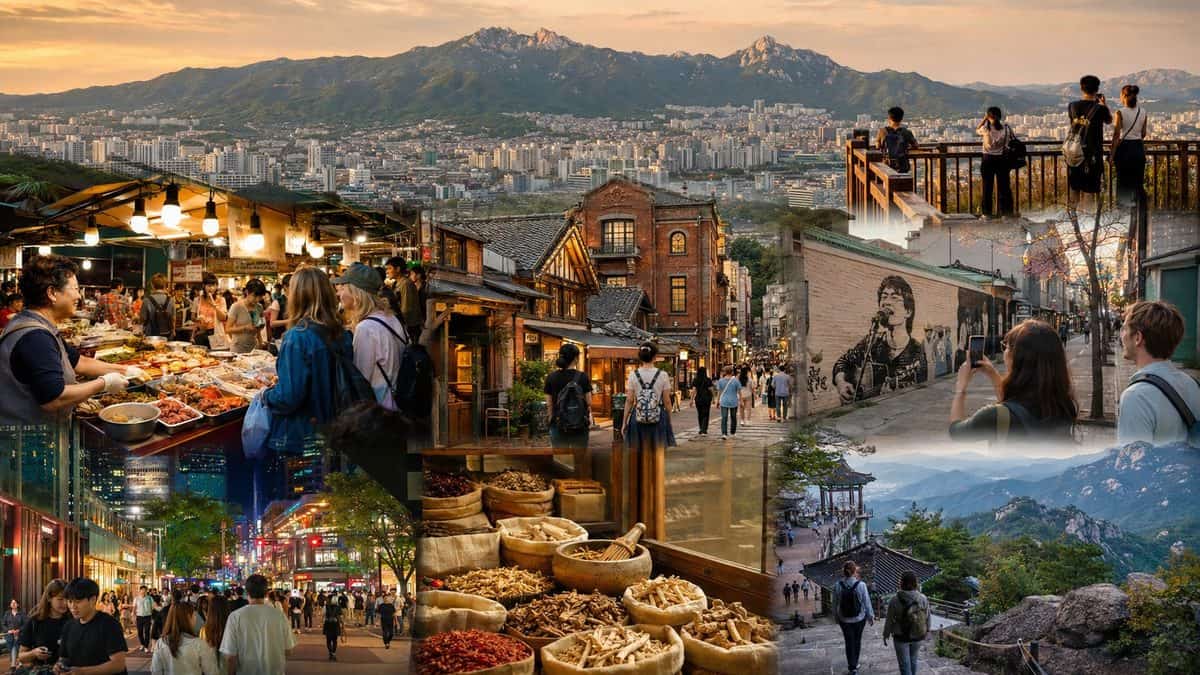
Image generated with Ai
The traditional tourist trail of South Korea is evolving. Daegu is who traditions consider to be a second stop destination after Seoul, Busan and Jeju. Tourist data shows that Daegu brought in 98.65 million visitor trips in 2024 and 6.98 million of those trips were foreign visitor trips. Food, modern history, music, shopping, medicinal herbs and mountain scenery are a few of Daegu’s appealing characteristics. Many Korean travelers will find that Daegu has something that the average first trip to Korea lacks, a closer look at the everyday urban blended with traditional Korean life. Daegu is also an increasingly easy destination to add as a 2 or 3-night stop as where before travelers would just consider it a stop over destination.
The Second Korea Trip Needs A Different City
The first visit to South Korea often follows a predictable rhythm. Travellers arrive in Seoul, explore its palaces and contemporary districts, then continue towards Busan or Jeju for a contrasting experience. That formula works because it efficiently introduces the country’s most recognisable cultural and scenic signatures.
Advertisement
Advertisement
A return journey raises a different question. What remains unexplored after the famous landmarks have been ticked off? Daegu answers that question through neighbourhoods, markets, food traditions and landscapes that require more curiosity than a conventional sightseeing checklist.
This distinction matters for the travel industry. Repeat visitors typically have a stronger appetite for regional experiences and less dependence on headline attractions. Daegu therefore fits a wider shift towards deeper, slower and more locally grounded travel, rather than another race between Instagram-famous landmarks.
Advertisement
Advertisement
Daegu Is Already A Substantial Tourism Market
The numbers make it difficult to describe Daegu as an undiscovered destination. Daegu’s tourism data platform recorded 98.65 million visitor trips during 2024, comprising 91.66 million domestic and 6.98 million foreign visitor trips. The city cautions that these figures represent tourism-data estimates and should be used primarily for trend analysis.
Advertisement
Advertisement
The distinction is important because visitor-trip statistics are not equivalent to unique tourists. Nevertheless, the scale indicates a substantial domestic tourism economy and a sizeable international component. Daegu’s municipal population was 2,369,335 in November 2024, including 61,554 foreign residents. The foreign-resident population increased 4.4% year on year, suggesting a city with an increasingly international social and commercial environment.
| Daegu Indicator | Latest Available Figure |
|---|---|
| Total visitor trips, 2024 | 98.65 million |
| Domestic visitor trips, 2024 | 91.66 million |
| Foreign visitor trips, 2024 | 6.98 million |
| Municipal population, Nov. 2024 | 2.37 million |
| Foreign residents, Nov. 2024 | 61,554 |
| Foreign-resident annual growth | 4.4% |
For travellers, the implication is straightforward. Daegu is not an alternative built around scarcity. It is a large metropolitan destination whose tourism proposition is becoming more legible to visitors seeking something beyond Korea’s established circuit.
Seomun Market Turns Food Into A Travel Narrative
For repeat visitors, food may be Daegu’s most persuasive entry point. Seomun Market combines commercial history, textile traditions and street food within one of the city’s most recognisable urban environments.
Advertisement
Advertisement
The market’s historical roots stretch back centuries, with its development accelerating after the establishment of the Gyeongsang provincial government in Daegu in 1601. Today, it remains strongly associated with textiles while also functioning as a major culinary destination.
The attraction lies in the range rather than a single signature dish. Napjak-mandu, or flat dumplings, kalguksu, noodles, hotteok and other market foods provide travellers with a regional alternative to the more familiar Korean barbecue and fried-chicken circuit. Daegu tourism material also highlights Dongin-dong jjimgalbi and Anjirang gopchang among the city’s distinctive food experiences.
Advertisement
Advertisement
The market’s night dimension adds another layer. Korea Tourism Organization lists Seomun Night Market among Daegu’s principal attractions, with evening trading and food offerings creating a different atmosphere from the daytime market.
| Food-led Stop | What Makes It Useful For Repeat Visitors |
|---|---|
| Seomun Market | Traditional commerce and regional street food |
| Dongin-dong Jjimgalbi Alley | Daegu-style braised beef short ribs |
| Anjirang Gopchang Alley | Distinctive grilled intestines food culture |
| Seomun Night Market | Evening food, entertainment and social atmosphere |
The smarter approach is therefore not simply to “visit a market”. Travellers should use Daegu’s food districts as a map of the city’s regional identity.
A 1.64-Kilometre Walk Through Modern Korea
Daegu’s historical appeal also differs from the palace-centred experience familiar from Seoul. The city’s Modern Culture Alley condenses layers of religious, commercial, medical and political history into a walk of approximately 1.64 kilometres.
The route includes Dongsan Cheongna Hill, former missionary houses, Independence Movement Road, Gyesan Cathedral, historic homes, the Yangnyeongsi medicine district and other sites connected with Daegu’s modern development. Korea Tourism Organization notes that the short route can take around two hours because of the number of points along the way.
That makes the district particularly useful for repeat visitors. Instead of moving from one isolated attraction to another, travellers can read the city through its streets. The experience is historical, but the method is contemporary: walking, stopping, eating and observing.
Advertisement
Advertisement
This also gives travel planners a compact cultural product. A two-hour walking experience can sit naturally between breakfast and dinner, while the surrounding streets provide opportunities for cafés, shopping and local dining.
Kim Kwang-seok Gives The City A Musical Memory
Daegu’s cultural personality becomes more distinctive around Kim Kwang-seok-gil. The approximately 350-metre-long street commemorates singer-songwriter Kim Kwang-seok through murals, sculptures and references to his music. Cafés and small businesses reinforce the area’s nostalgic character.
The significance extends beyond a mural street. It shows how a city can convert personal cultural memory into a visitor experience without relying on monumental architecture. For repeat travellers familiar with Korea’s contemporary entertainment exports, this offers a quieter perspective on the country’s musical history.
The neighbouring Dongseong-ro provides the counterpoint. The central commercial street extends roughly 900 metres between Daegu Station Intersection and Art Square, with shops, performance areas and event spaces. Korea Tourism Organization identifies it as a focal point for the city’s youth culture.
That contrast is one of Daegu’s strengths: memory and modernity occupy the same urban itinerary.
Advertisement
Advertisement
Dongseong-ro Signals A New Tourism Chapter
Daegu’s tourism authorities have also been giving greater institutional attention to Dongseong-ro. The district received tourist-special-zone designation in July 2024, while city policy has focused on cultural tourism, youth performances, commercial revitalisation and improved public spaces.
Municipal council records cited the district’s substantial footfall, with estimates of around 25,000 visitors on weekdays and 40,000 on weekends. The same material noted strong interest among younger visitors.
For travel businesses, that development matters because it strengthens the bridge between traditional sightseeing and contemporary consumption. A visitor can move from a historic alley to cafés, beauty retail, fashion, performances and food without leaving the central urban zone.
This makes Daegu travel for repeat Korea travellers particularly adaptable. It can serve culture-led travellers, younger city-break visitors and consumers interested in Korea’s lifestyle economy.
The Mountains Change The Pace Completely
Daegu’s urban density can be misleading. Mountain landscapes are close enough to transform a city break into a nature-and-culture itinerary without requiring a separate regional journey.
Advertisement
Advertisement
Palgongsan is particularly significant. Daegu’s tourism authority describes the cable car as a convenient way to reach the mountain, with the ride taking approximately seven minutes to the summit station area at around 870 metres above sea level. The surrounding landscape includes views towards Birobong, Dongbong and Seobong peaks.
Apsan provides another urban-to-nature transition. Its observatory can be reached by cable car or on foot, with the city’s tourism authority listing a hiking route of about 2.5 kilometres and one hour from Anjiranggol.
| Outdoor Experience | Best Travel Use |
|---|---|
| Palgongsan | Mountain scenery, temple culture and panoramic views |
| Apsan | Sunset, city views and short hiking |
| Donghwasa | Buddhist heritage and mountain culture |
| Suseongmot | Leisure, evening atmosphere and waterside relaxation |
This combination gives Daegu an advantage for repeat visitors who have already experienced Korea’s major coastal and island destinations. The city can deliver an urban morning and a mountain afternoon.
Wellness Has A Deeper Local Meaning Here
Wellness in Daegu is not limited to modern spas. The city has a much older connection with medicinal traditions through Daegu Yangnyeongsi, a historic herbal medicine district.
Daegu’s tourism authority traces Yangnyeongsi’s history back roughly 350 years. The district now stretches along approximately 650 metres and contains herbal medicine shops, traditional pharmacies, restaurants and related cultural facilities.
Advertisement
Advertisement
The area also supports experiential programmes that introduce visitors to medicinal herbs and traditional approaches to food and wellbeing.
The significance is growing as Korea’s medical-tourism ecosystem becomes more sophisticated. Korea Tourism Organization has recently promoted Daegu and Gyeongsangbuk-do through a combined medical and wellness proposition, highlighting Daegu’s medical infrastructure alongside cultural and wellness experiences.
For travel businesses, that creates a useful distinction. Wellness can become a cultural itinerary rather than simply a treatment or spa purchase.
Why Repeat Visitors May Stay Longer
Daegu’s strongest commercial opportunity may therefore be its ability to combine several motivations inside one compact trip. A visitor can build a food-led day around Seomun Market, explore Modern Culture Alley, spend an evening around Dongseong-ro and then devote another day to Palgongsan or Apsan.
That flexibility also supports different accommodation strategies. Business travellers can combine meetings with evening food and retail. Leisure travellers can choose a central urban base. Wellness-oriented visitors can build slower schedules around mountain and heritage experiences.
Advertisement
Advertisement
Daegu’s own tourism planning reflects this broader ambition. Municipal strategy has emphasised stronger links between attractions, shopping, food, sport, performances, exhibitions and ecological tourism. It has also identified international marketing in markets including Japan, China, Taiwan, Singapore and Vietnam as part of wider tourism development.
The strategic direction is revealing. The objective is not simply to increase arrivals. It is to make visitors combine more experiences and remain in the city for longer.
What Travellers Should Do Differently
The best way to experience Daegu is to abandon the logic of collecting attractions. Seomun Market works better as a food-and-commerce immersion than as a photograph. Modern Culture Alley becomes more meaningful when travellers allow time for the historical sequence rather than rushing between addresses.
Likewise, Kim Kwang-seok-gil makes sense when paired with nearby neighbourhoods, while Dongseong-ro demonstrates how contemporary Daegu operates after dark. Palgongsan and Apsan then provide the geographical counterweight.
For Daegu travel for repeat Korea travellers, the practical lesson is simple: allocate enough time for contrasts. A rushed day trip can reveal the attractions, but two or three nights allow the city’s different identities to connect.
Advertisement
Advertisement
How Daegu Compares With Korea’s Classic Stops
| Destination | Strongest First-Visit Appeal | Repeat-Visit Opportunity |
|---|---|---|
| Seoul | Major landmarks, shopping, pop culture | Neighbourhoods and specialised districts |
| Busan | Coast, seafood and major urban sights | Local districts and inland experiences |
| Jeju | Landscapes and island culture | Slow travel and niche outdoor experiences |
| Daegu | Food, history, urban culture and mountains | Deeper regional discovery and wellness |
The comparison should not become a competition. Seoul, Busan and Jeju remain fundamental components of Korea’s international tourism proposition. Daegu instead fills a different gap, particularly for visitors who want another perspective after completing the conventional route.
Its value is also its variety. Few city breaks can combine a historic market, a modern-history walking route, a music memorial street, a major youth district, a centuries-old medicine tradition and mountain landscapes within such a manageable itinerary.
A More Mature Way To Experience Korea
Daegu’s growing importance shows how Korean tourism as a whole is changing. Travellers now have the opportunity to go beyond the most famous sites and learn about the different ways different cities’ systems function socially, through their food, and culturally.
Signs show that Daegu’s 2024 tourism will grow substantially and its municipal tourism strategy focuses on “formulation of thematic tour products,” “longer stays,” “promotion abroad,” and “more integration of food/ culinary art, wellness, and the culture.”
This looks attractive to travellers, and Daegu does not need to begin competing with Seoul to be relevant. Daegu actually is quite relevant for travellers who are looking for a different pace and a different regional interpretation of the Koreas.
The first Korea trip is all about the discovery of the country. Return trips can be all about understanding the cities. Daegu is increasingly relevant for this understanding for travellers who are willing to forgo the famous sites and checklists in the name of food alleys, music, and urban parks.
Advertisement
