
Oman Oil Spill: Is It Safe to Travel and Cruise the Region Now

Published
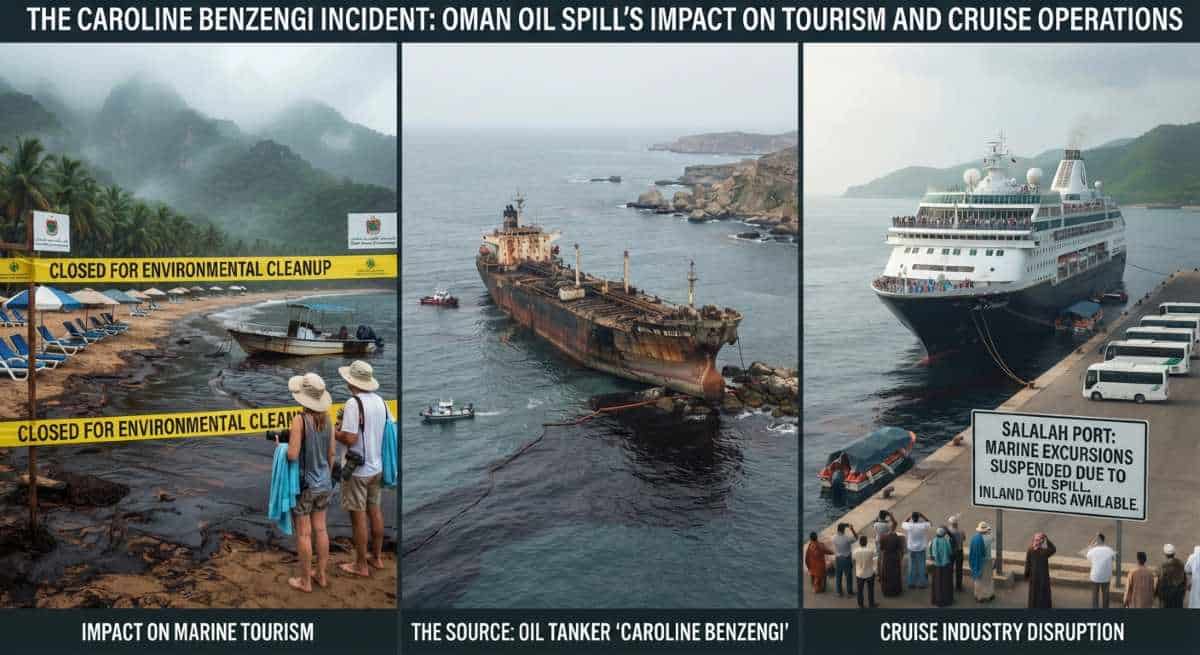
The maritime accident involving the Caroline Bezengi, a sanctioned oil tanker currently grounded off the coast of Oman, has introduced significant complications for the regional tourism landscape.
As this vessel, which is linked to the shadow fleet, sinks deeper near the Hallaniyat Islands, a substantial oil spill and environment emergency has unfolded.
The spreading slick poses a direct threat to marine life and coastal destinations. While the incident remains distinct from the geopolitical volatility associated with the Red Sea and Yemen, the convergence of this disaster with existing maritime instability has created a complex environment for stakeholders.
Travelers currently visiting the region or planning a trip are strongly advised to follow these comprehensive safety guidelines to ensure a secure and hassle-free experience:
Advertisement
Advertisement
- Monitor Official Channels Continuously: Stay closely connected with real-time updates and announcements issued directly by the Oman Environment Authority and local tourism boards regarding affected coastal zones and shorelines.
- Confirm Itineraries with Local Operators: Before finalizing or embarking on any maritime tours, independently verify the current operating status and safety protocols with trusted local providers to guarantee full accessibility.
- Emphasize Inland Tourism Experiences: Take advantage of the seasonal Khareef weather by focusing exclusively on the breathtaking inland landscapes, mountain ranges, and valleys of Dhofar, which remain completely unaffected by offshore issues.
- Exercise Vigilance Against Speculation: Rely solely on verified, factual journalism and official statements to assess the true scope of the oil spill, avoiding unverified rumors circulating on social media.
- Adhere Strictly to Environmental Directives: Respect all safety instructions, restricted-access warnings, and guidelines mandated by regional authorities to support active cleanup operations and prevent personal exposure.
Background and Context of the Maritime Emergency
The unfolding maritime crisis began with a series of critical mechanical failures on the aging vessel:
Advertisement
Advertisement
- The Initial Incident: The 274-meter tanker, carrying nearly one million barrels of Russian crude oil, suffered a devastating engine room explosion and subsequent flooding in June.
- Vessel Drifting and Grounding: Following these severe onboard failures, the disabled ship drifted uncontrollably until it ultimately grounded near Al Qibliyah Island.
- Delayed Pollution Detection: Although initial environmental monitoring suggested no immediate pollution, satellite imagery soon revealed a rapidly expanding oil sheen across the water.
- Escalating Emergency: By early August, the affected maritime area had expanded significantly, raising immediate alarms among regional environmental authorities.
- Monsoon Complications: The incident remains exceptionally precarious due to the ongoing Khareef monsoon season, bringing strong winds and powerful ocean currents that severely hinder containment efforts and elevate the risk of total structural deterioration.
Impact on Travel, Disruption, and Tourism Safety
The implications of the maritime emergency present a nuanced landscape for visitors and the broader tourism sector:
- Localized Environmental Focus: The primary ecological impact remains strictly concentrated around the Hallaniyat Islands and the open Arabian Sea, keeping the immediate contamination offshore.
- Fluctuating Safety Perceptions: Despite localized impacts, public perception of safety often fluctuates, creating unnecessary concern for travelers unfamiliar with the region’s actual geography.
- Marine Activity Disruptions: Travel disruptions are currently isolated to water-based activities, affecting recreational diving, sport fishing, and boat excursions throughout the Dhofar Governorate.
- Insulated Land Attractions: Popular land-based attractions tied to the Khareef season—such as mountain viewpoints, mist-covered valleys, and seasonal waterfalls—remain completely unaffected and fully accessible.
- Risks of Misinformation: The rapid spread of unverified details on digital platforms creates a high potential for misinformation, making official updates crucial.
- Need for Regional Awareness: Visitors are strongly encouraged to monitor ongoing regional advisories to stay informed about changing local conditions.
- Essential Itinerary Flexibility: Travelers planning maritime excursions must maintain high flexibility, as local authorities frequently restrict access to specific coastal zones to prioritize cleanup operations.
Industry Insights and Marine Security
The grounding highlights deeper vulnerabilities within the global maritime sector, specifically regarding the opaque operations of aging vessels. Within the broader cruise and travel industry, this disaster contributes to a heightened state of caution. Operators are constantly evaluating risks in regional corridors.
The incident underscores that even when direct links to conflict are absent, secondary economic effects—such as rising insurance premiums and logistical challenges—can have long-reaching consequences for regional infrastructure.
Comparison with Previous Developments
The incident is frequently compared to historical disasters, though such comparisons require caution. While the total volume of oil on board is substantial, the actual quantity released remains an evolving variable.
Unlike previous catastrophic tanker failures, this situation is exacerbated by its proximity to a protected marine sanctuary and the compounding influence of the monsoon season.
Compared to previous security-related disruptions in Oman, this event represents an environmental and economic challenge rather than a direct threat to passenger safety from military conflict.
Advertisement
