
Valletta Leads Europe’s Big Tourism Push as WTTC Demands Eight Major Policy Reforms

Published
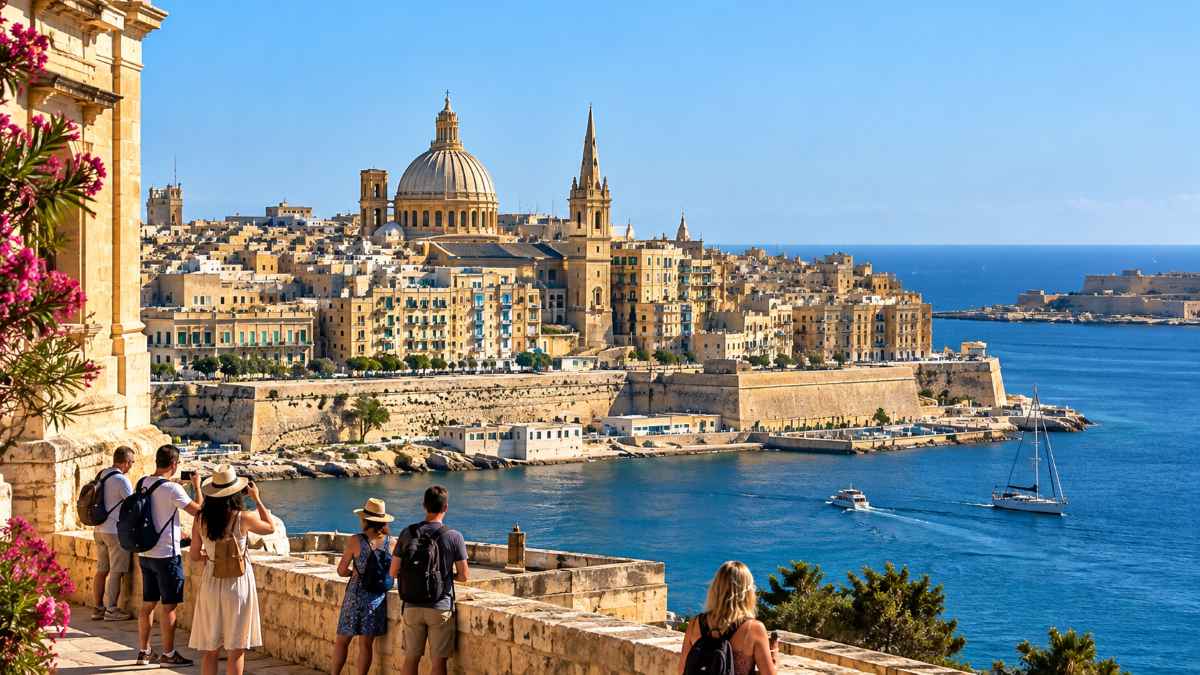
The city of Valletta in Malta has now become a focal point of an important initiative by the World Travel & Tourism Council (WTTC), which encourages European governments and organisations to tackle eight key structural issues that threaten the continent’s international competitiveness. Announced at the 26th Global Summit held by the WTTC in October 2026, these issues include visa accessibility, border technologies, overseas visitor markets, infrastructure investment, sustainability, labour shortage, artificial intelligence and regional connectivity. At a time when the European Commission is preparing the first-ever EU Sustainable Tourism Strategy, and discussions are taking place about the Multiannual Financial Framework (MFF) 2028-2034, the WTTC has called for tourism to be acknowledged as a key economic sector for the future EU budget, with increased access to investment funds. The necessity to do so can be judged from the economic impact of the travel & tourism industry, which accounted for 9.4% of regional GDP, nearly US$3 trillion in 2025, while employing 40.7 million people, or one in ten people.
Schengen Visa Restrictions Become a Major Tourism Concern
One of WTTC’s strongest recommendations concerns international visitor access. Schengen countries issued 5.3 million multiple-entry visas in 2025, 40% fewer than in 2019. Their share of all visas issued also declined from 59% to 51.7%.
The reduction creates additional difficulties for frequent international travellers, including corporate visitors, investors and tourists planning multiple European journeys.
WTTC is seeking faster implementation of the digital Schengen visa system, wider restoration of multiple-entry visas and an EU-wide trusted-traveller programme. It also recommends reciprocal recognition of programmes such as the United States’ Global Entry and a common framework for biometric processing at European airports.
Advertisement
Advertisement
For destinations including Paris, Rome, Barcelona, Berlin and Amsterdam, smoother entry procedures could improve accessibility for visitors arriving from long-haul markets.
Europe Needs More Visitors from Overseas Markets
The second priority concerns Europe’s dependence on intra-regional tourism.
Advertisement
Advertisement
74.3% of arrivals
Almost three-quarters of Europe’s international arrivals in 2025 originated within the continent. WTTC argues that greater diversification towards overseas markets could improve international visitor spending and strengthen the region’s tourism trade position.
Advertisement
Advertisement
Excluding intra-European travel, Europe’s travel trade balance shifts from a US$33.9 billion surplus to an estimated deficit of approximately US$45 billion.
Asia-Pacific remains an important opportunity, but recovery is uneven. Arrivals from the region remain 4.8% below 2019 levels, while Chinese arrivals are still 43.2% below their pre-pandemic benchmark. Japanese and South Korean arrivals remain approximately 30% lower.
WTTC recommends public-private marketing partnerships, stronger destination promotion and more accessible visa procedures to attract visitors from China, Japan, South Korea and other high-spending international markets.
Tourism Investment Trails North America and Asia-Pacific
Capital investment represents another major concern. European Travel & Tourism investment reached US$259 billion in 2025, increasing 7.1% year-on-year but remaining 3.6% below its 2019 level.
Advertisement
Advertisement
| Region | Tourism investment, 2025 |
|---|---|
| Asia-Pacific | US$395 billion |
| North America | US$273 billion |
| Europe | US$259 billion |
WTTC wants tourism classified as a strategic industrial ecosystem under the EU’s 2028-2034 budget, enabling businesses to access European investment instruments, SME financing and infrastructure funding.
This could support accommodation development, airport modernisation, visitor facilities, transport infrastructure and digital services across European destinations.
Mediterranean Destinations Face Growing Climate Pressures
Sustainability and climate adaptation form the fourth priority, with particular attention to Mediterranean tourism markets.
Destinations across Spain, Greece, Italy, Malta and Cyprus face increasing pressure from extreme summer temperatures, water shortages, waste management requirements and seasonal visitor concentration.
The Mediterranean accounts for 52.2% of Europe’s international visitor spending, making climate resilience particularly important for the region’s tourism economy.
WTTC recommends dedicated funding for water management, waste infrastructure, heat adaptation and nature protection. It also calls for faster adoption of Sustainable Aviation Fuel (SAF) and cleaner maritime fuels to support the decarbonisation of aviation and cruise tourism.
Advertisement
Advertisement
The council’s research also identifies a 14.8% reduction in the sector’s emissions intensity between 2019 and 2024, although tourism accounted for 6.3% of Europe’s greenhouse gas emissions in 2024.
Destination Management Must Move Beyond Visitor Numbers
The fifth priority focuses on managing tourism growth without placing excessive pressure on local communities.
International overnight arrivals in Europe are forecast to increase from 757.3 million in 2025 to 1.14 billion by 2036.
WTTC recommends moving beyond total visitor numbers when measuring destination performance. Governments should place greater emphasis on visitor expenditure, seasonal distribution and the economic benefits reaching local communities.
Digital visitor-management systems could help distribute tourists across lesser-known destinations and reduce pressure on heavily visited locations.
The council also wants municipal visitor levies to be transparently allocated towards destination management, public infrastructure and local tourism services.
Advertisement
Advertisement
Germany and Greece Face Future Tourism Workforce Shortages
Labour availability represents the sixth policy priority.
WTTC estimates that the tourism workforce in Germany and Greece could fall short of projected demand by 26% and 27%, respectively, by 2035.
The proposed measures include standardised skills passports, expanded apprenticeships, youth mobility agreements and stronger recognition of tourism qualifications.
These measures could help hotels, restaurants, tour operators, transport providers and destination-management organisations recruit and retain workers as international arrivals increase.
AI Adoption and Transport Connectivity Enter the Policy Agenda
The seventh priority addresses artificial intelligence adoption across tourism businesses.
WTTC wants European institutions to provide grants, training, expert guidance and shared digital tools, particularly for small and medium-sized enterprises.
Advertisement
Advertisement
AI-based booking systems, dynamic pricing and visitor-flow analysis could help smaller tourism businesses manage demand, improve operational efficiency and distribute visitors across destinations.
The eighth priority concerns transport connectivity. WTTC recommends stronger integration between aviation, rail, maritime and road networks, including improved ticketing and travel information across borders.
Protecting essential air connections to islands and peripheral regions is also important, particularly for destinations where alternative transport options remain limited.
Europe’s Tourism Economy Faces a Decisive Decade
| Economic indicator | WTTC projection or estimate |
|---|---|
| Tourism GDP contribution, 2025 | Nearly US$3 trillion |
| Jobs supported, 2025 | 40.7 million |
| Forecast sector growth, 2026 | 3.1% |
| Wider European economic growth, 2026 | 1.1% |
| International arrivals, 2036 | 1.14 billion |
| Projected tourism GDP, 2036 | US$3.8 trillion |
| Employment supported, 2036 | More than 50 million |
According to WTTC, Travel & Tourism in Europe will continue to experience an average annual growth of 2.2% throughout the next ten years, and is expected to reach US$3.8 trillion by 2036, with more than 50 million jobs supported by the sector. The priorities set out by the organisation include visa availability, market diversification abroad, investments and climate adaptation in addition to human resource development and infrastructure development for the next step forward in tourism in Europe. The talks happen amidst preparations for Europe’s first-ever Sustainable Tourism Strategy as well as its next seven-year budget.
Advertisement
