
Saudi Arabia Joins Bahrain and Others in GCC Carbon Review That Could Change Airfares, Ferry and Cruise Costs

Published
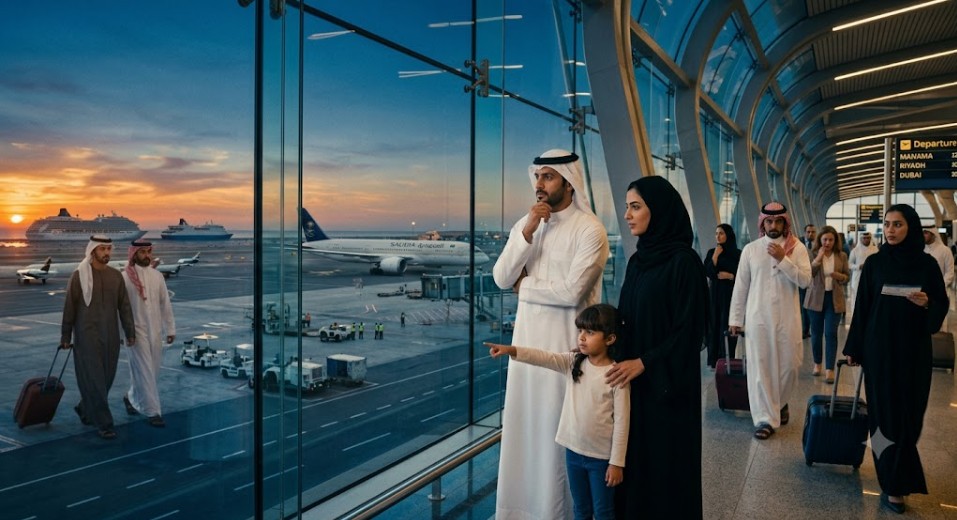
GCC carbon review airfares ferry cruise costs are shifting into sharp focus as Saudi Arabia, Bahrain, and regional partners re-evaluate maritime and aviation emissions frameworks. The Gulf Cooperation Council’s policy realignment aims to reconcile ambitious national Net Zero 2050 targets with sustainable transport infrastructure development. Because the Gulf region serves as a central global crossroads for international aviation, maritime trade, and marine tourism, any carbon pricing mechanism or levy carries substantial economic weight. Understanding this unified regulatory assessment reveals how emerging environmental compliance standards will influence future regional travel, ticket pricing, and cross-border transport economics.
Background of Carbon Frameworks Across the Arabian Peninsula
The Gulf Cooperation Council (GCC) member states—Saudi Arabia, the United Arab Emirates, Bahrain, Qatar, Kuwait, and Oman—have rapidly transformed their macroeconomic strategies to align with international climate directives. Long regarded primarily as energy exporters, these nations are enacting structural reforms under national vision programs, such as Saudi Vision 2030 and Bahrain Economic Vision 2030, to reduce economy-wide carbon footprints.
A central pillar of this transition involves addressing transport sector emissions. Commercial aviation accounts for roughly 2.5 per cent of global carbon emissions, while international shipping and passenger maritime operations contribute heavily to coastal environmental footprints. While European nations introduced carbon pricing mechanisms through the European Union Emissions Trading System (EU ETS) and fuel mandates like RefuelEU Aviation, the Middle East relied on voluntary offset programs like the Regional Voluntary Carbon Market Company (RVCMC) and the Global Carbon Council (GCC).
However, escalating global requirements under the International Civil Aviation Organization’s (ICAO) Carbon Offsetting and Reduction Scheme for International Aviation (CORSIA) and the International Maritime Organization’s (IMO) Net-Zero Framework have necessitated a coordinated regional response. The current initiative brings together civil aviation authorities, transport ministries, and environmental agencies across Saudi Arabia, Bahrain, and partner nations to harmonize regional carbon assessments for cross-border passenger and freight operations.
Advertisement
Advertisement
                     +---------------------------------------+
                     |  GCC Carbon Policy Coordination Group |
                     +---------------------------------------+
                                         |
            +----------------------------+----------------------------+
            |                                                         |
+-----------------------+                                 +-----------------------+
|   Aviation Sector     |                                 |    Maritime Sector    |
| (ICAO CORSIA Baseline)|                                 | (IMO Net-Zero Target) |
+-----------------------+                                 +-----------------------+
            |                                                         |
            v                                                         v
+-----------------------+                                 +-----------------------+
|  Airline Ticket Pricing|                                | Cruise & Ferry Tariffs|
|  & SAF Levies Impact  |                                 |  & Maritime Surcharges |
+-----------------------+                                 +-----------------------+
Latest Official Developments and Policy Coordination
The decision by Saudi Arabia to join Bahrain and neighboring states in a comprehensive review of transport sector emissions marks a significant shift in regional policy coordination. The joint review focuses on evaluating direct fuel burn, life-cycle emissions from traditional marine and aviation fuels, and the regional availability of lower-carbon alternatives.
Strategic Priorities under the Review
- Harmonized Fuel Monitoring: Developing unified standards for tracking fuel consumption on cross-border routes, ensuring uniform data collection across airport and seaport networks.
- Regulatory Compliance Realignment: Aligning regional regulatory frameworks with CORSIA Phase 1 requirements and IMO maritime GHG intensity targets.
- Impact Assessment on Fares: Quantifying the direct financial impact of potential regional carbon surcharges, offset obligations, or green fuel mandates on consumers and commercial operators.
- Infrastructure Readiness: Evaluating regional port and airport capacity for Sustainable Aviation Fuel (SAF) bunkering, Liquefied Natural Gas (LNG), and marine shore power facilities.
The joint ministry level meetings examine whether a regional carbon mechanism would prove more effective than fragmented national regulations. By coordinating through GCC channels, member states aim to prevent market distortions, avoid double-taxation on regional operators, and protect transit hub competitiveness.
Advertisement
Advertisement
Detailed Financial and Emissions Data
| Sector / Indicator | Industry Baseline | Projected Policy Shift | Financial & Operational Impact |
| Aviation Yields | Baseline passenger yield growth | +7.0% yield adjustments | Fare increases to absorb fuel/compliance costs |
| Jet Fuel A-1 Pricing | $90 / barrel historical average | Elevated price bands | Fuel costs reaching up to 31.4% of operating expenses |
| Aviation Carbon Offset Tab | CORSIA baseline requirements | Global airline costs up to $127B | Surcharges passed directly onto ticket buyers |
| Maritime CO2 Emissions | 0.43 – 1.0 kg CO2 / passenger nautical mile | IMO 2030/2050 Reduction Mandates | Capital expenditure for LNG/green retrofits |
| Regional Tourism Revenue | $254+ Billion Sector Value | Green-certified travel expansion | Surcharge risks balanced against destination growth |
Official statistics published by regional transport ministries and global industry bodies like IATA demonstrate that fuel costs account for nearly one-third of total operational expenses for Gulf-based carriers. As global offset rules tighten, airlines face escalating compliance expenditures. Similarly, maritime cruise operators running itineraries through the Red Sea and Arabian Gulf incur substantial compliance costs under strict environmental regulations.
Sector Impact Analysis: Aviation, Cruise, and Ferry Networks
Aviation and GCC Carbon Review Airfares Ferry Cruise Costs
Commercial aviation across the Arabian Peninsula represents a core economic driver. Major mega-hubs in Saudi Arabia, the UAE, and Qatar process tens of millions of transit and point-to-point passengers annually. Under the joint carbon review, authorities are determining how carbon pricing will apply to both short-haul intra-GCC flights and long-haul international corridors.
Advertisement
Advertisement
Short-haul flights under 500 miles exhibit the highest emissions intensity per passenger-kilometer due to high fuel burn during takeoff and climb phases. Consequently, regional routes—such as Riyadh to Bahrain, Dubai to Muscat, or Kuwait to Jeddah—could see proportionately higher carbon compliance surcharges relative to base ticket pricing. Airlines operating these routes may adjust fare structures, incorporating dynamic environmental fees to cover offset purchases and SAF blend premiums.
+-----------------------------------------------------------------------+
|                Aviation Carbon Surcharge Mechanism                    |
+-----------------------------------------------------------------------+
|  Base Ticket Price                                                    |
|  + Jet Fuel Volatility Recovery Fee                                  |
|  + Regional Carbon Offset Fee (CORSIA / GCC Framework)               |
|  + Sustainable Aviation Fuel (SAF) Infrastructure Contribution        |
|  -------------------------------------------------------------------  |
|  = Final Passenger Fare                                               |
+-----------------------------------------------------------------------+
Cruise Lines and Red Sea Marine Tourism
The marine tourism sector across the GCC has expanded rapidly following multi-billion-dollar investments in port infrastructure, luxury terminal builds, and marine conservation projects. Cruise itineraries connecting Jeddah, Dammam, Manama, Doha, and Dubai are central to diversification targets.
Cruise vessels consume significant operational energy, generating between 0.43 and 1 kilogram of CO2 per passenger per nautical mile. The joint review considers implementing environmental berthing fees, carbon-neutral port call mandates, and compulsory shore-power utilization requirements. Cruising itineraries operating in Gulf waters may see updated passenger port taxes and green surcharges added to booking invoices.
Cross-Border Ferry Infrastructure
Ferry links, such as passenger and vehicle transport across the King Fahd Causeway network and intra-gulf maritime channels, represent vital connectivity links. While ferries emit lower absolute volume compared to international air travel, older diesel-powered craft face significant retrofitting costs to comply with emerging regional standards. Surcharges introduced under the unified review may impact daily commuters, cross-border logistics operators, and local tourism providers utilizing sea routes.
Advertisement
Advertisement
Policy Implications and Multi-Government Frameworks
Integrating carbon review assessments across sovereign entities requires careful policy coordination. Saudi Arabia’s Ministry of Energy and Ministry of Transport and Logistic Services work alongside Bahrain’s Supreme Council for Environment and Ministry of Transportation and Telecommunications to align methodologies.
Key Regulatory Mechanisms Under Consideration
- Unified GCC Carbon Offset Market Integration: Leveraging the Global Carbon Council (GCC) registry and Saudi Arabia’s Regional Voluntary Carbon Market Company (RVCMC) to provide high-integrity, regionally verified offsets for transport operators.
- Mandatory SAF and Eco-Fuel Blending Targets: Introducing phased mandates for airlines operating out of Gulf airports to utilize a minimum percentage of Sustainable Aviation Fuel by 2030.
- Differential Maritime Tariff Structures: Implementing tiered port and berthing fees based on vessel propulsion type (e.g., LNG, methanol, or heavy fuel oil with scrubbers).
- Transparent Carbon Surcharge Disclosures: Requiring commercial transport providers to explicitly itemize carbon compliance fees on passenger tickets and freight manifests.
+---------------------------------------------------------------------+
|                  GCC Policy Alignment Pillars                       |
+---------------------------------------------------------------------+
|  1. Unified GCC Carbon Offset Registry Integration                  |
|  2. Phased SAF Blending Mandates for Airlines                       |
|  3. Tiered Maritime Port Fees Based on Vessel Emissions Profiles    |
|  4. Mandatory Fare Transparency for Carbon Surcharges               |
+---------------------------------------------------------------------+
Macroeconomic Analysis: Balancing Net Zero Targets with Economic Growth
The GCC tourism and travel economy generates more than $254 billion in regional economic value. The challenge for policymakers lies in enforcing environmental compliance without compromising the competitive edge of regional air carriers, cruise lines, and logistics networks.
+-----------------------------------------------------------------------+
|             Macroeconomic Balance: Decarbonisation vs Growth          |
+-----------------------------------------------------------------------+
|  Economic Drivers                      Environmental Mandates         |
|  - $254B+ Tourism Sector               - Net Zero 2050 Commitments    |
|  - Global Transit Hub Status           - ICAO CORSIA Compliance       |
|  - Diversification Mandates            - IMO GHG Reduction Targets    |
|               \                               /                       |
|                \                             /                        |
|                 v                           v                         |
|        +-----------------------------------------+                    |
|        | Calibrated GCC Carbon Review Framework  |                    |
|        +-----------------------------------------+                    |
+-----------------------------------------------------------------------+
Higher travel costs could influence price-sensitive passenger segments, particularly on competitive long-haul transit routes connecting Europe, Asia, and Africa. However, institutional investors and global corporate travel departments increasingly demand verified green travel corridors. By establishing a transparent carbon framework, Saudi Arabia, Bahrain, and their neighbors position the Gulf region as a sustainable destination and transit hub.
Financial institutions and sovereign wealth funds, including Saudi Arabia’s Public Investment Fund (PIF), continue to channel capital into renewable energy, green hydrogen production, and low-carbon transport infrastructure. The revenue generated from potential carbon surcharges is expected to be reinvested into local decarbonization technologies, producing SAF locally and upgrading port electrification infrastructure.
Official Statements and Industry Response
Official representatives from across the region have underscored the dual objectives of environmental stewardship and economic resilience.
“Our collaborative efforts across the GCC reflect a shared commitment to achieving climate neutrality while ensuring our transport and logistics sectors remain globally competitive and structurally resilient.”
Advertisement
Advertisement
— Regional Ministerial Joint Working Group on Climate and Infrastructure
Industry bodies, including the International Air Transport Association (IATA), have emphasized the importance of regulatory consistency. IATA notes that while airlines support net-zero aviation goals, carbon offset schemes and fuel mandates must avoid duplicative financial burdens that artificially inflate airfares and suppress global travel demand.
Similarly, cruise operators and maritime associations operating in Gulf waters have expressed support for standardized port requirements. Transparent rules across all GCC maritime terminals ensure a level playing field, encouraging operators to deploy modern, energy-efficient vessels to regional cruise ports.
Future Outlook and Strategic Roadmaps
As the joint carbon review progresses, several milestones will shape the regional transport landscape over the coming years.
2026 Q4: Completion of Joint GCC Transport Emissions Impact Assessment
  │
  ├──► 2027 Q2: Publication of Harmonised Carbon Surcharge Guidelines
  │
  ├──► 2028 Q1: Phased Implementation of SAF Blend Requirements
  │
  └──► 2030 Q1: Full Integration with IMO/ICAO Global Emissions Targets
- Near-Term Implementation (2026–2027): Publication of standardized carbon tracking metrics and initial guidance on fare disclosures for regional carriers and maritime operators.
- Medium-Term Integration (2028–2030): Introduction of localized SAF blending quotas at major airports and mandatory shore-power connections for cruise ships berthed at regional ports.
- Long-Term Objectives (Post-2030): Full transition toward zero-emission regional ferry fleets, widespread commercial availability of green hydrogen aviation fuels, and full alignment with international net-zero mandates.
Advertisement
