
Vietnam’s Phu Quoc Plans 5,350ha Forest Lease to Boost Sustainable Tourism and Ecotourism Growth

Updated
Published
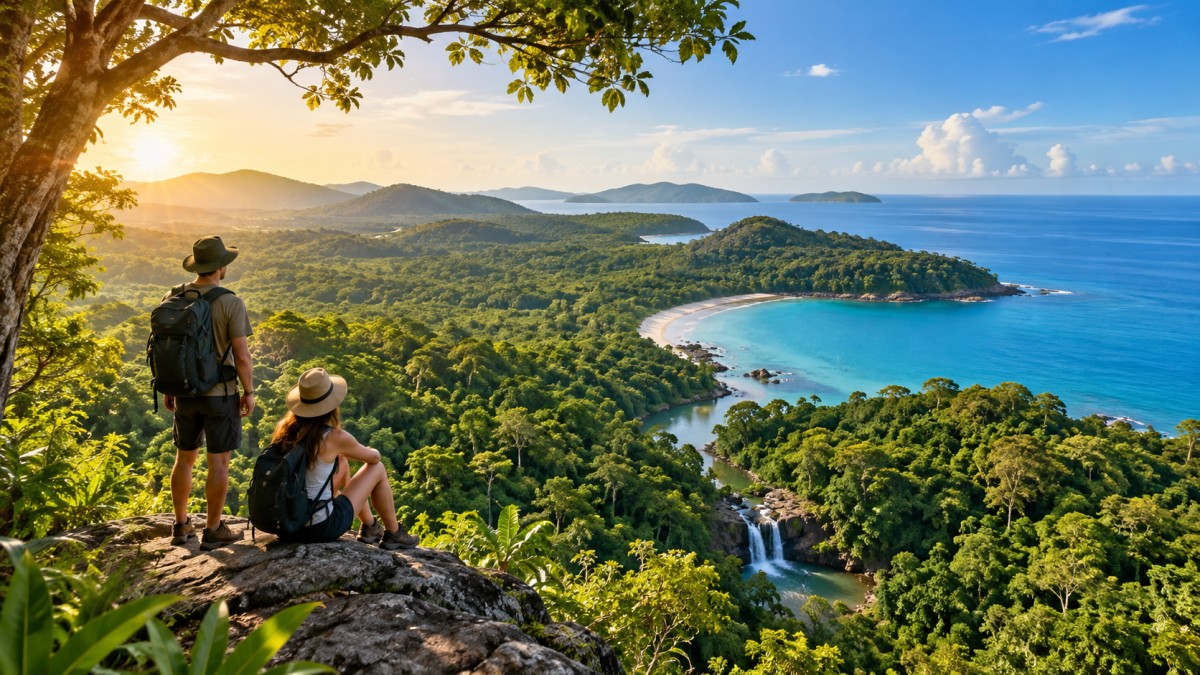
Phú Quốc island in Vietnam is about to enter a new phase in its development of tourism, with officials planning the launch of eco-tourism initiatives that will allow visitors to access specific forest areas for tourism purposes. This plan may also help improve travel options for tourists who are not only interested in enjoying local beaches and resorts, but also learning more about the conservation of forests, communities, and sustainable tourism perspectives. However, the most important part of the plan is that not all national parks will be involved in eco-tourism. Instead, only certain areas designated for eco-tourism will be leased for visitors.
Phu Quoc Forest Ecotourism Plan Covers 24 Designated Locations
Phu Quoc National Park announced on 24 September 2026 that it planned to lease forest environments at 24 locations covering 1,863.66 hectares for ecotourism, resort and recreational activities. Of the total, 15 locations covering 1,338.30 hectares are within special-use forest, while nine locations covering 525.39 hectares are classified as protection forest.
Advertisement
Advertisement
This is important for travellers because the programme could eventually introduce more structured ways to experience Phu Quoc’s forests rather than relying primarily on informal sightseeing. Individual sites, maps and proposed tourism-product orientations are included in official project documentation. However, the September notice principally concerns the selection of organisations seeking to lease forest environments, rather than announcing immediate openings of new tourist attractions.
Sustainable Tourism Sits at the Heart of Phu Quoc’s Expansion
Authorities say the forest-leasing initiative aims to use Phu Quoc’s landscape, biodiversity and ecosystem value responsibly while linking tourism with nature conservation. Revenue and private resources attracted through the scheme are intended to support forest management and protection, strengthen community livelihoods and contribute to a greener and more sustainable local economy rather than encouraging uncontrolled development inside sensitive forest areas.
Advertisement
Advertisement
That distinction matters. Phu Quoc National Park is not simply unused land being converted into conventional tourism real estate. Its official responsibilities include conserving natural forest habitats, protecting biodiversity, supporting scientific research and developing ecotourism that benefits surrounding communities. Forest tourism therefore operates within a conservation framework, with management, environmental protection and sustainable use forming essential conditions for future tourism activity.
Travellers Could Gain New Nature Experiences Beyond Phu Quoc’s Beaches
Phu Quoc already attracts travellers for tropical beaches, island scenery and resort holidays, but its forests offer an entirely different side of the destination. The national park contains evergreen broadleaf forest, melaleuca forest and mangrove ecosystems, alongside nine distinctive forest habitats. Expanding organised ecotourism could therefore diversify what visitors can experience during longer stays on the island.
Advertisement
Advertisement
Future products will depend on approved projects, so travellers should not assume every proposed location will immediately offer trekking, accommodation or adventure activities. Nevertheless, the framework creates potential for nature interpretation, forest exploration, biodiversity experiences, environmental education and carefully controlled recreation. Existing areas associated with forest tourism include waterways, waterfalls, coastal landscapes and routes through the northern parts of Phu Quoc.
Phu Quoc National Park Entry Is Currently Listed as Free
For travellers planning a Phu Quoc holiday now, the island’s official tourism portal currently lists Phu Quoc National Park admission as free. The portal identifies the park as an ecotourism environment in the north-east of the island and highlights its forest landscapes and viewpoints, including scenery associated with Mount Chua. Travellers should still verify conditions before visiting.
Advertisement
Advertisement
The free entry listing should not be interpreted as confirmation that every future commercial ecotourism experience will also cost nothing. Phu Quoc National Park has authority to organise tourism services and collect applicable ecotourism fees in accordance with approved planning and Vietnamese regulations. Ticket prices for tourism products arising from the new 24-site leasing programme have not yet been officially announced in the sources reviewed.
What travellers currently need to know:
- Phu Quoc National Park is presently listed as free to visit on the official tourism portal.
- No universal ticket price has been announced for the proposed new forest ecotourism sites.
- Individual commercial experiences may eventually carry separate charges.
- Travellers should use authorised operators once new products begin operating.
- Access restrictions may apply where conservation or forest protection requires them.
A Vast Protected Landscape Makes Conservation Especially Important
Phu Quoc National Park manages an extensive protected forest landscape. Official park information places its forest-management area at approximately 36,262 hectares, comprising 29,596 hectares of special-use forest and 6,666 hectares of protection forest. Around 97 per cent of the national park’s land is forested, illustrating why tourism development inside this environment requires considerably tighter safeguards than ordinary resort construction.
The ecological value extends beyond size. Official biodiversity information identifies three main forest ecosystems and records substantial plant and animal diversity across Phu Quoc. The national park also forms part of the internationally recognised Kien Giang World Biosphere Reserve. Protecting water resources, wildlife habitats and forest cover therefore remains essential as tourism demand and infrastructure expand across the island.
Advertisement
Advertisement
Local Communities Could Benefit From Nature-Based Tourism Growth
Sustainable tourism is not only about protecting trees and wildlife. Phu Quoc National Park also identifies community livelihoods as an important part of forest ecotourism. Previous park research has examined ways in which communities living around buffer zones could participate in tourism while supporting forest protection, creating a stronger economic reason for local people to help safeguard valuable natural resources.
For travellers, community participation could make future experiences more locally rooted. Guided nature activities, local services, traditional products and conservation-linked tourism can potentially spread visitor spending beyond large resorts. However, these opportunities depend on the final projects selected and authorised. The official leasing announcement explicitly includes improving community livelihoods among the programme’s objectives, giving social benefits a formal role alongside commercial tourism development.
The New Ecotourism Sites Are Not Open Yet
Travellers should distinguish between the announcement of a forest-environment leasing process and the launch of finished tourist attractions. The September 2026 notice invited organisations to submit applications for the designated locations, with the official application period running from 24 September until before 16:00 on 24 October 2026. That process concerns prospective operators rather than visitor bookings.
Consequently, tourists should avoid websites or sellers claiming that all 24 locations can already be booked as newly opened attractions unless official confirmation appears. Phu Quoc National Park has previously warned about unauthorised intermediaries involved in forest-environment leasing. Visitors should likewise rely on the national park, provincial authorities and recognised tourism channels when checking future opening dates, admission rules or tour arrangements.
Why Phu Quoc’s Sustainable Tourism Shift Matters for Travellers
Phu Quoc has become one of Vietnam’s most visible international island destinations, yet its competitive strength increasingly depends on protecting the landscapes that visitors come to experience. Vietnam’s National Authority of Tourism highlighted Phu Quoc’s beaches, clear waters and rich marine ecosystems when reporting its strong international island recognition in October 2026. Forest ecotourism could broaden that nature-based appeal.
The larger opportunity is to give travellers a more diverse Phu Quoc holiday: beaches and resorts alongside forests, biodiversity, outdoor recreation and conservation-led experiences. If authorities maintain strict environmental controls, the leasing programme could channel tourism investment into protected landscapes without sacrificing their fundamental ecological purpose. That would make sustainable tourism not simply a marketing phrase, but part of Phu Quoc’s visitor economy.
What Travellers Should Watch Next
Key developments involve choosing operators, agreeing on specific tourist plans and determining the launch dates and terms of operation. Therefore, tourists who are fond of hiking, wildlife, photography and ecotourism should keep an eye on announcements coming from Phu Quoc National Park and An Giang Province because the leasing announcement is not a guarantee that tourists will be received soon. At this stage, travelers can already think of visiting Phu Quoc National Park as something that can be included in their vacation schedule knowing that a new generation of forest tourism is being developed. The 2026 initiative indicates a significant transformation: Phu Quoc aims to expand tourism within its natural beauty, while the issues of nature protection and sustainable use of resources will play an important role in this process.
Advertisement
