
Finland Joins Sweden, Denmark and More in Leading the Worldwide Shift Toward Greener City Breaks: Everything You Need to Know

Updated
Published
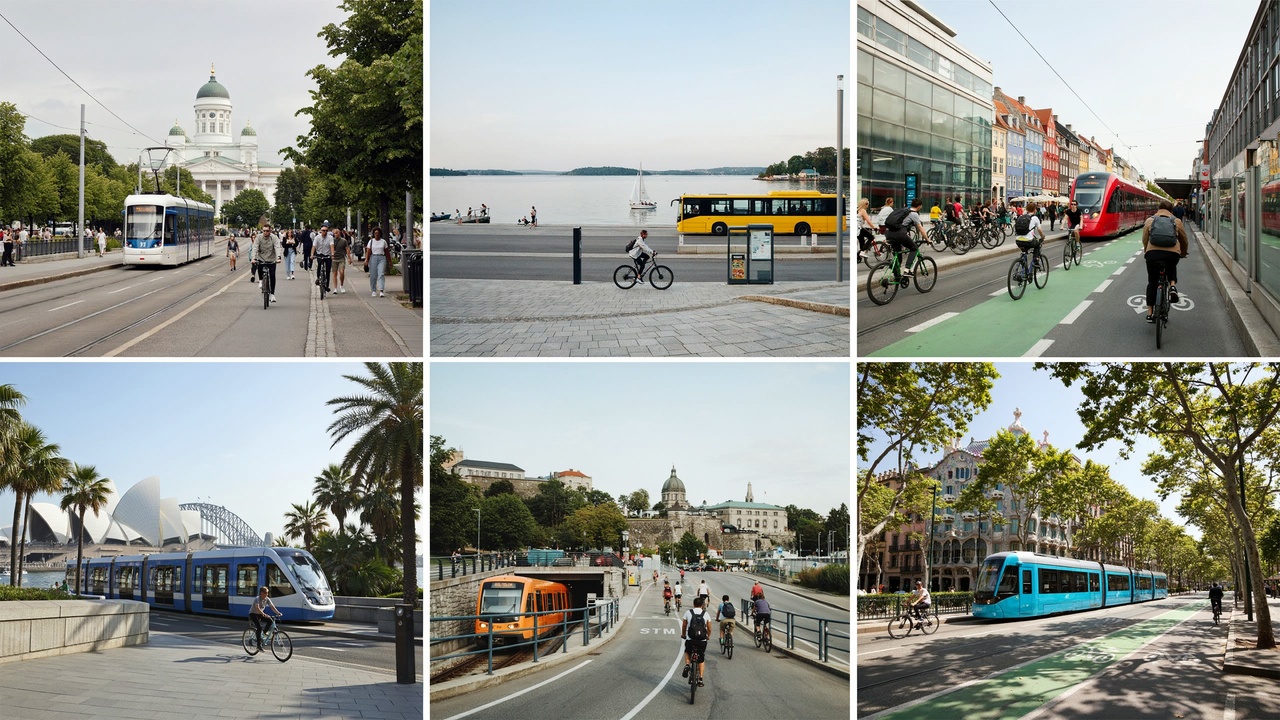
Helsinki is leapfrogging to become a global leader in the age of environmentally friendly, intelligent and responsible travel, leading the way in showing that a destination can be a tourism winner while pursuing cleaner mobility, greater community benefit and advanced visitor management. Helsinki ranks first in the latest Global Destination Sustainability ranking with a remarkable result of 92.94% ahead of Gothenburg and Copenhagen, while Glasgow, Sydney, Montreal, Reykjavik, Barcelona, Madrid, Dublin, Melbourne and Amsterdam are reinforcing their positions in the dynamic landscape of green travel worldwide.
This trend marks a more profound transformation of international tourism. Sustainable development of a destination is no longer confined to environmental positioning. It has become integral to the city’s strategy that affects the public transportation system, hotel operations, large events, public spaces, climate actions and long-term management of visitors. As travelers become more interested in cleaner, more conscious and better managed destinations, these cities are setting the standards for responsible tourism worldwide.
Advertisement
Advertisement
Helsinki Sets the Benchmark for Sustainable Urban Tourism
Helsinki has been identified as the leading destination in the sustainability ratings for 2026.
The Finnish capital has recorded a score of 92.94% gaining a lead over its European peers.
Advertisement
Advertisement
The successful tourism development of Helsinki is based on connecting sustainability with accessibility, residents’ welfare, local economies, and tourism development year-round.
Another beneficial factor is the increase in the number of tourist companies working under recognized sustainability principles.
Advertisement
Advertisement
For travelers, this means enjoying all the amenities and options for sustainable travel provided by heli-skiing, public transport systems, cycling and walking opportunities, plenty of green areas, and eco-friendly accommodation options.
Helsinki is now also pushing for more extended stays of tourists instead of concentrating on attracting more people to the city at once.
Advertisement
Advertisement
Gothenburg Keeps Sweden Among Europe’s Green Tourism Leaders
Scoring 91.29%, the city of Gothenburg ranks second to Helsinki.
With sustainability at the heart of its policies and plans for the future, Sweden’s secondlargest city has put great emphasis on public transport and urban planning as part of its efforts to become a sustainable city.
Since Gothenburg has an extensive tram network, that allows visitors to leave their private vehicles behind, and a central area that makes attractions easily accessible by foot, many of Gothenburg’s visitors can comfortably explore this interesting city on foot.
One more advantage of Gothenburg is that it is situated near Sweden’s western coast; therefore, nature is in close proximity to the city.
Advertisement
Advertisement
The results obtained by Gothenburg once again prove that Scandinavia counts as one of the leaders in sustainable urban tourism.
Copenhagen Shows Why Denmark Remains Central to Green City Travel
Copenhagen ranks third with a score of 90.35%.
The Danish capital has long been associated with cycling infrastructure, efficient public transport and urban environmental planning.
For visitors, cycling remains one of the most visible parts of everyday city life.
Copenhagen also demonstrates how sustainability can become integrated into the tourism experience rather than promoted as a separate attraction.
Restaurants, hotels, transport systems, public spaces and event venues increasingly operate within wider environmental policies.
Advertisement
Advertisement
The city’s strong position also reflects Denmark’s broader performance, with several Danish destinations ranking highly.
Glasgow Gives the United Kingdom a Strong Sustainability Presence
Glasgow remains one of the most important UK cities in the sustainability rankings.
The Scottish city combines a major cultural tourism economy with extensive public transport and ongoing urban regeneration.
Glasgow attracts visitors for music, architecture, museums, sporting events and conferences.
Its inclusion is significant because sustainable tourism is not limited to destinations traditionally marketed as eco-friendly.
Large post-industrial cities are increasingly using tourism planning to improve mobility, public spaces and environmental performance.
Advertisement
Advertisement
For travellers, Glasgow also provides access to wider Scotland, allowing city breaks to connect with countryside and nature-based experiences.
Sydney Becomes the Leading Non-European Destination
Sydney stands out as the highest-ranked destination outside Europe.
The Australian city reaches seventh position with a score above 87%.
Sydney’s inclusion is particularly important because long-haul destinations face different sustainability challenges from compact European cities.
International aviation remains central to Australia’s tourism economy, making improvements in local transport, hotels, events and waste management especially significant.
Sydney combines an extensive public transport network with coastal walks, beaches, green spaces and major cultural attractions.
Advertisement
Advertisement
The city shows how sustainable tourism strategies are expanding beyond Europe into major Asia-Pacific visitor markets.
Montreal Strengthens North America’s Sustainable Tourism Profile
Montreal is one of the strongest North American performers.
The Canadian city combines cultural tourism, festivals, gastronomy and neighbourhood travel with growing sustainability programmes.
Public transport plays a major role in moving visitors across the city, while cycling infrastructure continues to expand.
Montreal’s tourism economy also depends heavily on events, making sustainable event management increasingly important.
Its strong position shows how destination sustainability can incorporate environmental performance, local economic benefits and visitor management at the same time.
Advertisement
Advertisement
Reykjavik Connects Sustainable Tourism With Iceland’s Natural Appeal
Reykjavik poses another sustainability issue.
Iceland’s capital functions as the hub for tourists visiting the geothermal regions, waterfalls, volcanic landscapes and coastal regions.
Consequently, tourism goes beyond the area of the city.
Reykjavik’s location indicates how vital it is to preserve its natural heritage and to manage the flow of tourists.
Travellers engage in responsible tourism by taking advantage of arrangements made for transportation, not causing harm to protected places and not destroying fragile landscapes.
The tourist model in Iceland shows that sustainability needs to connect urban planning with the rural and nature areas.
Advertisement
Advertisement
Barcelona Faces the Challenge of Making Mass Tourism More Sustainable
One of the important places in the sustainability discussion is Barcelona, as this Spanish city gathers many tourists.
Barcelona attracts millions of visitors for its architecture, beaches, gastronomy, culture, and large events, which puts pressure on housing, transport, and tourist districts.
Barcelona’s approach to sustainability is not only based on its emissions but also on the distribution of tourists, public transport, and pressure from tourism.
Barcelona is an example of a new approach to the tourism policy.
Madrid Shows How Major Capitals Can Improve Sustainability
Madrid is another major Spanish destination strengthening its sustainability credentials.
Spain’s capital combines extensive metro and rail networks with large cultural attractions, museums, restaurants and international events.
Advertisement
Advertisement
The city has also increased investment in pedestrian areas and cleaner urban mobility.
Madrid’s progress is notable because large capitals face complex tourism challenges.
Millions of residents and visitors share the same transport networks, public spaces and services.
Sustainable tourism therefore requires policies that benefit local communities as well as tourists.
Dublin Links Sustainability With a Growing Visitor Economy
Dublin remains one of Ireland’s most important international tourism gateways.
The city attracts travellers for heritage, literature, nightlife and its role as a starting point for wider Irish journeys.
Advertisement
Advertisement
Its sustainability efforts increasingly focus on transport, destination management and reducing pressure on central areas.
Dublin also benefits from Ireland’s broader emphasis on spreading tourism beyond established hotspots.
Encouraging travellers to explore regional destinations can reduce pressure on major cities while distributing tourism spending more widely.
This makes Dublin an important example of how sustainable tourism can extend beyond individual city boundaries.
Melbourne Adds More Weight to Australia’s Green Tourism Push
Melbourne joins Sydney as another major Australian city recognised for sustainability progress.
The city has one of the world’s largest tram networks, giving visitors extensive public transport options.
Advertisement
Advertisement
Its tourism appeal centres on food, culture, sport, events and neighbourhood experiences.
Melbourne also benefits from compact inner-city areas that encourage walking and public transport use.
Its position alongside Sydney demonstrates that Australia is gradually strengthening its role in international sustainable destination development.
Amsterdam Focuses on Better Visitor Management
Amsterdam continues to be one of the cities in Europe with the highest number of tourists.
The challenge of sustainability encountered in the city is closely linked to the question of managing tourism.
In this connection, it is important to note that Amsterdam works every day to strike the balance between tourism and residents.
Advertisement
Advertisement
The city is famous for its easy transportation by bike, metro, train and foot.
Tourists in Amsterdam are also encouraged to venture outside the well-known central areas.
This concept is in line with the trend observed in most cities of Europe where sustainable tourism also involves some crowd management and provides for sustainability in terms of the quality of life of local residents and visitors alike.
Main Sustainable Destinations to Watch in 2026
| Destination | Country | Main Sustainability Strength |
|---|---|---|
| Helsinki | Finland | Integrated sustainable tourism strategy |
| Gothenburg | Sweden | Public transport and green urban planning |
| Copenhagen | Denmark | Cycling and low-carbon mobility |
| Glasgow | Scotland | Sustainable events and urban regeneration |
| Sydney | Australia | Leading non-European performer |
| Montreal | Canada | Sustainable destination and event management |
| Reykjavik | Iceland | Nature-based responsible tourism |
| Barcelona | Spain | Visitor management and public transport |
| Madrid | Spain | Cleaner mobility and pedestrian development |
| Dublin | Ireland | Sustainable tourism distribution |
| Melbourne | Australia | Tram network and compact urban tourism |
| Amsterdam | Netherlands | Crowd management and cycling infrastructure |
Sustainable Tourism Is Becoming More Than a Marketing Trend
The most successful regions now view sustainability as an integral part of tourism management.
This means more efficient transportation, sustainable hotels, greener events, waste minimization, greater accessibility and the protection of local communities.
However, travelers also play an important part.
Advertisement
Advertisement
By using trains and public transport, choosing environmentally friendly hotels, giving business to local companies and taking care of nature, the tourists can lessen their negative effect on environment.
In general, the process is taking place. The tourist destinations are not just about attracting large number of tourists anymore, but rather about managing tourism better and providing high quality tourism services.
Why These Destinations Matter for the Future of Global Tourism?
Finland, Denmark, Australia, Canada and Spain are examples of top countries in sustainable tourism which does not have one specific model.
Some nations are keenly dedicated to developing cycling infrastructures.
Other countries are focused on providing an efficiently functioning public transport.
While some countries solve the overcrowding issue, others aim to protect natural environments from human impacts and to achieve more responsible tourism events.
The uniqueness of these countries is that they realize that tourism has to benefit both local communities and visitors.
Taking into account the increasing level of tourism, it is likely that countries which have found the best balance between tourism growth and environmental protection will have an impact on the future travel development.
Frequently Asked Questions
1. Which city leads sustainable tourism in 2026?
Helsinki leads the latest destination sustainability benchmark with a score of 92.94%.
2. Which destination ranks highest outside Europe?
Sydney is the strongest non-European destination among the leading cities.
3. Why is Copenhagen considered sustainable?
Copenhagen is known for cycling infrastructure, public transport and long-term environmental planning.
Advertisement
Advertisement
4. Why is Barcelona important in sustainable tourism?
Barcelona faces high visitor volumes, making crowd management, public transport and responsible tourism planning particularly important.
5. Is sustainable tourism only about climate change?
No. It also includes local communities, accessibility, transport, employment, waste, visitor management and protection of cultural and natural assets.
Advertisement
