
Mauritius Blue Bay Coral Restoration Adds New Depth to Family Travel at Its Protected Lagoon

Published
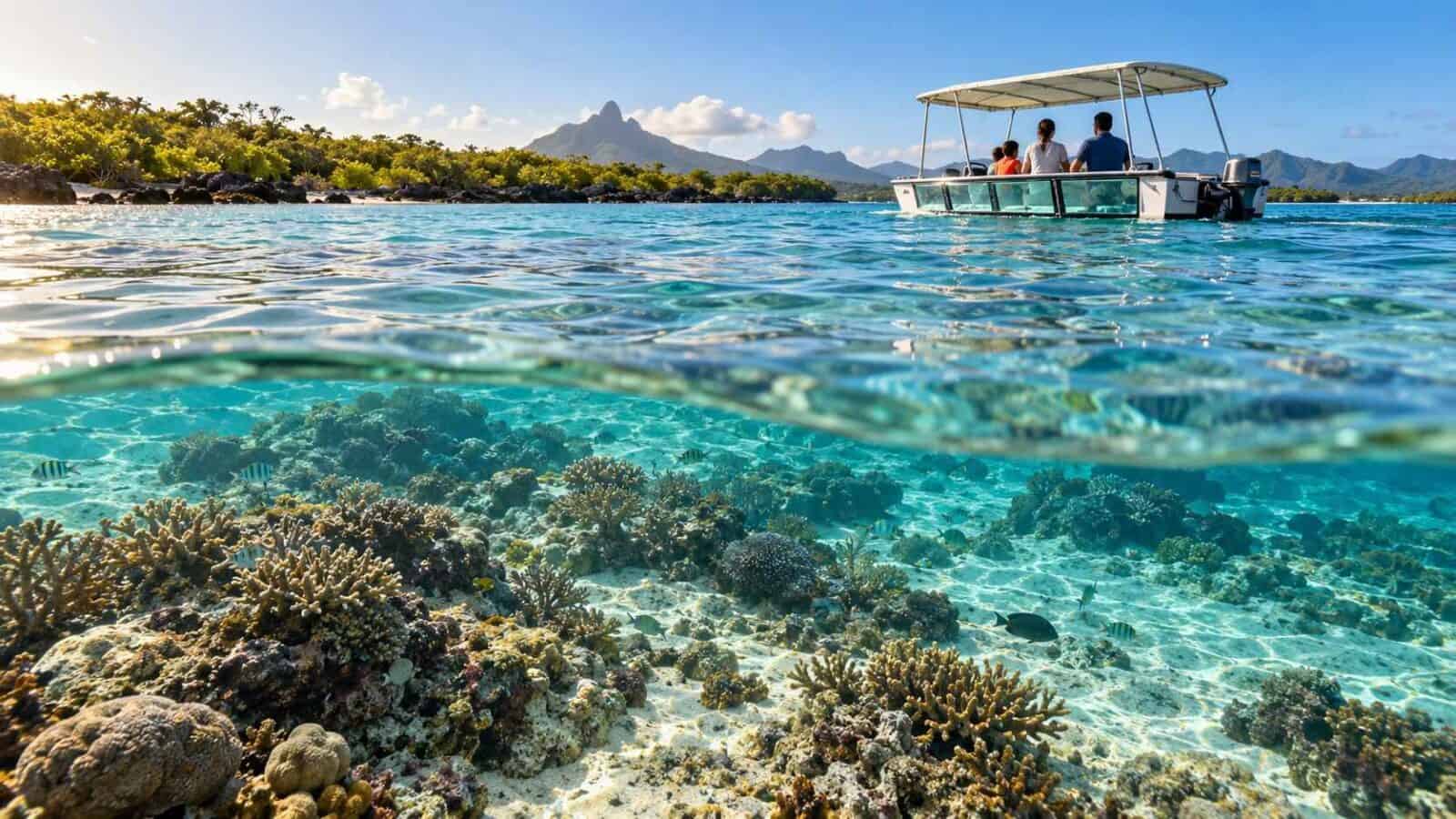
A National Coral Restoration program by the Government of Mauritius reports it has completed restoration of 1.5 hectares of coral reef within the Blue Bay Marine Park. Restoration work commenced in May 2025. Blue Bay is home to a variety of marine life, and activities such as snorkeling and glass bottom boat tours. Glass bottom boats allow visitors to peer into the clear shallow waters and view marine life, therefore, protecting the coral from undue stress. The Marine Park has regulations to protect the coral from further damage, and restrictions to outdoor activities. Knowledge of these boundaries helps families plan their activities for the day to be considerate of the marine life.
What the restoration figure means
The Mauritius environmental observatory says nursery-grown coral transplantation began at two sites in Blue Bay Marine Park in May 2025. Its published project account reports that about 1.5 hectares of degraded reef had been restored. The project aims to rehabilitate 2.5 hectares in the park and a further 0.7 hectares in a protected area of Rodrigues. ode.govmu.org
Advertisement
Advertisement
That is a substantial development for a lagoon that people visit to swim, snorkel and view marine life. It also needs careful wording. The area reported as restored does not tell visitors how many transplanted corals have survived, whether the entire area is open to excursions, or what they will see on a particular day.
The observatory describes the Blue Bay work as part of a regional project involving Mauritius, Rodrigues and Seychelles. It identifies funding from the Adaptation Fund and implementation by the United Nations Development Programme with local partners. The goal is to help reefs and the communities and economic activities that depend on them cope with a changing climate. ode.govmu.org
Advertisement
Advertisement
An earlier description of this story said the Blue Bay project ended in February 2026. That was incorrect. The February end date on the government page belongs to a separate assistance scheme for coral farming and fish breeding at other Mauritian locations. The page does not give that end date for the Blue Bay regional project. ode.govmu.org
A family beach beside a protected marine park
Blue Bay appeals to families because a beach visit can be paired with a look beneath the water. But Blue Bay Beach and Blue Bay Marine Park are not interchangeable: a day on the sand does not give visitors unrestricted access to every part of the protected water.
Advertisement
Advertisement
The government’s Marine Conservation Division says the park covers 353 hectares off south-east Mauritius. It became a marine park in 2000 and was listed as a Ramsar wetland of international importance in 2008. Its protected status reflects the value of its coral and other marine life. blueconomy.govmu.org
The park has a longer history than the current restoration work. Mauritius first proclaimed it a national park in 1997. A marine park centre opened in 2016 to support management and permits, while an exhibition facility inaugurated in 2023 helps explain marine ecosystems to students and other visitors. blueconomy.govmu.org
For parents, that creates a more meaningful outing than a promise of colourful fish. Children can enjoy the coast while learning why a reef needs protection. A glass-bottom boat may offer an option for family members who do not want to snorkel, provided the operator follows the park’s rules.
Blue Bay coral restoration and the visitor zones
The key planning detail is the park’s buoy-marked zoning system. Mauritius’s environmental observatory explains that the zones separate swimming, boat movement, mooring and conservation activities. Some snorkelling and glass-bottom boating are permitted in conservation zones, but visitors should follow the marked boundaries and their operator’s instructions. ode.govmu.org
| Park zone | What visitors should know |
|---|---|
| Swimming zone | Marked by yellow buoys. Boats and fishing are excluded. |
| Conservation zones | Marked by green buoys. Certain activities, including snorkelling and glass-bottom boating, are permitted under park controls. |
| Traffic lane | Marked by red and white buoys for motorised boat passage, with a stated speed limit of three knots. |
| Mooring zone | Marked by white buoys for boats to moor. |
Source: Mauritius environmental observatory’s account of Blue Bay Marine Park zoning. ode.govmu.org
These markings are more useful to a family than a vague instruction to “visit responsibly”. They show where a swim is intended to take place and why a boat cannot simply travel wherever it likes. Conditions and operational directions should still be checked locally on the day.
Advertisement
Advertisement
Visitors booking an excursion can ask where it goes and whether the business holds the appropriate marine park commercial activity permit. The Marine Conservation Division lists permits for glass-bottom boating and for boats carrying people to snorkel or dive. It also lists a tourism enterprise licence, boat insurance and a skipper’s licence among the documents required from applicants. blueconomy.govmu.org
Why the reef matters to Mauritius tourism
The restoration work sits alongside a large visitor economy. Statistics Mauritius reported 668,471 tourist arrivals in the first half of 2026, up 1.5% from the same period in 2025. Most arrived by air: 645,140, compared with 23,331 by sea. These are national arrival figures; they do not measure visits to Blue Bay. statsmauritius.govmu.org
The source markets also changed. In the first half of 2026, arrivals from Germany rose 13.4% year on year and those from India rose 11.9%. Arrivals from the United Kingdom fell 16%. Those figures show that Mauritius continues to attract international travellers, while demand differs sharply between markets. statsmauritius.govmu.org
A healthy lagoon matters to businesses offering boat trips, diving and other coastal experiences. The government describes reefs as supporting economic sectors as well as marine ecosystems. Yet the published Blue Bay project account does not establish that restoration has increased tour bookings, hotel revenue or visitor spending. Those effects would need separate evidence. ode.govmu.org
The same distinction applies to family travel. Restoration offers a stronger reason to learn about the lagoon. It does not promise that every snorkelling trip will pass a transplant site or reveal a fully recovered reef.
What visitors can do before booking
Families can keep the practical questions simple:
Advertisement
Advertisement
- Ask the operator which part of the park the trip visits. A tour of Blue Bay does not necessarily include a restoration site.
- Check the activity suits each family member. A beach swim, snorkelling trip and glass-bottom boat ride offer different experiences.
- Follow the buoys and local directions. The park assigns different activities to different zones.
- Keep expectations realistic. Visibility and wildlife sightings can vary, and the published restoration figure is not a guarantee of what a guest will see.
The most useful promise Blue Bay can make is an honest one. It offers visitors access to a striking lagoon with a documented conservation project and rules designed to protect it. That combination gives families a chance to connect the pleasure of a beach day with the work required to care for the water.
FAQs for travellers
Can families swim at Blue Bay Marine Park?
Yes, in the designated swimming zone. The government identifies that zone by yellow buoys and says boating and fishing are not allowed within it. Follow local signs and directions when you arrive. ode.govmu.org
Can visitors snorkel over the restored reef?
Do not assume so. Snorkelling is permitted in specified park zones, but the government’s restoration account does not say that the transplant sites are open to tourist visits. Ask the park centre or a permitted operator about the route before booking. ode.govmu.org
Does 1.5 hectares restored mean the reef has fully recovered?
No. That is the area the government reports as restored under the project. The cited account does not provide a current survival rate for transplanted coral or declare the whole reef fully recovered. ode.govmu.org
Conclusion
While most families take a Mauritius beach holiday, Blue Bay provides an opportunity to see what lies beyond. With the restoration of about 1.5 hectares of coral, and use of the marine park creating zones for different activities, guests can see how the marine life protection laws create spaces for tourism. Because the restoration is ongoing, the public should treat this as a conservation project and not expect coral sightings. The best way to have a positive effect on the project is to plan a fun family activity, use an approved service to get to the activity, and keep to the rules while enjoying the water. Hopefully, the project will help recover the coral and other marine life in the park.
Official sources
- Mauritius environmental observatory — biodiversity projects
- Mauritius environmental observatory — Blue Bay park zones
- Statistics Mauritius — first-half 2026 tourism figures
Advertisement
