
Philippine tourism infrastructure is entering a less glamorous but decisive phase, where the last stretch of a journey can determine a destination’s commercial potential. Airports, ferries, provincial roads, vans and small terminals increasingly shape how easily travellers reach emerging tourism areas. The shift matters because domestic tourism expenditure reached ₱3.26 trillion in 2025, up 3% from 2024. Tourism industries also employed 7.70 million people, representing 15.7% of national employment. Meanwhile, Philippine ports handled 69.13 million passengers in 2025, showing the enormous scale of domestic mobility.
The lesson is straightforward. A spectacular beach does not create a successful destination by itself. The journey between the gateway and the attraction can decide whether tourists arrive, stay longer and return. That makes the country’s overlooked “final mile” a critical tourism story.
Advertisement
For travellers, the journey rarely ends when an aircraft touches down. It continues through the airport exit, transfer queue, provincial road, ferry terminal and final connection to the hotel. A destination therefore operates as a chain rather than a single attraction.
Consider a typical island journey. A visitor may fly into a regional airport, take a van towards a port, board a ferry, find another local transfer and then travel several kilometres to accommodation. One weak link can undermine an otherwise excellent destination proposition.
Advertisement
That is why tourism planners increasingly need to think beyond airports and highways. The more useful question is not simply whether a destination has a road or airport. It is whether those facilities connect coherently with the rest of the visitor journey.
The National Tourism Development Plan for 2023–2028 explicitly places improved infrastructure and accessibility among its strategic goals. It also emphasises digital connectivity, tourist experience, destination diversification and stronger collaboration between national and local authorities.
The scale of Philippine travel makes small improvements potentially consequential. The Philippine Statistics Authority says tourism accounted for 8.1% of the economy in 2025. Domestic tourism expenditure alone reached ₱3.26 trillion, dwarfing inbound expenditure of ₱698.46 billion.
That imbalance gives domestic connectivity particular importance. Millions of residents already generate travel demand, even before international visitors enter the equation.
Advertisement
Advertisement
| Indicator | Latest government figure | Why it matters |
|---|---|---|
| Tourism contribution, 2025 | 8.1% of GDP | Shows tourism’s economic weight |
| Domestic tourism expenditure, 2025 | ₱3.26tn | Demonstrates huge home-market demand |
| Tourism employment, 2025 | 7.70m | Shows wider economic dependence |
| PPA passenger traffic, 2025 | 69.13m | Highlights maritime mobility |
| PPA passenger growth, 2025 | 5.25% | Indicates rising movement through ports |
| CAAP-operated airport passengers, 2025 | 23.68m | Shows continuing regional aviation demand |
The Civil Aviation Authority of the Philippines recorded 23.68 million passengers at CAAP-operated airports in 2025, compared with 22.64 million in 2024. Its figures exclude several major airports, including Bohol-Panglao, Laguindingan and Caticlan, so the national aviation picture is considerably larger.
These numbers make the final mile more than a transport inconvenience. It is a capacity question for the tourism economy.
For an archipelago, maritime transport remains fundamental to tourism access. Philippine Ports Authority figures show passenger traffic rising from 65.68 million in 2024 to 69.13 million in 2025, an increase of 5.25%. Ship calls also climbed by 7.95% during the same period.
The significance becomes clearer during peak travel periods. PPA recorded 6.28 million passengers from 15 December 2025 to 5 January 2026, its highest holiday figure since the agency was established in 1974. The comparable 2024 holiday period produced 4.74 million passengers.
For island destinations, ferry frequency can therefore matter as much as the size of a resort. A daily sailing creates a different tourism proposition from a service with limited weekly departures. Reliability also matters because missed connections can strand travellers or force expensive overnight stays.
Terminal quality has a similar effect. Covered waiting areas, clearer boarding systems, passenger information and better transfer coordination may appear modest. Yet they reduce friction at precisely the point when travellers are most vulnerable to confusion.
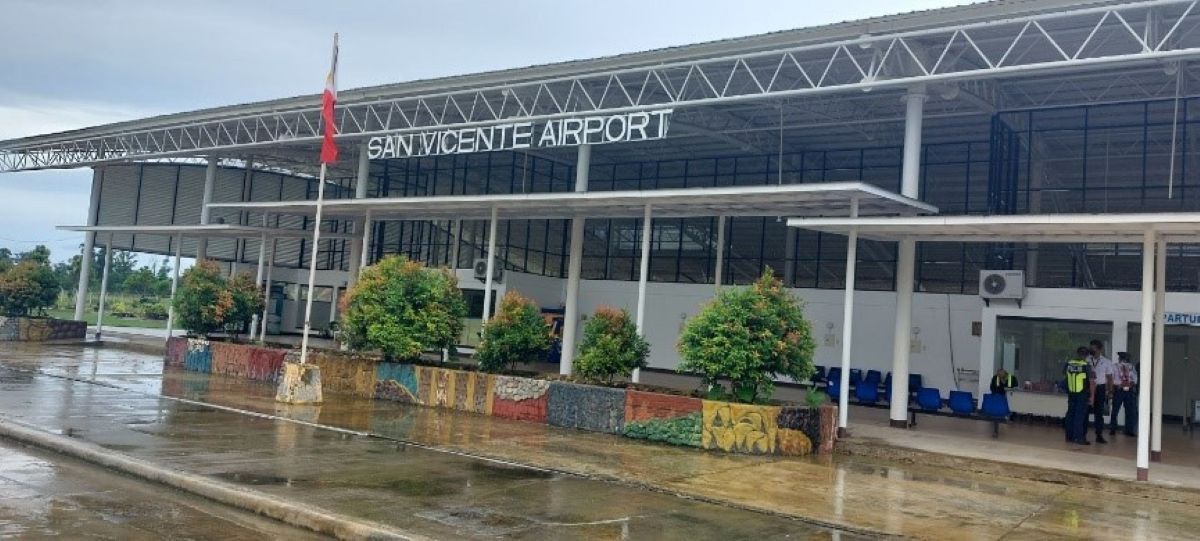
Small and regional airports can perform another important function. They compress the distance between a tourism gateway and the destination itself.
The effect is not simply about saving time. Shorter access can change the type of traveller a destination attracts. Families may consider a destination that once required an exhausting road journey. Weekend visitors may become more viable. International tourists may add a secondary destination to an existing itinerary.
CAAP’s data show the continuing importance of regional aviation. Passenger movement at its operated airports recovered sharply after the pandemic and reached 23.68 million in 2025. The authority also operates a network of airports serving destinations across Luzon, the Visayas and Mindanao.
However, an airport cannot operate as an isolated tourism asset. The transfer outside the terminal becomes the next bottleneck.
A visitor arriving at 6pm needs transport, not merely a runway. A resort needs predictable transfers, not simply an airport on the map. Tourism planners must therefore synchronise flight schedules, vans, taxis, buses and maritime departures wherever possible.
Road projects are perhaps the least glamorous part of the tourism story. They can nevertheless deliver some of its biggest practical gains.
The Department of Public Works and Highways continues to fund access roads leading to declared tourism destinations through its Tourism Road Infrastructure Programme. Its 2025 programme included projects serving tourism destinations in areas such as Kalinga and Agusan del Norte.
The underlying principle is powerful. A road does not need to lead directly to a major airport to influence tourism. It can connect a provincial highway with a beach, diving site, heritage attraction or nature area.
The DPWH infrastructure portal also records completed tourism access-road projects in destinations including Siquijor and Pangasinan.
For travellers, the benefit should be measured in journey reliability rather than kilometres alone. A smoother road can reduce transfer times, vehicle wear, weather-related disruption and uncertainty for tour operators.
For businesses, the effect can be wider. Better access allows workers to commute more easily and supplies to reach accommodation providers. It can also make smaller attractions viable as day trips from established tourism centres.
Tourism infrastructure is often judged by its largest facilities. That can obscure the influence of small terminals.
A provincial ferry terminal or modest airport building may handle fewer passengers than Manila or Cebu. Yet it sits much closer to the actual tourism experience.
This is where infrastructure becomes hospitality.
A clean terminal with toilets, shade, seating, signage and accessible boarding can immediately improve visitor confidence. Clear information can also reduce dependence on informal intermediaries.
The same principle applies to local bus and van terminals. Travellers need to know where vehicles depart, whether tickets are fixed-price and how long the journey takes.
These details rarely make headlines. They can nevertheless determine whether an emerging destination feels accessible or arduous.
Ground transport is often the weakest link in an otherwise modern travel chain. A regional airport may have excellent facilities, yet a traveller can still face uncertainty outside the arrivals hall.
The solution does not necessarily require expensive mass transit. Predictable, coordinated van and shuttle services can deliver a substantial improvement.
For tourism businesses, scheduled transfers can also reduce missed check-ins and late arrivals. Operators can package airport, port and hotel transfers into a single journey. That makes remote destinations easier to sell through travel agencies and online booking platforms.
The broader lesson is that transport should be designed around the visitor’s entire itinerary. A flight schedule that ignores the final ferry is not genuine connectivity.
A useful way to assess emerging destinations is to examine five links.Tourism link Traveller question Common weakness Gateway Can I reach the region easily? Limited flights or sailings Final connection Can I leave the gateway quickly? Scarce vans or taxis Local mobility Can I reach attractions? Fragmented transport Visitor infrastructure Is the journey comfortable? Basic terminals and signage Return connection Can I get back reliably? Tight or poorly coordinated schedules
This framework also exposes why infrastructure investment can produce uneven results. A new airport may increase capacity, but inadequate local transport can absorb the benefit. Likewise, a new road may shorten access while overcrowding fragile coastal areas.
Connectivity must therefore be matched with destination capacity.
Improved final-mile connectivity can change the practical economics of a holiday.
The first gain is time. A shorter transfer creates more usable hours at the destination. The second is predictability. Reliable transport makes independent travel less stressful. The third is choice. Travellers can consider destinations that previously required excessive planning.
There is also a price effect. Better competition between transport providers can potentially reduce dependence on expensive private transfers. However, this outcome depends on regulation, demand and local market conditions.
For international visitors, the final mile can influence whether a destination appears “easy” enough to include. Ease of access increasingly forms part of destination appeal.
Improved access is not automatically beneficial. A road can bring tourists faster than a destination can build accommodation. A new airport can increase arrivals before waste systems, water supplies or local transport are ready.
This creates a difficult policy balance. Infrastructure should unlock communities without overwhelming them.
The National Tourism Development Plan’s emphasis on sustainability and resilience is therefore important. Tourism expansion needs to consider environmental capacity, community participation and destination management alongside physical connectivity.
The strongest destinations may ultimately be those that improve access without turning accessibility into uncontrolled volume.
The next stage of Philippine tourism development should be judged through integrated journeys rather than isolated projects.Development Immediate benefit Longer-term tourism test Regional airport Faster arrival Quality of onward transfers New ferry service Better island access Frequency and reliability Tourism road Shorter road journey Visitor growth versus capacity Small terminal Better passenger experience Operational efficiency Van network Easier transfers Schedule integration Digital booking Less uncertainty Integration across transport modes
This also creates a useful opportunity for hotels, tour operators and destination managers. They can identify the precise point where visitors lose time or confidence.
The most valuable data may not be visitor arrivals alone. Transfer duration, missed connections, cancellation rates and journey costs can reveal where tourism growth is being constrained.
Travellers can apply the same logic themselves. Before booking an emerging destination, they should map the entire journey rather than checking only the flight.
The crucial questions are practical. What time does the last ferry leave? Does the airport have transport after the final scheduled flight? How long does the transfer take in normal traffic? What happens if weather disrupts the crossing?
Travellers should also examine the return journey carefully. The outbound trip is often easier because every connection is planned in advance. The return can expose hidden weaknesses when ferry, van and flight schedules do not align.
A destination that looks close on a map may therefore require an entire day of travel.
The Philippines does not lack spectacular destinations. Its larger challenge is converting geographical beauty into dependable visitor access.
The latest government figures show why the opportunity is significant. Domestic tourism generated ₱3.26 trillion in expenditure in 2025, while ports moved 69.13 million passengers. Meanwhile, CAAP-operated airports handled 23.68 million passengers.
That volume gives smaller infrastructure improvements a large potential audience. A ferry berth, regional airport, reliable van route or improved access road can become a tourism enabler when it completes the journey.
The next generation of Philippine destinations may therefore not be discovered solely through new attractions. They may emerge where the final kilometres finally become dependable. The real transformation is not simply making places easier to reach. It is making the entire journey work as one system. For travellers, that means more destinations become realistic. For communities, it can create new economic channels. For the industry, it offers a sharper measure of tourism readiness: not how impressive the destination looks, but how smoothly the visitor can get there, move around and get home.
Advertisement
Tags: Philippine ferry travel, philippine tourism, regional airports Philippines, tourism infrastructure Philippines
Advertisement
Advertisement













Saturday, September 5, 2026

Saturday, September 5, 2026

Saturday, September 5, 2026

Saturday, September 5, 2026

Saturday, September 5, 2026

Saturday, September 5, 2026

Saturday, September 5, 2026

Saturday, September 5, 2026



