

Portugal is Surging Tourism With New Visa Free Travel Entry Policy For 93 Countries Including Canada, United States and others

Updated
Published
Portugal is now broadening its international tourism reach as travelers connected with 93 visa-free countries as of October 2026, including Canada, United States and Others. Located on the western coast of the Iberian Peninsula, this western European country merges together a long maritime history with remarkably different physical settings. The northern area of Portugal is characterized by rolling hills, mountain ranges and a rugged Atlantic shoreline, this contrasts with the Algarve’s milder climate and sweeping beaches of white sand, limestone outcrops and thriving coastal resorts. In between these two areas are historic settlements, lush valleys and the dramatic Serra da Estrela mountain range, the location of mainland Portugal’s highest elevation. From captivating urban centers and traditional rural areas, to vineyards, rivers and Atlantic beaches, Portugal offers a combination of cultural, culinary, natural and seaside delights, providing international visitors with plenty of reason to go beyond its best-known tourism centers.
Portugal Tourism Hits New Highs
Portugal’s tourism sector continued to grow in 2026, recording 18.5 million guests and 46.5 million overnight stays between January and July. The United Kingdom remained the leading international market with an 18.1% share, followed by Germany at 11.4% and the United States at 9.8%. In July alone, Portugal welcomed 3.4 million guests, up 1% year on year, while overnight stays increased 2.1% to 9.6 million. Overnight stays from Canada rose 6.6% and those from Germany increased 5.3%, while Alentejo and Norte recorded growth of 7.5% and 6.3%, respectively. Tourism receipts reached approximately €16.5 billion during the first seven months of 2026, representing a 3.6% increase compared with the same period in 2025.
Portugal Economy 2026
Portugal’s economy is expected to maintain positive growth in 2026, with nominal GDP projected at around $380.64 billion. Economic growth forecasts vary among major institutions, with the IMF projecting real GDP growth of 1.9%, Banco de Portugal forecasting 1.8%, and the OECD estimating growth of 2.2%. Economic activity strengthened during the second quarter of 2026, when GDP expanded by 0.8% compared with the previous quarter, following growth of just 0.1% in the first quarter. On an annual basis, the economy grew by approximately 2.5% in Q2 2026. Portugal’s GDP based on purchasing power parity is estimated at around $567.63 billion, while GDP per capita stands at approximately $35,434 in nominal terms and $52,841 on a PPP basis. Tourism, international trade, exports and domestic consumption continue to play important roles in supporting economic activity.
Portugal Opens Visa-Free Travel to 93 Countries
| No. | Country | No. | Country | No. | Country |
|---|---|---|---|---|---|
| 1 | South Korea | 32 | Slovenia | 63 | Hong Kong |
| 2 | Japan | 33 | Latvia | 64 | Albania |
| 3 | Andorra | 34 | Estonia | 65 | Dominica |
| 4 | Sweden | 35 | San Marino | 66 | North Macedonia |
| 5 | Belgium | 36 | Australia | 67 | Bosnia and Herzegovina |
| 6 | Denmark | 37 | Canada | 68 | Solomon Islands |
| 7 | Finland | 38 | Brunei | 69 | Georgia |
| 8 | France | 39 | Taiwan | 70 | Tonga |
| 9 | Germany | 40 | Czechia | 71 | Macao |
| 10 | Italy | 41 | Lithuania | 72 | Panama |
| 11 | Luxembourg | 42 | United States | 73 | Paraguay |
| 12 | Netherlands | 43 | Israel | 74 | Costa Rica |
| 13 | Norway | 44 | United Arab Emirates | 75 | Mexico |
| 14 | Spain | 45 | Bulgaria | 76 | Vatican City |
| 15 | Switzerland | 46 | Romania | 77 | Guatemala |
| 16 | Singapore | 47 | Malaysia | 78 | St. Vincent and the Grenadines |
| 17 | Ireland | 48 | Cyprus | 79 | St. Kitts and Nevis |
| 18 | Malta | 49 | Argentina | 80 | El Salvador |
| 19 | United Kingdom | 50 | Barbados | 81 | Honduras |
| 20 | Austria | 51 | Uruguay | 82 | Colombia |
| 21 | Greece | 52 | Brazil | 83 | Ukraine |
| 22 | New Zealand | 53 | The Bahamas | 84 | Samoa |
| 23 | Iceland | 54 | Palau Islands | 85 | Trinidad and Tobago |
| 24 | Liechtenstein | 55 | Peru | 86 | Venezuela |
| 25 | Monaco | 56 | Marshall Islands | 87 | Nicaragua |
| 26 | Chile | 57 | Micronesia | 88 | St. Lucia |
| 27 | Hungary | 58 | Mauritius | 89 | Tuvalu |
| 28 | Poland | 59 | Seychelles | 90 | Moldova |
| 29 | Croatia | 60 | Serbia | 91 | Kiribati |
| 30 | Slovakia | 61 | Grenada | 92 | Kosovo |
| 31 | Montenegro | 62 | Antigua and Barbuda | 93 | Timor-Leste |
TTW Founder and Editor-in-Chief, Mr. Anup Kumar Keshan, Says: “Portugal’s growing international tourism appeal, supported by visa-free travel access involving 93 countries as of October 2026, including Canada, the United States, the United Arab Emirates, Brazil and other important global markets, highlights how easier mobility can strengthen a destination’s worldwide reach. Greater accessibility can encourage more travellers to explore Portugal’s historic cities, Atlantic coastline, cultural heritage, scenic countryside and the celebrated beaches of the Algarve. Stronger international travel connections can also create opportunities for hotels, tourism operators, local businesses and communities while supporting leisure, luxury, cultural, coastal and nature-based tourism. As Portugal continues to attract global interest, easier travel access can help diversify visitor markets, strengthen tourism spending and reinforce the country’s position as one of Europe’s most appealing travel destinations.”
Advertisement
Advertisement
Portugal’s Five Major Airports

1. Humberto Delgado Airport – Lisbon: Lisbon Airport is Portugal’s principal international aviation gateway and the busiest airport in the country. Its location provides convenient access to the capital’s historic districts, hotels, cultural attractions and business centres. The airport is particularly important for Portugal’s inbound tourism sector because it connects Lisbon with numerous European destinations as well as important long-haul markets in North America, South America and Africa.
2. Francisco Sá Carneiro Airport – Porto: Porto Airport is the main aviation gateway to northern Portugal and plays an important role in supporting the region’s expanding visitor economy. International travellers use the airport to reach Porto as well as destinations across the wider north, including the Douro Valley. Its connectivity supports city breaks, cultural holidays, wine tourism and business travel.
Advertisement
Advertisement
3. Faro Airport – Algarve: Faro Airport serves as the main international gateway to the Algarve, one of Portugal’s best-known leisure destinations. The airport provides access to popular tourism centres including Faro, Albufeira, Vilamoura, Portimão and Lagos. Its international services are particularly important for the Algarve’s beach resorts, golf tourism, coastal holidays and seasonal leisure market.
4. Madeira Cristiano Ronaldo Airport – Madeira: Madeira Airport is a critical gateway to the Madeira archipelago, particularly the island’s capital, Funchal. The airport supports year-round tourism by connecting the destination with mainland Portugal and international markets. Visitors use Madeira as a base for nature holidays, hiking, coastal experiences, cultural tourism and exploration of its mountainous Atlantic landscapes.
Advertisement
Advertisement
5. João Paulo II Airport – Ponta Delgada: Located on São Miguel Island, Ponta Delgada Airport is a major gateway to the Azores. It provides important links between the archipelago, mainland Portugal and overseas markets. The airport supports the Azores’ growing reputation for nature, adventure and sustainable tourism, providing access to volcanic scenery, crater lakes, hiking routes, whale-watching and other marine experiences.
Portugal Airport Passenger Traffic
| No. | Airport | Location | Passenger Traffic | Growth |
|---|---|---|---|---|
| 1 | Humberto Delgado Airport (Lisbon Airport) | Lisbon | 36.1 million | +2.9% |
| 2 | Francisco Sá Carneiro Airport (Porto Airport) | Porto | 16.9+ million | +6.3% |
| 3 | Faro Airport | Algarve | 10.4+ million | +5.8% |
| 4 | Madeira Cristiano Ronaldo Airport* | Madeira | 5.7+ million* | +11.8%* |
| 5 | João Paulo II Airport (Ponta Delgada)* | Azores | 3.4 million* | +2.3%* |
Five Major Airlines of Portugal

1. TAP Air Portugal
TAP Air Portugal is Portugal’s flag carrier and the country’s leading international airline. Headquartered in Lisbon and operating primarily through Humberto Delgado Airport, TAP connects Portugal with destinations across Europe, North America, South America and Africa. Its extensive links with Brazil and Portuguese-speaking African markets give the airline an important role in Portugal’s long-haul connectivity. TAP also supports the country’s tourism economy by feeding international passengers into Lisbon and providing onward connections to Porto, Madeira, the Azores and other European destinations.
2. Azores Airlines
Azores Airlines is a Portuguese airline closely associated with connectivity between the Azores, mainland Portugal and international markets. Based in the Azores, the carrier operates services that are particularly important for the archipelago’s tourism industry. Its network includes connections with mainland Portugal as well as destinations in North America and Europe, helping make the remote Atlantic islands more accessible to international travellers. The airline supports leisure, visiting-friends-and-relatives and regional travel demand.
3. SATA Air Açores
SATA Air Açores provides essential air connectivity between the islands of the Azores archipelago. Its regional services enable travellers to move between islands including São Miguel, Terceira, Faial, Pico, Santa Maria and Flores, among others. These connections are particularly important because the islands are geographically dispersed across the Atlantic. For tourism, the airline facilitates multi-island holidays and provides access to smaller destinations known for volcanic scenery, hiking, marine activities and nature-based experiences.
Advertisement
Advertisement
4. Portugália Airlines
Portugália Airlines operates within the TAP Group and provides regional flying under the TAP Express brand. Its operations complement TAP Air Portugal’s larger international network by serving shorter regional routes and feeding passengers into the airline’s Lisbon hub. This connectivity allows travellers arriving on long-haul services to continue towards Portuguese and European destinations, while passengers from regional markets can connect with TAP’s wider international network.
5. Sevenair
Sevenair is a Portuguese regional aviation operator with activities that include scheduled passenger services and other aviation operations. Its scheduled network has helped maintain air links involving smaller Portuguese destinations that are not served by the same volume of international flights as Lisbon, Porto or Faro. Regional aviation of this kind complements Portugal’s larger airline network by improving domestic accessibility and supporting travel between less-connected communities and major transport gateways.
Portugal’s Five Airlines – 2026 Data
| Airline | Main Base / Market | 2026 Fleet / Operation | Main Network Role | Key 2026 Data |
|---|---|---|---|---|
| TAP Air Portugal | Lisbon | Airbus A320-family and A330-family aircraft; TAP Express also uses regional aircraft | Portugal’s flag carrier, linking the country with Europe, Africa, North America and South America | Portugal’s principal international network airline and the backbone of Lisbon’s hub connectivity. |
| Azores Airlines | Ponta Delgada, Azores | 9 aircraft planned for summer 2026 | Mainland Portugal, Azores, Europe and North America | Around 270 weekly flights across 20 routes in summer 2026. More than 50 weekly flights are planned between the Azores and Boston, Toronto, New York and Montreal. |
| SATA Air Açores | Ponta Delgada, Azores | 7 aircraft planned for summer 2026 | Inter-island services throughout the Azores | Around 572 weekly inter-island flights across 16 routes are planned for summer 2026. |
| Portugália Airlines | Portugal / TAP network | Embraer E190/E195 aircraft associated with TAP Express | Regional feeder operations for TAP | Operates within the TAP Express regional operation, helping feed passengers into TAP’s wider network rather than maintaining a separate passenger network under its own brand. |
| Sevenair | Portugal | Official fleet information lists 40 training aircraft across several aircraft types | Aviation and training activities | Sevenair’s published fleet currently includes Cessna, Tecnam, Piper and Diamond aircraft. Its official 2026 information does not provide directly comparable scheduled-airline traffic figures. |
Five Leading Hotels in Portugal

1. Four Seasons Hotel Ritz Lisbon – Lisbon
Four Seasons Hotel Ritz Lisbon is one of the capital’s prominent luxury hotels. Located close to Eduardo VII Park, the property combines luxury accommodation with restaurants, wellness facilities, a spa and views across Lisbon. Its central location provides convenient access to Avenida da Liberdade, historic neighbourhoods, cultural attractions and major shopping areas.
2. The Yeatman – Porto
The Yeatman is a luxury wine-focused hotel overlooking Porto and the Douro River from Vila Nova de Gaia. The property is closely connected with Portugal’s wine culture and provides accommodation, gastronomy and wellness experiences. Its location also places visitors near the historic port wine cellars and within convenient reach of Porto’s UNESCO-listed historic centre.
3. Vila Vita Parc – Algarve
Vila Vita Parc Resort & Spa is a luxury coastal resort in the Algarve, set above the Atlantic Ocean near Porches. The resort combines rooms, suites and villas with restaurants, wellness facilities, swimming pools and access to the Algarve coastline. It is particularly relevant to Portugal’s luxury, leisure, gastronomy and beach tourism markets.
4. Reid’s Palace – Madeira
Reid’s Palace, A Belmond Hotel, Madeira is a historic luxury hotel overlooking the Atlantic Ocean in Funchal. Known for its long hospitality heritage, subtropical gardens and coastal setting, the property provides a base for travellers exploring Madeira’s landscapes, walking trails, cultural attractions and island experiences.
Advertisement
Advertisement
5. Bairro Alto Hotel – Lisbon
Bairro Alto Hotel occupies a central location between Lisbon’s Bairro Alto and Chiado districts. The luxury boutique property places guests within walking distance of restaurants, shops, historic streets and major cultural attractions. Its location and design make it particularly relevant to city-break, cultural and luxury travellers visiting the Portuguese capital.
Portugal Five Hotels – Timings, Airport Distance and Reviews
| Hotel | Destination | Check-in / Check-out | Nearest Major Airport | Airport Distance / Travel Time | Guest Review* |
|---|---|---|---|---|---|
| Four Seasons Hotel Ritz Lisbon | Lisbon | 4:00 PM / 11:00 AM | Humberto Delgado Airport (LIS) | 7 km / around 20 min by car | Luxury 5-star hotel |
| The Yeatman | Vila Nova de Gaia, Porto | 3:00 PM / 12:00 PM | Francisco Sá Carneiro Airport (OPO) | Around 25 min by car | 5-star hotel |
| Vila Vita Parc Resort & Spa | Porches, Algarve | 3:00 PM / 12:00 PM | Faro Airport (FAO) | Around 40–50 min by car | 5-star resort |
| Reid’s Palace, A Belmond Hotel, Madeira | Funchal, Madeira | 3:00 PM / 12:00 PM | Madeira Airport (FNC) | Approx. 20–25 min by car | Luxury 5-star hotel |
| Bairro Alto Hotel | Lisbon | 2:00 PM / 12:00 PM | Humberto Delgado Airport (LIS) | Around 29–31 min by car | 4.6/5 from about 900 Google reviews |
Portugal City Guide:
Portugal brings together medieval castles, cobblestone villages, colourful historic cities, rolling vineyards and golden Atlantic beaches, creating a remarkably varied travel experience. Visitors can wander through centuries-old neighbourhoods, explore ancient monuments and fortresses, experience traditional Portuguese culture and enjoy a rich food scene shaped by fresh seafood and regional flavours. Beyond Lisbon and Porto, travellers can discover the vineyards of the Douro Valley, the spectacular beaches and cliffs of the Algarve, mountain landscapes, peaceful countryside and picturesque coastal communities. From history and gastronomy to nature, culture and seaside escapes, Portugal offers experiences for city-break travellers, families, couples, adventure seekers and visitors looking for a relaxed European holiday.
Top Historic Attractions in Portugal:
1. Palácio Nacional de Mafra
The Palácio Nacional de Mafra is one of Portugal’s most impressive Baroque landmarks and has been part of the UNESCO World Heritage List since 2019. The vast complex brings together a royal palace, basilica, convent and remarkable historic library. Inside the basilica, visitors can see marble decoration, religious artwork and an extraordinary collection of six historic organs. The palace reveals the scale of Portuguese royal life through ceremonial rooms, private chambers, decorated ceilings and extensive corridors. Its magnificent library remains one of the complex’s greatest highlights, with long galleries lined by thousands of historic books.
2. Convent of Christ – Tomar
The Convent of Christ in Tomar is deeply connected with the history of the Knights Templar and Portugal’s maritime era. The Templars established themselves here during the 12th century, and the complex later developed into an extraordinary collection of Romanesque, Gothic, Manueline and Renaissance architecture. Its celebrated Charola, inspired by the Church of the Holy Sepulchre in Jerusalem, features elaborate paintings, carvings and religious decoration. Another major highlight is the richly detailed Manueline Chapter House Window. Visitors can also explore seven cloisters, the Templar castle and the surrounding landscape, while the nearby Pegões Aqueduct extends for roughly six kilometres.
3. Batalha Monastery
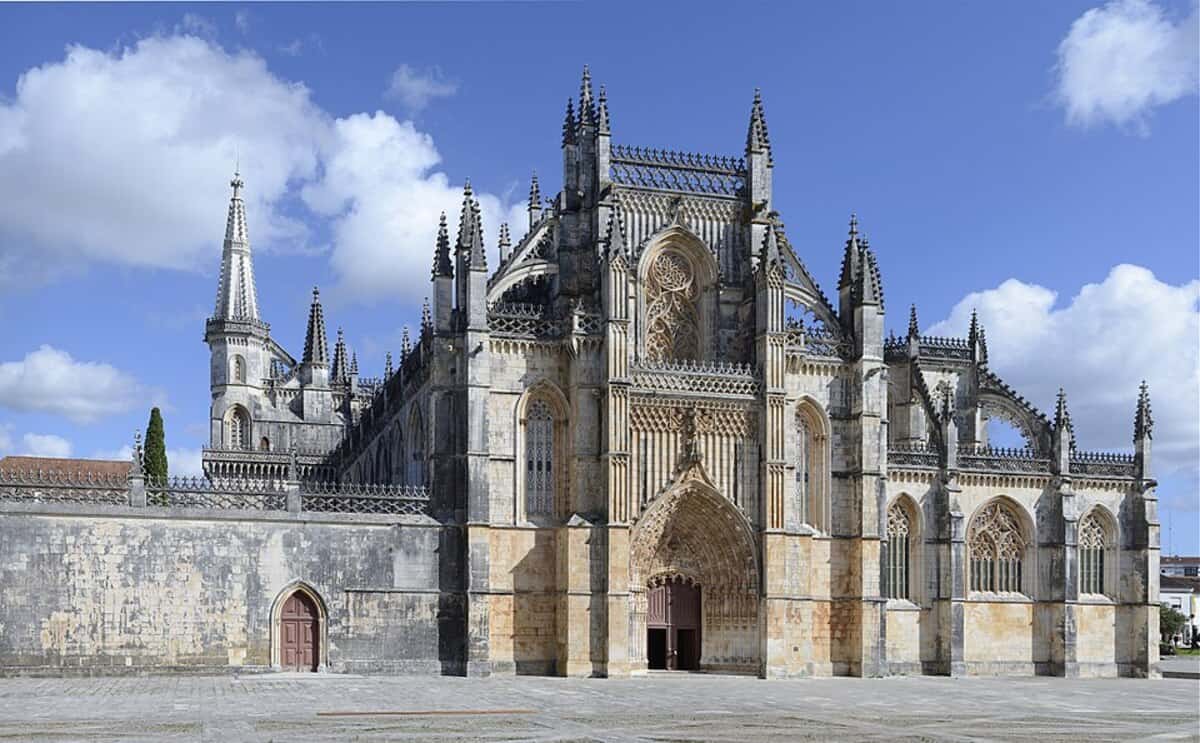
The Monastery of Batalha, formally known as the Monastery of Santa Maria da Vitória, was established following Portugal’s victory at the Battle of Aljubarrota in 1385. The UNESCO-listed monument is one of the country’s finest examples of Gothic and Manueline architecture. Its soaring church interior, elaborate stonework and stained-glass windows create a striking sense of scale. Major attractions include the Founder’s Chapel, containing royal tombs, the ornate Royal Cloister, the more restrained Afonsino Cloister and the Chapter House. Visitors can also explore the famous Unfinished Chapels, an extraordinary octagonal structure that was never completed.
4. Jerónimos Monastery – Lisbon
Located in Belém, Lisbon, the Jerónimos Monastery is one of Portugal’s most recognisable historic monuments and an outstanding example of Manueline architecture. Its development was closely connected with Portugal’s maritime expansion, reflected in decorative details inspired by ropes, navigation and the sea. The magnificent cloisters feature intricately carved arches, columns and maritime motifs. The adjoining church is equally important, with high vaulted ceilings, stained glass and elaborate stonework. It also contains the tombs associated with some of Portugal’s most significant historical and cultural figures, reinforcing the monastery’s importance to the country’s national heritage.
5. Palácio da Bolsa – Porto
The Palácio da Bolsa, or Stock Exchange Palace, is one of Porto’s most impressive historic buildings. Constructed on the site of a former convent, it reflects the city’s long history of international commerce and economic connections. Visitors enter through spaces decorated with symbols representing Portugal’s historic trading relationships before exploring a succession of elaborate ceremonial rooms. The palace’s most spectacular interior is the Arab Room, created in an elaborate Moorish Revival style and decorated with intricate patterns, gilded details and Arabic-inspired inscriptions. Today, the palace remains an important architectural and cultural attraction in Porto.
Advertisement
