
Why Cawker City’s World’s Largest Ball Of Twine Is A Model For Rural Tourism Success

Updated
Published
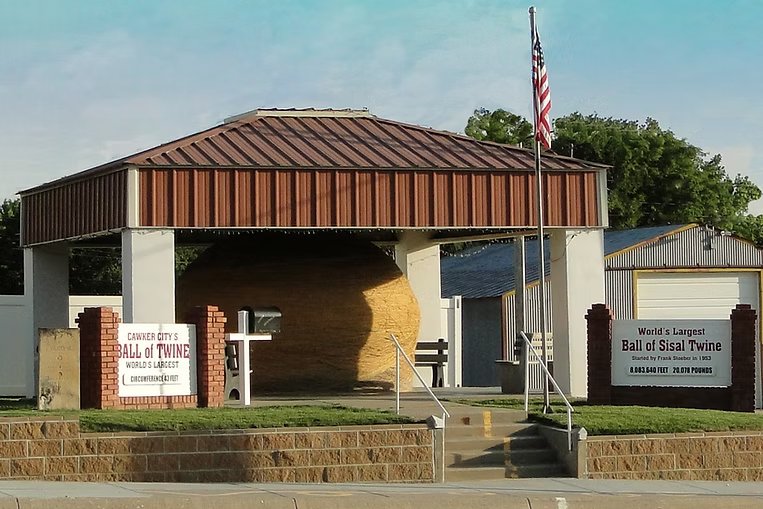 Image generated with Ai
In rural Cawker City, Kansas, a 70-year-old experiment has converted an idiosyncratic, bizarre concept into a booming economic force. What was once the hobby of a local farmer has evolved into one of the most unusual instances of community-supported tourism in the United States: the World’s Largest Ball of Twine. Originally constructed in 1953, the ball has swollen to a weight of more than 27,000 pounds and has attracted hundreds of thousands of visitors from all corners of the globe, including remote places like Antarctica and the farthest reaches of Mongolia. This grass-roots attraction has provided a model in grassroots economic development and has some lessons to offer to other rural communities seeking to stimulate their local economy through unusual tourism initiatives.
From Farmer’s Hobby to Global Attraction
The story of the World’s Largest Ball of Twine began as the personal project of a farmer named Frank Stoeber. In 1953, Stoeber began winding twine on his farm as a way to pass the time, but little did he know that his modest hobby would evolve into a world-famous attraction. Over the decades, local residents and visitors alike have added to the ball, with twine being donated and placed by thousands of hands. Unlike other roadside oddities, this twine ball continued to grow, offering a unique interactive experience for tourists.
What sets this attraction apart is the way it was built and sustained. Rather than relying on outside investors or top-down development, the people of Cawker City made this a participatory experience that invited visitors to be part of the story. This approach turned the Ball of Twine into more than just an oddity—it became a symbol of community pride and collective ownership. Today, it draws tourists from all corners of the globe, and the impact on the local economy has been profound.
Economic Impact That Defies Expectations
The World’s Largest Ball of Twine has generated a remarkable $1,425 per capita in economic impact, a figure that far exceeds the state average of $520 per person. This economic success can largely be attributed to the participation model that the attraction operates on. Visitors aren’t just observers—they actively contribute to the ball’s growth by adding twine during annual “twine-a-thon” events. These events encourage a sense of ownership, as each visitor can proudly say that they added a piece to the world’s largest twine ball. This personal investment creates what psychologists refer to as “contribution satisfaction,” where people feel a sense of accomplishment from adding value to something larger than themselves.
Advertisement
Advertisement
This interactive element has proven to be far more effective than static attractions, which only offer photo opportunities but lack a sense of participation. The Ball’s continuous growth also ensures repeat visits, as people are drawn back year after year to witness its expansion. Many families, some of whom have been visiting for decades, bring their children and grandchildren to continue the tradition, further embedding the Ball of Twine into the social fabric of the town.
Accessibility and Engagement: The Key to Success
One of the reasons the World’s Largest Ball of Twine has had such a profound impact on rural tourism is its 24/7 accessibility. Unlike most museums or tourist attractions, the Ball is always open to the public, under a protective gazebo. There are no admission fees, no operating hours, and no advance reservations required. This accessibility makes it a perfect stop for families on road trips, international tourists, and anyone looking for a unique and authentic American experience.
Advertisement
Advertisement
The Ball’s round-the-clock availability eliminates many of the barriers that often prevent people from visiting traditional tourist attractions, especially in rural areas. The fact that visitors can engage with the attraction at their own convenience has helped make it a must-see stop for travelers passing through the region. It also ensures that the attraction is open to a wide range of demographics, from budget-conscious tourists to international visitors.
Overcoming Challenges: The Sustainability and Succession Dilemma
As the Ball continues to grow in size, it faces several sustainability challenges. The twine’s exposure to the elements—particularly humidity and UV rays—can cause degradation over time, threatening its structural integrity. The increasing weight of the ball also raises concerns about its ability to withstand environmental factors and the need for ongoing engineering assessments to ensure its safety.
Advertisement
Advertisement
Additionally, there is the issue of succession planning. The current caretakers of the Ball, such as Linda Clover, have been instrumental in its upkeep, but as they age, there is a growing concern about the lack of documented successors to take on the responsibility. This challenge highlights the need for other communities looking to replicate this model to develop systems for transferring institutional knowledge and ensuring the continuity of their attractions beyond the founding generations.
The Future: Digital Integration and Expansion
Cawker City is not resting on its laurels. The town is exploring ways to evolve the attraction without losing its authentic, tactile appeal. One proposal includes the use of QR codes for visitor tracking, allowing people to virtually contribute to the ball even if they cannot physically visit. This innovation could help bring in global participation, creating a sense of connection between people from around the world. The addition of digital features will complement the traditional experience, enhancing the sense of global collaboration.
Furthermore, the town is considering new developments to keep the attraction fresh and engaging for returning visitors. Plans are underway to introduce a twine museum, themed lodging, and more social media integration to amplify the attraction’s narrative. These changes could extend the average length of visitors’ stays, turning a brief stop into a more immersive experience.
A Blueprint for Rural Tourism Development
Cawker City’s success with the World’s Largest Ball of Twine offers valuable lessons for struggling communities across the country. The model is simple yet effective: identify locally abundant materials, create participatory experiences, and use absurdity as a tool for differentiation. The low infrastructure investment required to maintain the Ball of Twine makes it an accessible option for small towns that may lack the resources to invest in larger-scale tourism projects.
Advertisement
Advertisement
Other communities, such as those in Minnesota with their own twine balls and South Dakota’s Corn Palace, have adapted this approach with varying degrees of success. However, what sets Cawker City apart is the authentic ownership that the community feels over the attraction. It’s a reminder that tourism development doesn’t need to be top-down or heavily commercialized; with the right grassroots approach, even the most unconventional attractions can transform local economies.
Conclusion: Why Cawker City’s Experiment Matters
The World’s Largest Ball of Twine is one example—and an inspiration—of community-powered tourism at its best. As others have pointed out how much authenticity is missing in much tourism today, Cawker City shows us how rural economies can be reinvigorated through community action and ongoing innovation. Its success reminds us that even the most unorthodox and unexpected concept has the power to build tremendous value when based firmly in community involvement and ongoing reinvention. It’s not about twine at all; it’s about converting local assets to communal experiences that build long-term economic and social value for generations to come.
References: Cawker City Official Website, Kansas Department of Tourism, Travel & Tourism Economics by the U.S. Travel Association
Image Credit: Cawker City Official Website
Advertisement
