
Wisconsin Outdistances Florida, Nevada, Montana and Other US States in AI Scam Reports as Complaints Surge 238% and Consumer Losses Rise

Published
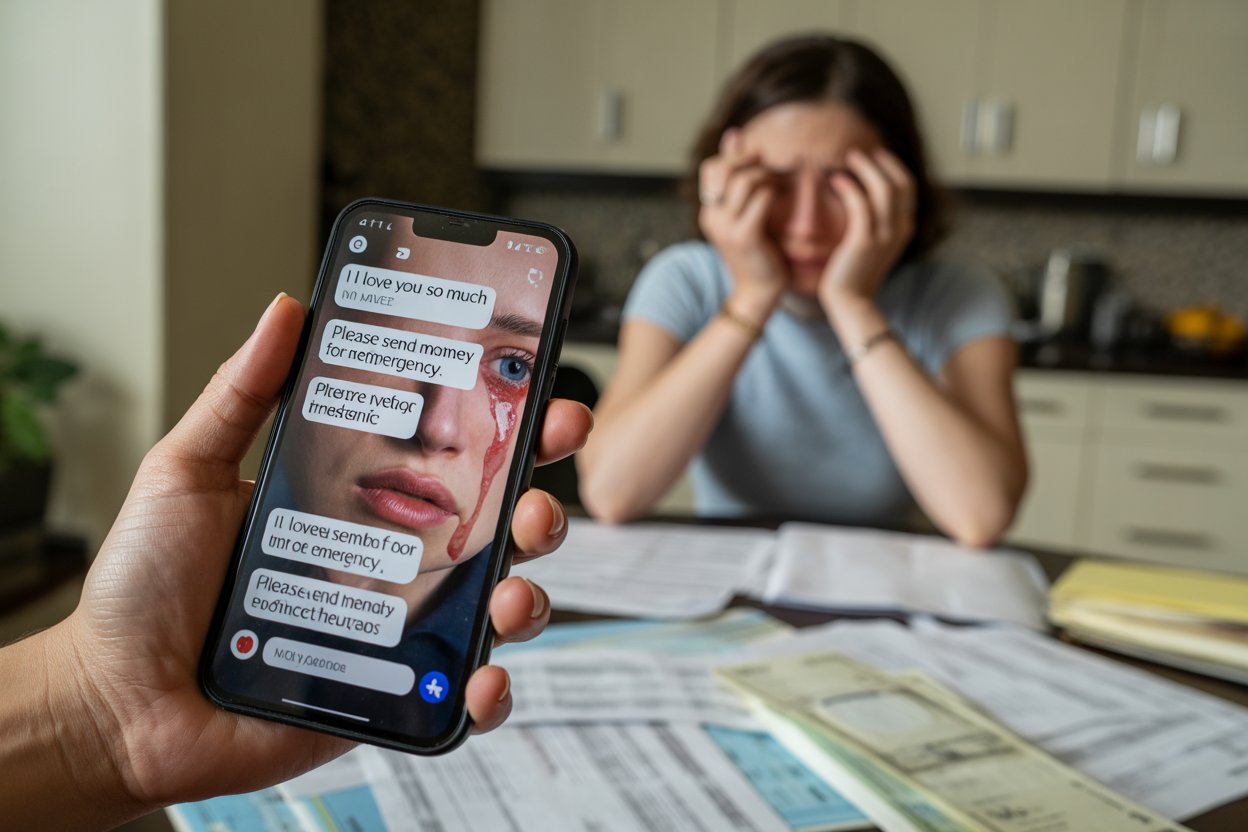
Wisconsin outdistances Florida, Nevada, Montana and other US states in AI scam reports as complaints surge 238% and consumer losses rise. New research reveals Wisconsin’s unusually high reporting rate, raising concerns about digital fraud, financial security and consumer protection across America, particularly for travellers using online booking platforms.
Wisconsin leads US in AI scam reports as complaints surge 238% and consumer losses rise, according to new research. The findings highlight growing digital fraud risks across American states. For travellers booking flights, hotels and rental cars online, the figures underline the importance of checking unfamiliar websites and payment requests.
Advertisement
Advertisement
Wisconsin Leads US in AI Scam Reports as Complaints Surge 238% and Consumer Losses Rise
Wisconsin has emerged as the leading US state for AI-related scam reporting, according to research by Simmrin Law Group. The study found that Wisconsin recorded 21.30 AI-related complaints per 100,000 residents in 2025, almost four times the national average of 5.56. Newer figures from the Wisconsin Better Business Bureau also show a sharp increase in scam submissions mentioning artificial intelligence during the first seven months of 2026.
The findings raise important questions about online consumer protection, particularly as travellers increasingly rely on digital platforms to research destinations, book accommodation, compare airfares and arrange transport.
Advertisement
Advertisement
However, the research does not establish that Wisconsin has the highest underlying rate of AI-enabled crime. It measures reported complaints, which can also reflect differences in public awareness and reporting behaviour.
Wisconsin Records the Highest AI Scam Reporting Rate in America
The Simmrin Law Group study examined FBI Internet Crime Complaint Center (IC3) data and US Census Bureau population estimates covering all 50 states and Washington, D.C.
Advertisement
Advertisement
Wisconsin ranked first with 21.30 AI-related reports per 100,000 residents. This was 3.83 times the national reporting rate and 2.29 times Florida’s figure.
Florida ranked second with 9.30 complaints per 100,000 residents, followed by Nevada at 8.38 and Montana at 8.30.
Advertisement
Advertisement
Washington recorded 7.79 complaints, while Maryland followed with 7.74. The District of Columbia, California, Arizona and Oklahoma completed the top ten.
These findings show considerable differences in reported AI-related fraud across the country.
For the travel industry, the geographic spread is relevant because online booking fraud, fake customer service accounts and fraudulent accommodation listings can affect consumers regardless of their destination.
The figures are not a ranking of travel scams specifically. They provide a broader picture of digital fraud reporting across the United States.
Advertisement
Advertisement
Top Ten US States and Districts for AI-Related Scam Reporting
| Rank | State or district | Reports per 100,000 residents |
|---|---|---|
| 1 | Wisconsin | 21.30 |
| 2 | Florida | 9.30 |
| 3 | Nevada | 8.38 |
| 4 | Montana | 8.30 |
| 5 | Washington | 7.79 |
| 6 | Maryland | 7.74 |
| 7 | District of Columbia | 7.21 |
| 8 | California | 7.08 |
| 9 | Arizona | 6.79 |
| 10 | Oklahoma | 6.72 |
| — | US national benchmark | 5.56 |
Source: Simmrin Law Group analysis of FBI IC3 2025 state reports and US Census Bureau population estimates.
Wisconsin’s reporting rate was also 8.42 times Louisiana’s rate of 2.53 per 100,000 residents.
Yet complaint frequency does not necessarily indicate how much money victims lose.
Wisconsin AI Scam Mentions Jump 238% in Seven Months
Newer data from the Wisconsin Better Business Bureau offers another view of the problem.
Between January and July 2025, the organisation received 13 scam submissions mentioning AI. During the same period in 2026, that number increased to 44.
This represented growth of approximately 238%.
Advertisement
Advertisement
Overall scam submissions also increased, rising from 1,154 to 2,683, an increase of 132%.
Although both categories grew, AI-related mentions increased at a faster percentage rate.
The share of AI-mention submissions involving financial losses climbed from 30.77% to 54.55%.
This means more than half of the 44 submissions mentioning AI in the 2026 period involved reported financial harm.
The median reported loss also increased from $46.24 to $105.67, representing growth of approximately 129%.
These changes deserve attention, but the sample remains small. The increase in AI mentions does not establish that AI caused every reported loss or that AI-enabled scams are growing at the same rate across the wider population.
Advertisement
Advertisement
One AI Trading Scam Involved a $118,000 Reported Loss
The Wisconsin BBB findings also reveal how a single serious incident can influence financial statistics.
Average reported losses among AI-mention submissions increased from $778.12 in January–July 2025 to $5,586.95 during the equivalent period in 2026.
This represented an increase of approximately 618%.
However, the 2026 average was heavily influenced by one reported AI trading platform scam involving a loss of $118,000.
This matters because averages can rise sharply when a small number of victims experience unusually large losses.
The median provides another perspective. At $105.67 in 2026, it shows that the middle reported loss was much smaller than the average.
Advertisement
Advertisement
For consumers, both measures matter. Many incidents involve relatively modest sums, while individual cases can produce severe financial consequences.
Wisconsin Leads in Complaints but Ranks 27th for Financial Losses
One of the study’s most important findings concerns the difference between reporting frequency and financial damage.
Wisconsin ranked first for AI-related complaints per resident but only 27th for population-adjusted financial losses.
Connecticut showed a contrasting pattern.
It ranked 27th for reporting frequency but second for financial losses, recording $437,801 per 100,000 residents.
The comparison suggests that the number of complaints alone cannot explain the financial severity of reported fraud.
Advertisement
Advertisement
Some states may record many incidents involving smaller losses. Others may report fewer complaints but experience larger financial losses.
Reporting habits, scam categories and individual circumstances could influence these differences.
However, the available data cannot establish which factors explain the state-level variation.
FBI Records $893.3 Million in AI-Related Scam Losses Nationwide
The national figures illustrate the scale of the wider issue.
According to the research, the FBI recorded 22,364 AI-related complaints across the United States in 2025.
These complaints were associated with approximately $893.3 million in reported financial losses.
Advertisement
Advertisement
Investment-related complaints accounted for around $632 million.
This makes investment fraud a particularly important part of the reported financial damage.
AI-related deception can involve fabricated identities, misleading promotional material and digital impersonation.
Such tactics may make fraudulent offers appear more credible to potential victims.
The national statistics cover multiple forms of online fraud. They should not be interpreted as evidence that travel-related scams account for a particular share of the losses.
Nevertheless, they demonstrate why stronger digital verification is increasingly relevant across consumer-facing industries.
Advertisement
Advertisement
Fake Car Dealerships in Wisconsin Show the Risks of Digital Impersonation
Recent Wisconsin cases provide a practical example of how convincing online fraud can become.
Wisconsin Public Radio reported in October 2026 that residents lost approximately $1.2 million to fraudulent online car dealerships during 2025.
State consumer protection officials described fake dealership websites that sometimes used AI-generated images to create a convincing appearance.
The $1.2 million figure covers dealership impersonation scams generally. It does not represent losses attributed exclusively to artificial intelligence.
Still, the reported use of synthetic imagery highlights an important challenge.
Consumers may encounter professional-looking websites, attractive product photographs and detailed offers that do not represent genuine businesses.
Advertisement
Advertisement
The same general deception risks are relevant when people search for rental vehicles, holiday accommodation or other travel services.
A convincing website is not proof that a business is legitimate.
What the Findings Mean for Travellers Booking Flights, Hotels and Rental Cars
Digital platforms have made travel planning faster and more convenient.
Consumers can compare international flights, reserve hotel rooms, book airport transfers and arrange rental vehicles within minutes.
However, these services also create opportunities for criminals to impersonate established travel brands or advertise services that do not exist.
AI-generated photographs can make fraudulent listings appear realistic. Fake customer service profiles may imitate legitimate companies, while misleading payment requests can create pressure to act quickly.
Advertisement
Advertisement
The Wisconsin findings do not measure these travel-specific threats directly.
Instead, they highlight the broader consumer protection environment in which digital travel businesses operate.
Travellers should independently confirm booking websites, check reservation details through official company channels and avoid sending money to unfamiliar personal accounts.
They should also treat unexpected payment instructions and requests for sensitive information with caution.
Why Travel Companies Need Stronger Online Verification
Airlines, hotels, travel agencies and vehicle rental companies depend heavily on consumer trust.
When criminals imitate legitimate businesses, customers may struggle to distinguish genuine offers from fraudulent advertisements.
Advertisement
Advertisement
Travel companies can help reduce confusion by maintaining clear official booking channels and providing accessible customer support.
They can also explain how customers should verify payment requests and report suspicious communications.
Clear refund policies and booking confirmation procedures can make it easier for travellers to identify irregularities.
Public awareness remains equally important.
Consumers should understand that realistic photographs, professional websites and convincing messages do not automatically establish authenticity.
The Wisconsin research reinforces the need to examine both the frequency of reported fraud and the amount of financial harm associated with individual incidents.
Advertisement
Advertisement
Why AI Scam Reporting Differences Need Careful Interpretation
Wisconsin’s unusually high reporting rate raises questions about public awareness, consumer behaviour and the way complaints are recorded.
A higher reporting rate could reflect more frequent incidents, greater willingness to report suspicious activity or a combination of factors.
The research does not determine which explanation applies.
The FBI and BBB figures also come from separate reporting systems and cover different periods.
The FBI analysis compares state-level reporting during 2025. The Wisconsin BBB figures compare submissions from January to July in 2025 and 2026.
These datasets should therefore be considered complementary rather than directly interchangeable.
Advertisement
Advertisement
Neither establishes the number of unreported scams.
That distinction is essential when interpreting rankings or comparing the apparent severity of digital fraud between states.
Consumer Awareness Becomes Essential as AI-Related Fraud Reports Rise
Wisconsin’s position at the top of the national reporting rankings brings renewed attention to digital fraud prevention.
The increase in BBB submissions mentioning AI suggests that artificial intelligence is becoming more visible in local scam reporting.
However, the limited sample and the influence of unusually large losses require careful interpretation.
For the travel industry, the findings offer a broader warning about the importance of reliable booking information and secure digital transactions.
Advertisement
Advertisement
As more travel services move online, consumer confidence will depend on transparent communication, dependable verification and effective fraud reporting.
“The rapid rise in AI-related scam reporting highlights why digital trust must remain a priority for the global travel industry. Travellers increasingly depend on online platforms for flights, hotels and transport, making reliable information and secure payments essential. Wisconsin’s findings remind us that technology must strengthen consumer confidence rather than create uncertainty. Travel businesses, regulators and consumers should work together to improve awareness, verify transactions and protect the integrity of digital travel services worldwide.”
— Anup Kumar Keshan, Founder and Editor-in-Chief, Travel And Tour World
Wisconsin leads US in AI scam reports as complaints surge 238% and consumer losses rise, highlighting growing concerns over digital fraud. Although the figures do not measure travel scams specifically, they reinforce the need for secure booking platforms, reliable payment systems and stronger consumer awareness across America’s travel industry.Simmrin Law Group analyzed FBI IC3 and Census data for all 50 states and D.C. and found Wisconsin ranks first for reports but only 27th for financial losses per resident.
Wisconsin’s leading position in AI scam reporting highlights growing concerns about digital fraud across the United States. With AI-related mentions increasing 238% and reported financial losses rising, the findings underline the importance of consumer awareness, secure online transactions and stronger fraud prevention measures, particularly within the digital travel industry.
Frequently Asked Questions
1. Which US state recorded the highest AI-related scam reporting rate in 2025?
Advertisement
Advertisement
Wisconsin ranked first, with 21.30 AI-related reports per 100,000 residents, according to the Simmrin Law Group analysis of FBI IC3 and Census data.
2. How much did AI-related scam reporting increase in Wisconsin in 2026?
Wisconsin BBB scam submissions mentioning AI increased by 238%, from 13 in January–July 2025 to 44 during the same period in 2026.
3. Which states followed Wisconsin in the national AI scam reporting rankings?
Florida ranked second, followed by Nevada, Montana, Washington, Maryland, the District of Columbia, California, Arizona and Oklahoma.
4. How much money was lost to AI-related scams across the United States in 2025?
Advertisement
Advertisement
The FBI figures cited in the research recorded approximately $893.3 million in associated reported losses, including around $632 million linked to investment-related complaints.
5. Does Wisconsin’s first-place ranking mean it has the highest financial losses from AI scams?
No. Wisconsin ranked first for complaints per resident but 27th for population-adjusted financial losses. Reporting frequency and financial severity are separate measures.
6. How can travellers protect themselves from AI-assisted online booking scams?
Travellers should book through verified websites, independently confirm accommodation and transport providers, avoid unexpected payment requests, use secure payment methods and report suspicious communications to the relevant authorities.
Advertisement
