

South Africa’s Platfontein Lodge Tourism Redevelopment Near Kimberley Sets Close-Out Beyond DBSA Agreement

Published
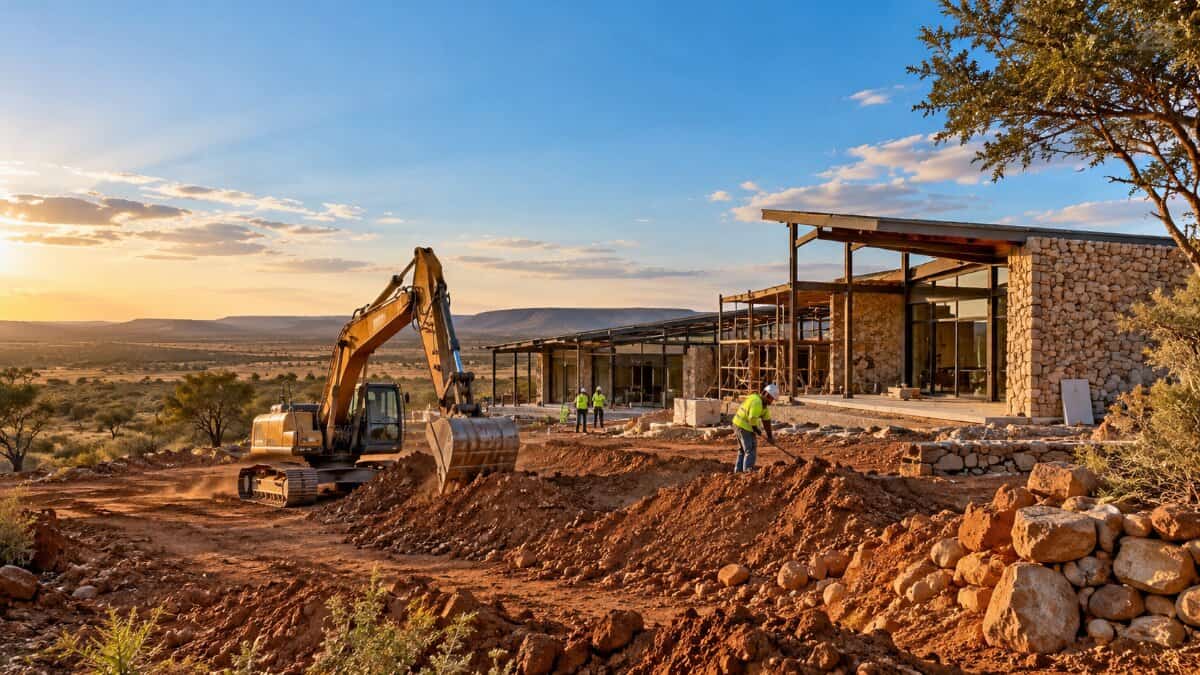
South Africa’s roughly R32 million Platfontein Lodge redevelopment in the Northern Cape faces ongoing implementation challenges as it works toward a revised completion timeline. To fulfill remaining construction and close-out obligations for the heavily delayed project, the Development Bank of Southern Africa (DBSA) recently requested an extension of its implementing agreement until March 31, 2027. Originally budgeted at R9.5 million, the initiative is intended to generate vital economic benefits and community-driven accommodation for the historically marginalized Indigenous !Xun and Khwe communities. Given the project’s history of stalled delivery, tourism operators and local stakeholders must carefully distinguish these extended government construction targets from any confirmed reopening date.
South Africa’s Platfontein Lodge Project Reveals a Critical Tourism Infrastructure Timeline Discrepancy
South Africa’s efforts to strengthen community-based tourism in the Northern Cape have brought renewed attention to Platfontein Lodge, a tourism and conferencing facility approximately 17 kilometres from Kimberley.
The central issue is no longer simply whether restoration work is taking place. Official documentation reveals an important difference between the remaining duration of the government’s implementation agreement and the timetable for completing the project’s final administrative obligations.
According to the Development Bank of Southern Africa’s presentation to Parliament on 4 August 2026, the lodge carries a total project budget of R44.1 million.
Advertisement
Advertisement
The development bank’s construction schedule identifies 31 March 2027 as the anticipated practical completion date. However, subsequent construction and administrative milestones continue until 31 August 2027.
The same presentation identifies 31 March 2027 as the expiry date of the existing implementation agreement between the DBSA and the National Department of Tourism.
Advertisement
Advertisement
This creates a five-month difference between the agreement’s current end date and the project’s anticipated administrative close-out.
The discrepancy does not establish that construction will stop in March, that funding will be withdrawn or that the project has been abandoned. It does identify an important matter requiring clarification about the arrangements governing the remaining delivery stages.
Official Construction and Completion Milestones
| Platfontein Lodge project milestone | Date in DBSA documentation | Tourism industry significance |
|---|---|---|
| Contractual practical completion, with extension-of-time approval noted | 31 March 2026 | Earlier contractual reference point |
| Revised practical completion target | 31 March 2027 | Anticipated point when the building could be substantially ready for its intended use |
| Existing DBSA implementation agreement expires | 31 March 2027 | Current end of the implementing framework |
| Works completion scheduled | 30 April 2027 | Further contractual construction requirements |
| Final completion scheduled | 30 June 2027 | Expected conclusion of remaining building-contract obligations |
| Final account scheduled | 30 July 2027 | Financial reconciliation stage |
| Project close-out report scheduled | 31 August 2027 | Final administrative reporting milestone |
Source: DBSA presentation to the Portfolio Committee on Tourism, 4 August 2026. Dates are reported targets, not certificates of completed work.
The timetable makes a critical distinction between practical completion and final completion.
Under the construction framework explained in the DBSA presentation, practical completion indicates that a building is substantially complete and suitable for its intended use, while certain outstanding contractual responsibilities may remain.
The development bank’s documentation describes a subsequent 90-calendar-day defects liability period under the applicable building contract arrangements.
Advertisement
Advertisement
For the tourism industry, reaching practical completion therefore does not automatically establish that a property has obtained every operational approval, appointed its commercial management team or begun accepting overnight reservations.
Those are separate matters requiring confirmation.
R3.10 Million Spending Shortfall Exposes Additional Pressure on Northern Cape Tourism Development
Beyond the timetable discrepancy, the DBSA’s financial reporting identifies a measurable construction spending gap.
The bank’s August presentation records R5.995 million in actual construction expenditure against a forecast of R9.1 million for the relevant reporting position.
That represents an under-expenditure of approximately 34.1% against the reported forecast.
The result should not be confused with a 34.1% physical construction delay. Financial expenditure and completed building work are different measures.
Advertisement
Advertisement
Nevertheless, the figures provide a documented indication that the project was not spending at its anticipated rate during the reporting period.
Platfontein Lodge Financial Position in the August 2026 DBSA Briefing
| Financial indicator | Reported amount | What it represents |
|---|---|---|
| Total project budget | R44,100,000.00 | Overall project allocation in the construction schedule |
| 2026/27 construction budget line | R39,463,510.08 | Financial-year construction allocation |
| Construction spending forecast at reporting point | R9,100,000.00 | Projected expenditure for comparison |
| Actual construction expenditure | R5,995,064.30 | Reported expenditure against that forecast |
| Construction expenditure variance | −R3,104,935.70 | Amount below the projected spending level |
| 2026/27 professional service provider budget | R2,866,500.00 | Separate financial-year professional services allocation |
| Professional services projected expenditure | R220,000.00 | Spending forecast for professional services |
| Professional services actual expenditure | R0.00 | Recorded expenditure against that forecast |
| Professional services variance | −R220,000.00 | Unspent forecast amount |
Source: DBSA project expenditure and recovery measures, 4 August 2026. Overall project and financial-year budget figures have different accounting scopes and must not be added together or presented as money already spent.
The primary presentation identifies two project-specific factors affecting spending: a slow start involving certain higher-value construction activities and delays in the provision of design information by the professional services provider.
The DBSA’s documented recovery measures included adjustments to the professional services team, prioritisation of high-value work, assistance with regular payment certification and weekly project monitoring.
These measures establish that an intervention framework existed in August. They do not establish how much progress had subsequently been achieved by 8 October.
A newer certified progress statement would be necessary to establish the lodge’s current physical completion percentage or determine whether expenditure had moved closer to forecast during September.
Advertisement
Advertisement
For tourism investors and operators, the outstanding question concerns the relationship between recovery spending, physical construction progress and eventual commercial readiness.
Five Months Beyond the Agreement: An Original Examination of the Two Project Clocks
A comparison of the DBSA‘s agreement schedule and project milestone table exposes a governance question that a conventional construction update could overlook.
The existing implementation agreement and the anticipated practical completion date both reach 31 March 2027. Yet the construction schedule reserves additional time for works completion in April, final completion in June, financial reconciliation in July and project close-out in August.
These dates describe different responsibilities. Practical completion concerns the usability of the building, while subsequent stages concern outstanding work, defects, accounts and formal reporting.
The significance of the five-month difference therefore lies in the need to establish how the remaining responsibilities will be administered after the agreement’s stated expiry. An agreement extension, another authorised arrangement or a revised delivery timetable might address the discrepancy. None should be presumed without documentary confirmation.
The spending data adds a second layer. August under-expenditure indicates that the project was operating below its financial forecast, but cannot establish the position in October or prove that the March 2027 practical completion target is unattainable.
Advertisement
Advertisement
A third issue concerns ownership. The community retains a direct interest in whether construction can be converted into safe, functional and commercially productive tourism accommodation.
Together, these findings identify three distinct questions for future reporting: the governing agreement, independently certified construction progress and operational readiness. Resolving one does not automatically resolve the others.
Platfontein Lodge’s Earlier Handover Explains Why This Is More Than a New Hotel Construction Story
Platfontein Lodge differs from a conventional new-build hotel because it has already undergone an earlier development and handover process.
According to an official parliamentary oversight report examining the Northern Cape, the original project involved converting existing buildings on communal land into tourism and hospitality facilities.
Work began in March 2017 and was reported complete in October 2018.
The lodge was handed over to the community and an operator in November 2018.
Advertisement
Advertisement
However, building defects were reported during 2019, including water ingress and structural cracking. Subsequent parliamentary oversight identified problems involving foundations, moisture and drainage.
These historical defects explain why the subsequent government programme has focused on remediation and refurbishment rather than simply expanding an already operational accommodation business.
The original facility included plans for a 12-bedroom lodge, reception and dining facilities, a conference centre with kitchen, swimming pool, staff accommodation and supporting infrastructure.
Other elements included water and sewerage services and an approximately 1.2-kilometre gravel access road.
These are historically documented project components, not independently verified descriptions of the finished facilities available to visitors in October 2026.
The Department of Tourism’s November 2024 infrastructure progress presentation subsequently placed Platfontein Lodge in the planning phase for accommodation refurbishment.
Advertisement
Advertisement
The presentation also identified the swimming pool as an addition to the refurbishment design scope.
By August 2026, the project had advanced sufficiently to appear among the three facilities classified as under construction within the DBSA’s wider tourism infrastructure portfolio.
This progression establishes that the lodge has moved through several stages of redevelopment. It does not establish that its accommodation section is presently ready to receive paying guests.
Indigenous Community Ownership Makes the Kimberley Tourism Project Economically Significant
Platfontein Lodge occupies an important position within South Africa’s community-based tourism strategy because of its relationship with the !Xun and Khwe communities.
The parliamentary oversight record identifies the !Xun and Khwe Communal Property Association as the owning entity and custodian of the project on behalf of the community.
That ownership structure distinguishes Platfontein from many independently owned commercial hotels.
Advertisement
Advertisement
Its intended benefits extend beyond room sales and conference bookings to potential employment, enterprise participation and local economic activity.
The lodge was developed to combine hospitality services with the cultural and historical significance of the Platfontein community.
Any future cultural tourism product, however, must depend on community approval, suitable commercial arrangements and accurate representation of Indigenous heritage. Ownership of the site does not automatically authorise outside operators to market cultural experiences on the community’s behalf.
The historic parliamentary report recorded that the conferencing operation had generated annual revenue of approximately R1.5 million to R1.8 million during the period examined.
At that stage, accommodation operations had been restricted by building defects.
Those revenue figures are historical and should not be treated as evidence of the lodge’s income in 2026.
Advertisement
Advertisement
Nevertheless, they demonstrate why restoring the accommodation component matters.
A functioning overnight hospitality operation could potentially create additional demand for catering, housekeeping, transport, maintenance and other supporting services.
The scale of those benefits would ultimately depend on operating costs, occupancy, guest expenditure, employment arrangements and the distribution of commercial returns.
No verified 2026 operating forecast, room-rate schedule or occupancy target was identified in the primary documents examined.
Kimberley’s Heritage Tourism and MICE Industry Could Benefit From a Fully Operational Lodge
Kimberley already has a recognised heritage tourism identity, supported by attractions associated with the diamond industry and South African history.
According to the Northern Cape Government’s tourism information, the city’s established attractions include the Big Hole and the historic home of Sol Plaatje.
Advertisement
Advertisement
Platfontein adds a different potential dimension to this destination offering.
Rather than concentrating exclusively on mining heritage, the lodge could support community-owned hospitality and appropriately developed Indigenous heritage experiences.
Its historical conferencing facilities also create a potential connection with the meetings, incentives, conferences and exhibitions sector.
The opportunity is particularly relevant to smaller meetings, educational visits and specialist groups, although no current venue capacity or suitability assessment has been verified.
What the Lodge Could Mean for Tourism Products
| Tourism segment | Documentary basis | Potential commercial relevance | Verification required before sale |
|---|---|---|---|
| Overnight accommodation | Historic 12-bedroom lodge development | Additional small-scale accommodation capacity near Kimberley | Current room inventory, safety, opening date and rates |
| Meetings and conferences | Historical conference centre and documented venue activity | Specialist meetings, workshops and group events | Available spaces, capacity, equipment and operating status |
| Indigenous heritage tourism | Community ownership and documented cultural heritage | Community-authorised cultural interpretation and responsible visitor experiences | Community consent, approved activities and commercial arrangements |
| Heritage itineraries | Established Kimberley attractions recognised by government | Potential integration into wider Kimberley visitor programmes | Actual opening status, transport logistics and operator agreements |
| Local tourism procurement | Government community-development objectives | Opportunities for community businesses and service providers | Confirmed suppliers, procurement terms and operational demand |
Analysis based on parliamentary oversight findings, the Department of Tourism’s project documentation and official Northern Cape destination information. Potential benefits are not confirmed operating products.
The distinction is essential for travel agencies.
Advertisement
Advertisement
A property may be part of an officially supported tourism development programme without yet being a reliable accommodation supplier.
Until a responsible operator confirms availability and operating arrangements, Platfontein Lodge should be regarded as a potential future addition rather than an established component of bookable Kimberley itineraries.
South Africa’s 2026 Tourism Growth Raises the Importance of Completing Community-Based Accommodation
The uncertainty surrounding Platfontein Lodge comes during a period of growing international tourism demand for South Africa.
According to the Department of Tourism’s official figures published on 30 September 2026, the country welcomed 1,005,286 international tourists in August 2026.
This represented year-on-year growth of 7.4%.
During January to August 2026, international tourist arrivals reached 7,581,455, an increase of 11.7% compared with the corresponding period in 2025.
Advertisement
Advertisement
These national figures demonstrate the importance of strengthening tourism supply. They do not, by themselves, establish additional visitor demand for Platfontein or forecast commercial performance in Kimberley.
Verified Tourism Indicators Relevant to the Investment Environment
| Indicator | Latest verified figure | Reporting period | Relevance |
|---|---|---|---|
| International tourist arrivals | 1,005,286 | August 2026 | Current national inbound tourism demand |
| International arrivals growth | 7.4% | August 2026 versus August 2025 | Year-on-year market expansion |
| Cumulative international tourist arrivals | 7,581,455 | January–August 2026 | Scale of inbound tourism |
| Cumulative arrivals growth | 11.7% | January–August 2026 versus 2025 | Broader national tourism momentum |
| Tourism investment opportunities showcased | 15 | October 2026 summit | National tourism investment pipeline |
| Potential value of showcased opportunities | R3.5 billion | October 2026 summit | Scale of wider investment mobilisation |
Sources: South African Department of Tourism, 30 September and 2 October 2026. National arrivals and investment-pipeline figures are not Platfontein-specific demand or investment commitments.
The broader investment environment has also developed.
According to the Department of Tourism’s 2 October 2026 account of the South African Tourism Investment Summit, the Johannesburg summit showcased 15 tourism infrastructure investment opportunities with a potential combined value of R3.5 billion.
That investment pipeline is separate from the DBSA’s documented Platfontein redevelopment unless an official source establishes otherwise.
Likewise, the three-year infrastructure cooperation agreement announced on 25 August 2026 between the tourism and public works portfolios relates to broader investment preparation. It must not be confused with an extension of the Platfontein DBSA implementation agreement.
Advertisement
Advertisement
For the tourism trade, these developments underline a wider commercial distinction.
National visitor growth and major investment announcements can improve the conditions for tourism expansion. Individual community assets still require completed construction, accountable management and the ability to serve customers consistently.
Platfontein Remains Among Three Tourism Infrastructure Projects Under Construction
The challenge at Platfontein is part of a wider programme managed by the DBSA on behalf of the Department of Tourism.
According to the South African Parliament’s official statement dated 4 August 2026, three projects remained in construction during the 2026/27 financial year.
They were Platfontein Lodge in the Northern Cape, Manyane Lodge in North West and Muzi Pan in KwaZulu-Natal.
The development bank’s programme presentation covered 71 projects, of which 54 had reached practical completion and 30 had reached the formal close-out stage.
Advertisement
Advertisement
The programme reported approximately R885 million in cumulative infrastructure expenditure.
These figures illustrate the difference between programme-wide infrastructure delivery and the status of an individual project.
A high overall practical-completion count does not establish the completion of Platfontein Lodge.
Parliament also identified wider infrastructure programme challenges involving contractor performance, budget pressures, vandalism, municipal service delays and community-related disputes.
Those challenges should not all be attributed to Platfontein. Its specifically documented August expenditure problems concerned higher-value construction activities and delays in professional design information.
What Travellers and Tour Operators Need to Know Before the 2027 Completion Window
The most important distinction for travellers is between a published construction schedule and a confirmed guest-opening announcement.
Advertisement
Advertisement
The DBSA’s timetable contains dates for completing building work and project administration. It does not provide an independently verified public booking date, current room prices or a confirmed accommodation distribution partner.
There is therefore insufficient primary-source evidence to advise travellers that overnight stays at Platfontein Lodge will become available on 31 March 2027.
A practical completion certificate may mark progress towards use of the building, but commercial reopening requires separate confirmation of the operating arrangements and services offered.
The lack of a verified October 2026 construction progress statement also limits any assessment of whether the development is currently ahead of, aligned with or behind its revised programme.
Travel businesses preparing Northern Cape itineraries should continue using independently confirmed accommodation and visitor services while monitoring the lodge’s redevelopment.
Critical Operational Takeaways and Risk-Management Strategies
- Separate construction targets from opening dates. Do not present 31 March 2027 as a confirmed hotel reopening.
- Verify accommodation availability directly. Obtain written confirmation of bookable rooms, tariffs, cancellation terms and the responsible operating entity before advertising stays.
- Monitor the implementation agreement. Look for an official extension or another documented arrangement addressing responsibilities beyond 31 March 2027.
- Request updated completion evidence. Distinguish certified construction progress from expenditure forecasts and administrative project reports.
- Check access and facilities. Confirm road access, essential utilities, safety conditions, conferencing equipment and accessibility before contracting the property.
- Protect community participation. Agree on any cultural tourism activities with authorised community representatives and clarify how commercial benefits are distributed.
- Maintain itinerary alternatives. Use confirmed Kimberley accommodation for fixed departures until the lodge demonstrates operational readiness.
- Track the remaining milestones. Review the scheduled April, June, July and August 2027 stages before treating the redevelopment as fully closed out.
South Africa’s Platfontein Redevelopment Will Test Whether Tourism Infrastructure Investment Becomes Sustainable Community Revenue
Platfontein Lodge represents a significant test of how South Africa converts public tourism infrastructure expenditure into commercially useful and community-owned hospitality services.
Advertisement
Advertisement
The R44.1 million project carries a documented August spending shortfall, a March 2027 practical completion target and an administrative schedule extending beyond the existing implementation agreement.
For Kimberley and the wider Northern Cape, the long-term opportunity lies in restoring a facility that could complement heritage tourism, support small conferences and expand community participation in the visitor economy.
Yet the decisive achievement will not simply be a completed construction report.
It will be the establishment of a functioning, safe and financially sustainable tourism property with verifiable benefits for the !Xun and Khwe communities.
As South Africa expands its international tourism market and investment ambitions, Platfontein provides a highly relevant measure of whether infrastructure delivery can translate into dependable visitor experiences and durable local economic value.
Reporting cut-off: 8 October 2026. This analysis uses official parliamentary, government and DBSA records. Future milestones are scheduled targets; an agreement extension, new October construction status and public reopening date remain unverified.
Advertisement
