
American, United and Delta Among Airlines Reporting Mishandled Baggage in Latest US Data

Published
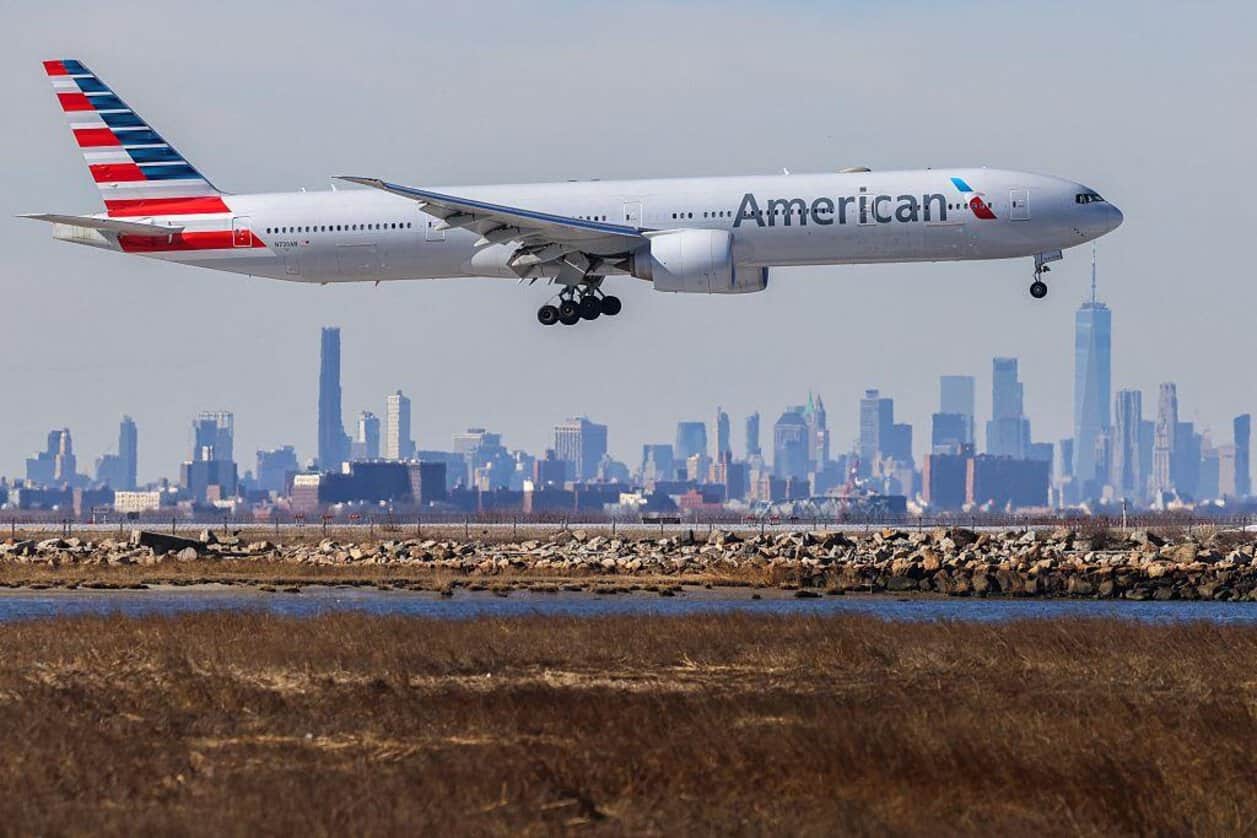
American, United, Delta and other airlines are facing renewed attention as mishandled baggage remains a major challenge across the US aviation industry. The latest data shows that thousands of bags were lost, delayed, damaged or mishandled during July. However, the figures also reveal a more complicated picture. American and United recorded large numbers of mishandled bags, while Delta, Southwest and Allegiant reported lower rates.
Meanwhile, baggage volumes remain enormous across the airline network. As passenger demand continues, airports and carriers are investing in tracking, automation and better transfer processes. Therefore, the latest numbers offer an important insight into how airlines manage one of travel’s most visible service problems.
Why is mishandled baggage still a major issue for airlines?
Mishandled baggage remains one of the most visible operational problems in commercial aviation because passengers experience the consequences directly. A delayed suitcase can disrupt a holiday, a business trip or a connecting journey, while damaged or missing baggage can create additional costs and claims for both travellers and airlines.
The latest US Department of Transportation data covering July 2026 shows that major airlines continued to process millions of checked bags while reporting tens of thousands of mishandled items.
Advertisement
Advertisement
The DOT measure covers checked baggage that is reported as lost, damaged, delayed or pilfered while under an airline’s responsibility on reportable domestic nonstop scheduled passenger services.
Advertisement
Advertisement
That distinction matters. A carrier handling millions of bags can naturally record a larger number of mishandled items than a smaller airline. Therefore, the rate per 100 bags provides a more useful way to understand operational performance.
How did American Airlines perform?
American Airlines reported 52,300 mishandled bags from 6.43 million bags enplaned during July 2026, producing a rate of approximately 0.81 mishandled bags per 100 bags.
The figure was lower than American’s reported rate of 0.91 in July 2025. This represents an improvement in the rate despite the airline continuing to handle a very large baggage volume.
The absolute number remains significant because American operates one of the largest domestic and international networks in the US market. Its extensive connecting network also means that baggage frequently moves through major hubs before reaching its final destination.
For passengers, the important point is that a large network creates substantial logistical complexity. Baggage must be screened, sorted, transferred, loaded and unloaded within tight turnaround windows.
Advertisement
Advertisement
What does United Airlines’ baggage data show?
United Airlines recorded 42,908 mishandled bags from approximately 5.45 million bags enplaned, giving it a July 2026 rate of 0.79 per 100 bags.
United’s rate also improved from the approximately 0.87 recorded during July 2025.
The airline’s figures highlight the scale of baggage operations required by a major network carrier. United’s large connecting hubs mean that bags frequently move between flights, increasing the number of operational hand-offs involved in completing a journey.
Transfer points are particularly important because baggage must reach the correct aircraft within the available connection window. A missed transfer can result in a bag arriving after its owner, even when the passenger reaches the destination on time.
Where did Delta and Southwest stand?
Delta Air Lines recorded 33,933 mishandled bags from approximately 7.87 million bags, equivalent to about 0.43 per 100 bags.
Advertisement
Advertisement
Southwest Airlines reported 32,534 mishandled bags from approximately 9.24 million bags, producing a lower rate of around 0.35 per 100 bags.
Both carriers improved their rates compared with July 2025. Delta moved from approximately 0.48 to 0.43, while Southwest declined from around 0.41 to 0.35.
The figures demonstrate why raw mishandled-bag totals can be misleading. Southwest recorded almost as many mishandled bags as Delta, yet its much larger baggage volume produced a lower rate.
For airline comparisons, therefore, the rate and the absolute number should be reported together.
Which airlines recorded the lowest rates?
Among the carriers included in the July 2026 DOT comparison, Allegiant Air recorded the lowest mishandled-baggage rate at approximately 0.12 per 100 bags.
Advertisement
Advertisement
Southwest followed at around 0.35, while Delta recorded 0.43. Alaska Airlines and JetBlue each reported approximately 0.46.
Allegiant’s lower figure should nevertheless be viewed in the context of its operating model and network structure. Airlines have different route patterns, airport footprints, aircraft utilisation levels and connecting-baggage requirements.
A carrier with fewer complex connections can face different baggage-handling conditions from a global network airline with large international transfer hubs.
Consequently, the numbers provide a useful operational indicator, but they should not be interpreted as a complete measure of an airline’s overall passenger service.
Which airlines saw their baggage rates increase?
Not every airline improved.
Advertisement
Advertisement
Frontier Airlines recorded approximately 0.54 mishandled bags per 100 in July 2026, compared with 0.41 a year earlier.
JetBlue Airways also increased from approximately 0.37 to 0.46 per 100 bags.
Allegiant moved slightly higher, from approximately 0.11 to 0.12.
These changes demonstrate that baggage performance can fluctuate from one reporting period to another. Staffing, weather, airport congestion, aircraft changes, irregular operations and transfer volumes can all affect baggage movements.
A single month’s data therefore provides a snapshot rather than a complete annual assessment.
Advertisement
Advertisement
Why does the number of bags matter?
The sheer volume of baggage travelling through US airports makes the problem difficult to eliminate completely.
American handled more than six million bags in the July reporting period. United handled more than five million, while Delta and Southwest each processed well over seven million.
Even a relatively small percentage of mishandled baggage can therefore translate into tens of thousands of individual passenger cases.
This is why the industry’s focus has increasingly moved towards automation and real-time visibility.
Modern baggage systems can use barcode scanning, RFID technology, automated sorting and digital tracking to establish where a suitcase is during different stages of its journey.
Advertisement
Advertisement
Is technology reducing baggage problems?
Technology is becoming increasingly important in the industry’s response.
SITA’s global baggage research has highlighted improvements in the worldwide mishandling rate and pointed to technology investment as one contributor. Real-time tracking, automated sorting, improved baggage reconciliation and better information sharing can reduce the possibility of bags disappearing into operational blind spots.
The most difficult stage remains the transfer process, where baggage must move between aircraft, terminals or handling systems within a limited period.
Better data can give airlines and airports earlier warning when a bag is unlikely to make its connecting flight. That creates an opportunity to intervene before the passenger reaches the destination.
Why should travellers pay attention to baggage data?
For travellers, baggage performance is particularly relevant when choosing flights involving tight connections.
Advertisement
Advertisement
A journey with several connections requires more baggage transfers than a nonstop service. Every additional transfer introduces another operational hand-off.
Passengers can reduce some risks by allowing sufficient connection time, keeping essential medication and valuables in cabin baggage, photographing checked luggage and retaining baggage receipts and tracking information.
However, responsibility for the baggage process ultimately remains with the airlines and their handling partners under the applicable rules.
What does the wider US baggage picture reveal?
The latest figures show that baggage performance is improving in several parts of the US airline industry, but the underlying challenge has not disappeared.
Major carriers continue to process millions of bags every month. Even small changes in mishandling rates therefore have large consequences when multiplied across enormous passenger volumes.
Advertisement
Advertisement
The contrast between American’s 52,300 mishandled bags and Allegiant’s 872 also illustrates why absolute numbers must be read alongside baggage volume.
At the same time, year-on-year improvements at American, United, Delta, Southwest, Alaska and several regional carriers indicate that operational changes can make a measurable difference.
The longer-term direction of travel is likely to depend increasingly on data integration, automated baggage systems, tracking technology and closer coordination between airlines, airports and ground handlers.
What should the industry watch next?
The most important question is whether recent improvements can be maintained as passenger demand grows.
Airlines are operating increasingly complex networks while airports face capacity constraints and ground-handling pressures. A baggage system must work not only during normal operations but also during weather disruptions, aircraft swaps, delays and large-scale schedule changes.
Advertisement
Advertisement
That makes baggage technology an operational investment rather than simply a passenger convenience.
For airlines, the objective is increasingly clear: identify a bag’s location, anticipate problems before they become failures and provide passengers with accurate information when disruption occurs.
The latest US data suggests that progress is possible, but the scale of the challenge remains substantial.
Mishandled baggage remains a major issue for American, United, Delta, Southwest and other airlines, but the latest figures show that the story is not simply about lost suitcases. American reported 52,300 mishandled bags in July 2026, while United recorded 42,908. Yet both airlines improved their rates from a year earlier. Delta and Southwest also reported lower rates, while Frontier and JetBlue moved higher. Meanwhile, Allegiant recorded the lowest rate among the carriers in the comparison.
The numbers underline an important aviation reality: baggage performance depends on volume, network complexity, airport operations and transfer activity. As passenger numbers remain high, airlines are increasingly turning to tracking, automation and data integration. The next challenge will be maintaining these improvements as networks become busier and operational disruption continues.
Advertisement
Advertisement
The cause of mishandled baggage is rarely one single failure. Bags can be delayed during transfers, sorting, loading, unloading or irregular operations. The answer is increasingly centred on better tracking, automation, accurate scanning and faster intervention when a connection is missed. The reason is straightforward: airlines move millions of bags through complex networks every month, creating thousands of operational hand-offs. Therefore, even a small failure rate can affect a large number of passengers. American, United, Delta, Southwest and other airlines show different results because their baggage volumes, networks and operating conditions vary. Consequently, rate and volume must be examined together when assessing baggage performance.
“Baggage is one of the most important touchpoints between an airline and its passenger because the journey does not truly end when the aircraft lands. The latest figures show that airlines are making progress, but they also demonstrate the scale of the operational challenge. Technology, real-time tracking and better coordination between airlines, airports and ground handlers will remain essential as global travel continues to expand. The industry should look beyond simply reducing the number of mishandled bags and focus equally on giving passengers faster information and effective solutions when disruption occurs. Reliable baggage handling can strengthen confidence, improve the passenger experience and support a more resilient aviation ecosystem.” says Anup Kumar Keshan, Editior-in-Chief, TTW
Image: American Airlines
Advertisement
