
China Opens a New Aviation Chapter as C919 Makes Scheduled International Debut in Mongolia

Published
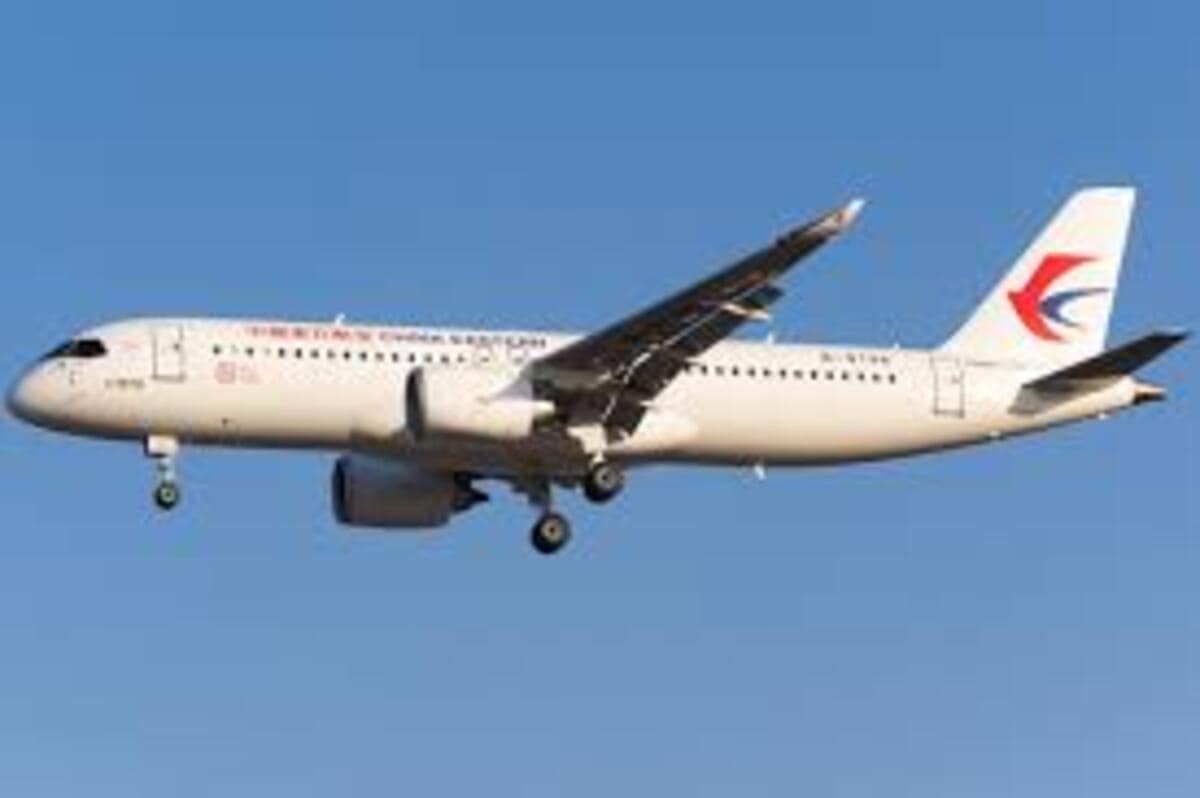
Image generated with Ai
China is making progress in the international aviation sector with the first international commercial flight of the domestically made C919 to Mongolia. This is a sign of certain growth outside China’s domestic aviation sector. It also shows China’s progression in the manufacturing of the C919 to meet their goals of growing the C919’s market presence outside China and their entry into the increasingly competitive global commercial aviation sector.
The milestone came on 12 August 2026, when Air China deployed the C919 from Beijing Capital International Airport to Mongolia’s Chinggis Khaan International Airport. The operation marked the aircraft’s first scheduled international commercial passenger route.
The breakthrough gives China an opportunity to demonstrate the C919 in an overseas operating environment. It also brings the aircraft closer to the wider Asian aviation market, where airlines continue to require large numbers of short- and medium-haul jets.
The development does not immediately change the global dominance of Airbus and Boeing. However, it gives COMAC something increasingly important: practical international operating experience.
Advertisement
Advertisement
C919 Crosses China’s Border in a Landmark Aviation Milestone
The historic international operation was conducted as Air China flight CA723.
The C919 departed Beijing carrying 121 passengers. The aircraft used for the service carried registration B-919Y before landing at Chinggis Khaan International Airport in Mongolia.
Advertisement
Advertisement
The arrival represented more than a routine flight linking two neighbouring capitals.
Until this milestone, scheduled C919 passenger services had mainly operated within China. Flying to Ulaanbaatar placed the aircraft in a genuine international commercial environment for the first time.
Advertisement
Advertisement
That means airlines, airports and technical teams can now gather operational information from regular cross-border services.
For COMAC, such experience could become increasingly valuable as the manufacturer examines opportunities to expand the C919 beyond its home market.
Beijing–Ulaanbaatar Becomes the First International C919 Route
The decision to deploy the aircraft between Beijing and Ulaanbaatar provides COMAC and Air China with a practical first step into international operations.
The two capitals are geographically close. This makes the route suitable for an aircraft designed primarily for short- and medium-haul services.
Advertisement
Advertisement
The route also allows the C919 to remain relatively close to its main technical and maintenance support network in China while operating through an overseas airport.
Air China planned regular C919 operations on the route during the initial deployment period, extending through at least mid-September 2026.
Regular operations matter more than a single showcase flight.
Repeated services provide opportunities to assess turnaround performance, technical reliability, passenger handling, maintenance requirements and coordination with overseas airport teams.
Every successful rotation adds operational knowledge that could support future international expansion.
China Has Taken the C919 From Development to International Service
The C919’s international debut follows nearly two decades of aircraft development.
Advertisement
Advertisement
China launched the C919 programme in 2007 as part of a wider effort to build a domestically developed commercial passenger aircraft industry.
The aircraft completed its first flight in May 2017.
It later received type certification from the Civil Aviation Administration of China in September 2022, clearing an important regulatory stage before passenger operations could begin.
Commercial services started in May 2023.
China Eastern Airlines became the first carrier to operate the C919 in regular passenger service. Air China and China Southern Airlines later introduced the aircraft into their fleets.
The Ulaanbaatar operation therefore represents another stage in the programme’s progression from design and testing to certification, delivery, domestic service and now scheduled international flying.
Advertisement
Advertisement
C919 Enters One of Aviation’s Most Competitive Aircraft Markets
The C919 operates in the narrow-body passenger aircraft segment, one of the most commercially important areas of global aviation.
Single-aisle jets operate thousands of flights each day. Airlines use them for domestic services, regional international routes, business markets and popular leisure connections.
The C919 can accommodate approximately 158 to 192 passengers, depending on configuration.
Its published maximum range can extend to around 5,555 kilometres, supporting a wide selection of domestic and regional routes.
These characteristics place the aircraft in the same broad commercial segment as the Airbus A320 family and Boeing 737 family.
That position makes the programme strategically significant for China.
Advertisement
Advertisement
If COMAC can increase production, build international support systems and secure wider acceptance, airlines could eventually gain another aircraft option in a market long dominated by two major Western manufacturers.
Mongolia Gives COMAC a Manageable International Testing Ground
Mongolia offers a logical starting point for scheduled international C919 operations.
The relatively short Beijing–Ulaanbaatar sector reduces operational complexity while still placing the aircraft inside an overseas airport environment.
Ground teams must handle passenger boarding, aircraft servicing, baggage operations, technical coordination and turnaround procedures for the Chinese-built jet.
This creates experience that domestic flying alone cannot provide.
COMAC and Air China can also study how the aircraft performs when it interacts with different airport systems, procedures and operational teams.
Advertisement
Advertisement
Knowledge collected from Mongolia could help shape decisions about possible C919 deployment to additional regional destinations.
For China, neighbouring Asian markets may become particularly important because many cities sit comfortably within the aircraft’s intended operating range.
International Growth Will Require a Strong Global Support Network
Operating an aircraft internationally involves far more than proving that it can complete a flight safely.
Airlines carefully examine the wider support system before introducing a new aircraft type.
Maintenance availability is essential.
Spare parts must reach operators quickly.
Advertisement
Advertisement
Engineers and pilots require specialised training.
Technical support must be available when operational problems occur.
Airports must also understand the aircraft’s handling and servicing requirements.
Airlines will closely examine fuel efficiency, dispatch reliability, maintenance costs, utilisation rates and long-term ownership economics.
COMAC will therefore need to build a dependable international support ecosystem if it wants the C919 to attract more operators outside China.
Without that infrastructure, wider expansion could remain limited even if the aircraft performs strongly.
Advertisement
Advertisement
Certification Will Determine How Far the C919 Can Expand
Regulatory approval remains one of the most important issues surrounding the aircraft’s international future.
The C919 holds Chinese type certification, allowing it to operate commercially within the country’s regulatory framework.
Major expansion into other aviation markets would require additional approvals, validation or regulatory agreements.
Europe and North America operate extensive aircraft certification systems. Entering those markets would represent a considerably larger challenge for COMAC.
Certification can involve detailed technical reviews, safety assessments, documentation and cooperation between aviation regulators.
Until wider approvals are achieved, the aircraft’s most realistic international opportunities may remain in regions where regulatory conditions support its introduction.
Advertisement
Advertisement
Asia could therefore become an important testing ground.
China already has extensive aviation links with neighbouring countries, while many regional routes fit the C919’s operational profile.
Production Capacity Will Be Critical to COMAC’s Global Ambitions
International demand alone cannot establish the C919 as a major competitor.
COMAC must also prove that it can manufacture and deliver aircraft at sufficient scale.
Airbus and Boeing operate enormous global production, supplier and maintenance networks supporting thousands of aircraft.
COMAC is still developing comparable industrial capacity.
Advertisement
Advertisement
If C919 orders increase, the manufacturer will need to expand production while protecting quality, reliability and delivery standards.
It must also maintain a resilient supply chain and ensure airlines can obtain replacement components when required.
Delivery delays can affect airline fleet planning. Weak technical support can increase costs and reduce aircraft availability.
Production and after-sales support will therefore be just as important as headline orders.
Asia Could Shape the Next Stage of C919 Expansion
Asia represents a major opportunity for narrow-body aircraft manufacturers.
The region contains some of the world’s largest and fastest-moving aviation markets, supported by huge populations, growing airline networks and strong demand for regional connectivity.
Advertisement
Advertisement
China already provides the C919 with a vast domestic operating base.
Nearby international destinations could become the next layer of growth.
Routes from Chinese hubs to Northeast Asia, Southeast Asia and parts of Central Asia can fit within the aircraft’s range.
However, every potential market will depend on regulatory approval, airport capability, airline demand and technical support.
The Beijing–Ulaanbaatar route is therefore a modest but strategically important beginning.
C919 International Debut Signals China’s Bigger Aviation Ambition
The C919 has not displaced Airbus or Boeing from their dominant global positions.
Advertisement
Advertisement
It has, however, moved China another step towards becoming a more visible participant in international commercial aircraft manufacturing.
The Beijing–Ulaanbaatar operation proves that the aircraft is no longer confined entirely to scheduled domestic passenger services.
COMAC now has its flagship narrow-body jet operating regularly across an international border.
The next stage will be more difficult.
The manufacturer must increase production, strengthen maintenance networks, obtain broader regulatory acceptance and demonstrate dependable long-term performance.
Airlines around the world will watch these developments closely.
Advertisement
Advertisement
For now, the Mongolia service represents an important breakthrough for China’s commercial aviation programme.
The C919 has crossed its first international frontier. Its bigger challenge is proving that it can turn that milestone into a durable position within the wider global aviation market.
Advertisement
