

Oman’s Hajar Mountains or Jordan’s Trails are Quietly Fixing Travel Crisis Happened Earlier Through Walking Tourism and Why Your Next Trip Needs This Slow Movement, Find Out Now

Published
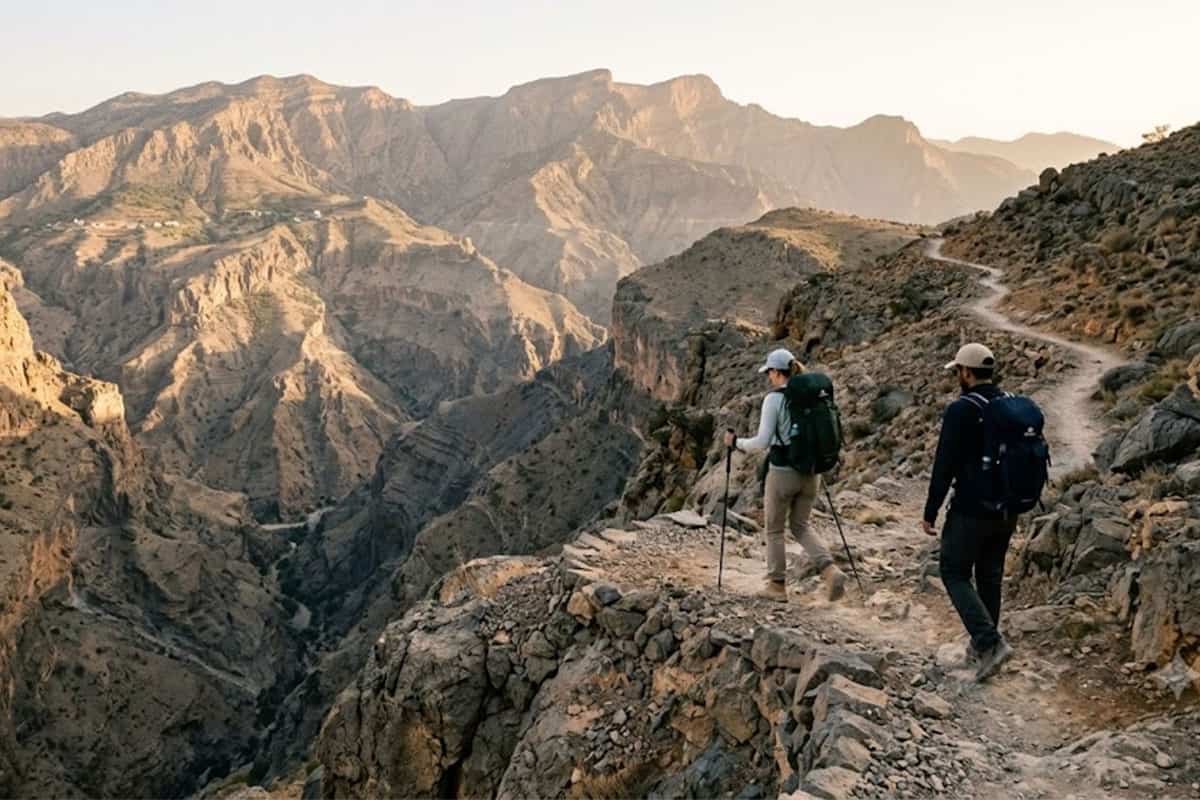
The global travel landscape is undergoing a profound transformation, and Middle East walking tourism is rapidly emerging as the definitive antidote to urban overtourism. Instead of crowding into congested city centres and traditional resorts, discerning visitors are now seeking authentic, slow-paced natural adventures. From the rugged altitudes of Oman’s Hajar Mountains to the ancient trails connecting Jordan’s Petra and Wadi Rum, and the eco-focused pathways of Saudi Arabia’s AlUla, regional governments are strategically investing in sustainable trekking infrastructure. This crucial shift disperses economic benefits directly to rural communities while preserving historical integrity and redefining the modern Middle Eastern travel experience.
The Rise of Middle East Walking Tourism: A Necessary Evolution
The tourism sector across the Middle East has traditionally been dominated by ultra-modern skylines, luxury mega-resorts, and rapid urban development. However, as global travel rebounds and the damaging effects of overtourism become glaringly apparent in popular international destinations, governments in the region have proactively altered their strategic focus. The latest development in this strategic pivot is the heavy promotion of Middle East walking tourism. This slow travel phenomenon is actively encouraging visitors to abandon congested, TikTok-trending viewpoints in favour of rural dispersal, multi-day trekking, and profound immersion into local environments and ancient histories.
Advertisement
Advertisement
By investing in high-quality walking trails and sustainable infrastructure, countries such as Oman, Jordan, and Saudi Arabia are successfully decentralising their visitor footprints. This approach prevents the structural degradation of historical monuments, protects delicate ecosystems, and channels critical tourism revenue directly into the hands of local rural communities who previously saw little benefit from standard package tourism.
Background: The Urgent Need to Combat Overtourism
Overtourism is no longer just a European or Southeast Asian concern; it is a global issue that fundamentally degrades the quality of life for local residents and diminishes the authenticity of the visitor experience. When a destination’s carrying capacity is consistently exceeded, the resulting strain on infrastructure, natural resources, and cultural heritage sites can lead to irreversible damage.
Advertisement
Advertisement
In recent years, iconic Middle Eastern destinations recognised the looming threat of mass concentration. The response was not simply to limit numbers through taxation or quotas, but to organically reshape visitor behaviour. By introducing well-maintained walking trails, regional tourism boards are physically spreading visitors across wider geographical areas. The objective of Middle East walking tourism is to stretch a traditional one-day, highly congested itinerary into a dispersed three-day sustainable journey, effectively diluting the immediate pressure on prime heritage sites.
Latest Official Developments in October 2026
As of October 2026, the shift towards eco-trekking and slow travel has gained unprecedented official backing. Recent government initiatives firmly anchor walking tourism as a core pillar of national economic diversification strategies. Authoritative tourism boards across the region have launched comprehensive digital mapping systems, safety protocols, and community-led guiding certifications to formalise the sector.
Advertisement
Advertisement
In Saudi Arabia, the Royal Commission for AlUla recently celebrated a major milestone by winning Gold in the Nature Positive Responsible Tourism category at the 2026 ICRT Responsible Tourism Awards. This accolade is a direct result of their expansive ecosystem restoration programmes, which include dedicating more than half of AlUla’s 22,561-square-kilometre area as protected nature reserves.
Oman’s Hajar Mountains: Pioneering High-Altitude Trekking
The Sultanate of Oman has long been respected for its balanced approach to development, and its handling of tourism is no exception. At the forefront of Middle East walking tourism is the breathtaking Hajar Mountain range.
Dispersing Tourists Through Nature
Rather than concentrating visitors along the coastlines of Muscat or Salalah, the Ministry of Heritage and Tourism has actively promoted the interior mountains. Trails such as the famed Balcony Walk in Wadi Ghul (the Grand Canyon of Oman) offer trekkers unparalleled views while maintaining high ecological standards.
The Hajar Mountains present a rugged, arid environment where careful management is essential. Official trekking guidelines now explicitly mandate the use of camping gas instead of foraging for scarce wood, protecting the fragile high-altitude flora.
Economic Benefits to Mountain Communities
Walking tourism in the Hajar Mountains directly impacts rural livelihoods. As hikers traverse the ancient donkey tracks connecting isolated villages like Siya, Al Mudabghah, and Mibam, they rely on local resources. The integration of traditional shawawiya (local pastoralist) settlements into the trekking routes provides a sustainable economic injection into these otherwise remote areas. Visitors are encouraged to engage with local guides, thereby ensuring that the financial yields of tourism are distributed equitably rather than remaining trapped within international hotel chains.
Jordan’s Expansive Trails: Slowing Down at Petra and Wadi Rum
Jordan remains one of the crown jewels of Middle Eastern history and archaeology. However, sites like Petra have historically suffered from the intense concentration of day-trippers. The government’s strategic integration of the Jordan Trail—a continuous, long-distance hiking route stretching from Um Qais in the north to Aqaba in the south—represents a masterclass in combating overtourism.
Advertisement
Advertisement
Managing the Footprint at Petra
The approach to visiting the Rose Red City has fundamentally changed. The Jordan Tourism Board and local authorities now actively promote multi-day walking itineraries through the Petra Archaeological Park. By encouraging visitors to explore the Petra Main Trail and surrounding mountainous paths over several days, authorities are effectively reducing the daily bottleneck at the Siq.
This method of exploration allows travellers to experience the monumental Nabataean tombs and hidden wadis at a sustainable pace. Walking naturally slows down the visitor flow, mitigating the severe wear and tear caused by heavy, concentrated foot traffic and vehicular transport near delicate archaeological zones.
The Mars-Like Landscapes of Wadi Rum
Similarly, in the protected desert wilderness of Wadi Rum, official strategies have pivoted towards eco-trekking. Guided multi-day desert walks, managed in strict cooperation with local Bedouin communities, ensure that the fragile desert ecosystem is protected from off-road vehicle damage. This form of Middle East walking tourism not only preserves the pristine nature of the UNESCO World Heritage site but also provides visitors with an authentic, culturally immersive experience that cannot be replicated from the back of a 4×4.
Saudi Arabia’s Eco-Trekking: The AlUla Initiative
Saudi Arabia’s Vision 2030 outlines a monumental shift away from oil dependency, with tourism acting as a primary economic driver. Within this framework, the development of AlUla serves as a blueprint for sustainable, nature-focused travel in the 21st century.
Award-Winning Sustainable Tourism Development
The Royal Commission for AlUla’s recent Gold award at the 2026 ICRT Responsible Tourism Awards highlights the success of their nature-positive policies. By mandating that over 50% of the territory remains a protected nature reserve, the government has set a definitive boundary against unchecked commercial expansion.
In Sharaan National Park, massive rehabilitation efforts covering over 74,000 hectares have been implemented to support native flora and enhance the resilience of desert and oasis ecosystems. These protected zones are meticulously designed for eco-trekking. Guided walking routes through the ancient canyons and preserved Nabataean tombs of Hegra (Saudi Arabia’s first UNESCO World Heritage Site) allow tourists to explore without contributing to structural degradation.
Advertisement
Advertisement
Policy Implications and Environmental Safeguards
The policy implications of Saudi Arabia’s approach are vast. By prioritising ecosystem restoration alongside heritage protection, the government ensures that tourism development does not compromise the environmental baseline. Visitors participating in Middle East walking tourism within AlUla are strictly monitored through designated pathways, ensuring that the natural habitats of native species are undisturbed while still offering an elite, high-value experiential product.
Industry Impact: A Shift in the Travel Business Model
The rise of walking tourism is actively reshaping the regional travel industry’s business model. Tour operators are shifting their portfolios away from large-group coach tours toward small-group, low-impact trekking expeditions.
Infrastructure and Accommodation
To support this shift, there has been a significant rise in the development of eco-lodges, sustainable campsites, and community-run guesthouses along major trekking routes. These accommodations are built with stringent environmental guidelines, focusing on water conservation, solar energy utilisation, and waste reduction. This infrastructure perfectly complements the ethos of the walking tourist, who generally seeks authentic, low-impact lodgings over heavily commercialised resort experiences.
Training and Certification
The professionalisation of the trekking industry is another major development. Governments are collaborating with international outdoor and mountaineering bodies to establish rigorous training programmes for local guides. This ensures high safety standards for tourists traversing challenging terrains like the Hajar Mountains or the Jordanian desert, while simultaneously elevating the professional status and earning potential of the local workforce.
Economic Implications: Wealth Distribution and Rural Empowerment
The economic logic behind Middle East walking tourism is incredibly sound. Traditional mass tourism often suffers from high economic leakage, where a significant percentage of tourist spending flows out of the host country via international airlines, global hotel chains, and foreign tour operators.
Direct Community Investment
Walking tourism fundamentally reverses this trend. Trekkers require local knowledge, local food, and local accommodation. When a tourist hikes the Jordan Trail or treks through the remote wadis of Oman, their spending goes directly into the micro-economies of rural villages. This direct financial injection helps to stem rural-to-urban migration by providing viable, sustainable livelihoods in historically marginalised areas.
Advertisement
Advertisement
Enhancing Destination Resilience
By diversifying the tourism portfolio to include robust nature and trekking segments, Middle Eastern countries are building greater economic resilience. Destinations that offer expansive, outdoor, and socially distanced activities are far less vulnerable to global travel shocks. Walking tourism provides a stable, evergreen attraction that is largely immune to the fluctuating trends of luxury leisure travel.
Future Outlook: The Evergreen Appeal of Slow Travel
Looking ahead to 2027 and beyond, the trajectory of Middle East walking tourism is overwhelmingly positive. As global travellers increasingly reject hyper-scheduled, overcrowded itineraries in favour of meaningful, purpose-driven exploration, the Middle East is perfectly positioned to capture this high-value demographic.
The continued investment by regional governments in trail mapping, conservation funding, and community training ensures that this is not a passing trend, but a permanent structural enhancement of the tourism sector. By successfully merging environmental preservation with economic empowerment, Oman, Jordan, and Saudi Arabia have established a highly effective blueprint for combating overtourism. Walking tourism proves that the future of travel does not have to be faster and more crowded; it can be slower, deeper, and profoundly sustainable.
Advertisement
