

Denmark Aligns With France And More Countries As Border-free Europe Faces Longer Waits And Biometric Checks Under New Schengen Rules

Published
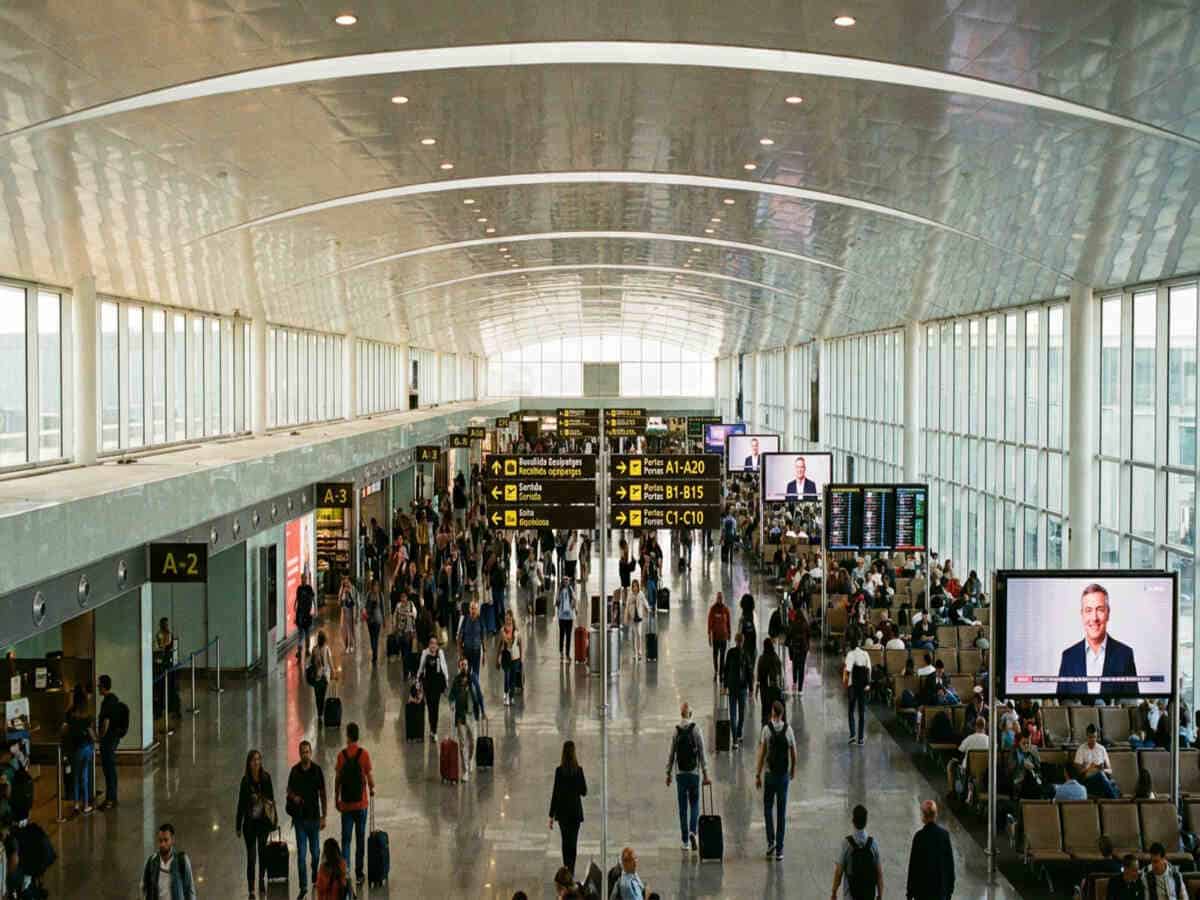
The Schengen changes in Europe will involve biometric screening, border control and increased waiting time for travellers. Europe’s famed passport free travel will be experiencing a more controlled digital age. Some of the Schengen countries where travellers may experience temporary border checks within include Denmark, France, Germany, Austria, Poland, Sweden, Italy and Norway, while the European Union Entry/Exit System will revolutionize the entry and exit process of non-EU visitors in the region. The combination of biometric registration, automated stay control and new border checks at some internal borders will create a new travel experience in 2026. Travel will be possible throughout Europe, although smooth travels will require more efforts with passports, travel preparation, biometric checks and keeping track of the 90-day Schengen rule.
Border-free Europe Is Becoming More Controlled For Travellers
The Schengen area remains one of the world’s most important border-free travel zones. It allows travellers to move across participating countries without facing routine immigration controls at every national frontier.
Advertisement
Advertisement
However, the travel experience is changing.
Temporary border controls have returned across several important European routes. At the same time, the EU Entry/Exit System, known as EES, has replaced traditional passport stamping for many non-EU visitors entering the participating Schengen countries.
Advertisement
Advertisement
Together, these measures mean that travellers can face additional checks even when travelling through a region traditionally associated with seamless cross-border movement.
Road passengers may encounter checkpoints. Rail travellers could face document inspections. Airport passengers may need biometric registration. First-time EES users could also require more processing time at external borders.
Advertisement
Advertisement
Europe remains highly connected, but travellers should no longer assume that every Schengen journey will be completely check-free.
Denmark Adds Another Layer Of Checks To Northern European Travel
Denmark has temporary controls affecting its border connections with Germany.
Advertisement
Advertisement
This is especially important for travellers moving by road, rail or ferry between Scandinavia and continental Europe.
Denmark sits on a major northern European transport corridor. Travellers connecting Germany with Denmark, Sweden and other Nordic destinations frequently pass through the country.
Temporary checks therefore have implications beyond Denmark itself.
Passengers should keep passports and relevant travel documents accessible during cross-border journeys. They should also avoid planning extremely tight connections where an unexpected document inspection could affect onward travel.
Advertisement
Advertisement
The existence of controls does not mean every traveller will be stopped. However, border authorities retain the ability to conduct checks.
For tourists accustomed to almost invisible borders between Schengen countries, this creates another planning consideration.
France Brings Checks Back To Several Major Tourist Corridors
France is particularly important because of the number of international leisure routes crossing its borders.
Temporary French controls cover connections with Belgium, Germany, Luxembourg, Switzerland, Spain and Italy under the information provided.
That places several major tourism corridors within the affected network.
Travellers may move between Paris and Brussels, France and Germany, the French Riviera and Italy, or southern France and Spain while remaining entirely within the Schengen area.
Advertisement
Advertisement
Previously, many tourists would have expected these journeys to resemble domestic travel.
That assumption is becoming less reliable.
Travellers should carry valid passports throughout their journey. Rail passengers should keep documents available rather than packing them inside inaccessible luggage.
Road travellers should also allow additional journey time when crossing borders where controls are being conducted.
France therefore illustrates the new reality of Schengen travel: border-free movement continues, but temporary national controls can still reappear.
Germany Becomes A Key Pressure Point For European Cross-Border Journeys
Germany has an especially important role because it sits at the centre of Europe’s road and rail network.
Advertisement
Advertisement
Temporary controls cover its land borders with France, Luxembourg, Belgium, the Netherlands, Denmark, Austria, Switzerland, Czechia and Poland.
That creates a wide geographical impact.
A traveller taking an international train through Germany may pass through one of these controlled borders. The same applies to tourists driving through central Europe or using long-distance coach services.
Germany’s position also means that travellers using it as a transit country need to consider potential checks even when Germany is not their final destination.
For example, a journey from the Netherlands towards Austria can pass through Germany. A France-to-Poland road trip can do the same.
The practical lesson is straightforward.
Advertisement
Advertisement
Schengen travellers should keep identification accessible throughout international journeys and leave enough time between transport connections.
Austria Extends The Impact Across Central Europe
Austria has temporary controls involving Slovakia, Czechia, Hungary and Slovenia.
These borders are significant for travellers exploring Central Europe by train, coach or car.
Vienna is a major regional gateway. Many visitors combine Austria with nearby capitals such as Bratislava, Prague and Budapest.
These journeys remain possible and popular, but border inspections can introduce an additional step.
Travellers planning multi-country itineraries should therefore avoid assuming that every land crossing will be completely uninterrupted.
Advertisement
Advertisement
The controls also reinforce a broader change taking place across Europe.
A Schengen journey may legally remain an internal movement, yet travellers can still be asked to produce identification.
That makes carrying the correct passport increasingly important even after a visitor has completed their initial Schengen entry procedure.
Poland Introduces Another Important Change For Eastern European Routes
Poland’s controls with Germany and Lithuania affect two important directions of travel.
The German border connects Poland directly with Western Europe. Lithuania provides an important route towards the Baltic region.
Tourists travelling by rail, road or coach across these borders may therefore encounter document checks.
Advertisement
Advertisement
This is especially relevant for longer European itineraries connecting Germany, Poland, Lithuania and other Baltic destinations.
Travellers should not interpret these controls as the end of Schengen mobility.
Instead, they show that Schengen countries retain the ability to temporarily restore internal checks.
For travellers, the practical impact can include slower border crossings, passport inspections and uncertainty when estimating travel times.
Sweden Adds Checks Across Land Air And Sea Routes
Sweden has also maintained temporary controls affecting internal Schengen movement through land, air and sea connections.
Its geography makes this particularly relevant for international ferry passengers and travellers moving between Nordic countries.
Advertisement
Advertisement
Air passengers should also remember that an intra-Schengen flight does not necessarily guarantee the complete absence of document checks.
The wider lesson applies throughout the region.
Travellers should carry valid identification whenever crossing national boundaries, regardless of whether the journey technically remains inside the Schengen area.
Sweden’s controls demonstrate how temporary measures can apply across several transport modes rather than only road crossings.
Italy Focuses Controls On Its Border With Slovenia
Italy’s temporary controls with Slovenia affect an important gateway between southern and eastern Europe.
The route is particularly relevant for tourists travelling between Italy, Slovenia, Croatia and neighbouring destinations.
Advertisement
Advertisement
Northern Italy and Slovenia have become increasingly connected through road and rail tourism.
Travellers making these journeys should therefore keep passports available and allow flexibility.
The controls do not remove the benefits of Schengen movement, but they introduce the possibility of inspections where travellers may previously have expected an uninterrupted journey.
Norway Applies Checks To Relevant Ferry Connections
Norway is not an EU member, but it participates in the Schengen area.
Temporary controls affecting relevant ports with Schengen ferry connections show why travellers should not treat the European Union and Schengen as identical concepts.
Norway remains part of the common travel zone even though it sits outside the EU.
Advertisement
Advertisement
Ferry travellers therefore need to remain aware of identification requirements and possible controls.
This is particularly important for tourists using sea routes between Norway and other European destinations.
How Current Schengen Changes Can Affect European Journeys
| Country | Current Traveller Impact Described | Travel Modes Most Relevant | What Travellers Should Consider |
|---|---|---|---|
| Denmark | Temporary controls linked with Germany | Road, rail, ferry | Keep passport accessible and allow extra time |
| France | Controls with several neighbouring states | Rail, road, air | Expect possible checks on major tourism corridors |
| Germany | Wide network of temporary land-border controls | Rail, coach, road | Build flexibility into international connections |
| Austria | Checks towards several Central European neighbours | Rail, road, coach | Carry documents during multi-country trips |
| Poland | Controls involving Germany and Lithuania | Rail, road, coach | Consider possible delays on east-west routes |
| Sweden | Controls across land, air and sea movements | Air, ferry, road | Keep valid identification available |
| Italy | Controls focused on Slovenia | Road and rail | Plan extra time on Italy-Slovenia journeys |
| Norway | Checks affecting relevant Schengen ferry routes | Ferry | Carry travel documents throughout sea journeys |
Biometric Checks Are Transforming Entry Into The Schengen Area
Internal border checks are only one part of the changing European travel landscape.
The EU Entry/Exit System has created an even larger shift at the Schengen area’s external borders.
EES began on 12 October 2025 and moved through a gradual implementation period. From 10 April 2026, the system became fully operational across participating external border points under the information provided.
For many short-stay non-EU visitors, this means border authorities now electronically register arrival and departure information.
Advertisement
Advertisement
The system can include passport details, travel dates, facial images and fingerprints.
For many visa-exempt travellers, four fingerprints and a facial photograph can be collected during registration.
Children below 12 years of age are currently exempt from fingerprint collection, although other border procedures may still apply.
First-time Visitors Could Face Longer Processing
The biggest immediate inconvenience may appear during a traveller’s first EES registration.
Creating the digital record involves more than simply presenting a passport for stamping.
A traveller may need to use a registration kiosk, submit biometric information or have a photograph taken.
Advertisement
Advertisement
That process can increase border processing times, particularly during peak travel periods.
Repeat visits should become simpler because officials can verify travellers against information already held in the system.
However, travellers should still allow sufficient time at airports, ports and land borders.
Biometric technology may ultimately make border management more efficient, but the transition requires travellers to adapt.
Refusing Required Biometrics Can Create Serious Problems
EES biometric checks are not simply an optional airport convenience.
Travellers who fall within the system and refuse to provide required biometric information can face refusal of entry.
Advertisement
Advertisement
This distinction matters.
EES is part of border control, rather than a voluntary fast-track programme.
Visitors should therefore understand the requirements before reaching the border and follow instructions from immigration officers and transport operators.
The Ninety Day Rule Is Becoming Much Harder To Ignore
The Schengen short-stay rule has not fundamentally changed.
Many visa-exempt non-EU travellers can stay for a maximum of 90 days during any rolling 180-day period.
The major difference is that EES makes those movements easier to track electronically.
Advertisement
Advertisement
Travellers cannot spend 90 days in Spain and then simply begin another 90 days in France.
The Schengen allowance is shared across participating countries.
A visitor spending 30 days in Spain, 20 days in France, 20 days in Italy and 20 days in Greece has already accumulated 90 Schengen days.
Frequent travellers, business visitors and long-stay holidaymakers therefore need to calculate their days carefully.
Electronic entry and exit records mean overstays can become considerably easier for border authorities to identify.
Ireland And Cyprus Remain Important Exceptions
Ireland and Cyprus are not part of EES in the same way as the participating Schengen countries.
Advertisement
Advertisement
This distinction matters when travellers construct longer European itineraries.
Ireland, in particular, remains outside the Schengen area’s shared short-stay calculation.
Travellers must still follow Ireland’s national immigration rules, but time there is generally treated separately from the Schengen 90-day allowance.
This can make the difference between European Union membership and Schengen participation confusing for visitors.
Not every EU country follows exactly the same border framework.
Britain Has A Different EES Experience At Dover Folkestone And London
British travellers can encounter EES before physically reaching continental Europe.
Advertisement
Advertisement
At the Port of Dover, Eurotunnel Le Shuttle in Folkestone and Eurostar services from London St Pancras, relevant checks can take place before passengers leave the United Kingdom because of juxtaposed border arrangements.
Infrastructure has been developed to support biometric registration.
Eurostar passengers may use self-service pre-registration facilities.
Eurotunnel has introduced a dedicated registration area.
Dover has also developed processing infrastructure at its Western Docks.
By contrast, travellers flying from most British airports usually complete the relevant EES procedure after arriving at their Schengen destination.
Advertisement
Advertisement
Cruise Passengers Face Different Rules
Cruise travel adds another layer of complexity.
A cruise that begins and ends outside the Schengen area, such as one departing and returning to a UK port, will usually not require EES checks for every Schengen day trip included in the itinerary.
However, port authorities can apply checks in particular circumstances.
Passengers who leave a cruise permanently within the Schengen area and continue their journey independently may need to complete EES procedures.
Similarly, travellers joining a cruise inside the Schengen area may need to complete EES registration when they initially enter Schengen territory.
Cruise passengers should therefore follow guidance from their operator and the relevant port authorities.
Advertisement
Advertisement
EES Does Not Apply To Every Traveller
Several categories are exempt.
These can include EU citizens, nationals of Iceland, Liechtenstein, Norway and Switzerland, qualifying residence-permit holders, long-stay visa holders and certain family members of EU citizens.
Some people protected by the EU-UK Withdrawal Agreement may also fall outside normal EES registration requirements when carrying the required residence documentation.
Eligible exempt travellers should present the documents establishing their status to border authorities.
They should not unnecessarily create an EES record where an exemption applies.
ETIAS Will Add A Separate Pre-Travel Requirement
Travellers also need to distinguish EES from ETIAS.
Advertisement
Advertisement
They are not the same system.
EES operates at the border and records entry and exit activity.
ETIAS will instead function as a pre-travel authorisation for eligible visa-exempt travellers.
Under the information available for this article, ETIAS had not yet begun accepting applications.
Travellers should therefore avoid unofficial websites claiming to sell an active ETIAS authorisation before the official system opens.
Once introduced, ETIAS is expected to require travellers to submit information before departure and pay a €20 fee.
Advertisement
Advertisement
Until its official launch, no ETIAS action is required.
New EU Rules Are Creating New Challenges For Travellers
The biggest challenge is not one single rule.
It is the combination of several systems.
Travellers now need to understand where EES applies, whether temporary internal border controls are operating, how much of their 90-day allowance remains and whether their residence or visa status gives them an exemption.
- Journey planning is therefore becoming more important.
- A tight rail connection may be affected by a document check.
- An airport arrival could take longer because of first-time biometric registration.
- A frequent visitor could accidentally approach the 90-day threshold.
- A cruise passenger may face different procedures depending on where the voyage begins and ends.
- Europe remains highly accessible, but travellers need better preparation than before.
Schengen Travel Is Still Open But The Experience Has Changed
Denmark, France, Germany, Austria, Poland, Sweden, Italy and Norway demonstrate how Europe’s border-free system can coexist with temporary controls.
- At the same time, EES represents a permanent digital transformation of external Schengen borders.
- The result is not the end of easy European travel.
- It is a move towards more closely monitored travel.
Tourists can still cross multiple countries during one holiday. Trains still connect major European capitals. Road trips still cross national frontiers. Airlines continue to link destinations across the region.
Advertisement
Advertisement
However, travellers should now keep passports close, allow more time at borders, understand biometric procedures and monitor their Schengen stay carefully.
New Schengen regulations for Europe are bringing the use of biometrics, border controls, and delays to the travel experience.
Where Europe’s borders appear open on any map, in 2026 the technology and regulations behind those borders are much more apparent to the traveller.
Advertisement
