

Scarlet Lady Breaks Free in Rhodes, Greece, as Powerful Winds Test Cruise Ship Moorings

Published
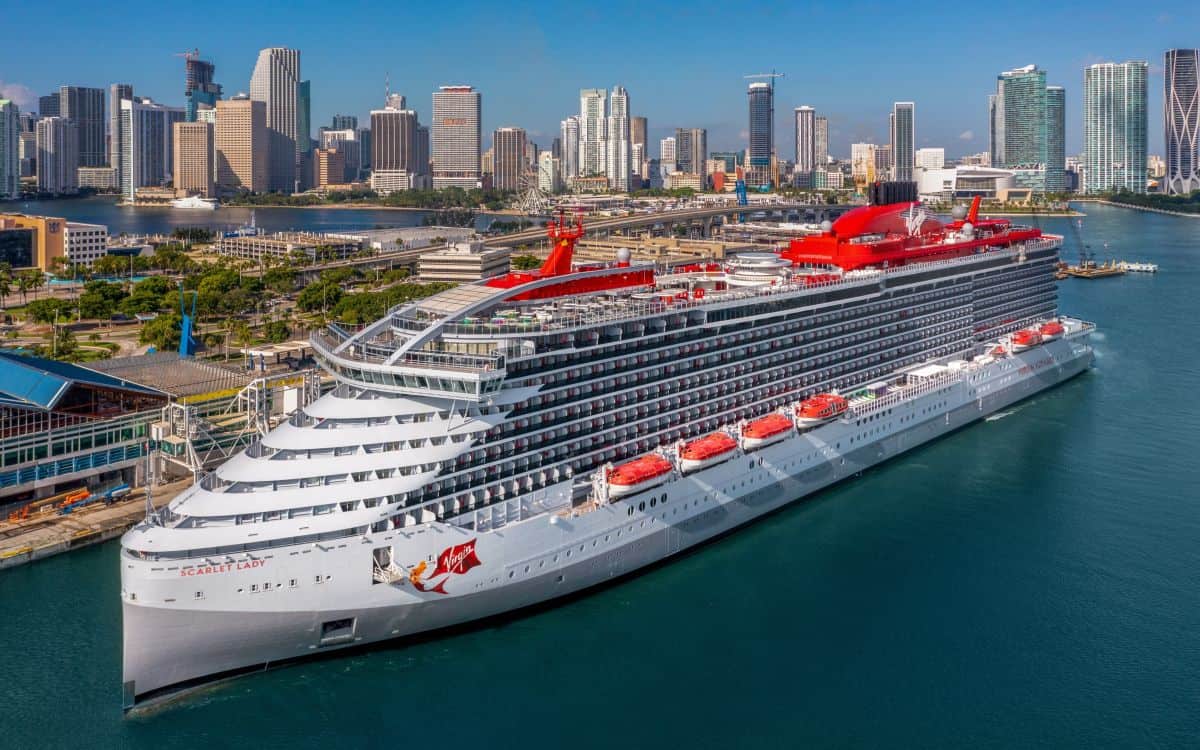
Virgin Voyages’ Scarlet Lady broke from its moorings in Rhodes, Greece, on September 30 amid unusually strong winds. The crew re-secured the vessel within minutes, with no reported injuries or disruption to the voyage. The incident occurred while the ship was docked during a week-long Mediterranean sailing that departed Athens on September 27. Virgin Voyages said the vessel continued its scheduled itinerary and expected no impact on the following sailing. The episode nevertheless highlights a critical issue for cruise travellers: extreme weather can create operational risks even while a ship remains alongside. Rhodes is also an important cruise gateway, making berth safety increasingly relevant as Greece handles record cruise traffic.
How The Rhodes Incident Unfolded
The incident occurred on September 30, when unseasonably high winds caused Scarlet Lady to break from its moorings while alongside in Rhodes. The vessel did not remain adrift for an extended period. Crew members responded immediately and restored the ship to a secure position within minutes.
Advertisement
Advertisement
Virgin Voyages confirmed that there were no reported injuries among passengers or crew. The cruise line also indicated that the scheduled voyage continued as planned, without an expected knock-on effect for the next sailing.
That distinction matters for travellers. A ship moving unexpectedly at berth can sound alarming, yet a brief mooring failure does not automatically mean a cruise has suffered structural damage or an unsafe navigation event.
Advertisement
Advertisement
In this case, the available information indicates a rapidly contained operational incident. There has been no indication of injuries, evacuation, collision or cancellation linked to the event.
The ship had departed Athens on September 27 for a week-long itinerary. Rhodes was among its Mediterranean calls before the voyage continued towards its subsequent destinations.
Advertisement
Advertisement
The Scarlet Lady mooring incident therefore appears to have been isolated rather than a wider cruise disruption. However, its timing adds significance because Greece remains one of the Mediterranean’s busiest cruise markets.
Why Strong Winds Matter At Cruise Berths
Large cruise ships are highly manoeuvrable at sea, but their exposure changes considerably when they are alongside a pier. A vessel’s enormous hull and superstructure can present substantial surface area to wind.
Advertisement
Advertisement
That can generate considerable lateral forces against the ship and its mooring system. The risk can increase when gusts arrive suddenly or from changing directions.
Mooring lines distribute those forces between the vessel and shore infrastructure. Their effectiveness depends on the ship’s configuration, berth design, weather conditions and operational procedures.
The International Maritime Organization has strengthened international guidance around mooring arrangements and equipment. Revised SOLAS-related requirements and guidance cover the design, selection, inspection and maintenance of mooring systems.
This framework is particularly relevant as cruise ships become larger and passenger volumes rise. The IMO says international passenger ships carrying more than 12 passengers must comply with relevant safety requirements under the SOLAS framework.
Advertisement
Advertisement
| Risk Factor | Why It Matters At Berth | Traveller Relevance |
|---|---|---|
| Strong winds | Increase lateral pressure on the vessel | May affect boarding or departure |
| Sudden gusts | Can create rapid changes in loading | May require additional crew action |
| Mooring-line loads | Transfer forces between ship and berth | Can trigger operational restrictions |
| Berth exposure | Open locations can experience stronger wind | May influence port operations |
| Ship size | Larger structures can present greater wind area | Weather can affect handling |
| Changing weather | Conditions may deteriorate quickly | Itineraries can change with limited notice |
Rhodes Is A Major Cruise Gateway
The incident occurred at a destination where cruise traffic has expanded significantly. Rhodes recorded 547,549 cruise passengers in 2025, according to figures reported from Hellenic Ports Association data.
Across Greece, cruise activity reached a record level during the same year. Greek ports recorded 6,129 cruise ship arrivals and 8.42 million passengers in 2025.
That represented an 11.7% increase in ship arrivals compared with 2024. Passenger traffic also climbed 6.2%, from 7.93 million to 8.42 million.
The Bank of Greece provides another measure of the sector’s economic scale. Its 2025 cruise survey covered 16 Greek ports and captured 85.4% of cruise ship arrivals.
The survey estimated 5.61 million cruise passengers and recorded €1.17 billion in cruise receipts during 2025. Cruise passenger visits reached approximately 8.18 million, reflecting multiple port calls by many travellers.
| Greek Cruise Market Indicator | 2024 | 2025 | Change |
|---|---|---|---|
| Cruise ship arrivals | 5,490 | 6,129 | +11.7% |
| Passenger traffic | 7,927,709 | 8,415,713 | +6.2% |
| Cruise passenger visits | 7.83 million | 8.18 million | +4.5% |
| Cruise receipts | — | €1.166 billion | +4.9% year-on-year |
| Rhodes cruise passengers | 458,373 | 547,549 | Strong annual growth |
The figures demonstrate why operational resilience at Greek cruise ports matters. More ship calls mean more exposure to weather disruptions, berth congestion and tightly scheduled port movements.
Advertisement
Advertisement
What Cruise Travellers Should Expect
Travellers should not interpret a mooring incident as evidence that cruise ships routinely become unsafe during windy weather. Cruise operations rely on layered safety procedures, trained crews and port controls.
Weather monitoring is an important part of that process. The IMO recognises that weather conditions can affect navigation and supports the use of weather-routing information to improve safety.
Port operations can also involve shore-based traffic management and communication systems. Vessel Traffic Services can provide meteorological warnings and operational information to ships within relevant port areas.
For passengers, the most visible consequence is often not an emergency. Instead, travellers may encounter delayed boarding, slower disembarkation or changes to departure times.
Cruise lines can also alter an itinerary if weather conditions threaten safe port access. A scheduled port call may be shortened, postponed or replaced when conditions exceed operational limits.
Therefore, passengers should treat weather-related changes as normal safety decisions rather than signs of cruise failure.
Advertisement
Advertisement
Travellers with independent shore excursions should also consider this possibility. A cruise ship can change its arrival or departure schedule even when local attractions remain open.
Scarlet Lady Brings Significant Passenger Capacity
Scarlet Lady is one of Virgin Voyages’ four Lady Ships and was the company’s first vessel. The ship entered service after its delivery in February 2020 and began commercial operations in 2021.
Virgin Voyages places the ship within its mid-sized cruise category. The company’s current information states that its Lady Ships carry roughly 2,700 passengers at full capacity, supported by more than 1,100 crew members.
That scale helps explain why mooring operations deserve close attention. A sudden movement involving a vessel carrying thousands of people could have consequences even if the ship itself suffers no major damage.
At the same time, the rapid response reported in Rhodes illustrates the importance of crew readiness. Fast intervention limited the incident before it developed into a broader passenger disruption.
Virgin Voyages describes its fleet as adults-only, with Scarlet Lady accommodating thousands of travellers across a large network of cabins and public spaces.
Advertisement
Advertisement
Recent Incidents Put Weather In Focus
The Rhodes event is not entirely isolated within the cruise sector. Other recent incidents have also demonstrated how powerful winds can affect ships while they are alongside.
A Norwegian Cruise Line vessel reportedly broke from its moorings in Corfu during strong winds during summer 2026. That incident had more serious consequences, including a passenger entering the water.
A Celebrity Cruises vessel also drifted from a pier in Juneau in 2025 after a sudden wind squall. These incidents differ materially from the Rhodes event, particularly in their outcomes.
They nevertheless highlight a common operational vulnerability. A ship does not need to be sailing at sea for severe weather to create a maritime safety challenge.
| Incident | Location | Weather Factor | Reported Outcome |
|---|---|---|---|
| Scarlet Lady, 2026 | Rhodes, Greece | Unseasonably high winds | Re-moored within minutes; no reported injuries |
| Norwegian Cruise Line vessel, 2026 | Corfu, Greece | Strong winds | Passenger entered the water |
| Celebrity Cruises vessel, 2025 | Juneau, Alaska | Sudden wind squall | Ship drifted from pier |
The comparison should not be treated as evidence of a systemic failure across cruise lines. Each event involved different ships, ports, weather conditions and circumstances.
Instead, the pattern reinforces the importance of weather awareness, mooring procedures and rapid crew response.
Advertisement
Advertisement
What International Safety Rules Require
The broader regulatory framework is considerably more comprehensive than the individual incident might suggest. SOLAS establishes minimum international requirements for ship construction, equipment and operation.
Passenger vessels also operate under requirements covering navigation, communications, emergency procedures and life-saving equipment. The framework has evolved repeatedly after major maritime incidents.
The IMO’s passenger-ship safety regime increasingly focuses on preventing casualties before they escalate. It also incorporates the principle of keeping essential systems operational so ships can safely return to port after certain emergencies.
Mooring safety has received specific attention as well. The IMO’s current framework includes guidance covering mooring arrangements, equipment selection, inspection and maintenance.
That matters because mooring lines are not simply passive ropes securing a vessel. They form part of a carefully engineered system designed to manage forces between a ship and berth.
Travellers therefore benefit from understanding one key point. A cruise ship remaining alongside is still operating within a formal maritime safety environment.
Advertisement
Advertisement
What This Means For Mediterranean Cruises
The Rhodes incident comes as Mediterranean cruising continues to expand. Greece’s record passenger figures underline the region’s growing importance to international cruise operators.
For travellers, that growth creates both opportunities and operational pressures. More ships can generate greater choice, but busy ports also face tighter schedules and higher infrastructure demands.
Weather adds another variable. Autumn Mediterranean conditions can shift quickly, particularly when strong winds develop around exposed coastal locations.
Passengers should therefore allow flexibility around port calls. Those travelling on tightly timed independent tours, ferries or flights after disembarkation should avoid building connections around extremely narrow time windows.
Travel insurance can also provide useful protection where eligible weather-related disruptions create covered losses. However, passengers should check policy wording carefully before relying on cancellation or delay benefits.
For current voyage information, travellers should use the cruise line’s official travel updates and onboard communications.
Advertisement
Advertisement
For broader maritime safety standards, the International Maritime Organization passenger-ship safety guidance provides the most authoritative international reference.
Why The Incident Matters For Travellers
The Scarlet Lady mooring incident is significant less because of its immediate consequences and more because of what it reveals about modern cruise operations.
The ship was quickly secured, no injuries were reported and the voyage continued. Those are important facts and should remain central to any assessment of the event.
However, the incident also demonstrates why cruise passengers should pay attention to weather-related announcements. Conditions at a port can affect a vessel even when passengers are not at sea.
Greece’s expanding cruise market makes this issue increasingly relevant. With more than 6,100 cruise ship calls recorded nationwide in 2025, ports must accommodate growing traffic while maintaining robust safety margins.
For travellers, the practical lesson is straightforward. Keep shore plans flexible, monitor onboard updates and allow additional time for transport connections after port calls.
The Rhodes episode ultimately ended without injuries or voyage disruption. Yet it offers a timely reminder that weather remains one of the variables capable of changing cruise operations within minutes.
Advertisement
