
South Africa Shows There Is More Opportunity to Unlock Better Aviation Access at Kroonstad Airport

Updated
Published
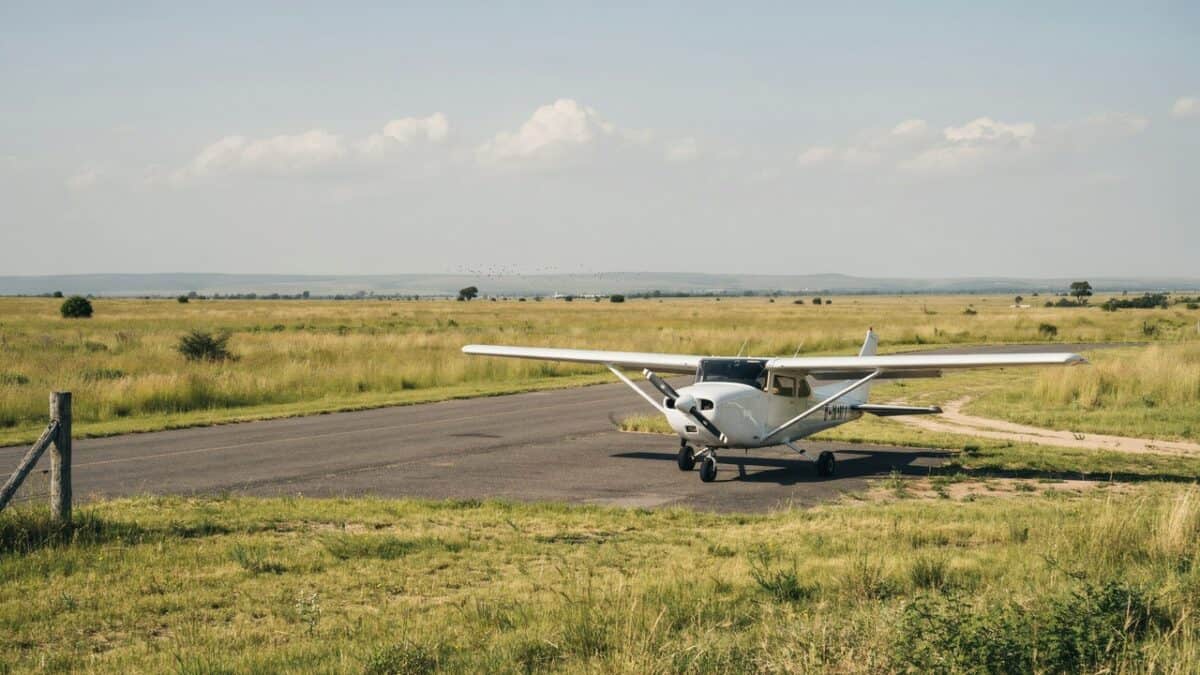
Image generated with Ai
Kroonstad Airport could improve Aviation Access across South Africa’s Free State through charter flights, business travel, aviation training and emergency operations. However, no scheduled passenger services or airport expansion have been officially confirmed. Future development would require technical assessments, regulatory approval, proven passenger demand, secure funding and a sustainable operating plan.
Kroonstad Airport Has Potential but No New Passenger Flights
Kroonstad Airport could improve Aviation Access across the northern Free State by supporting private flying, charter operations, corporate movements, emergency flights and specialist tourism. The aerodrome serves Kroonstad, a regional centre situated along the important N1 road corridor between Johannesburg and Bloemfontein. This location creates a possible role within the province’s broader transport system. It could serve travellers who value time and need direct access to Kroonstad or nearby agricultural and business areas.
However, the existence of a licensed aerodrome does not automatically create a commercially viable passenger airport. No official announcement reviewed as of 2 September 2026 confirms scheduled passenger flights, an approved redevelopment, a new terminal or an airline commitment. Future expansion would depend on passenger demand, infrastructure readiness, regulatory approvals and long-term funding. Kroonstad Airport must therefore be treated as a regional general-aviation facility with development potential, not as a newly launched commercial gateway.
What official information currently confirms
South Africa’s official aerodrome directory identifies the facility as Kroonstad Aerodrome. It records the ICAO location indicator FAKS and aerodrome licence number six. The official aerodrome document lists three runways, including a 1,775-metre asphalt runway identified as 07/25. It also records two shorter runways, 12/30 and 03/21. Runway and taxiway lighting, fuel facilities and daytime and night-time operating availability appear in the record.
Advertisement
Advertisement
Those details show that the airport possesses useful general-aviation infrastructure. They do not prove that airline facilities exist or that public flights can be booked. The official material does not provide current scheduled passenger numbers, a confirmed charter timetable or a public development budget. It also does not establish that the airport operates as an international entry point. Normal aviation, immigration and customs requirements remain applicable to every flight.
Advertisement
Advertisement
| Research field | Verified position | Information still requiring confirmation |
|---|---|---|
| Airport identity | Kroonstad Aerodrome | No further identity confirmation needed |
| ICAO indicator | FAKS | Current operational use should be checked before flying |
| Licence record | Licence number six | Any amended conditions or limitations |
| Main runway | 07/25, 1,775 metres, asphalt | Current pavement condition and declared distances |
| Other runways | 12/30 and 03/21 | Current surfaces, condition and availability |
| Lighting | Runway and taxiway lighting listed | Current serviceability and operating arrangements |
| Fuel | Fuel facilities listed | Fuel type, hours, quantity and payment procedures |
| Operating availability | Day and night listed | Local staffing and advance-notice requirements |
| Scheduled services | None officially confirmed | Airline interest and commercial feasibility |
| Passenger traffic | No verified public figure found | Annual passengers and aircraft movements |
| Development funding | No confirmed budget found | Funding source, procurement and timeline |
| Ownership and operation | Requires current documentary confirmation | Responsible owner, operator and maintenance authority |
Why Better Regional Air Connectivity Could Matter
Improved Aviation Access could reduce journey times for selected business visitors, agricultural specialists, investors, emergency teams and event participants. Kroonstad occupies an important position in the northern Free State and serves surrounding farming and commercial communities. Specialist air movements could make it easier for technical teams, veterinary services, infrastructure inspectors and time-sensitive business travellers to reach the area. These markets might exist even if the town cannot support daily scheduled airline services.
The critical question is not simply whether an aircraft can land. A sustainable operation depends on paying demand, airport facilities, operating costs, aircraft availability and regional competition. Road travel along the N1 already connects Kroonstad with major economic centres. A flight must save enough time and offer sufficient convenience to justify airport transfers, security procedures and higher fares. Charter flights, emergency services and event-based operations may therefore offer a more realistic first stage than daily scheduled departures.
| Aviation category | Possible present role | Future opportunity | Main requirement |
|---|---|---|---|
| General aviation | Private and recreational flying | More local activity | Safe and licensed facilities |
| Business aviation | Corporate and official movements | Faster executive access | Handling and ground transport |
| Charter flights | On-demand operations | Group, event and specialist travel | Operator interest and paid demand |
| Emergency aviation | Medical and public-service missions | Faster regional response | Coordination and operational readiness |
| Flight training | Training movements where permitted | Local skills development | Approved training providers |
| Specialist cargo | Urgent or limited freight | Agricultural and medical consignments | Volume, handling and security |
| Scheduled passengers | Not officially confirmed | Possible long-term service | Airline business case and terminal facilities |
| Aviation Access | Regional connectivity | Wider economic reach | Integrated and funded development plan |
Location Offers Opportunity but Road Travel Remains Strong
Kroonstad lies on the N1 corridor connecting Johannesburg with Bloemfontein and destinations farther south. Its position supports road-based business, agriculture, freight and domestic travel. This geography could help an airport draw passengers from the town and nearby communities. It could also provide a specialised arrival point for conferences, sporting events, government travel and agricultural visits. Nevertheless, geography alone cannot prove that sufficient passengers will pay for flights throughout the year.
Advertisement
Advertisement
A commercial assessment would need to compare flying with existing road alternatives. A passenger may save time in the air but lose part of that advantage through airport reporting times, transfers and limited schedules. Ticket prices would also affect demand. Travellers may prefer driving when several people share a vehicle or when they need transport after arrival. A low-frequency air route could be less convenient than the N1 if departure times do not match business or leisure needs.
The airport’s location should also be compared with established commercial gateways. Johannesburg offers extensive domestic and international connections, while Bloemfontein provides the Free State’s established scheduled passenger airport. Travellers may accept longer road journeys to those airports when they gain better fares, more departures and simpler connections. Kroonstad would need a clearly defined market instead of attempting to duplicate services already available elsewhere.
Advertisement
Advertisement
Infrastructure Will Decide Which Services Are Realistic
Kroonstad Airport’s main paved runway is its strongest confirmed physical asset. At 1,775 metres, runway 07/25 may support a range of suitable aircraft, depending on aircraft weight, weather, elevation and operating conditions. The two additional runways provide alternative alignments when available. However, runway length alone cannot prove readiness for scheduled passenger operations. Commercial services also require passenger processing, baggage handling, security screening, rescue capability and dependable ground support.
Infrastructure will determine which aircraft and Aviation Access models can operate safely and consistently. Official records list runway and taxiway lighting, fuel and day-and-night availability. Operators must still confirm whether these facilities are serviceable at the planned time. Fuel type and quantity also matter. An airport may list fuel while requiring advance orders or operating during limited hours. Pilots should never depend solely on a static directory entry.
Several other facilities remain unconfirmed in the public official material reviewed. These include the current passenger reception area, security screening, accessible facilities, public parking, firefighting category, perimeter security, apron capacity and navigation equipment. A scheduled operation would require a complete technical inspection. It would also need a plan for travellers with reduced mobility, safe boarding, baggage management, toilets, shelter and emergency procedures.
| Infrastructure component | Why it matters | Current position to verify |
|---|---|---|
| Paved runway | Determines aircraft performance and reliability | Condition and declared operating distances |
| Additional runways | Offer alternative wind alignments | Surface, condition and availability |
| Runway lighting | Supports evening or early operations | Serviceability and activation procedures |
| Taxiways and apron | Allow safe aircraft movement and parking | Load capacity and usable space |
| Passenger facilities | Support waiting, check-in and baggage | Available, limited, proposed or absent |
| Rescue and firefighting | Essential for regulatory compliance | Current category and response capacity |
| Security screening | Required for scheduled passenger handling | Equipment, staffing and secure areas |
| Fuel | Supports local and visiting aircraft | Type, price and operating hours |
| Weather information | Supports safe flight decisions | Local observations and approved alternatives |
| Navigation facilities | Improve operational reliability | Current equipment and limitations |
| Ground transport | Connects passengers with Kroonstad | Verified taxi, shuttle and rental availability |
| Accessibility | Enables inclusive travel | Step-free access and passenger assistance |
Charter and Public-Service Flights Offer a Practical Starting Point
Charter services could improve Aviation Access without requiring the passenger volume and fixed cost of daily scheduled flights. Potential users might include corporate groups, sports teams, conference delegates, agricultural visitors, production crews and private travellers. Event-based operations could test whether people will pay to fly directly to Kroonstad. A charter model can match aircraft size and departure time more closely to confirmed group demand.
Airport capability must not be confused with an active charter schedule. An aerodrome may be able to receive suitable aircraft without having a permanently based operator or published timetable. Every proposed charter would still require operational planning, aircraft suitability, weather assessment and regulatory compliance. Ground transport and baggage arrangements would also need confirmation before passengers travel.
Advertisement
Advertisement
Emergency and public-service aviation could create another useful role. Possible operations include medical transfers, disaster response, search support, firefighting coordination and infrastructure inspections. Agricultural monitoring and urgent humanitarian movements may also benefit from a local aerodrome. However, no official evidence reviewed confirms that these services are permanently stationed at Kroonstad Airport. Their inclusion represents potential use, not an existing operational promise.
Training could provide a further development path. Subject to approval, the aerodrome might support pilot training, ground-operations instruction, drone education and aviation-safety programmes. Any training provider would need the appropriate national aviation approval. Maintenance training, rescue preparation and youth aviation programmes would also require qualified instructors, safe facilities and sustainable funding.
Tourism Business and Agriculture Could Benefit Carefully
Kroonstad’s tourism potential centres on local heritage, events, outdoor activity and regional stopovers. Official municipal planning material identifies tourism and economic opportunities connected with the town and its wider region. The area also has agricultural importance and sits within a major national road corridor. A specialised flight could bring groups closer to local accommodation, meetings, events or farm-based activities.
These opportunities should not be overstated. No official data reviewed shows how many tourists currently arrive through Kroonstad Airport. There is also no verified ratio connecting airport activity with municipal tourism revenue. A tourism impact assessment would need to measure arrivals, accommodation bookings, visitor nights and spending. Airport capability does not automatically create tourism demand.
| Area | Potential visitor product | Possible airport role |
|---|---|---|
| Kroonstad | Heritage, events and business travel | Principal local arrival point |
| Wider municipal area | Rural, agricultural and cultural experiences | Charter and group access |
| Parys and Vredefort area | Nature, adventure and geological heritage | Part of a wider road itinerary |
| Welkom | Business, mining heritage and events | Complementary regional market |
| Bloemfontein | Established urban and aviation services | Main scheduled-airport comparison |
| Northern Free State | Agriculture and road-trip tourism | Specialist air access |
Agriculture may create demand distinct from leisure travel. Veterinary teams, equipment specialists, investors and agricultural delegations sometimes need fast regional access. Urgent documents, medical supplies or lightweight specialist parts might also move by air. However, passenger travel, cargo and general aviation are separate markets. A viable passenger route does not automatically make freight commercially sustainable.
Advertisement
Advertisement
Better Aviation Access could support accommodation, restaurants, transport providers, maintenance activity and local procurement. These benefits cannot be calculated responsibly without a feasibility study. Temporary construction jobs must be separated from permanent employment. Projected visitor spending must also be separated from airport operating revenue. Combining them would produce an unsupported economic figure.
Scheduled Passenger Services Face a Demanding Test
A scheduled passenger route would need more than public interest. A proper study must estimate the number of people who would buy tickets at realistic fares. It should examine the local catchment area, business demand, government travel, seasonal tourism and existing road behaviour. It must also assess how frequently passengers need to travel and whether demand remains stable throughout the year.
A survey asking whether residents would like flights cannot establish commercial viability. People may express interest but decline to purchase when fares and departure times become known. A credible study should test actual willingness to pay. It should also examine whether travellers need onward connections and whether a small aircraft can offer enough seats at an affordable price.
Aircraft selection would affect the route. Smaller aircraft may suit thin regional markets but can have higher per-seat costs. Larger aircraft need stronger demand and suitable infrastructure. The service would also require a minimum operating frequency to remain useful. A single weekly flight may attract limited business demand, while several weekly services could increase financial exposure if seats remain empty.
Public support or route subsidies would raise further questions. Authorities would need to explain the public benefit, cost, duration and financial risk. Any subsidy should follow transparent approval and procurement procedures. A proposal, study, tender and awarded operating agreement are different stages. None should be reported as a confirmed service before all requirements are completed.
Advertisement
Advertisement
Comparison With Other Free State Airports
Bloemfontein’s established airport remains the province’s principal scheduled passenger gateway. Official information describes it as connected with the N1, N6 and N8 and capable of handling 600,000 passengers annually. That figure represents stated capacity, not necessarily annual passenger throughput. The airport provides established passenger facilities and serves a much larger urban market.
Welkom and Bethlehem also appear in discussions about regional aviation. Their roles, catchment areas and infrastructure differ from Kroonstad. Any regional strategy should examine whether these facilities complement one another or compete for limited demand. Opening similar services at several nearby airports could divide a market that is already too small to support frequent flights.
| Airport | Existing role | Main comparison question |
|---|---|---|
| Bloemfontein airport | Established scheduled passenger gateway | Would Kroonstad complement or duplicate it? |
| Welkom Airport | Licensed regional aviation facility | Which area has stronger paid demand? |
| Bethlehem Airport | Regional and general-aviation role | Can local tourism and business sustain services? |
| Kroonstad Airport | Licensed local and regional aerodrome | Which operating model is commercially realistic? |
A complete comparison would require current aircraft movements, runway capacity, passenger facilities, catchment populations and verified road distances. Those figures were not available consistently across all four airports in the official material reviewed. This prevents a defensible numerical ranking. The appropriate conclusion is that Kroonstad needs its own evidence-based business case.
Funding Regulation and Community Questions Remain Open
Before development begins, authorities must confirm ownership, operating responsibility and maintenance obligations. They must determine whether funding would come from municipal, provincial or national sources. Any proposed private participation would require clear commercial terms. A development budget should identify construction costs, equipment, staffing, maintenance and operating losses during the start-up period.
Airport licensing and airline route approval are separate processes. An aerodrome may hold a licence without having permission, facilities or commercial demand for scheduled passenger services. A prospective operator would need the appropriate air-service approvals. The airport would require compliant safety systems, rescue arrangements and security procedures. Environmental and municipal approvals could also apply to infrastructure work.
Advertisement
Advertisement
Community consultation would need to consider aircraft noise, land use, wildlife risk, road traffic and emergency planning. Water and electricity requirements could rise if terminal or support facilities expand. Development should also consider local employment and fair access to contracts. These matters cannot be resolved through an airport directory alone.
No Kroonstad-specific official quotation covering ownership, funding, development intentions and project timing was found in the official documents reviewed. An unrelated quotation would not answer those questions. No statement has therefore been invented or presented as local confirmation.
What Travellers Should Know Now
Better Aviation Access remains a potential future benefit rather than a confirmed scheduled travel option. Travellers should not attempt to book a commercial flight to Kroonstad based only on airport-development discussions or reference pages. They should use verified airline systems and compare access through Johannesburg, Bloemfontein or another appropriate scheduled gateway.
Passengers considering private or charter travel should confirm the operator’s aviation credentials, aircraft type and cancellation conditions. They should also check baggage limits, ground transport and weather arrangements. A local aerodrome may not provide the check-in desks, shops, lounges or public transport expected at a commercial airport.
Key points include:
Advertisement
Advertisement
- Kroonstad Airport is officially identified as FAKS.
- The official directory records licence number six.
- The principal asphalt runway measures 1,775 metres.
- Two additional runways are listed.
- Lighting, fuel and day-and-night availability appear in the official record.
- Facility serviceability must be checked before every flight.
- No scheduled passenger service is officially confirmed.
- No approved expansion budget was identified.
- No international passenger operation is confirmed.
- Existing South African visa and passport rules remain unchanged.
- Current aviation weather and operational notices must be checked before departure.
- Hotel and taxi advertising on commercial pages should not be treated as official airport services.
What Happens Next?
The next phase for Aviation Access at Kroonstad Airport should begin with verified technical and commercial evidence. A feasibility study should determine whether the strongest opportunity lies in charters, emergency operations, training, specialist cargo or scheduled passenger services. It should test paid demand rather than general interest and compare airport development with road-based alternatives.
The necessary sequence is:
- Confirm airport ownership and current operating responsibility.
- Inspect runways, lighting, taxiways, apron and supporting infrastructure.
- Verify fuel, firefighting, security and passenger facilities.
- Study passenger, charter and specialist cargo demand.
- Compare Kroonstad with existing regional airports and road access.
- Prepare financial and environmental assessments.
- Consult residents, businesses and tourism stakeholders.
- Identify the most realistic operating model.
- Secure regulatory and planning approvals.
- Confirm funding and long-term maintenance responsibilities.
- Invite qualified operators through an appropriate process.
- Launch services only after safety and commercial requirements are met.
- Publish passenger and economic results after operations begin.
A charter-led model may provide the most practical way to test demand because flights can operate around confirmed groups or events. Emergency and training functions could also grow independently of passenger services. Scheduled flights should remain a longer-term possibility until an airline commitment and credible business case exist.
Conclusion
Kroonstad Airport presents a potentially useful opportunity for stronger Aviation Access in South Africa’s northern Free State. Its licensed status, 1,775-metre main runway, additional runways, lighting and fuel facilities provide a foundation for suitable general-aviation operations. Charter, business, training and emergency flights may offer realistic development paths.
Scheduled passenger services should not be promised without proven demand, compliant passenger facilities and an airline commitment. Authorities must first clarify ownership, complete technical assessments, consult the community and establish sustainable funding. Kroonstad’s future aviation role will depend on verified evidence and careful implementation rather than the simple existence of an airport.
Advertisement
Advertisement
Frequently Asked Questions
Where is Kroonstad Airport?
It is located near Kroonstad in South Africa’s Free State province and is positioned near the N1 corridor between Johannesburg and Bloemfontein.
Does Kroonstad Airport have scheduled passenger flights?
No official announcement reviewed as of 2 September 2026 confirms scheduled passenger services.
Can travellers book a regular flight directly to Kroonstad?
Travellers should check verified airline booking systems. A licensed aerodrome does not automatically provide scheduled flights.
What types of flying could the airport support?
Potential uses include general aviation, private flights, charters, business movements, training and emergency operations, subject to facilities and approvals.
Could scheduled flights begin in the future?
They could be considered, but only if a study demonstrates paid passenger demand, airline interest, suitable infrastructure and sustainable funding.
Advertisement
Advertisement
Who regulates the airport?
The aerodrome and any flight operations fall under South Africa’s civil aviation, transport, planning, security and environmental frameworks.
Would airport development increase tourism?
It could improve regional access, but its effect must be measured through visitor arrivals, accommodation bookings, spending and length of stay.
Which larger airport serves the Free State?
The established scheduled passenger airport at Bloemfontein serves as the province’s principal commercial gateway.
Could Kroonstad Airport support cargo?
Specialised or urgent freight may be possible. A regular cargo service would require sufficient volume, handling facilities and regulatory compliance.
What should happen before investment begins?
Technical, environmental, financial and demand assessments should be completed before construction or commercial services are promised.
Advertisement
