
Munich Is Now Set To Unlock More Great Oktoberfest Travel And A Unique Cultural Opportunity Across Bavaria

Published
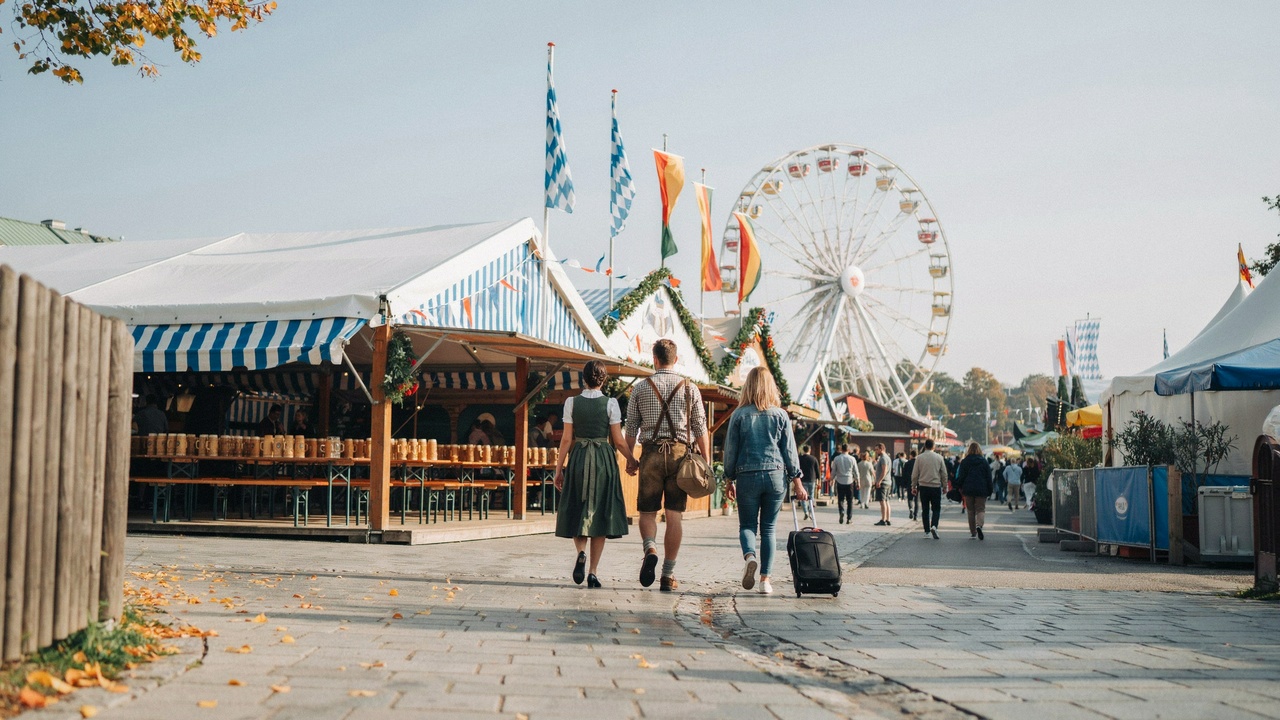
Germany is preparing for a major rise in festival-led travel when the 191st Oktoberfest opens at Theresienwiese in Munich on 19 September 2026. The event will run for 16 days and close on 4 October. Oktoberfest Travel will affect accommodation, urban transport, restaurants, attractions and public spaces across the Bavarian capital. The opening day will feature the traditional ceremonial barrel tapping. A major costume and marksmen’s procession will follow on 20 September. Entry to the main festival grounds and beer tents is generally free, although visitors may need reservations to secure seats during busy periods.
The latest official material presents the event as a tourism and visitor-management story rather than a change in border policy. International guests must continue to follow Germany’s normal Schengen entry rules. No special Oktoberfest visa, passport or travel permit exists. Official sources have not released a festival-specific airport forecast, hotel occupancy prediction or record-price estimate for 2026. Such figures should not be presented as confirmed. The available evidence instead shows that large crowds, public transport demand and spending across Munich will shape the visitor experience. Careful planning will be essential for both domestic and overseas travellers.
Advertisement
Advertisement
Munich Prepares for Sixteen Days of Festival Travel
The 2026 event continues a public celebration that began in 1810. It has developed into the world’s largest folk festival and one of Germany’s most recognised cultural gatherings. Theresienwiese remains its central home. Oktoberfest Travel Munich 2026 combines historic customs, traditional clothing, music, fairground attractions and large hospitality areas. This mix gives the event value across cultural tourism, city breaks and international leisure travel. Visitors often combine the festival with museums, historic districts, regional attractions and journeys across Bavaria. As a result, the tourism effect can spread well beyond the main grounds, even though the strongest pressure remains concentrated in central Munich.
The main dates create three festival weekends. Saturdays have traditionally been among the busiest days, while the opening weekend attracts strong interest because of the ceremony and procession. A parallel city programme will run from 19 September to 4 October across 47 establishments. It will carry festival traditions into hospitality venues outside Theresienwiese. This wider activity may distribute spending through more parts of Munich and give travellers alternatives when the main grounds are crowded. However, no official 2026 revenue forecast is available for either the central festival or the participating city venues, so any precise economic claim would be premature.
Advertisement
Advertisement
Official Data Reveals the Scale Behind the 2026 Event
Recent official figures provide a reliable benchmark for Oktoberfest Travel Munich 2026. Around 6.5 million visits were recorded during the 16-day 2025 festival, compared with 6.7 million in 2024 and 7.2 million in 2023. The 2025 total was therefore about 3% lower than in 2024 and approximately 9.7% below the 2023 figure. The traditional heritage area received 360,000 visits in 2025, against 430,000 in 2024. That represents a decline of about 16.3%. The wider 2025 reduction was partly linked to a one-day closure, so it should not be treated as proof of weakening demand for 2026.
International participation remained visible in 2025, although most visitors still came from Munich and its surrounding region. On the middle Saturday, overseas guests represented about 30% of visitors, compared with an estimated average of 21% across the festival. This means the international share on that Saturday was nine percentage points higher than the event-wide average, or about 43% greater in relative terms. Official reporting identified strong visitor flows from several European markets, North America and India. These figures show why accommodation, airport services and international rail links matter, but they do not establish a 2026 passenger forecast.
Advertisement
Advertisement
| Category | Officially verified information | Meaning for 2026 travel |
|---|---|---|
| Festival schedule | 19 September to 4 October 2026 | A confirmed 16-day travel period across three weekends |
| 2025 attendance | 6.5 million visits | Demonstrates the event’s established crowd scale |
| Annual attendance change | Down about 3% from 6.7 million in 2024 | The fall was limited and partly affected by a closure |
| Heritage-area attendance | 360,000 in 2025, down about 16.3% | Family and cultural areas still require capacity planning |
| International presence | 21% on average and about 30% on the middle Saturday in 2025 | Overseas demand can become more concentrated on peak days |
| Beer volume | 6.5 million litres in 2025, down about 7.1% | Hospitality demand remained substantial despite lower volume |
| Food sales | Up 5% to 6% in larger hospitality areas during 2025 | Spending patterns extended beyond drinks |
| Electricity use | 2.8 million kilowatt-hours in 2025 | The event requires substantial operating infrastructure |
| Waste | 764 tonnes in 2025, down about 4.7% | Lower waste offers a measurable operational improvement |
| Medical demand | Calls increased 28% in 2025 | Health planning remains a major visitor-management issue |
Hotels, Transport and Businesses Face Concentrated Demand
Accommodation demand linked to Oktoberfest Travel Munich 2026 will build around the confirmed dates, but no official authority has published a citywide occupancy rate or average room-price forecast. Visitors should therefore be cautious with claims describing record hotel prices. The event’s historic attendance supports an expectation of a busy market, not a guaranteed pricing outcome. Some travellers may stay outside central Munich and use regional services to reach the festival. This can benefit accommodation providers in neighbouring areas while increasing pressure on morning and late-evening trains. Longer stays may also direct expenditure towards museums, shops, guided visits and other Bavarian destinations.
Hospitality evidence from 2025 shows how visitor behaviour can change even when total attendance falls. Beer volume reached about 6.5 million litres, down from seven million litres in 2024, a reduction of around 7.1%. At the same time, reported food sales in larger hospitality areas increased by roughly 5% to 6%, while smaller venues recorded growth of about 3% to 4%. Non-alcoholic beer demand rose between 6% and 10%, depending on the location. Overall demand for non-alcoholic drinks increased about 3%. These ratios point to a broader spending pattern and changing preferences rather than simple dependence on beer consumption.
Public Transport Will Carry the Main Visitor Load
Munich’s underground, suburban railway, tram and bus systems will provide the main routes for Oktoberfest Travel Munich 2026. Theresienwiese station, served by the U4 and U5 underground lines, offers the closest principal access. Other useful approaches include Goetheplatz, Poccistrasse, Hackerbrücke and the central railway station, followed by a walk to the grounds. Using several stations can reduce dependence on a single crowded entrance. Travellers should expect longer boarding and walking times during peak periods. Live service information should be checked on travel days because planned works, temporary controls or crowd-management measures can change the best route.
Air travel will deliver visitors from international markets, but there is no official 2026 passenger estimate tied only to Oktoberfest. It would therefore be inaccurate to claim a confirmed airport record or a precise festival-driven increase. The same rule applies to fares. Prices can change with demand, availability and booking time, but no official evidence proves a particular percentage rise. Visitors arriving by air should allow sufficient time for immigration, baggage collection and onward travel. Those entering the Schengen Area from outside it may also face document and border checks before continuing to Munich.
Entry Rules, Reservations and Essential Visitor Points
The festival creates no separate immigration system. Nationals who require a short-stay Schengen visa must obtain one before travelling. Applications should normally be submitted at least 15 days before the intended journey and no earlier than six months beforehand. Standard processing normally takes 15 days, although detailed checks may extend this to 45 days. The regular fee is €90 for adults and €45 for children aged six to twelve, with different rates or waivers applying to some categories. Supporting evidence may include accommodation, financial means, medical insurance and proof of the planned journey.
Travellers should build their plans around the following confirmed points:
Advertisement
Advertisement
- The festival opens on 19 September and closes on 4 October 2026.
- The main venue is Theresienwiese in Munich.
- The opening ceremony takes place on the first day.
- The costume and marksmen’s procession follows on 20 September.
- General entry to the grounds and main tents is normally free.
- Free entry does not guarantee a seat or admission to a full tent.
- Reservations should only be arranged through authorised channels.
- Visa-exempt stays are generally limited to 90 days in any 180-day period.
- Relevant passports must usually remain valid for three months after departure.
- Visitors should check current baggage, safety and transport instructions before arrival.
- ETIAS is not a special Oktoberfest rule and no unofficial application should be trusted.
Safety Pressures and What Will Happen Next
Official 2025 operating figures show why safety capacity matters. Medical calls increased by 28% compared with 2024, while 4,500 lost items were registered, up from 3,500. Security teams intercepted about 116,000 beer mugs being removed, compared with 98,000 one year earlier. That was an increase of roughly 18.4%. Electricity use remained at 2.8 million kilowatt-hours. Waste fell from 802 tonnes to 764 tonnes, a reduction of about 4.7%. These figures illustrate the scale of health, security, cleaning and infrastructure work required, but they do not predict the exact 2026 outcome.
The next verified stage for Oktoberfest Travel Munich 2026 will be the release of final operating information before the opening. Travellers should watch for confirmed hours, access controls, transport changes, accessibility guidance and safety instructions. During the event, live notices may address station crowding or temporary entrance restrictions. After 4 October, official reporting should reveal attendance, international participation, consumption, waste, medical demand and security results. Until those figures appear, claims about record tourism revenue, airport traffic, hotel occupancy or visitor totals should remain excluded. The clearest conclusion is that Oktoberfest Travel requires early preparation and close attention to current official advice.
Advertisement
