
US Southwest Airlines Fuel Costs Soar as Record Revenue Faces USD 889 Million Financial Pressure

Published
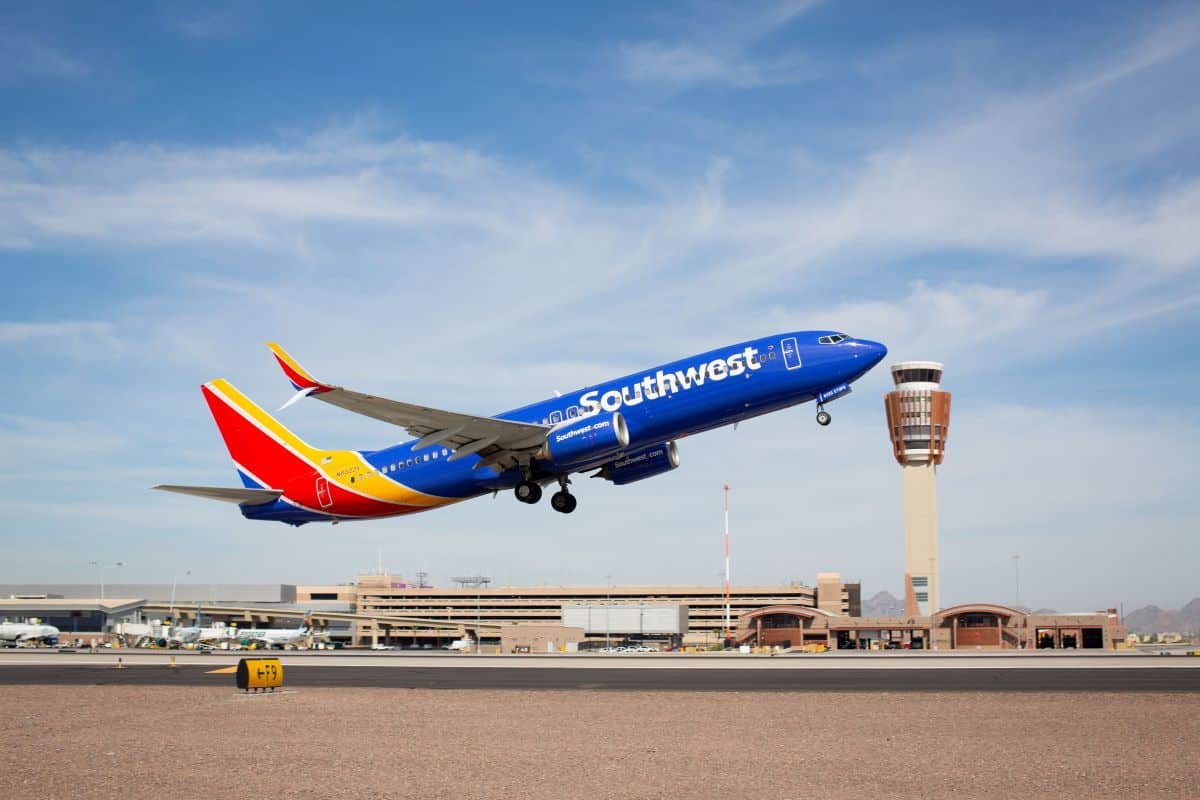
Southwest Airlines fuel costs have become the problem in the airlines financial situation for 2026. Official documents show that fuel expenses in the quarter went up by $889 million compared to the same time last year even though revenue hit a record high and the profit reported got better. The big rise in costs is important for travelers, workers and people who own shares in the company because fuel affects profits, flight schedules how many planes are. The money available for improving services. This report looks at the recent SEC reports government aviation numbers and US energy information that was available, by 4 August 2026. It also talks about why higher revenue has not made people stop worrying about costs how things are being handled and the company ability to stay strong financially in the future.
Southwest Airlines Fuel Costs Reshape the 2026 Financial Story
Southwest Airlines entered the second half of 2026 with a complicated financial picture. Demand, revenue and profit indicators improved, but operating costs also climbed sharply. The most significant pressure came from aircraft fuel and related taxes.
Advertisement
Advertisement
A filing submitted to the US Securities and Exchange Commission showed that second-quarter operating revenue reached a record $8.432 billion. That represented growth of 16.4% compared with the same quarter of 2025. Adjusted operating revenue reached approximately $8.7 billion, an increase of 20.3%.
The revenue performance demonstrated that the airline was generating more money from a largely stable level of capacity. Second-quarter available seat mile capacity increased by only 0.2% year on year. Revenue per available seat mile, commonly known as RASM, rose by 16.2%, while adjusted RASM increased by 20.1%.
Advertisement
Advertisement
However, aircraft fuel expense consumed a substantial part of that progress. The airline reported an average second-quarter fuel cost of $3.92 per gallon. That compared with $2.32 per gallon during the corresponding quarter of 2025.
Advertisement
Advertisement
The increase was severe. Fuel and related tax expenditure rose by $889 million, or 67%, year on year during the quarter. On a unit-cost basis, aircraft fuel and related taxes increased by 66.1%.
The airline said higher fuel prices were associated with market disruption and worldwide geopolitical events. The official disclosure did not attempt to predict how long those conditions would continue.
That uncertainty helps explain why investors could remain cautious even when reported revenue and profit are moving in a positive direction. The official evidence confirms the cost pressure. It does not, however, independently establish the precise cause or scale of any daily or monthly movement in Southwest’s share price.
Advertisement
Advertisement
What the Official Second-Quarter Results Reveal
The second-quarter figures show that Southwest remained profitable despite the cost shock. Reported net income reached $233 million, compared with $213 million in the same period of 2025.
Reported diluted earnings were $0.47 per share, up from $0.39. When special items were excluded, net income reached $465 million, compared with $230 million a year earlier. Adjusted diluted earnings rose to $0.94 per share from $0.43.
Advertisement
Advertisement
The difference between reported and adjusted performance was influenced by a $285 million accounting adjustment. This related to the reversal of part of the breakage revenue recorded between 2022 and 2025 for non-expiring flight credits.
The adjustment is important because it means the headline revenue total did not capture the full strength of current commercial activity. It was also treated as a special item in the company’s non-GAAP presentation.
Nevertheless, readers should distinguish carefully between reported accounting results and adjusted measures. Both provide useful information, but they answer different questions. Reported results follow generally accepted accounting principles, while adjusted results remove selected items management regards as unusual or unrepresentative of the underlying operation.
For the first six months of 2026, reported net income reached $460 million, compared with $64 million during the corresponding period of 2025. First-half diluted earnings increased to $0.92 per share from $0.11.
Adjusted first-half net income rose to $691 million from $153 million, while adjusted diluted earnings climbed to $1.39 from $0.27.
Advertisement
Advertisement
This substantial year-on-year improvement shows that the airline’s financial condition cannot be described solely through the fuel-cost increase. Revenue initiatives and operating changes were producing visible benefits. Yet those gains were being tested by energy prices and other cost increases.
Fuel Becomes the Dominant Cost Pressure
Fuel is one of the largest and most volatile expenses for any airline. Carriers need vast quantities of jet fuel to operate published schedules, and they cannot easily reduce consumption without cutting flights, changing aircraft, improving operating efficiency or reducing aircraft weight.
For Southwest, aircraft fuel and related tax expenditure increased by $996 million, or 38.7%, during the first six months of 2026. On a per-available-seat-mile basis, the increase was 37.5%.
The airline attributed the first-half increase primarily to higher jet-fuel prices, particularly following market disruption and worldwide geopolitical events beginning in March 2026.
Fuel and related taxes cost 4.70 cents per available seat mile in the second quarter, up from 2.83 cents one year earlier. This increase of 1.87 cents represented a 66.1% rise.
Advertisement
Advertisement
By comparison, salaries, wages and benefits cost 7.44 cents per available seat mile, up 7.2%. Landing fees and airport rentals rose by 11.6% to 1.35 cents. Maintenance materials and repair costs fell by 11.4% to 0.62 cents.
The contrast demonstrates the unusual size of the fuel movement. Labour remained the largest individual cost category on a unit basis, but fuel produced the most dramatic year-on-year increase.
Total second-quarter operating expenses rose by $1.1 billion, or 16.1%, to approximately $8.1 billion. Excluding special items, operating expenses also increased by about 16.2%.
Most of the dollar increase came from fuel and labour. When fuel, special items and profit sharing were removed, adjusted unit costs increased by 3.4%. This was below the airline’s earlier guidance but still represented underlying inflation.
The SEC filing calculated that higher fuel expense produced a $1.17 headwind to adjusted earnings per share during the second quarter. This figure illustrates why fuel prices can dominate airline financial discussions even when passenger demand remains strong.
Advertisement
Advertisement
Fuel prices were lower than Southwest had feared
There was one limited positive point. The $3.92-per-gallon second-quarter fuel cost came below the airline’s previous assumption of between $4.10 and $4.15.
This means the fuel outcome was worse than the previous year but better than the company had expected shortly before reporting the result. That distinction matters when assessing the performance fairly.
A cost can be both damaging and better than forecast. Investors may respond differently depending on whether they focus on the year-on-year increase, the improvement against guidance or the outlook for the next quarter.
For the third quarter, Southwest assumed a fuel cost of between $3.70 and $3.75 per gallon, based on the forward curve available on 17 July 2026. That was lower than the second-quarter result but remained well above the $2.32 recorded a year earlier.
A forward-curve assumption is not a guaranteed price. It is a planning estimate based on available market information. Actual costs can change with crude-oil markets, refining conditions, transport constraints, taxes and geopolitical disruption.
Advertisement
Advertisement
Federal Energy Data Confirms a Volatile Market
The US Energy Information Administration publishes official historical data for Gulf Coast kerosene-type jet-fuel spot prices. This series provides a useful public benchmark for the broader jet-fuel market.
Spot prices do not equal the final amount paid by an airline. An airline’s realised fuel cost can include transportation, refining differentials, taxes, contractual arrangements, hedging premiums and timing differences. The EIA benchmark should therefore be used as context rather than treated as a direct substitute for Southwest’s reported cost.
Southwest’s SEC disclosures provide the most relevant measure of the airline’s actual experience. The carrier reported fuel costs of $3.92 per gallon for the second quarter, including the effects defined in its financial presentation.
The wider EIA evidence nevertheless supports the conclusion that energy conditions were volatile. This volatility matters because an airline publishes schedules months in advance and sells seats before it knows exactly what fuel will cost when those journeys operate.
A sudden increase can therefore compress the margin on tickets already sold. Carriers may respond over time by adjusting future fares, reducing unprofitable capacity, improving aircraft utilisation or strengthening revenue from optional services.
Advertisement
Advertisement
None of those reactions happens automatically. Competition can prevent an airline from passing the full increase to customers. Cutting too much capacity can also weaken its network and reduce revenue.
That is why jet-fuel price volatility creates a difficult balance. Airlines must protect financial performance without making schedules less useful or pricing customers out of the market.
Revenue Growth Provides a Powerful Counterweight
Southwest’s revenue performance was not a minor improvement. It represented a major change from the corresponding period of 2025.
Passenger revenue during the first six months of 2026 increased by $1.9 billion, or 15.3%. Total first-half operating revenue rose by $2 billion, or 14.7%, even after the $285 million breakage adjustment.
Other revenue increased by $104 million, or 9.1%. The filing linked this improvement mainly to higher retail spending on co-branded credit cards.
Advertisement
Advertisement
First-half RASM reached 17.59 cents, an increase of 13.8%. Excluding special items, it stood at 17.91 cents, up 15.8%.
Yield increased by 13.6%, supported by broad demand strength, higher ancillary revenue and customer engagement with the airline’s revised product structure. Load factor rose by half a percentage point.
These figures show that Southwest generated more revenue from each unit of capacity. This is especially important when capacity growth is limited because the airline cannot rely simply on adding more flights and seats to increase revenue.
The improvement followed significant commercial changes. Southwest began operating assigned and extra-legroom seating for travel from 27 January 2026. Its boarding process was redesigned around seat location, fare bundles and loyalty status.
The airline had also introduced charges for first and second checked bags on qualifying tickets purchased from 28 May 2025. These changes represented a significant shift from the traditional operating and marketing model associated with Southwest.
Advertisement
Advertisement
The financial filing attributed higher passenger revenue partly to a larger proportion of customers buying higher fare categories, new bag-fee income and the effect of assigned and extra-legroom seating.
The official results therefore provide measurable evidence that the commercial redesign was generating revenue. The central question was whether those gains could continue to outpace fuel, labour, airport and other operating costs.
Profit Improved but Margins Remained Exposed
Reported second-quarter net margin was 2.8%, slightly below the 2.9% recorded one year earlier. Adjusted net margin increased to 5.3% from 3.2%.
This contrast again reflects the effect of special items, including the flight-credit accounting adjustment. The adjusted margin showed stronger underlying improvement, but the reported margin remained narrow.
A narrow margin leaves less room for unexpected cost increases or operational disruption. Severe weather, air traffic constraints, maintenance events and fuel-price movements can quickly affect airline earnings.
Advertisement
Advertisement
Southwest’s reported operating income reached $322 million in the second quarter. Its adjusted operating result was substantially stronger after excluded items were considered.
The company’s first-half performance also improved sharply. However, operating expenses increased faster than capacity. This means cost control remained important even as revenue initiatives delivered results.
For the first half, operating expenses rose by $1.4 billion, or 10.2%, while capacity increased by only 0.8%. Operating expense per available seat mile rose by 9.3%.
Excluding fuel, profit sharing and special items, first-half CASM-X increased by 2.9%. The filing linked much of this underlying rise to wage-rate inflation.
The overall picture is therefore mixed but not contradictory:
Advertisement
Advertisement
- Revenue increased substantially.
- Reported and adjusted profits improved.
- Fuel expense rose dramatically.
- Labour and airport expenses also increased.
- Capacity remained tightly controlled.
- Adjusted commercial performance strengthened.
- Reported margins still offered limited protection from shocks.
This combination explains why positive earnings figures may not remove financial-market concern. Investors usually assess not only current profit but also its durability, the quality of earnings, cash requirements, future costs and execution risk.
Labour, Airports and Financing Add Further Pressure
Fuel was the largest source of the year-on-year expense increase, but it was not the only one.
Second-quarter salaries, wages and benefits increased by $237 million, or 7.3%. The airline attributed most of this rise to scheduled pay-rate increases and associated employee benefits.
Across the first six months, labour expense increased by $433 million, or 6.8%. On a per-available-seat-mile basis, it rose by 5.7%.
Landing fees and airport rental costs also increased. These expenses reflect the cost of using airport infrastructure and can be influenced by facility investment, gate arrangements, local charging structures and operational volume.
Advertisement
Advertisement
Interest expense increased by $33 million, or 38.8%, during the first six months. The filing linked this to financing transactions completed since the second quarter of 2025.
Interest income declined by $81 million, or 58.7%, because investment balances and the average interest rate earned on the investment portfolio were lower.
This combination matters. Higher interest expense and lower interest income can reduce the financial support available outside the core airline operation.
Southwest entered into a $500 million senior secured term-loan facility during the first quarter. The facility was fully drawn and matures in March 2029.
The airline also prepaid an obligation associated with the Payroll Support Program. These financing actions must be understood within the broader structure of liquidity, debt, shareholder distributions and capital spending.
Advertisement
Advertisement
No single measure proves financial weakness. However, investors normally examine how operating profit, cash holdings, borrowing, dividends, share repurchases and capital investment work together.
Liquidity Remained Substantial
Southwest ended the second quarter with $5.3 billion in liquidity. This included $3.8 billion in cash and cash equivalents and an available revolving credit facility of $1.5 billion.
The company also reported unencumbered aircraft and related assets with a net book value of approximately $15.7 billion.
These resources provide an important buffer against market disruption. Liquidity helps an airline pay employees, purchase fuel, maintain aircraft and operate schedules when revenue or costs move unexpectedly.
Gross leverage stood at 2.1 times at the end of the quarter, according to the company’s adjusted measure. The airline distributed $88 million in dividends during the second quarter.
Advertisement
Advertisement
It also had $450 million remaining under a $2 billion share-repurchase authorisation. During the first quarter, the company spent approximately $1.25 billion on share repurchases through accelerated programmes and open-market purchases.
Share repurchases reduce the number of shares outstanding and can increase earnings per share when other factors remain equal. They also use cash that could otherwise support debt reduction, investment or liquidity.
The filing showed that weighted-average diluted shares declined between the relevant periods, helping reported earnings-per-share comparisons. Investors should therefore examine both total profit and profit per share.
Southwest’s liquidity and asset position indicated that it retained meaningful financial flexibility. Nevertheless, sustained fuel inflation could increase cash requirements and place greater pressure on margins.
Capacity Discipline Becomes More Important
Southwest expected full-year 2026 capacity growth of approximately 1.5%, down from previous guidance of 2%.
Advertisement
Advertisement
This reduction signalled a more disciplined approach to supply. Capacity decisions are crucial because too many seats can weaken fares, while too few can limit revenue and reduce network usefulness.
The airline’s second-quarter capacity grew by only 0.2%. Yet operating revenue rose by 16.4%. This produced a major increase in revenue efficiency.
For the third quarter, the company expected RASM to increase by between 17.5% and 19.5% year on year. That forecast included the effect of comparing 2026 results against the 2025 introduction of bag fees and other initiatives.
The airline also expected third-quarter CASM-X to rise by between 3.5% and 4%. The estimate included a 1.1-percentage-point headwind connected with removing six seats from Boeing 737-700 aircraft to provide extra-legroom seating.
Removing seats reduces available seat miles if flight operations remain otherwise unchanged. However, the airline may seek to offset that reduction by earning more from premium seating or improving customer appeal.
Advertisement
Advertisement
This is an example of the wider transformation underway. The carrier is attempting to earn more from each passenger and each unit of capacity instead of depending mainly on network growth.
If the strategy succeeds, stronger revenue per seat could absorb part of the higher fuel and labour bill. If demand weakens or customers resist higher prices and charges, the economics could become more difficult.
Fleet Plans Carry Costs and Efficiency Opportunities
Southwest received 13 Boeing 737-8 aircraft during the second quarter and retired 10 aircraft. It ended June with a fleet of 803 aircraft.
The retirements included four Boeing 737-800 aircraft sold, one Boeing 737-700 sold and five additional 737-700 aircraft retired.
For the full year, the airline expected 64 Boeing 737-8 deliveries and planned to retire approximately 60 aircraft.
Advertisement
Advertisement
Newer aircraft can offer operating and fuel-efficiency benefits compared with older models. They can also support redesigned cabins and improve reliability. However, deliveries require significant capital and may involve financing commitments.
Gross capital expenditure reached $818 million during the second quarter. Spending covered aircraft as well as technology, facilities and operational investments.
The airline expected 2026 net capital expenditure to finish near the low end of, or below, its previous range of $3 billion to $3.5 billion.
This adjustment could preserve cash during a period of elevated operating costs. It may also reflect aircraft-delivery timing and proceeds from asset sales.
Fleet renewal remains strategically important because fuel efficiency has a direct connection with operating costs. Even small reductions in consumption per flight can become significant across a large domestic network.
Advertisement
Advertisement
However, fleet renewal cannot immediately remove the effect of a rapid market-wide fuel-price increase. It is a long-term efficiency measure rather than a complete short-term solution.
What the Results Mean for US Travellers
Travellers should not assume that one quarter of higher fuel prices will automatically produce a specific fare increase. Ticket prices depend on demand, competition, seasonality, capacity, route performance and booking timing.
Fuel nevertheless changes the economic backdrop. When costs rise, airlines have a stronger incentive to protect revenue through fare management, premium products and ancillary charges.
Southwest’s commercial changes were already increasing revenue before the second-quarter result. Assigned seating, extra-legroom options, revised fare categories and checked-bag charges expanded the number of ways the carrier could generate income from each booking.
For travellers, this creates a more complex comparison. A base fare may no longer describe the total trip cost. Passengers need to consider baggage, seat choice, flexibility, loyalty benefits and other included services.
Advertisement
Advertisement
The transformation could also affect airport behaviour. Assigned seating and revised boarding groups change how passengers prepare for departure and move through the gate area.
Capacity discipline may influence availability on individual routes. The official full-year outlook referred to the network as a whole and did not prove that any particular destination would gain or lose service.
Travellers should rely on published schedules and direct booking information when planning a journey. Financial guidance should not be used as evidence that a specific route will change.
Broader Implications for the US Airline Industry
Federal transport statistics showed that the wider US airline system continued to move a very large volume of passengers and capacity during 2026.
Bureau of Transportation Statistics data available through May showed an industry passenger load factor of approximately 81.76% when domestic and international services were combined for the relevant reporting period. That compared with approximately 82.46% in the corresponding period shown by the agency.
Advertisement
Advertisement
Revenue passenger miles increased overall, but capacity, measured through available seat miles, also rose. The result was a modest decline in the national load factor.
These system-wide statistics do not describe Southwest alone. They provide context for the competitive environment in which it operates.
When industry capacity grows faster than demand, airlines can face pressure on fares and load factors. When capacity is constrained, carriers may gain greater pricing power, although travellers may encounter fewer choices or higher prices.
Southwest’s strong unit-revenue growth suggested that its specific commercial initiatives were producing a benefit beyond broad capacity expansion. Yet the airline remained exposed to the same energy market and infrastructure constraints affecting the wider industry.
The result illustrates an important sector-wide issue: strong demand does not guarantee strong margins when fuel, labour, airports and financing become more expensive.
Advertisement
Advertisement
Why the Stock Claim Requires Careful Treatment
The supplied report focused on Southwest’s stock performance during August. However, the requested evidence standard permits only official public institutions and authoritative official databases.
SEC filings confirm financial results, risk disclosures, share counts, repurchases and material corporate events. They do not provide an official government explanation for daily share-price movements.
A falling stock price may coincide with higher fuel costs, but coincidence alone does not prove causation. Prices respond to numerous forces, including earnings expectations, analyst revisions, market sentiment, interest rates, industry news and wider economic conditions.
For that reason, it would be inaccurate to state as established fact that fuel costs alone caused a particular August movement unless a properly sourced analysis demonstrated the relationship.
What can be reported confidently is narrower and stronger:
Advertisement
Advertisement
- Southwest’s second-quarter fuel cost reached $3.92 per gallon.
- Fuel expense increased by $889 million year on year.
- Fuel created a $1.17 headwind to adjusted earnings per share.
- Total operating expenses rose by approximately $1.1 billion.
- Revenue and profit nevertheless improved.
- Third-quarter fuel guidance remained elevated.
- The airline reduced its full-year capacity-growth outlook.
These facts explain why fuel was financially material. Any assertion about the exact reason for a market-price movement should be presented as interpretation rather than verified government fact.
Southwest Airlines Fuel Costs and the Future Outlook
The next stage of Southwest’s financial story will depend on the relationship between revenue growth and expense inflation.
Third-quarter RASM guidance suggested that the airline expected another substantial improvement in revenue per unit of capacity. This would support margins if demand remained strong.
However, the third-quarter fuel assumption of $3.70 to $3.75 per gallon remained high. CASM-X was also expected to increase by between 3.5% and 4%.
The carrier therefore needed revenue gains to overcome both fuel and non-fuel inflation. Commercial execution would remain central.
Advertisement
Advertisement
Assigned seating and extra-legroom products must produce enough value to compensate for implementation costs and the reduction in seats on affected aircraft. Bag-fee revenue must also be balanced against customer expectations and competitive alternatives.
Capacity discipline could support pricing, but the airline must retain a network that remains useful to travellers. Fleet renewal could improve efficiency, although it requires capital and depends on aircraft delivery schedules.
Southwest’s $5.3 billion liquidity position offered protection. Record revenue and improved adjusted earnings also showed genuine progress.
The main unresolved issue was durability. A successful transformation must deliver through different fuel-price environments, demand cycles and competitive conditions.
Official filings identify fuel prices, economic uncertainty, operational disruption, competition, labour expenses, regulation and aircraft availability among the factors capable of affecting airline results.
Advertisement
Advertisement
The evidence available by 4 August 2026 therefore supports neither an entirely negative nor an entirely optimistic conclusion. Southwest had strengthened revenue generation and profit, but a major fuel shock exposed the continuing sensitivity of the business.
Conclusion
Southwest Airlines fuel costs continue to threaten the carrier’s growing revenue story in 2026. Record quarterly revenue, higher unit revenue and increased profit show that commercial reforms are delivering gains. However a $889 million rise in fuel expense higher labour costs and cautious capacity planning reveal the limits of that progress. Official evidence does not prove how Southwest Airlines shares will perform. It explains why markets may stay sensitive, to energy prices and execution. Travellers should expect Southwest Airlines to focus on fares, ancillary products, seating, capacity and efficiency as Southwest Airlines works to protect margins while keeping demand strong.
[Source:- AD HOC News]
Image Credit:- Southwest Airlines
Advertisement
